
EU approves 5 defense projects — Europe's industry gains time, but still no capabilities
 Dr. Klaus Weber
EU approves 5 defense projects — Europe's industry gains time, but still no capabilities
Brussels, September 30, 2026. Approximately 343 million euros or 369 million US dollars will flow into the first five European defense projects of common interest. Four of these initiatives involve Ukraine. This is politically significant, but militarily it is not yet a breakthrough. The European Union has thus adopted a priority list, but has not yet created any operational capability.
Five projects, one political signal
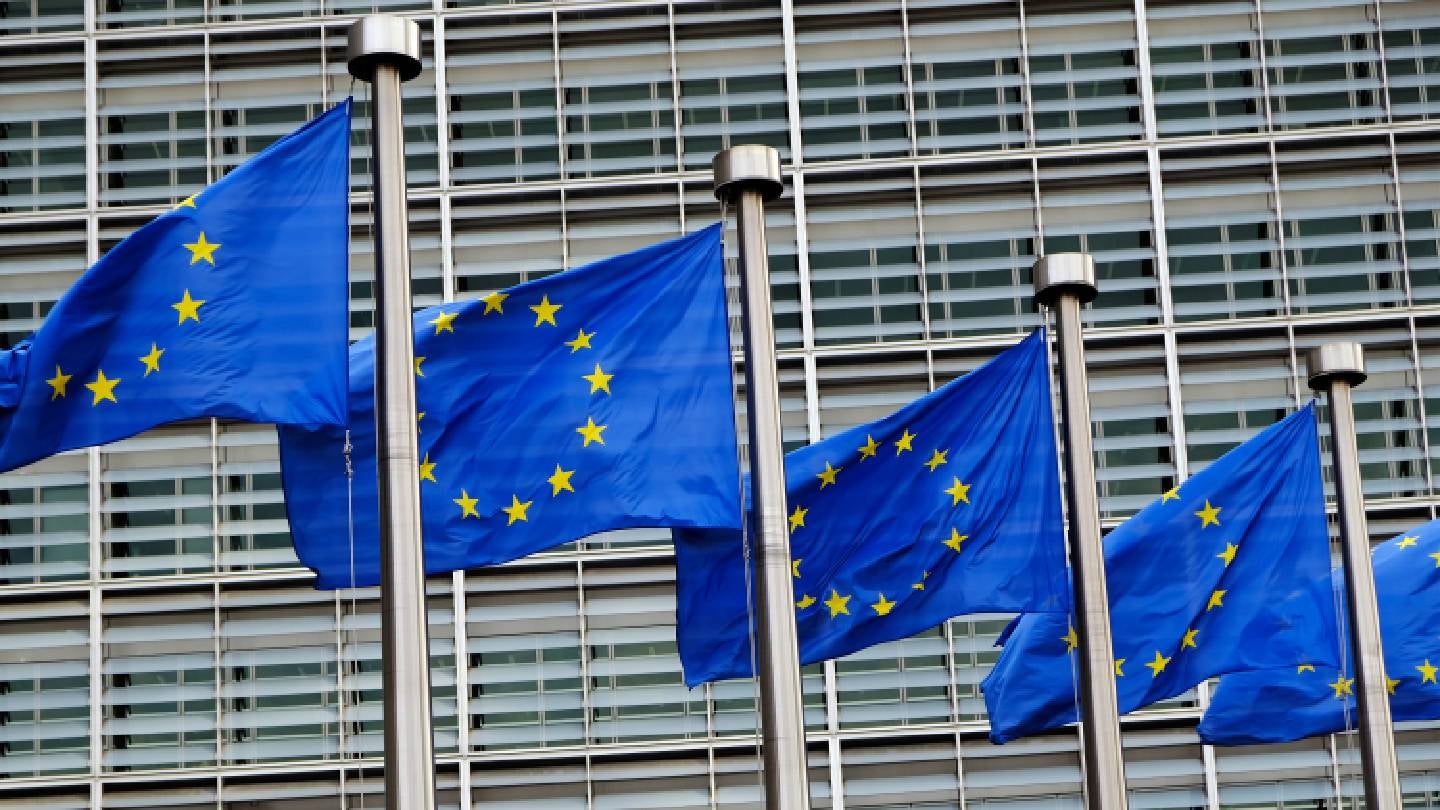
The EU Council identified the first five projects under the European Defence Industry Programme on September 28. Systems for drone defense and space-based missile warning were publicly highlighted. Other initiatives aim to consolidate European development, procurement, and industrial manufacturing. Member states should no longer finance 27 national responses to the same threat.
The scale immediately reveals the problem. 343 million euros is a useful boost, but not a substitute for mass production. A modern air defense battalion, a satellite program, or a robust electronic warfare chain can already tie up a significant portion of this amount. The money finances cooperation; it does not yet finance the mass that Europe's armed forces need.
Drone defense is not a single device
The most important lesson from the Ukraine war is that counter-UAS is not accomplished by purchasing a single effector. A robust architecture requires a layered system of 3D radar, electro-optical sensors, passive radio intelligence, electronic jamming, and cost-effective kinetic interceptors. The key is shortening the sensor-to-shooter chain: a target must be detected, classified, prioritized, and engaged before it reaches its target.
Here lies Europe's institutional weakness. Member states purchase individual radars, jammers, and air defense guns without common data standards or a unified command architecture. A Ukrainian operator does not care whether a sensor comes from Germany, Poland, or France. He needs a common situational picture and a response in seconds. The EU projects can enforce this interoperability. They will only do so if funding is tied to common interfaces and joint acceptance procedures.
Missile warning shifts the perspective
The inclusion of space-based missile warning is strategically even more important. Satellites with infrared-based early warning sensors can detect the launch of a ballistic missile earlier than ground-based systems. They do not replace interceptors like Aster or Patriot and do not provide complete target engagement. Their value lies in providing additional minutes for political decision-making, activation of air defense, and warning the population.
Europe has individual national sensors and satellite capabilities, but no fully integrated sovereign warning chain. Without secure data connections, redundant ground stations, and clear command authority, a satellite remains a sensor without strategic effect. The technical specification is therefore less a matter of maximum resolution than of availability, reliability, and speed of data transmission. This is unremarkable, but crucial for war.
Why Ukraine is a litmus test
The fact that Ukraine is involved in four of the five projects is not a symbolic addition. Ukrainian armed forces have the most extensive practical experience with massed drone attacks, decoys, changing flight profiles, and the integration of reconnaissance and precision fire. European developers can translate this experience into requirements that no laboratory or peace exercise can replace.
However, Kyiv must not be treated as a testbed while European governments postpone procurement. Joint development without binding production orders would be the familiar European formula: much consultation, little available ammunition. Ukraine must gain access to prototypes, spare parts, software updates, and industrial feedback loops. Otherwise, the lessons learned will become just another conference language.
The conflict with Washington
The American accusation that the European made-in-Europe policy is primarily for national self-interest touches on a real conflict of objectives. European preference rules can stabilize demand and production capacity on the continent. However, they can also increase costs and exclude American systems that would be available in the short term. Strategic autonomy must not be confused with industrial isolation.
The sensible answer is a tiered model. In sensors, software, data fusion, and munitions, Europe needs its own industrial control. For certain platforms, a transatlantic division of labor may still make sense. However, those who import every critical component do not possess autonomy but rather a supply relationship. Conversely, those who exclude every American system for political reasons risk capability gaps during the establishment of their own production.
The real benchmark
The five projects are a test for the governance of the EU. In the next twelve to eighteen months, it must become clear whether the political selection leads to common technical standards, robust timelines, and series contracts. What should be measured is not the number of consortia, but the number of operational systems delivered to European and Ukrainian units.
Brussels has taken a small but important step: it has for the first time established common priorities with immediate relevance to the Ukrainian front. The paradoxical finding remains. Europe now knows better which capabilities are lacking than it knows who should build them with what command authority and in what quantities. Money can initiate cooperation. It cannot replace the institutional decision on responsibility and production.
Sources
- Council of the European Union, September 28, 2026 — https://www.consilium.europa.eu/en/press/press-releases/2026/09/28/european-defence-industry-council-identifies-the-first-five-projects-of-common-interest/
- Defence Industry Europe, September 28, 2026 — https://defence-industry.eu/
- Kyiv Post, September 30, 2026 — https://www.kyivpost.com/
- Euronews, September 30, 2026 — https://www.euronews.com/
The European Union approved five defense projects totaling 343 million euros, with four involving Ukraine. These projects focus on enhancing drone defense and missile warning systems, aiming to improve European military capabilities and interoperability. The EU emphasizes the need for common standards and cooperation among member states to address shared threats.
- EU allocated 343 million euros for five defense projects
- Four projects involve Ukraine
- Focus on drone defense and missile warning systems
- Projects aim to enhance European defense capabilities
- Need for interoperability and common standards highlighted