
EU invests 1.2 billion euros in Ukrainian drones and missiles — Europe's new dependency
 Dr. Klaus Weber
EU invests 1.2 billion euros in Ukrainian drones and missiles — Europe's new dependency
Berlin, October 7, 2026. The European Union is providing Ukraine with an additional approximately 1.2 billion euros for drones, drone defense munitions, and missiles. According to the European Commission, the funds are primarily intended for Ukrainian companies. This is not about delivering European stockpiles, but rather a financed order from a war economy that has developed its production logic under combat conditions. This is where the strategic significance — and the institutional problem — lies.
From classic arms aid to the Ukrainian production chain
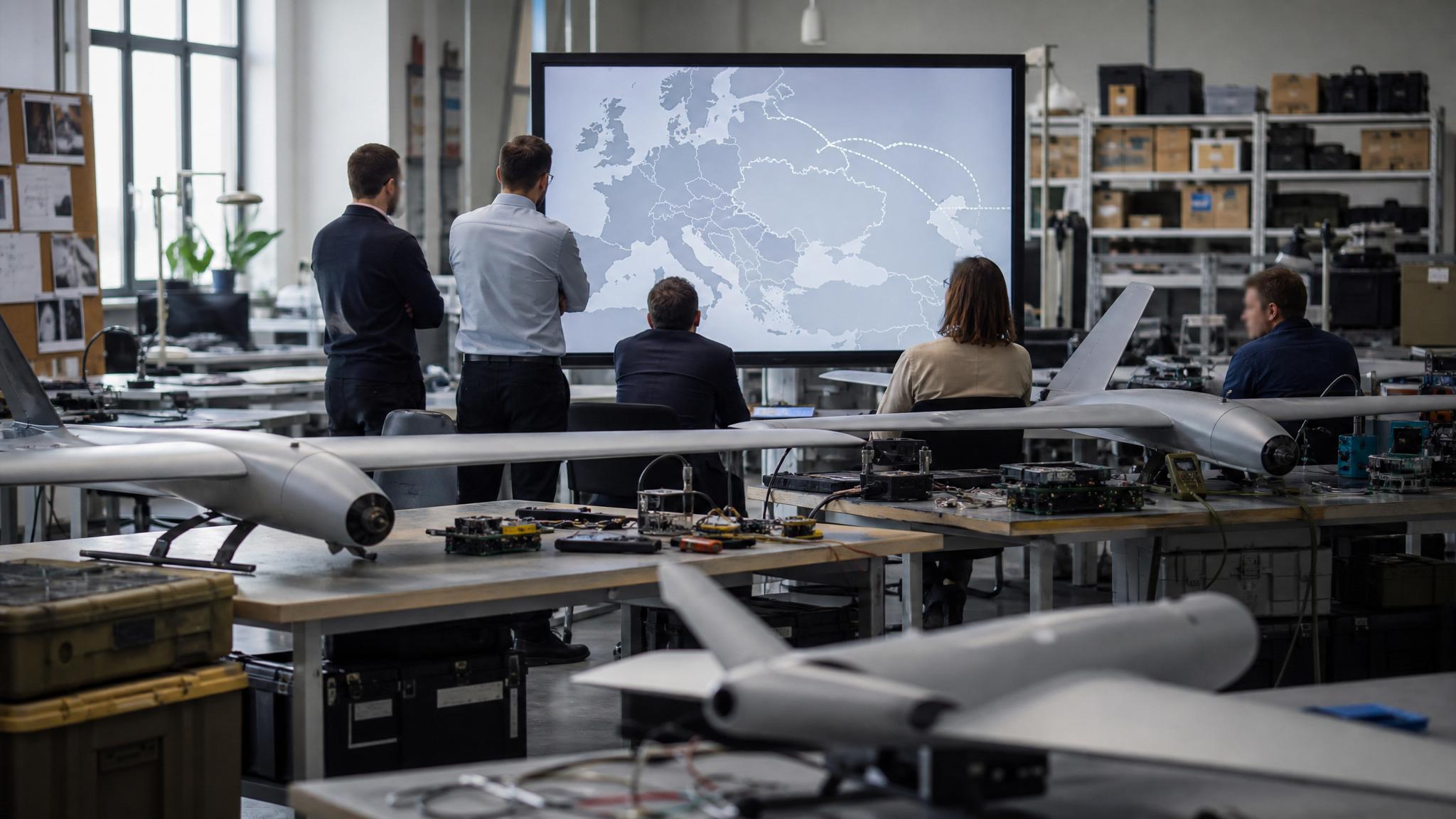
The new tranche is tailored to systems that are consumed particularly quickly in the current war. This includes unmanned aerial vehicles for reconnaissance and effect, intercept drones against Russian attack drones, munitions for these defense systems, and missiles. Unlike a single arms purchase, this involves a chain of sensors, aircraft, warheads, software, spare parts, and personnel. Military quality is determined not only by the range of a model but by the ability to respond to new Russian disruption and attack patterns within weeks.
Ukrainian manufacturers have an experience advantage that no European procurement program can buy in the short term. Their systems are tested, modified, and reused under real conditions. This is attractive for the EU because part of the funding goes directly into the industrial learning curve that Europe's established defense companies would have to build from scratch. Reports from the Kyiv Independent, Anadolu Agency, and Kyiv Post confirm the focus on Ukrainian-produced drones and missiles.
The number is large — the capability remains limited
1.2 billion euros is a strong political signal, but militarily it is no substitute for a European production strategy. The amount can finance thousands of systems, but drones are not a uniform product. A small reconnaissance drone, a loitering munition system, and an intercept aircraft have different sensors, ranges, communication links, and production risks. Even with missiles, it is not just the number of ordered projectiles that matters. Storage, target reconnaissance, launch systems, and reloading capability determine whether money actually translates into firepower.
This is the old European weakness in a new form. Europe is increasing its spending but continues to measure political success by the approved amount. The crucial question is not whether the EU provides 1.2 billion euros. It is how many operational systems arrive at the front within what timeframe, how many of those still function after Russian electronic warfare, and whether production capacity in spring 2027 is higher than today. Allocations are not deliveries; loans and budget lines are not capabilities.
Strategic autonomy through outsourcing
The EU can pursue three goals simultaneously with this funding. First, Ukraine receives urgently needed defense means against the Russian combination of cruise missiles, ballistic missiles, and large drone swarms. Second, Brussels supports the Ukrainian industry without depleting European stockpiles to the same extent. Third, a procurement model is created in which Ukrainian companies can scale their products directly for a European financing mechanism.
However, this model has a paradoxical core. Europe speaks of strategic autonomy while financing an industrial base outside the EU. This is reasonable in the short term, but only long-term autonomous if European states also gain access to production processes, data, components, and maintenance structures. Otherwise, the EU remains the payer, while Ukraine is the producer and the United States remains the supplier of critical electronics and propulsion components. A European check is not yet a European defense industry.
What Germany and the EU must decide now
The right answer would not be a withdrawal from Ukrainian procurement but its institutional safeguarding. Every further tranche should include measurable delivery targets, transparent production data, and common standards for electronic warfare. The EU should involve Ukrainian manufacturers in PESCO and EDF projects, as far as security interests and export controls allow. At the same time, European companies must be required to build production lines, spare parts supply, and software expertise together with Ukrainian partners.
Germany should define its role more precisely. Berlin has industrial expertise in sensors, air defense, and command and control, but lacks the political speed that the drone war demands. Another national special fund without common European requirements would deepen fragmentation. A more sensible approach would be a European acceptance guarantee for certain system classes — linked to open interfaces, interoperable software, and the possibility of integrating Ukrainian innovations into NATO structures.
The real test is not whether Europe finds money, but whether it turns Ukrainian war experience into a common production capability.
Conclusion
The 1.2 billion euros are more than a aid package, but less than a strategic breakthrough. They mark the transition from delivering finished weapons to financing a war-related innovation ecosystem. This can immediately strengthen Ukrainian defense and modernize Europe's procurement policy. However, it can also cement a new division of labor in which Europe pays, Ukraine produces, and other powers control key technologies. Europe's dilemma therefore remains: Without Ukrainian production speed, it loses time; without its own industrial depth, it loses sovereignty.
Sources: European Commission, October 7, 2026; The Kyiv Independent, October 7, 2026; Anadolu Agency, October 7, 2026; Kyiv Post, October 7, 2026.
The European Union allocated 1.2 billion euros to support Ukraine's defense capabilities, focusing on drones and missiles. This funding is intended for Ukrainian manufacturers, enhancing their production under combat conditions. The investment aims to provide urgently needed defense resources against Russian threats while avoiding depletion of European stockpiles. The initiative reflects a shift towards financing a war-related innovation ecosystem in Ukraine.
- EU allocates 1.2 billion euros for Ukrainian drones and missiles.
- Funding aims to support Ukrainian companies rather than depleting European stockpiles.
- The investment focuses on systems rapidly consumed in the current conflict.
- Ukrainian manufacturers have a competitive edge in producing military equipment under combat conditions.
- The EU seeks to enhance its defense procurement model while maintaining strategic autonomy.