
EU pays 2.86 billion euros for drones and air defense — why Leopard 2A8 remains indispensable
 Dr. Klaus Weber
EU pays 2.86 billion euros for drones and air defense — why the Leopard 2A8 remains indispensable
A loan, three military realities
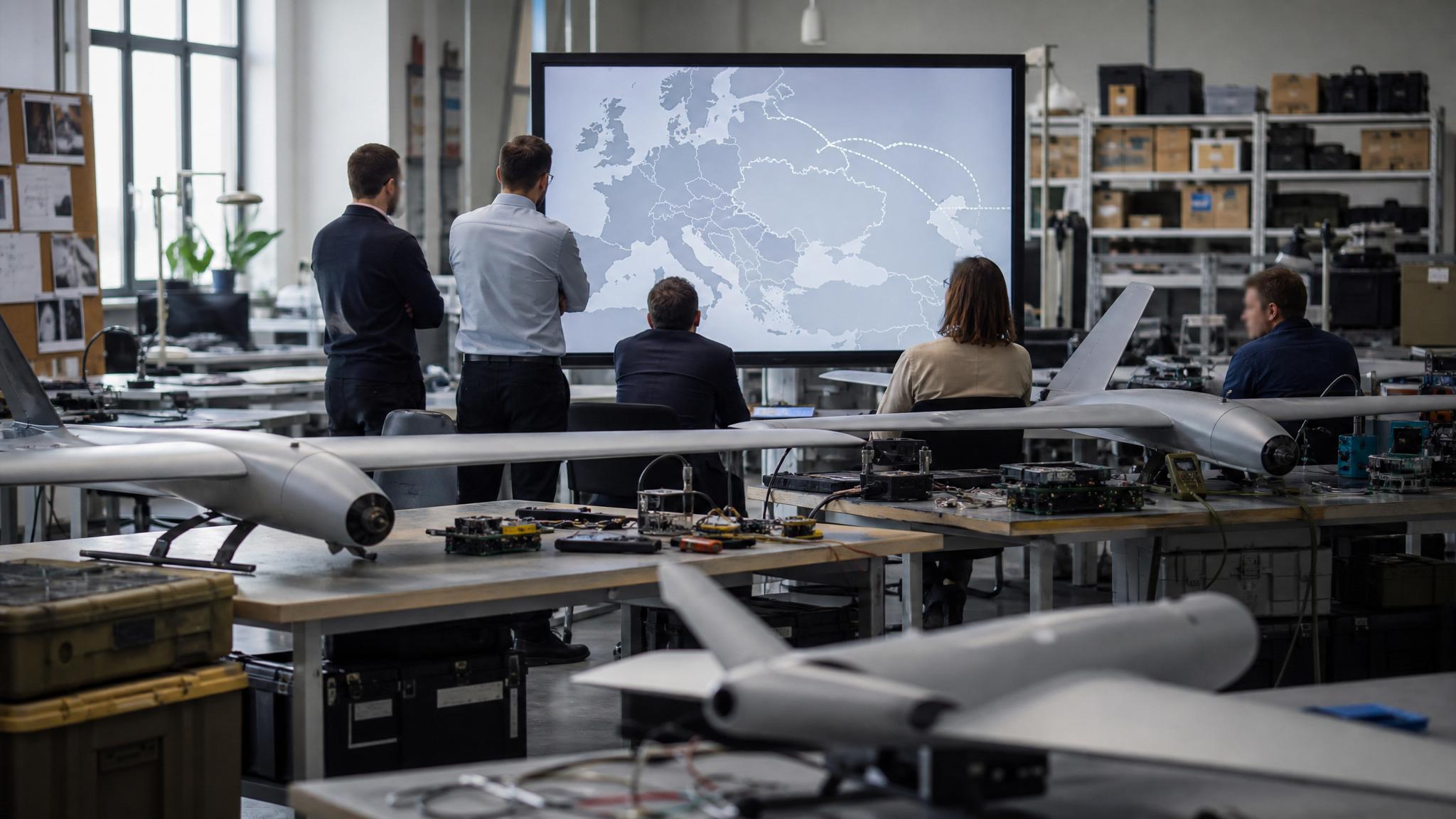
On October 14, the European Commission disbursed 2.86 billion euros to Ukraine. The funds are intended for drones, missiles, air defense, radar systems, electronic warfare, and ammunition. They come from the 90 billion euro support loan for 2026 and 2027, of which the defense component is estimated at 60 billion euros. Ursula von der Leyen described the payment as a response to Russia's ongoing airstrikes. This is politically understandable. However, the crucial strategic question is different: Is Europe buying short-term military effectiveness or primarily financing the establishment of a European armaments structure?
The initial answer is: both, but not at the same pace. The Commission plans to allocate a total of 28.3 billion euros in 2026 to strengthen the Ukrainian defense industry; 12.54 billion euros of that were still available in the current annual framework after the disbursement. This means that Ukraine is treated not only as a recipient but as part of the European industrial base. This is where the progress — and the risk — lies. A loan can finance production lines, supply chains, and joint development programs. However, it cannot conjure up urgently needed interceptors in the short term.
Drones are not a substitute for air defense
The priorities of the payment reflect the reality of war. Drones can be produced relatively quickly, are adaptable, and can be deployed in large numbers. Radars and electronic warfare enhance their survivability. However, against Russian cruise missiles and ballistic threats, Ukraine remains dependent on a limited number of effective interceptor systems. An unmanned system can scout, jam, or attack; it does not automatically replace a layered air defense.
This creates Europe's well-known imbalance between political commitment and industrial capacity. The EU can release 2.86 billion euros, but it does not control all production lines or the availability of critical components. For missiles, sensors, and engines, there are multi-year lead times. Therefore, the disbursement is a necessary financing act, but not yet a delivery and certainly not an additional capability. Anyone who confuses these three terms is doing accounting with military vocabulary.
Why the Leopard 2A8 does not disappear from the equation
At the Warsaw Security Forum, European defense ministers simultaneously warned against reducing heavy land forces in favor of drones. Lithuania points to its planned procurement of Patria armored vehicles and 44 Leopard 2A8 battle tanks. The political point is precise: the armed forces on NATO's eastern flank must deploy drones, counter-drone measures, and heavy platforms together. The Leopard 2A8, equipped with active protection and sensor systems, is not immune to modern threats. However, it remains a protected means to hold terrain, protect troops, and force breakthroughs.
The lesson from Ukraine is therefore not that tanks are outdated. It is that tanks are vulnerable without reconnaissance, electronic warfare, air defense, and flexible modernization contracts. Lithuanian decision-makers rightly demand so-called smart contracts: at the time of delivery, the latest available anti-drone technology should be integrated, not the technical standard of the order year. Three years in this war is an eternity. However, Europe's procurement law still treats them as a normal planning period.
The real weakness lies in the mix of institutions
The EU support loan combines three goals that are politically often sold as a single one: acute assistance for the Ukrainian front, reconstruction of the Ukrainian armaments industry, and integration of this industry into the European defense base. These goals are not incompatible, but they compete for time, production capacity, and political attention. A Ukrainian factory producing drones for air defense today cannot simultaneously deliver complex interceptors in European quantities without additional investments.
The financing itself also deserves sobriety. According to the Commission, the EU and its member states have spent a total of 231.5 billion euros on Ukraine since 2022, including 3.8 billion euros from the proceeds of immobilized Russian assets. This is a substantial political commitment. However, the size of the sum says nothing about delivery speed, spare parts availability, or operational readiness. A loan program will only resolve European fragmentation if it enforces common standards, long-term purchase guarantees, and industrial division of labor. Otherwise, it remains a very large national shopping list with an EU emblem.
Europe's decision is not drones versus tanks
The current payment is therefore correct, but it must not be misunderstood as proof of strategic autonomy. Europe must simultaneously strengthen Ukrainian production capacities, procure its own interceptors, and modernize heavy forces on the eastern flank. This requires a different logic than the previous one: not the choice between high-tech and mass, but the connection of both levels in a common force planning.
With the 2.86 billion euro step, the Commission has sent an important signal. However, whether this leads to defense capability will be decided in factories, in the integration of sensors, and in contracts that allow for technical changes. More money is a prerequisite. It is not the result. Europe's dilemma remains uncomfortably clear: without loans, the industry cannot grow — with loans alone, it cannot win a war for a long time.
Sources
The European Union allocated 2.86 billion euros to Ukraine on October 14, 2026, for military support, including drones and air defense systems. This funding aims to enhance Ukraine's defense capabilities while emphasizing the continued necessity of Leopard 2A8 tanks for NATO's eastern defense. The report outlines the strategic implications of this aid and the challenges in balancing immediate military needs with long-term industrial development.
- The EU allocated 2.86 billion euros to Ukraine for military support on October 14, 2026.
- The funding is intended for drones, missiles, air defense, and other military equipment.
- The Leopard 2A8 tanks remain crucial for NATO's eastern flank defense.
- The EU's support aims to strengthen Ukraine's defense industry and integrate it into the European defense framework.
- The report highlights the challenges of balancing immediate military needs with long-term industrial capacity.