
EU pays 3.3 billion euros for Ukrainian drones and missiles — and still does not buy European air defense
 S.W
S.WEU pays 3.3 billion euros for Ukrainian drones and missiles — and does not yet buy European air defense
\nOn September 18, the European Commission disbursed 3.3 billion euros for the purchase of Ukrainian drones and missiles. This is the fourth tranche from the defense window of the 90 billion euro Ukraine Support Loan. The figure is politically impressive, but strategically it is only the beginning: money has been transferred, but the fighter jets, missiles, and production capacities have not yet been created.
\n\n3.3 billion euros are a payment, not a capability
\n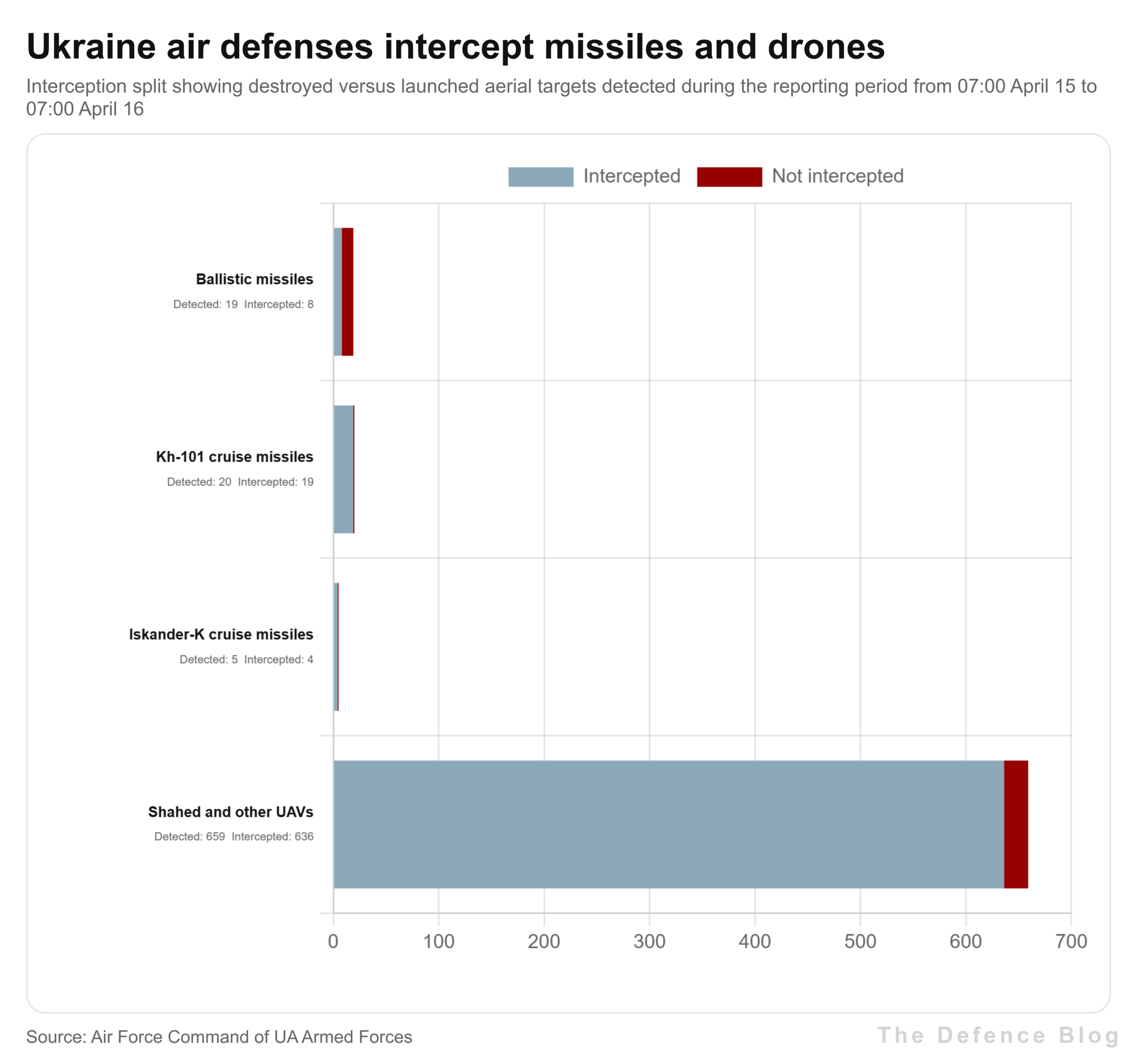 \n
\nThe Commission now estimates its total support for Ukraine in 2026 at nearly 15 billion euros. Of this, funds are allocated for defense procurement and general financial aid. The loan mechanism provides for a total of 60 billion euros for defense and 30 billion euros for the Ukrainian state budget in 2026 and 2027. An additional 6.1 billion euros for Ukrainian defense needs had already been approved on September 11, including PAC-3 interceptor missiles for Patriot systems.
\nThis sequence highlights the real problem of European security policy. Brussels can quickly decide on funds and disburse them in tranches. However, the industry cannot deliver Patriot interceptors, long-range missiles, and drones at the same pace. Therefore, the political metric is 3.3 billion euros; the military metric should be: How many operational systems will reach which Ukrainian unit and when?
\n\nThe Patriot remains Europe's uncomfortable reality
\nThe inclusion of PAC-3 in the package is militarily understandable. The Ukrainian air defense must fend off Russian cruise missiles, ballistic missiles, and drones in large numbers. Patriot is one of the few Western systems with proven capability against challenging targets. But precisely its strength makes the European dependency visible. The PAC-3 production is determined by American supply chains, American certification, and American prioritization. A European loan can finance this dependency; it cannot eliminate it in the short term.
\nThis is not an argument against procurement. It is an argument against the convenient assertion that procurement already constitutes strategic autonomy. Europe pays more because it must act faster. Therefore, it does not yet produce more.
\n\nFreya promises industrial integration
\nThe Commission has also proposed using remaining funds from the Security Action for Europe instrument for a joint EU-Ukraine program. At the center is a European air and missile defense system based on the existing Freya approach. Ukrainian combat experience is to be linked with European industrial and technological capacity; in the long term, Ukraine is to be integrated into the European defense technological and industrial base.
\nThis is the strategically most interesting part of the announcement. Ukraine is not merely a recipient of material but the European country with the most comprehensive practical experience in combating mass drone and missile attacks. This experience could accelerate development, sensor technology, software, and operational doctrine. However, a development program is not an operational battery. Years of testing, financing, and standardized procurement procedures lie between a political mandate and a certified air defense architecture.
\n\nThe production question remains unresolved
\nThe Commission identifies three immediate measures: releasing stocks, reprioritizing orders, and increasing production. All three are necessary, but none of them is a substitute for industrial planning. Stocks are finite. Reprioritization shifts delivery times from one European operator to another. And new production lines require skilled workers, suppliers, test stands, and reliable multi-year acceptance contracts.
\nThe European Council has earmarked up to 45 billion euros for 2026, of which 28.3 billion euros are for industrial defense capacity. This amount will only become militarily relevant when it is translated into contracts with clear quantities, delivery deadlines, and responsibilities. Europe's old weakness lies not in a lack of summit declarations but in the fragmentation of demand. National special requests extend development times while Ukraine needs ammunition and interceptors today.
\n\nFinancial solidarity needs a capability account
\nThe EU should therefore not only publish the 3.3 billion euros as a disbursement but as a capability account. For each tranche, quantities, delivery times, operational readiness, and the European industry share must be traceable. Otherwise, it remains unclear whether a loan strengthens Ukrainian defense or merely stabilizes European budget procedures initially.
\nVon der Leyen's statement that Europe steps forward and others must follow is politically understandable. Strategically, it is not sufficient. Europe must not only pay more but also decide which systems it wants to master itself and which dependencies it consciously accepts. The 3.3 billion euros are a necessary step for Ukrainian air defense. However, they are not yet proof of European defense autonomy. The paradox is: Brussels can mobilize money faster today than Europe's industry can produce missiles — and it is exactly this difference that determines whether solidarity reaches the battlefield.
\n\nSources
\n- \n
- European Commission, information on the disbursement of 3.3 billion euros and the 90 billion euro Ukraine Support Loan, September 18, 2026. \n
- Defence Industry Europe, “European Commission releases €3.3 billion for Ukraine drones and missiles under €90 billion defence and budget support loan”, September 21, 2026. \n
- European External Action Service, statement by Kaja Kallas on support for Ukraine and Russian escalation, September 21, 2026. \n
- European Defence Agency and EU Instrument Security Action for Europe, framework for European defense procurement and industrial capacities. \n
The European Commission allocated 3.3 billion euros for the purchase of Ukrainian drones and missiles on September 18, 2026, as part of a broader support package. This funding is intended to enhance Ukraine's defense capabilities against Russian threats, particularly through the inclusion of PAC-3 interceptors. However, the report emphasizes the challenges in translating financial support into operational military readiness and the ongoing dependency on U.S. production capabilities.
- The European Commission allocated 3.3 billion euros for Ukrainian drones and missiles on September 18, 2026.
- This is part of a larger 90 billion euro support loan for Ukraine.
- The PAC-3 interceptors included in the package are crucial for Ukraine's air defense against Russian attacks.
- The report highlights the gap between financial commitments and actual military capabilities.
- The EU aims to integrate Ukraine into its defense industrial base.