
Russia's Starlink Rival Is Already Operating Over Ukraine in 2026
 Alexandra Reeves
Russia's Starlink Rival Is Already Operating Over Ukraine in 2026
Russia is no longer treating satellite internet as a Western convenience. It is treating it as a battlefield dependency to be copied, contested and eventually controlled. Reuters reported on November 6 that Russian forces are using their own version of Starlink for military communications over Ukraine, citing Ukrainian officials. On the same day, Reuters reported that Russia's Security Council called for a rapid expansion of a domestic answer to Elon Musk's satellite network.
The two reports look contradictory only if the story is reduced to a race for satellites. The more important point is that Moscow has recognised the operational lesson of the Ukraine war: a commercial communications constellation can become part of a military's command system faster than governments can write rules for it.
The Battlefield Is Already the Test
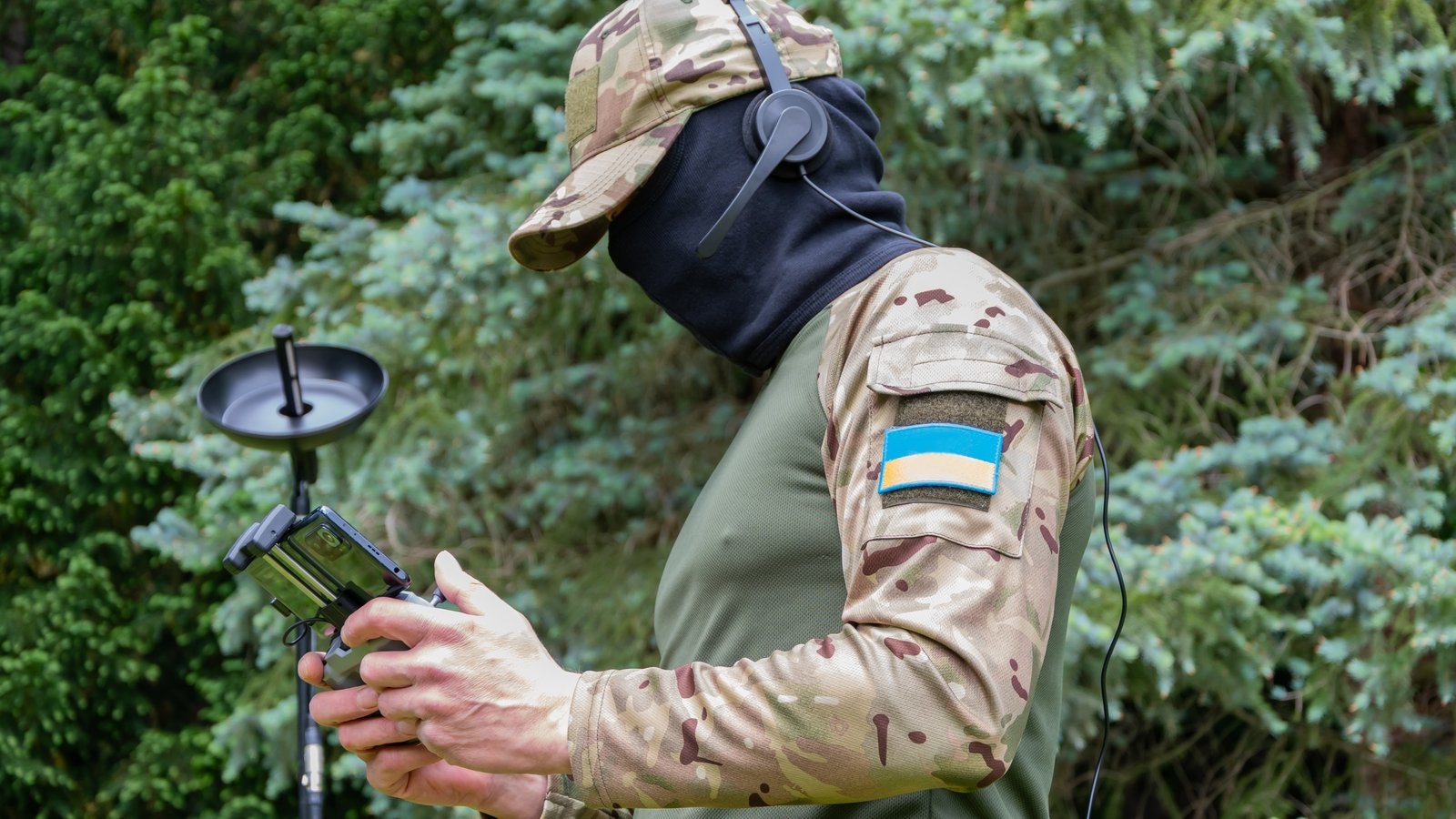
According to Reuters, Kyiv says Russian troops are using a home-grown satellite communications system over Ukrainian territory. The report does not establish that Russia has reproduced Starlink's scale, coverage or reliability. That distinction matters. A satellite network is not simply a dish and a signal; it requires satellites, ground infrastructure, terminals, encryption, logistics and a software layer that can survive jamming and battlefield movement.
But scale is not the first threshold. A smaller network can still be useful if it connects selected command posts, drone teams or logistics nodes. In Ukraine, where units disperse to avoid artillery and drone strikes, even intermittent beyond-line-of-sight connectivity can be operationally valuable. It can keep a drone crew linked to targeting data, move orders around damaged terrestrial networks and provide a fallback when radio frequencies are jammed.
That is why the phrase “Russia's version of Starlink” should be read as a military warning, not a marketing claim. The question is not whether Moscow has built an equal competitor. The question is whether it has built something good enough to deny Ukraine an advantage it once assumed would remain asymmetric.
Commercial Space Is Now Part of Deterrence
Ukraine's dependence on Starlink exposed an uncomfortable fact for every NATO planner: a private company can provide a capability that looks strategic, while the final decision over access may sit outside the normal alliance chain of command. Reuters has separately reported that Starlink access and Starshield restrictions affecting Ukraine became entangled with political decisions in Washington. The lesson travelled quickly to Moscow.
For Russia, the attraction of a domestic system is obvious. It reduces exposure to a US-controlled service, complicates Ukrainian targeting calculations and gives the Kremlin another instrument for electronic warfare. It also creates leverage over Russian forces themselves. A network designed for military use can be built around national security requirements, including authentication, traffic prioritisation and resistance to foreign interference.
None of this means satellite internet makes Russian forces invulnerable. Satellite terminals emit, can be geolocated and can be attacked through cyber, electronic or physical means. A resilient network also needs redundancy. If Russia concentrates too much command traffic in one architecture, Ukraine will have a valuable target set.
Still, the strategic direction is clear. The commercial space sector is no longer sitting outside defence planning. Its satellites, ground stations and software are becoming infrastructure that adversaries will map, disrupt and replicate. The old distinction between civilian connectivity and military communications has collapsed somewhere between the drone operator and the artillery battery.
Why NATO Should Care
NATO's counter-drone marketplace, launched this week to speed access to defence technologies, shows that the alliance understands how quickly battlefield innovation is moving. But a procurement marketplace is not the same thing as assured communications. The alliance can buy more drones and jammers; it still needs networks that work when a commercial provider changes policy, a ground station is hit or an adversary begins spoofing signals.
Europe's problem is especially sharp. European governments have relied on American space capacity while promising greater strategic autonomy, a phrase that often means little until a service is interrupted. Europe does have industrial assets and emerging constellation projects, but it lacks a single military communications architecture with the political authority, funding and operational integration to replace US systems overnight.
That gap will matter beyond Ukraine. Russia's effort is a signal to NATO that future conflicts will contest access to orbit and the networks below it from the opening hours. A government that can lose connectivity may lose situational awareness; a unit that loses situational awareness may lose the fight before its heavier weapons arrive.
The Race Is About Dependence
It is tempting to describe this as a technology race between Elon Musk and Vladimir Putin. That is too neat. Russia's immediate challenge is to make its network reliable enough for military use. Ukraine's challenge is to maintain access to multiple systems without becoming hostage to one provider. NATO's challenge is harder: it must turn commercial capacity into an alliance capability without pretending that private firms are interchangeable with governments.
The next indicators are practical. Watch whether Russia expands the number of terminals in frontline units, whether Ukrainian forces report new disruptions or geolocation risks, and whether European states commit money to sovereign satellite communications rather than another round of policy language. Those signals will tell us whether this is a working military adaptation or simply an official Russian aspiration.
My judgement is that the adaptation is real even if the advertised Russian capability is exaggerated. Moscow has understood what many Western governments preferred to ignore: connectivity is combat power, and whoever controls the switch can influence the battlefield. NATO's real vulnerability is not that Russia may build a better Starlink. It is that Europe may enter its next war still renting the one it needs.
Sources
- Reuters, November 6, 2026 — Russia using own version of Starlink for military communications over Ukraine, Kyiv says.
- Reuters, November 6, 2026 — Russia must swiftly expand its answer to Starlink, Security Council says.
- Atlantic Council, October 15, 2026 — Russia's Starlink substitute poses a security threat far beyond Ukraine.
Russian forces are utilizing a domestically developed satellite communications system for military operations over Ukraine as of November 6, 2026. This development follows a call from Russia's Security Council for rapid expansion of their satellite capabilities, recognizing the strategic importance of such technology in modern warfare. The integration of commercial satellite systems into military command structures poses new challenges for Ukraine and NATO.
- Russian forces are using a home-grown satellite communications system over Ukraine.
- Russia's Security Council called for a rapid expansion of this system.
- The operational lesson from the Ukraine war is that commercial communications can be integrated into military command systems quickly.