
Europe 2026 needs Skyranger 30 and clear rules against drone attacks
 Dr. Klaus Weber
Europe 2026 Needs Skyranger 30 and Clear Rules Against Drone Attacks
The European debate on drone defense begins at a remarkable point. According to a Reuters report from October 21, several European states are considering granting energy providers and operators of critical infrastructure greater powers to shoot down or neutralize suspicious drones. On the same day, Reuters reported a significant Russian sabotage threat to Germany. This is not a typical procurement issue. It is an attempt to transform a military task into a civilian legal and responsibility problem.
The New Front Lies Over Power Plants and Ports
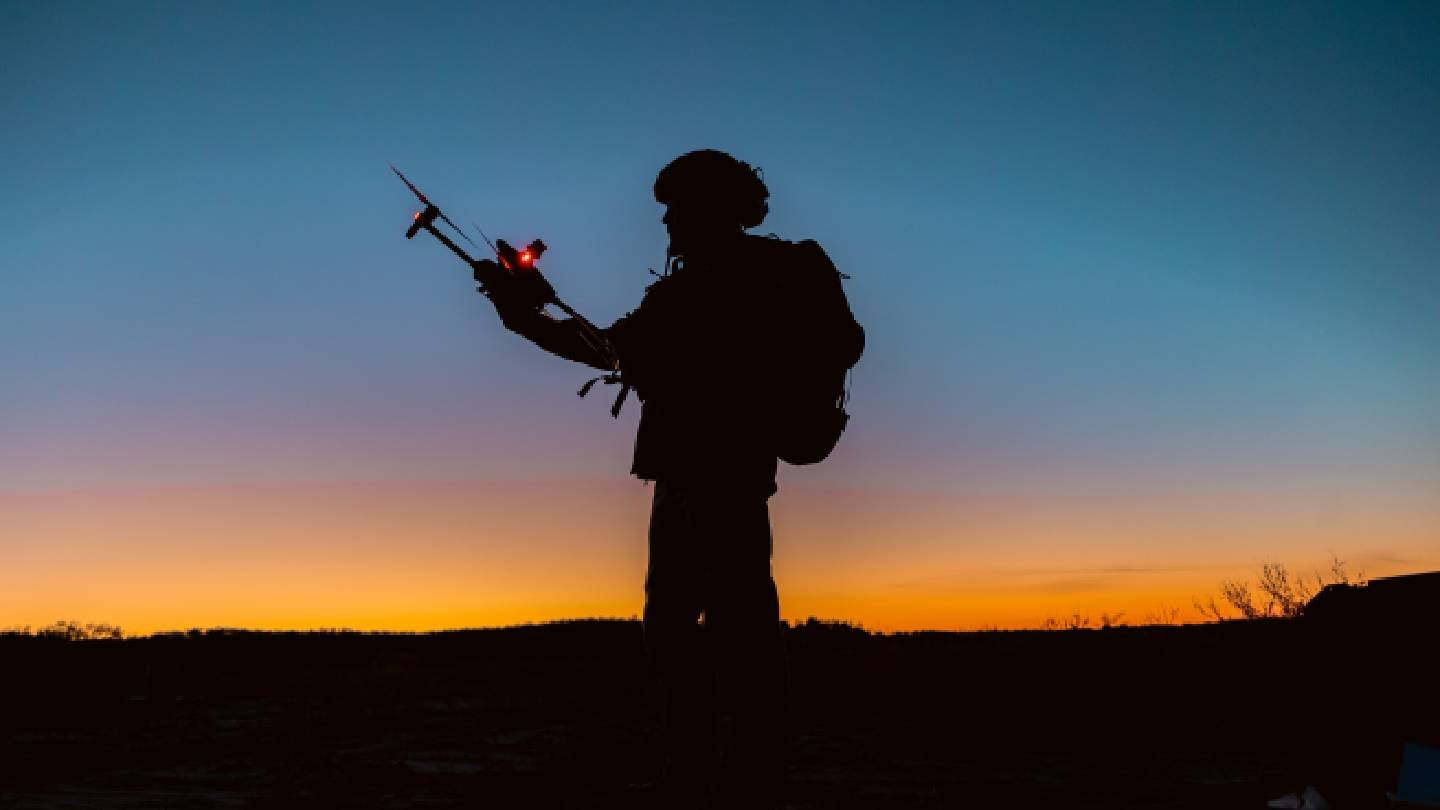
Russia does not need to prepare for a classic invasion to test Europe's vulnerability. A small drone over a substation, an LNG terminal, or a military transshipment point can already force a disproportionate response. NATO has also increased its presence in the Black Sea following Russian attacks, as reported by the Guardian on October 20. This shifts the security situation from the front line into a gray area where civilian operators, police, intelligence services, and armed forces must act simultaneously.
The political impulse is understandable. An energy company knows its terrain, its technical facilities, and the local risks better than a distant headquarters. But recognizing is not combating. Anyone who disrupts a drone takes responsibility for navigation, debris, electronic side effects, and potential civilian damage. Therefore, a private operator needs not only a device but also a legally secure chain of command.
Skyranger 30 is a Capability, Not a Legal Basis
In the European discussion, systems like the German Skyranger 30 are often referenced. The turret combines a 30mm cannon with sensors and can be used against small unmanned systems. Its significance lies less in a single technical specification than in the return to tiered close-range defense. Against cheap drones, an expensive surface-to-air missile like IRIS-T SLM or Patriot is often economically unfeasible. However, a cannon system only addresses the last step. Before that come sensor fusion, identification, electronic warfare, and the decision of who is allowed to shoot.
This is precisely where Europe's institutional weakness lies. Member states purchase sensors and effectors nationally, share data incompletely, and define the powers of private security services differently. A drone defense network across Europe does not automatically emerge from increased spending. It only arises when an operator in Denmark, Germany, or Poland applies the same minimum standards for air situation awareness, evidence preservation, and escalation rules.
The Economic Incentive is Misplaced
The current debate also risks creating the wrong market. If a power plant operator only has to invest when a drone has already been spotted over the site, they will buy point solutions: a camera, a jammer, perhaps a portable defense system. This is not sufficient for national security. Critical infrastructure requires connected, redundant, and round-the-clock operational capabilities. These are expensive, but their value becomes apparent precisely when no single attack can be clearly attributed.
The EU can achieve more here with common standards and procurement programs than with another political declaration. Funding must include sensors, data lines, training, and maintenance. Otherwise, European drone defense will become a collection of national demonstrators. The experience with PESCO and many European armaments projects is sobering: common logos do not yet create common readiness.
Black Sea and Home Front Go Together
NATO's reinforcement in the Black Sea shows the external dimension. Ports, sea routes, and underwater infrastructure are militarily relevant, but their operators often remain civilian companies. A ship reporting a suspicious drone needs a situational picture from the coast guard, the navy, and allies. If these systems are not interoperable, NATO's response remains slow, even though individual states possess modern technology.
The same problem applies to Germany. The Bundeswehr cannot comprehensively guard civilian infrastructure, and private operators cannot simply be declared substitute armed forces. A tiered model would be required: civilian operators recognize and report; state authorities assess and authorize; military or specially mandated forces neutralize as soon as the threshold for threat defense is crossed. This separation sounds bureaucratic. However, it is the prerequisite for ensuring that a mistake does not escalate into an international crisis.
Europe's Real Gap is Governance
Reuters' report on additional powers for providers is therefore more important than the next announcement of a defense system. It makes clear that Europe must expand its security architecture without privatizing accountability. The state may provide companies with the means to defend against threats. However, it must not silently leave the political decision of when an unidentified flying object becomes a hostile attack to them.
The strategic conclusion is uncomfortable. Europe needs the Skyranger 30, electronic warfare, and better sensors. However, it urgently needs a common legal regime, reliable data connections, and exercises with operators of critical infrastructure. More devices without this order only increase the number of actors who may act inconsistently in a crisis.
Europe cannot permanently combat drones with exemptions. It must decide whether its critical infrastructure is part of defense — and then take responsibility for it.
More powers for providers can be a necessary step. However, they are no substitute for state leadership. The European paradox is thus: The stronger the threat penetrates the civilian space, the more important a public, not private, decision-making chain becomes.
Sources
- Reuters, October 21, 2026, report on additional powers for energy providers and operators of critical infrastructure for drone defense.
- Reuters, October 21, 2026, report on the Bundeswehr's warning of a significant Russian sabotage threat.
- The Guardian, October 20, 2026, report on the increased NATO presence in the Black Sea.
- NATO, news portal, accessed October 21, 2026.
European states are considering granting energy providers the authority to neutralize suspicious drones amid rising threats, particularly from Russia. The Skyranger 30 system is emphasized as a critical capability for this defense. NATO has also increased its presence in the Black Sea, reflecting heightened security concerns. A unified legal framework for drone defense is deemed essential to ensure effective response and governance.
- European states are considering new powers for energy providers to neutralize drones.
- There is a significant Russian sabotage threat to Germany.
- NATO has increased its presence in the Black Sea region.
- The Skyranger 30 system is highlighted as a necessary capability for drone defense.
- A unified legal framework for drone defense is urgently needed.