
European Security Council 2026 — Von der Leyen's new institution threatens to weaken NATO
 S.W
S.WEuropean Security Council 2026 — Von der Leyen's new institution threatens to weaken NATO
By Dr. Klaus Weber, European Defense and NATO Policy
A new council for an old problem
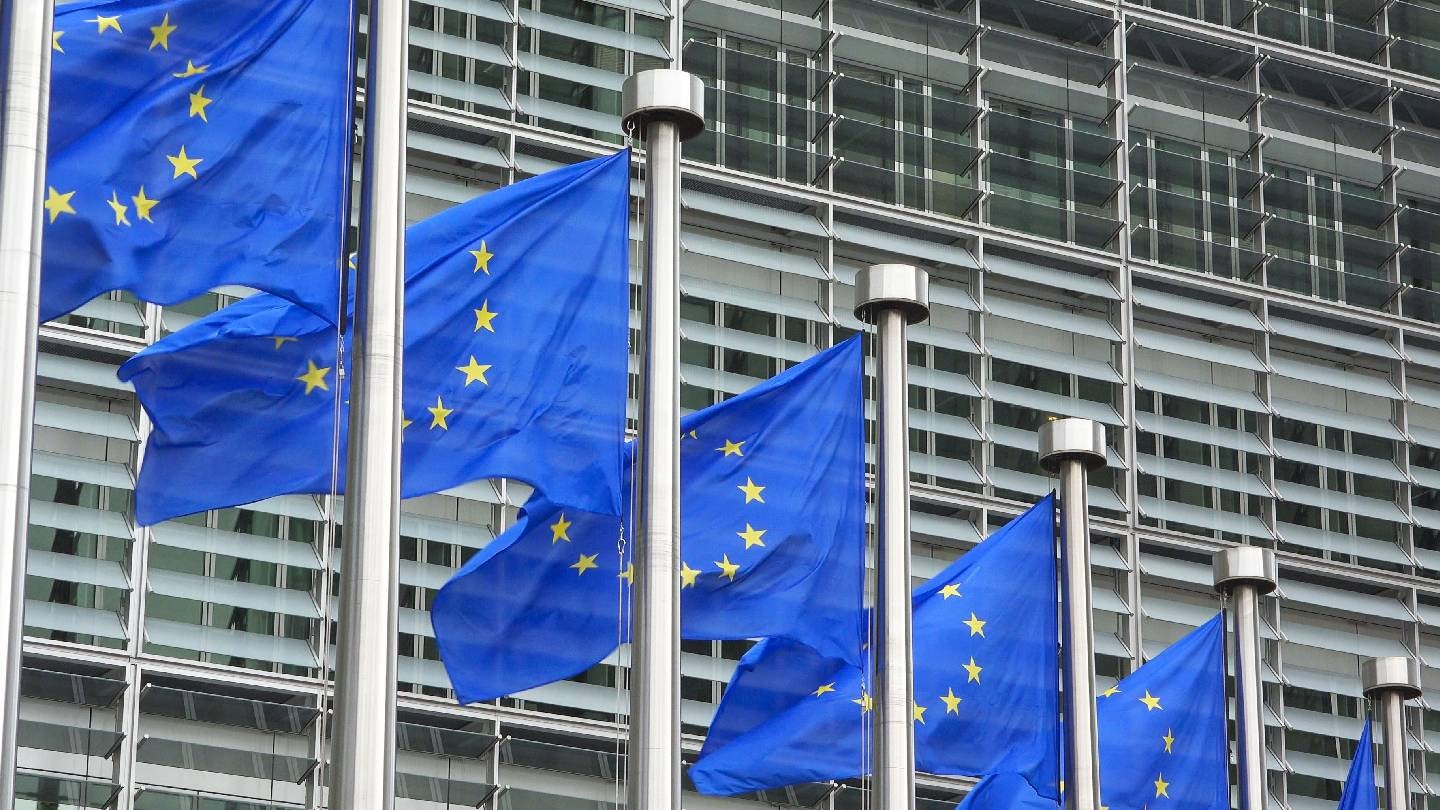
Ursula von der Leyen proposed a European Security Council in her State of the Union address on September 16, 2026, which could involve not only EU member states but also Ukraine and Canada. At the same time, she announced a European "playbook" against sabotage and hybrid attacks. The political message is clear: Europe should no longer wait for Washington to define every security crisis.
However, the institutional question is less clear. Europe already has the European Council, the Council for Foreign Affairs, the Political and Security Committees of the EU, NATO, and several formats of the coalition of the willing. Another table does not initially produce a single drone, no satellite, and no additional Patriot missile. This is precisely where the difference lies between political visibility and strategic capability.
The idea responds to real dangers
The proposal does not come from a vacuum. European intelligence services warn of a more determined Russian strategy towards NATO states; at the same time, sabotage, cyberattacks, disinformation, and attacks on critical infrastructure are increasing. NATO generals speak of the danger of miscalculations. The European security debate has shifted from whether hybrid attacks occur to how quickly governments can respond.
A small circle with regular consultations could have practical benefits here. Ukraine has operational experience with Russian drones, electronic warfare, and attacks on energy infrastructure. Canada has capabilities in Arctic, maritime, and intelligence security. Despite Brexit, the UK remains indispensable for European deterrence. A format that brings these actors together early would be more sensible than the current habit of forming a new ad-hoc group after each incident.
The NATO problem cannot be organized away
However, von der Leyen's proposal carries an institutional risk. If the Security Council is understood as a European substitute for American leadership, without Europe providing its own intelligence, air defense, strategic transport, and command capabilities, a dangerous illusion arises. A European decision is not the same as a European capability. NATO remains the only framework in which Article 5, integrated military planning, and American strategic resources come together.
The announced sabotage "playbook" must therefore be more than a collection of political guidelines. It needs common thresholds for attribution, secure communication channels, protection for critical undersea cables and energy facilities, as well as pre-agreed responses. Otherwise, it remains with national responsibilities, which in a serious case would be paralyzed by evidentiary issues and political considerations. Those who do not jointly recognize and respond to a hybrid attack have no deterrence, only a press release.
The real test is money in capabilities
The EU is simultaneously discussing a European Defense Union, higher defense spending, drone defense, military mobility, and joint procurement. This sounds comprehensive, but it is not yet a capability plan. For years, the number of European initiatives has been increasing faster than the number of deployable systems. PESCO has produced cooperation projects but no unified European command. The European Defense Fund promotes research but does not replace national procurement. SAFE can mobilize loans but does not automatically establish production lines.
Therefore, the central measure of the new council should not be the number of its summits. What matters are concrete deadlines: How many deployable counter-UAS systems will be jointly procured by 2027? Which states will provide intelligence and air defense for the protection of critical infrastructure? How many military transport corridors will function without national special permits? And who will bear responsibility in a crisis if the attack remains below the threshold of armed conflict?
Ukraine must not only be a symbolic partner
The inclusion of Ukraine would be politically strong but must not end in symbolic proximity. Kyiv should gain access to European procurement and training programs while its frontline data systematically flows into capability planning. The Ukrainian experience with cost-effective drones, electronic warfare, and decentralized repair is more valuable for European forces than many glossy doctrines. This requires industrial contracts and secure data connections, not just invitations to conferences.
At the same time, the EU must institutionally regulate its relations with the UK and NATO cleanly. A Security Council that only occasionally consults London and treats Washington as a problem rather than an alliance partner would worsen Europe's strategic situation. European sovereignty does not mean rhetorically replacing American capabilities. It means becoming capable in areas where Europe has so far deliberately remained dependent.
Conclusion
The European Security Council can be useful if it is designed as a crisis and implementation instrument: a small participant circle, clear responsibilities, NATO compatibility, and verifiable capability goals. As another symbolic forum, it would be counterproductive. Europe indeed needs more political control over its security. But control without means is merely a polite form of powerlessness. Therefore, the new council will not be measured by how European its name sounds, but by whether action can be taken within hours after the next sabotage incident.
Sources
- European Commission, State of the Union 2026, September 16, 2026
- Reuters, “EU’s von der Leyen backs European Security Council and playbook against sabotage”, September 2026
- Euractiv, “SOTEU — Here are von der Leyen’s big defence proposals”, September 2026
- NATO, “Resilience, civil preparedness and Article 3”, September 2026
Ursula von der Leyen proposed the establishment of a European Security Council on September 16, 2026, aimed at enhancing Europe's response to security threats, including increased Russian aggression. The proposal seeks to involve EU member states, Ukraine, and Canada, emphasizing the need for improved military capabilities and cooperation. The report warns that without concrete actions, the initiative may merely serve as a symbolic gesture rather than a functional military strategy.
- Ursula von der Leyen proposed a European Security Council on September 16, 2026.
- The proposal includes participation from EU member states, Ukraine, and Canada.
- European intelligence warns of increased Russian aggression and hybrid threats.
- The report emphasizes the need for European military capabilities and cooperation.
- Ukraine's operational experience with drones and electronic warfare is highlighted as valuable.