
Expert: Russia’s Arena tank defense wasn’t the failure it seemed
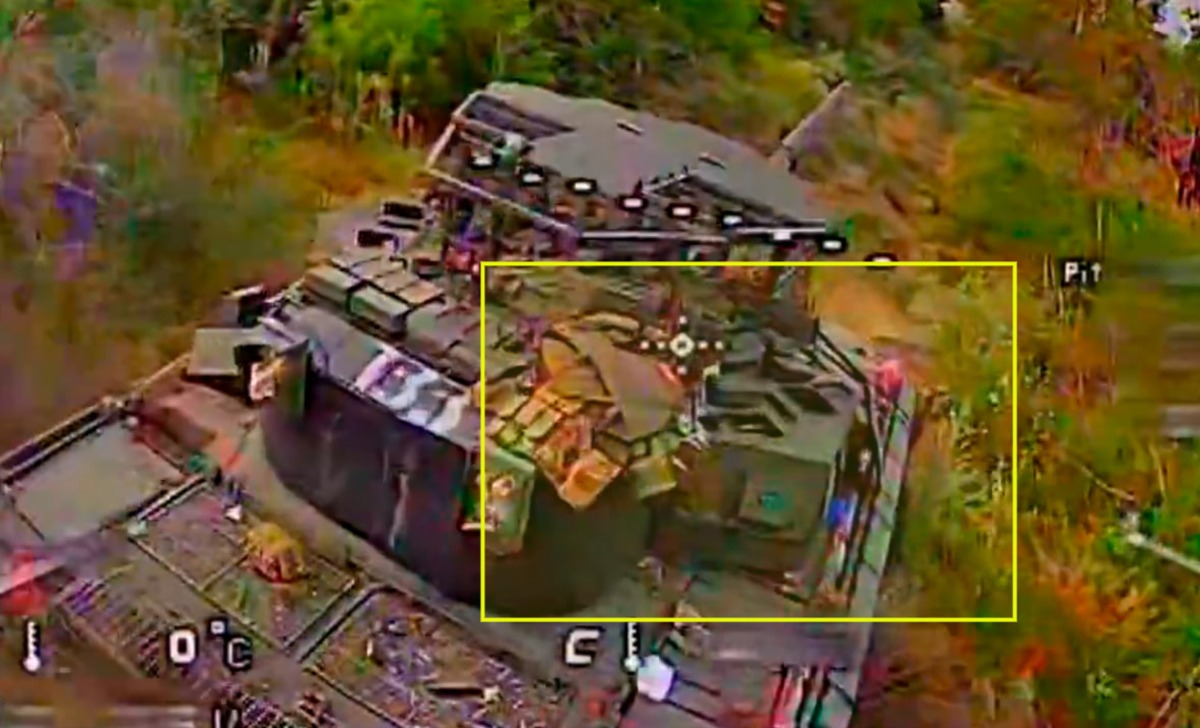
A Russian tank that Ukrainian and Western observers had already written off as another failed experiment in anti-drone armor may actually have done exactly what it was built to do, just not enough of it.
New battlefield testimony from a combat drone specialist who spoke directly with the Ukrainian unit involved in the fight suggests Russia’s upgraded Arena active protection system, a hard-kill defense mechanism that automatically detects and shoots down incoming threats before they hit a tank, worked as designed against a wave of Ukrainian first-person-view drones, destroying seven of them before the vehicle was finally knocked out.
The tank in question was a T-72B3A, a modernized version of Russia’s long-serving T-72 main battle tank fitted with the Arena active protection system, known in Russian military terminology as a KAZ, short for Kompleks Aktivnoy Zashchity, or active protection complex. The system works by using radar to detect an incoming projectile, whether an anti-tank missile, a rocket-propelled grenade or, in its newly upgraded form, a small first-person-view drone, the same cheap, remotely piloted aircraft that pilots fly directly into targets using a live video feed. Once the radar spots a threat, Arena automatically fires a small explosive countermeasure to intercept and destroy it in midair before it reaches the tank’s armor.
Dmytro Putiata, a combat drone warfare specialist, said he and Rob Lee, a senior fellow at the Foreign Policy Research Institute who has become a widely cited analyst of the war in Ukraine, spoke directly with one of the Ukrainian units that took part in the engagement to determine whether the system actually worked.
“Rob Lee and I had a conversation with one of the units that took part in that operation and saw whether that system effectively working or not. And, unfortunately, it works. At one tank that system destroyed 7 FPV drones. In general it took from 15 to 20 FPV drones to destroy a tank (there were 7 of them),” said Putiata.
That account complicates a narrative that spread quickly through defense media and open-source military accounts in late July, when footage released by the Omega Special Purpose Center, a unit of Ukraine’s National Guard, appeared to show a T-72B3A tank taking a direct FPV drone hit to the rear without any visible response from its Arena system. Outlets including Militarnyi and Defence Blog reported the incident as the first publicly documented failure of Russia’s upgraded anti-drone protection, and the story circulated widely as evidence that the system’s radar could not reliably distinguish small, slow-moving drones from other objects.
Andrei Tarasenko, an armored vehicle analyst, offered a more detailed technical read of the same underlying footage, which was originally compiled and released by Ukraine’s Security Service. Tarasenko noted that the video also showed a Russian T-72B3M with only its standard factory-installed anti-drone cage, offering essentially no protection, and a T-90M with a improvised metal cage nicknamed a hedgehog and an otherwise bare hull. What Tarasenko found most notable, however, was the footage of the T-72B3A carrying the Arena system, a vehicle identified by the number 133 painted on its hull, because the video appeared to show the tank’s countermeasures had already been used by the time the fatal drone strike landed. In other words, the tank’s active protection system had already fired its available interceptors at earlier threats, leaving it with an empty magazine when the drone that ultimately destroyed it arrived. Tarasenko also pointed to a structural limitation behind that shortfall, that expanding the current Arena system’s supply of countermeasures is not simply a matter of adding more rounds, because doing so would block the hatch over the tank’s engine and transmission compartment, a critical access point crews need for maintenance and repairs.
That technical detail lines up with a broader assessment attributed to Russian sources, who acknowledged that the current version of the upgraded Arena system would have been far more useful earlier in the war, sometime between 2023 and 2025, before Ukraine’s drone tactics evolved to the point of overwhelming a tank with a dozen or more FPV attacks in a single engagement. Those sources conceded that meaningfully increasing the number of interceptor rounds the system carries is unlikely given the physical size of the Arena unit and the limited space available on the tank’s exterior, a constraint that suggests Russian engineers face a genuine design ceiling rather than a simple fix.
Taken together, the emerging picture is more complicated than either the initial “system failed” headlines or Russian state media’s promotional claims about Arena’s effectiveness would suggest. The tank’s active protection system appears to have functioned exactly as engineered, intercepting drone after drone in real combat conditions, but Ukrainian forces adapted by simply sending more drones than the system could physically stop, a tactic that has defined much of the drone war on both sides since 2023. Seven intercepted threats out of what analysts estimate is typically fifteen to twenty drones needed to kill a modern tank is a real technical achievement for Russian engineers, yet it changes nothing about the tank crew’s fate once the ammunition ran out.
Content preview only. Full article available at source. View Full Article
The Arena active protection system on a T-72B3A tank successfully intercepted 7 FPV drones during a recent engagement in Ukraine before the tank was ultimately destroyed by a drone strike. This incident highlights the system's operational capabilities and the evolving tactics of Ukrainian forces, which involved overwhelming the tank with multiple drone attacks. Despite initial reports of failure, the Arena system functioned as designed but was unable to cope with the volume of threats.
- The Arena system destroyed 7 FPV drones before the tank was hit.
- The T-72B3A tank was equipped with the Arena active protection system.
- The system's effectiveness was questioned after a drone strike was filmed.
- The tank's countermeasures were depleted before the fatal drone strike.
- Russian sources acknowledged limitations in the Arena system's design.