
F-35, MQ-9, and Destroyers Show Europe's NATO Gap Without US Reserves in 2026
 Dr. Klaus Weber
F-35, MQ-9, and Destroyers Highlight Europe's NATO Gap Without US Reserves in 2026
One third fewer American fighter jets for NATO crisis planning is not a technical footnote. It is the moment when the European debate on defense spending is forced from abstract percentages to a concrete capability list. On June 3, US General Alexus Grynkewich, Supreme Allied Commander Europe and head of US forces in Europe, stated that European allies and Canada must urgently contribute more manned and unmanned aircraft as well as ships to NATO defense plans. This sounds administrative. In fact, it is the first public glimpse into a redistribution that Washington had already announced in May as part of the NATO Force Model.
The Force Model Shock
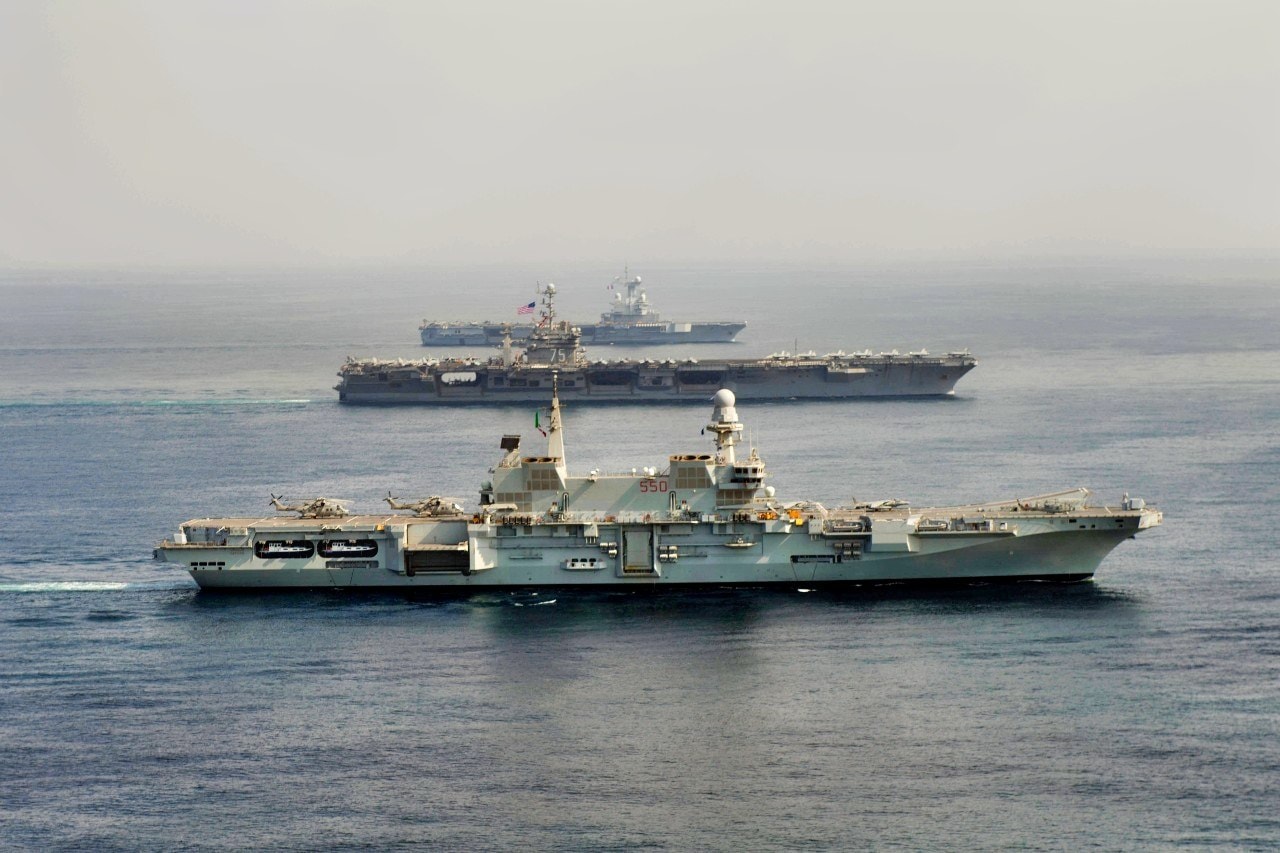
The NATO Force Model is not a press formula, but the list of those forces that should be available for regional defense plans in case of a crisis. That is precisely why the American decision is so consequential. Reuters reported on June 3 that Washington is initially reducing where allies, from the perspective of NATO headquarters, already possess sufficient capabilities or are expected to soon: aircraft, drones, and naval forces. A NATO spokesperson emphasized that no defense gaps would arise; nations simply need to assign existing capabilities to NATO. This phrasing is precise and simultaneously revealing. Between "possessing" and "committing firmly to NATO" often lies a political chasm in Europe.
The Spiegel numbers, which Reuters picked up, show the operational sharpness: The number of American fighter jets in the NATO crisis reserve is expected to decrease by about one third; Washington will contribute fewer destroyers and no submarines to this pool; Europe must provide its own reconnaissance drones, while armed US models will be significantly reduced. This is not a complete withdrawal. It is something institutionally more complex: a partial decoupling within existing alliance structures. Article 5 remains, nuclear deterrence remains, but the conventional toolbox is being redistributed.
Why More Money Does Not Create Air Power
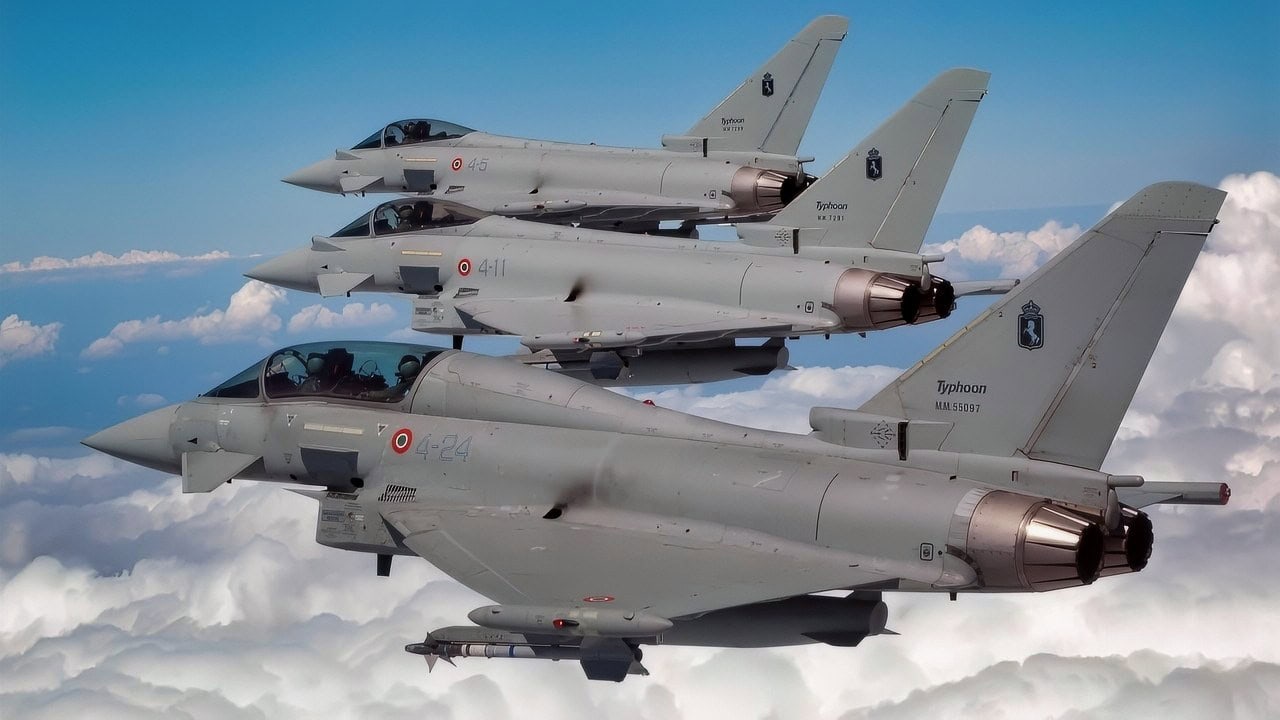
NATO can rightly point to increasing expenditures. European allies and Canada raised their defense spending from 1.4 percent of combined GDP in 2014 to 2.3 percent by 2025; in absolute terms, that amounted to more than 574 billion US dollars at 2021 prices. Since the Hague Summit in 2025, the new 5 percent commitment applies until 2035, with 3.5 percent for core defense and 1.5 percent for security-related infrastructure, industry, and resilience. However, the Force Model debate makes visible what percentage targets obscure: One billion euros in national personnel costs does not replace an MQ-9 reconnaissance orbit, a tanker, an electronic reconnaissance aircraft, or an operational destroyer.
The IISS report Defending Europe Without the United States calculated in 2025 what kind of American reinforcement would be relevant in a major European NATO war. For the Air Force, it mentioned 20 to 30 tactical fighter squadrons, or about 250 to 350 aircraft, along with bombers, early warning aircraft, SIGINT platforms, and UAV orbits. For the Navy, the open estimate included, among other things, ten nuclear attack submarines, two aircraft carriers, 26 larger surface combatants, and several amphibious ships. One does not have to read these numbers as precise operational planning. Their political significance is clear enough: Europe is expected not only to report more tank brigades but also to replace enablers that it has never built up in sufficient numbers.
European Fragmentation Becomes a Military Metric
Europe's problem is not that it lacks aircraft. Germany, Italy, the Netherlands, Norway, Denmark, Belgium, and Poland are procuring F-35s; the UK, Italy, Germany, and Spain operate Eurofighters; France has Rafales and its own nuclear air component. The problem is availability, standardization, armament, maintenance depth, and political assignment. An F-35A in national fleet statistics is not yet a NATO-available sortie in a Baltic air war. A destroyer in the national fleet plan is not yet a permanently available air defense contribution in the North Sea, Baltic Sea, and North Atlantic simultaneously.
This distinction is uncomfortable because it blocks Europe's favorite escape route: procurement as a substitute for organization. FCAS, GCAP, F-35 follow-on purchases, Eurofighter tranche, drone initiatives, Maritime Patrol Aircraft, new frigates, corvettes, and submarines can all be meaningful. But if they are planned nationally side by side, no European reserve is created, but rather a sum of national exceptions. Washington is now demanding exactly the opposite: not just money, but reliably assigned forces.
Canada Is Not a Side Show
That Grynkewich explicitly mentioned Canada alongside Europe is important. The NATO gap is not just continental. It affects the North Atlantic, the Arctic, sea routes, reinforcement transports, and maritime surveillance. An alliance that plans for fewer American destroyers, no American submarines in the crisis pool, and fewer armed drones must reassess the connection between Norfolk, the North Sea, the Baltic Sea, and the High North. This is strategically central for Canada, but also for European states. Without secured maritime lines of communication, any discussion about Baltic forward defense is incomplete.
Here the weakness of the European EU-NATO debate becomes apparent. Brussels likes to talk about industrial sovereignty; NATO talks about Capability Targets. Both must be brought together, but not rhetorically. If European shipyards build frigates that remain nationally bound, it helps the European industry, but not automatically the NATO Force Model. If EU instruments finance drone production but do not create a common operational and data architecture, industrial activity arises without operational depth. This is the classic European mistake: input is counted, output is assumed.
The Political Lesson Before Ankara
The NATO summit in Ankara in July 2026 will therefore live less on new percentage promises than on the question of whether the allies will accept and close concrete gaps. Which European states will actually provide additional air defense capabilities under NATO planning? Who will deliver reconnaissance drones with personnel, data links, and evaluation cells? Which navies will take on North Atlantic and Baltic Sea tasks when American destroyers and submarines are tied up elsewhere? And who will pay for the munitions and maintenance reserves, without which any fleet remains just a political backdrop?
The real turning point is not that Washington is asking Europe to pay. That has been known for decades. What is new is that Washington is beginning to remove the American replacement function from the NATO tables.
For Germany, this development is particularly uncomfortable. Berlin cannot simultaneously welcome strategic autonomy, quietly plan for American enablers, and continue Bundeswehr procurement at the pace of administrative risk avoidance. The special fund has covered many gaps but has not eliminated institutional slowness. If American contributions of fighter jets, drones, and naval forces truly decrease, this slowness will no longer appear as an internal political problem but as an alliance risk.
In the end, a European paradox remains. The US is not completely withdrawing from NATO and remains nuclear irreplaceable. Precisely for this reason, the conventional pressure on Europe is greater, not less. Those who want to maintain the American presence must organize less American routine dependency. Those who want European autonomy must stop confusing autonomy with national procurement. More money is necessary. But only when F-35s, MQ-9s, destroyers, and submarines are planned as binding alliance capabilities will spending translate into defense.
Sources
- Reuters via Military Times, June 3, 2026, US tells Europe, Canada to boost NATO air and naval forces.
- Defense News and Reuters, May 19, 2026, US plans to shrink forces available to NATO during crises.
- NATO, Defence expenditures and NATO’s 5% commitment, 2026.
- IISS, Defending Europe Without the United States, May 2025.
The U.S. Armed Forces announced a reduction of approximately one-third in the number of American fighter jets available for NATO crisis planning, urging European allies to enhance their own military capabilities. This shift, highlighted by U.S. General Alexus Grynkewich, reflects a broader reassessment of NATO's defense posture, particularly in the North Atlantic and Baltic regions. The upcoming NATO summit in Ankara in July 2026 will address these capability gaps and the need for reliable military contributions from European nations and Canada.
- U.S. to reduce the number of fighter jets in NATO crisis reserve by about one-third.
- European allies are urged to provide more manned and unmanned aircraft and ships for NATO defense plans.
- The NATO Force Model indicates a shift in the distribution of conventional military capabilities within the alliance.
- Canada is explicitly mentioned as part of the NATO gap, affecting the North Atlantic and Arctic regions.
- The upcoming NATO summit in Ankara will focus on addressing specific military capability gaps among allies.