
Mali bans 125 cc motorcycles in 2026 — Bamako attempts to disrupt the mobility of JNIM
 S.W
S.WMali bans 125 cc motorcycles in 2026 — Bamako attempts to disrupt JNIM mobility
On the evening of June 3, in Bamako, the order was announced on national television. Motorcycles of 125 cc and above will no longer be allowed to circulate outside major urban centers in Mali. In the same move, the general staff defined 35 areas deemed of military interest, mostly forests in the center, south, and west, where civilians are no longer allowed to enter. For a capital still reeling from the attacks in April and the threat of a blockade from Jama'at Nusrat al-Islam wal-Muslimin (JNIM), this decision is less a policing measure than an operational admission.
The military government is not only trying to control a means of transport. It is attempting to cut the nerves of a mobile war that its adversaries have been waging for years with motorcycles, light pick-ups, a few heavy machine guns, local informants, and a very good understanding of the trails. On paper, banning large motorcycles seems logical. In practice, it is much more complicated.
A measure born after the humiliation of April
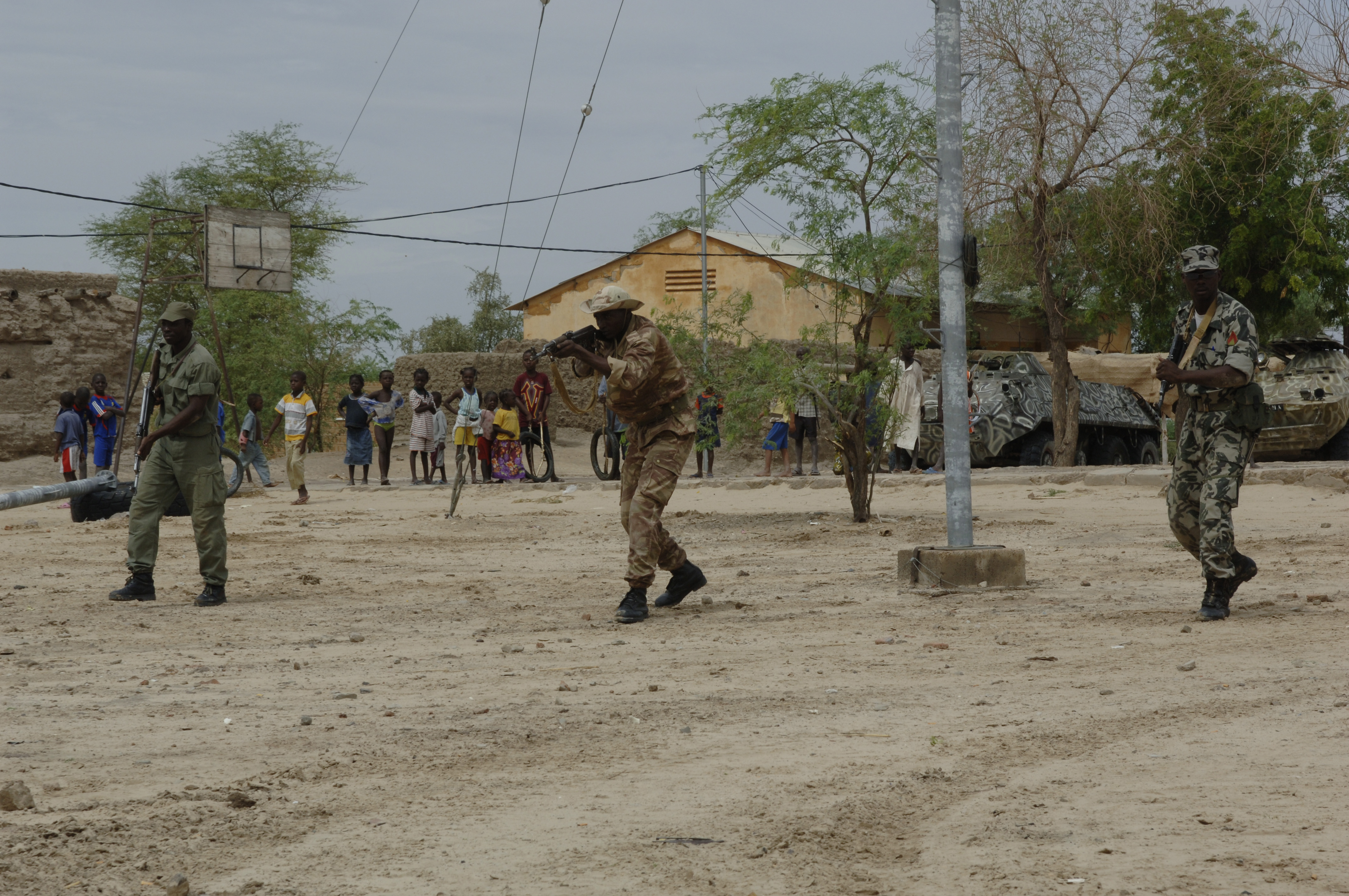
Associated Press reports that the decree targets the sale and use of large motorcycles outside the main urban areas, and prohibits civilians from accessing the 35 new military zones. According to the official wording, these areas can serve as refuges for armed terrorist groups and will therefore be systematically targeted by the Malian armed forces. It is a heavy statement. It transforms entire forested areas into spaces where civilian presence becomes suspect by default.
The timing explains the brutality of the response. Mali suffered its most serious offensive in over a decade at the end of April. JNIM and the Azawad Liberation Front (FLA) struck several sites, Kidal fell back into the hands of armed groups, and Defense Minister Sadio Camara was killed. On May 6, Al Jazeera and AFP also reported the attack on the Kenieroba prison, about 60 kilometers southwest of Bamako, as well as attacks on supply trucks destined for the capital. In this theater, the motorcycle is not a detail. It is the vehicle for reconnaissance, ambush, liaison, and sometimes propaganda.
The tactical problem is real
In the Sahel, an armored column sees far but moves slowly. A katiba on motorcycles can bypass a post, observe a road for two days, strike a fuel truck, and then disappear into a hamlet or dry forest before reinforcements arrive. From experience, it is precisely in this difference of pace that regular armies lose the initiative. The jihadists do not need to hold every village. They only need to make the routes too costly for the state and traders.
The Malian measure therefore targets a tactical center of gravity. The 125 cc and above are powerful enough to carry two men, a weapon, fuel, and sometimes a box of ammunition on poor trails. They allow operations between Sikasso, Bougouni, Koutiala, Mopti, or the outskirts of Bamako without relying on main roads. The restrictions announced by media citing AFP also include the importation, transit, marketing, sale, and even free distribution of these motorcycles and their accessories. Bamako wants to close the logistical chain, not just stop a few drivers.
But civilian friction will be immediate
The difficulty is that the same motorcycle is also used by farmers, merchants, health workers, and young people transporting bags of millet or jerrycans of gasoline. In regions where the state is already intermittent, removing this mobility tool can further isolate the villages that are claimed to be protected. The exceptions provided for Bamako, regional capitals, and certain urban localities do not address the issue of secondary trails. Yet that is where the war is fought.
The risk is not only economic. If Malian forces enforce the decree with an open hunting logic, the Peul, Tuareg, or Songhai civilians living near the forests declared military zones will be exposed to collective suspicion. Human rights organizations had already raised alarms after the April attacks regarding allegations of abductions and extrajudicial executions. It must be said cautiously: not all information is verified, and Bamako tightly controls access to the field. But the combination of a traffic ban and areas where the army announces systematic strikes creates an environment conducive to abuses.
The Burkinabè mirror
Mali is not inventing this method. Burkina Faso has already experimented, several times, with military interest zones and mobility restrictions in provinces where JNIM used forests and parks as operational depth. The result has been mixed. These zones facilitate airstrikes and simplify rules of engagement, but they also displace populations and sometimes inform armed groups about the army's priorities. When a forest is publicly designated as a target, the adversary can use it as bait or empty it before the units arrive.
In Mali, this logic arrives at a moment of strategic weakness. Reuters highlighted at the end of April that the setbacks suffered by Bamako threatened Russia's image as a security guarantor in the Sahel, while the Africa Corps has about 2,000 men in the country and Moscow has interests in gold, lithium, solar energy, and even a nuclear project. If the junta must ban motorcycles to protect the roads of Bamako, it is because the Russian-Malian partnership has not restored freedom of movement. For a regime that bases its legitimacy on regained sovereignty, the symbol is bad.
What JNIM will seek now
JNIM will likely test the seams of the decree rather than confront it head-on. One can expect more low-displacement motorcycles, nighttime transfers, the use of makeshift motorized bicycles, carts, requisitioned civilian vehicles, and pre-positioned caches near the routes. Armed groups are good at this economy of adaptation. They may let Malian forces control the entrances to certain cities, then strike further away, where control becomes administrative rather than physical.
The real question is therefore one of intelligence. A motorcycle ban without a reliable human network produces only checkpoints, fines, frustrations, and circumventions. A ban backed by credible village relays, patrols capable of holding the night, and strict discipline among the forces can hinder the katibas. Today, there is no evidence that Bamako still possesses this architecture in the most contested areas.
On the ground, a mobility measure does not win a war. It buys time. The question is what to do with that time.
The next indicator will be simple: the convoys to Bamako. If trucks start circulating again without heavy escort and without fires on the routes coming from Côte d'Ivoire and Senegal, the decree will have had a tactical effect. If attacks shift to rural markets, water points, and small garrisons, Bamako will have only shifted the pressure. In this second scenario, the 35 military zones will become less a barrier against JNIM than a map of the weaknesses of the Malian state.
Sources
- Associated Press, June 4, 2026, announcement of the ban on 125 cc motorcycles and creation of 35 military zones.
- AFP via Mwanzo TV, June 4, 2026, details on urban exceptions and the suspension of importation and sale.
- Al Jazeera and AFP, May 6, 2026, attack on Kenieroba prison and disruption of supplies to Bamako.
- Reuters, April 29, 2026, analysis of Malian setbacks and their implications for Russian presence.
Mali has implemented a ban on motorcycles of 125cc and above from operating outside major urban areas as of June 3, 2026, establishing 35 military zones off-limits to civilians. This decision follows significant attacks by the JNIM, aiming to disrupt their mobility and operational capabilities. The ban may exacerbate civilian isolation and raise concerns about human rights violations in the affected regions.
- Mali has banned motorcycles of 125cc and above from operating outside major urban centers.
- 35 military zones have been established where civilian access is prohibited.
- The ban is a response to recent attacks by the JNIM and aims to disrupt their mobility.
- The measure is seen as an operational acknowledgment of the challenges faced by the Malian government.
- The ban may lead to increased civilian isolation and potential human rights abuses.