
Farnborough 2026 with 1,600 exhibitors shows Europe's procurement problem despite record budgets
 Dr. Klaus Weber
Farnborough 2026 with 1,600 Exhibitors Shows Europe's Procurement Problem Despite Record Budgets
1,600 exhibitors, about half of them from the defense sector: The Farnborough Airshow, which opens on July 20, is less an aviation festival this year and more a stress test for Europe's security economy. Historically, the defense share of the fair was around 40 percent; now weapons, sensors, drones, AI software, and production capacities are taking center stage. This is not an atmospheric change but an institutional warning signal.
Reuters reported on July 17 via Defense News that the classic rivalry between Airbus and Boeing for commercial aircraft orders is losing significance at the fair. The reason is not a lack of interest in aircraft but a shift in strategic demand: The war in Ukraine is entering its fifth year, the situation in the Gulf remains unstable, and Western forces are rediscovering that deterrence is not about program names but about available ammunition, spare parts, and industrial endurance.
The Fair Shows Not Strength, but a Shift in Priorities
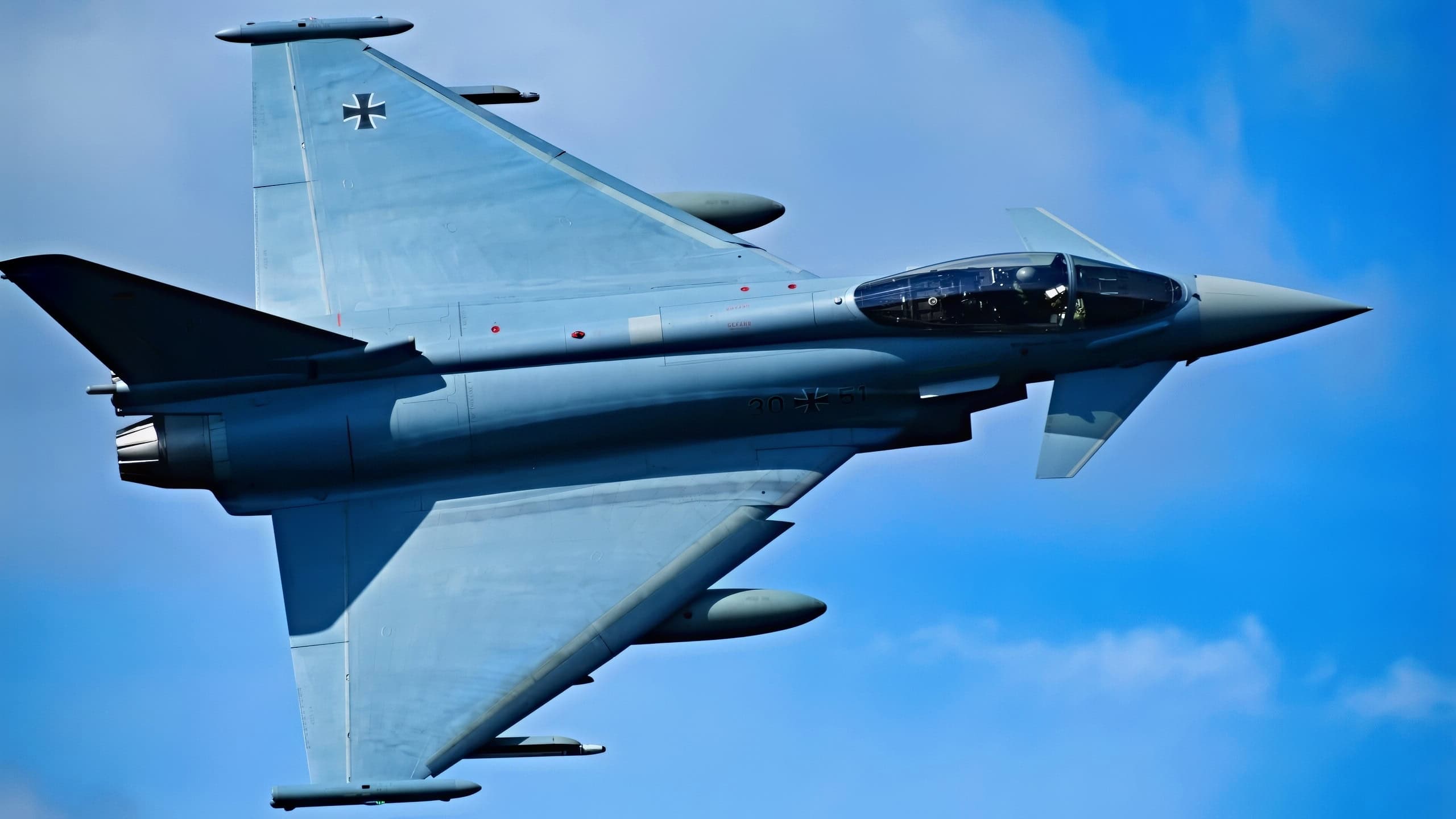
The Eurofighter and the F-35 will continue to fly at Farnborough. But the real debate is no longer taking place under the wings. It lies with the weapons hanging beneath them, with the data links transmitting target information, and with the supply chains that keep an air force operational after six months of intensive use. This is precisely where Europe's problem lies: It possesses sophisticated platforms but lacks the industrial depth to use these platforms politically independently in a long war.
The British Air Chief Marshal Harv Smyth described the security environment before the fair as more complex and volatile than it has been in decades. This formulation sounds dramatic but is analytically precise. Volatility does not reward the most elegant procurement document but the fastest adaptability. However, European procurement agencies are still focused on long development cycles, national work shares, and politically secured large programs. This suited the peace dividend. It fits poorly with a war in which drones, cruise missiles, and electronic countermeasures change their tactics within months.
NATO Figures Conceal the Second Question
NATO reported on July 7 that European allies and Canada have increased their core defense spending by nearly 20 percent in 2025 compared to 2024. For 2026, five allies are already expected to meet the new 3.5 percent guideline for core defense; 17 allies are also expected to meet the 1.5 percent guideline for defense and security-related investments. This is politically significant. But it only answers the first question: Is more money being provided?
The second question is more uncomfortable: Will this money translate into military capacity? Farnborough suggests that this translation does not happen automatically. Airbus and Boeing continue to struggle in the civilian sector with cast parts, forged parts, engines, and interiors. The same bottlenecks also affect military aviation programs, but there they are further exacerbated by secrecy, export controls, national special requests, and fragmented European demand. Those who order more in 2026 do not automatically receive more readiness in 2027.
The European defense problem is no longer primarily a lack of announcements. It is the slow transformation of budget decisions into available quantities.
Startups Accelerate Pace, but Not Statehood
The rise of Helsing is therefore more than just a financial news item. The Munich-based company raised $1.8 billion according to Defense News on July 13 and achieved a valuation of $18 billion. It is the largest funding round for a European defense startup. Helsing points to AI platforms, the HX-2 strike drone approach, combat software, and autonomous combat aircraft concepts. Shortly before, Quantum Systems had raised $1.2 billion; other European companies like Stark, ICEYE, and Harmattan AI also attracted large sums.
This is the dynamic part of the European picture. It shows that capital markets have understood what many ministries are still processing bureaucratically: Software, unmanned systems, and rapid iteration are becoming militarily central. But venture capital does not replace a procurement order. A startup can pre-finance risk; however, it cannot independently create ammunition stockpiling, export approvals, NATO standardization, or national operational doctrine. If public procurers continue to review in five-year cycles while technology matures in quarters, no innovation ecosystem will emerge, but rather a showcase economy.
Made in NATO vs. Buy European
Additionally, there is the industrial directional dispute. Mark Rutte advocates for a broad Made-in-NATO understanding that includes transatlantic production chains and large alliance deals. The EU, on the other hand, is pushing for Buy European through programs like SAFE and its industrial policy logic, focusing on European value creation and protection of its own defense base. Both positions are rational, but they address different problems.
Rutte addresses speed and alliance cohesion, even towards Washington. The EU addresses dependency and industrial sovereignty. The conflict arises because Europe wants both at the same time: to utilize American, British, Turkish, or Israeli capacities in the short term while building an independent European base in the long term. There is no clean mechanism for this institutionally. NATO plans military capabilities, the EU finances industrial policy, and member states buy nationally. Farnborough illustrates this tripartite division on a fairground.
The Real Test Begins After the Press Conferences
The coming days will bring orders, declarations of intent, and partnerships. Some of these will be useful. But for European security policy, the sum of the fair announcements matters less than whether contracts transition into series production. 300 commercial aircraft deals, 800 projected units, or 1,600 exhibitors are familiar metrics in the aviation industry. In defense, they are only relevant if they lead to magazines, maintenance capacities, trained personnel, and interoperable systems.
Europe has learned in the last two years to approve more money. It is now learning that money alone does not build a factory, stabilize a supply chain, or change a national procurement culture overnight. Farnborough 2026 is therefore not proof of Europe's new military strength. It is a more useful but uncomfortable picture: Europe has finally recognized where the market is heading, yet its institutions are still moving at the speed of the old peace order.
The paradox remains: Without higher spending, Europe would have no chance of closing the gap. With higher spending alone, it cannot close the gap either.
The Farnborough Airshow, opening on July 20, 2026, showcases 1,600 exhibitors, with a significant focus on defense procurement challenges in Europe. The event highlights a shift in strategic demand due to ongoing conflicts, particularly in Ukraine, as European allies increase defense spending. However, the report emphasizes that increased funding does not automatically translate into military capacity, revealing systemic issues in the European defense industry.
- Farnborough Airshow features 1,600 exhibitors, half from the defense sector.
- European allies and Canada are increasing defense spending by nearly 20% in 2025.
- The report indicates a shift in strategic demand due to ongoing conflicts, particularly in Ukraine.
- European procurement agencies are struggling with long development cycles and national interests.
- Startups in the defense sector are gaining funding but cannot replace state procurement processes.