

Summary and Key Points: Defense expert Kris Osborn evaluates the tactical evolution of China’s CH-7 stealth drone, officially unveiled at the Zhuhai Airshow.
-Designed by the China Aerospace Science and Technology Corporation (CASC), the CH-7 features a flying-wing configuration reminiscent of the Northrop Grumman X-47B.
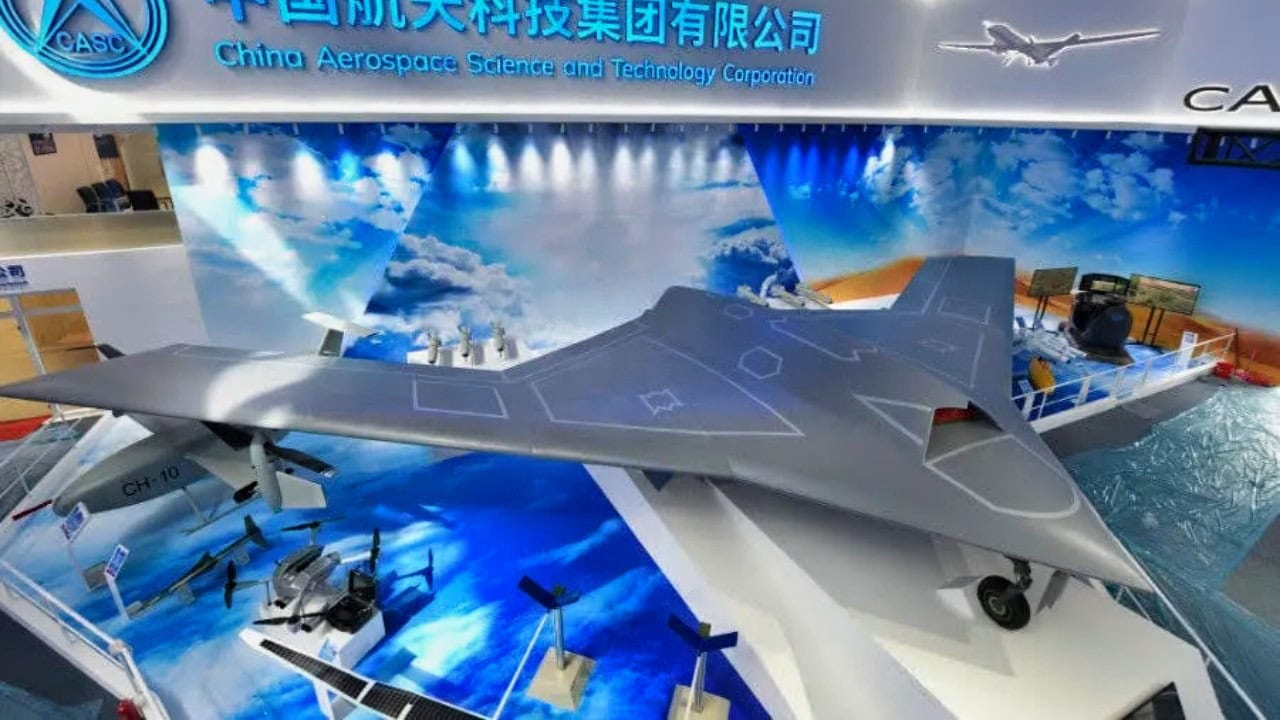
CH-7 Drone from China. Image Credit: X Screenshot.
-This report analyzes its role as a “forward-operating sensor” that penetrates contested airspace at Mach 0.5 to transmit targeting data to stand-off platforms.
-Osborn explores the PLAAF’s shift toward a “family of systems” architecture, concluding that the CH-7 represents a significant leap in China’s ability to conduct high-risk ISR and electronic warfare against peer adversaries.
The CH-7 Stealth Pivot: Why China Re-Engineered its Premier Drone to be the “Eyes” for the PLAAF
“Eyes for other combat units” were the words used by a Chinese government-backed newspaper to describe the concept of operation for its emerging CH-7 stealthy reconnaissance drone.
The paper says this platform will perform high-risk surveillance over dangerous enemy territory and send target data to bombers.
The Global Times adds that the CH-7 evolved from earlier designs of a larger, armed platform into a smaller, lighter, stealthy reconnaissance drone intended to penetrate contested airspace and identify high-value targets for armed platforms to engage from stand-off ranges.
This description of the drone raises interesting tactical questions. The Chinese paper said the CH-7 will identify targets for “bombers” or “other combat units.”
This would indicate that the People’s Liberation Army Air Force (PLAAF) may use its bomber force as an aerial command-and-control node capable of receiving real-time data from forward-operating stealthy drones.
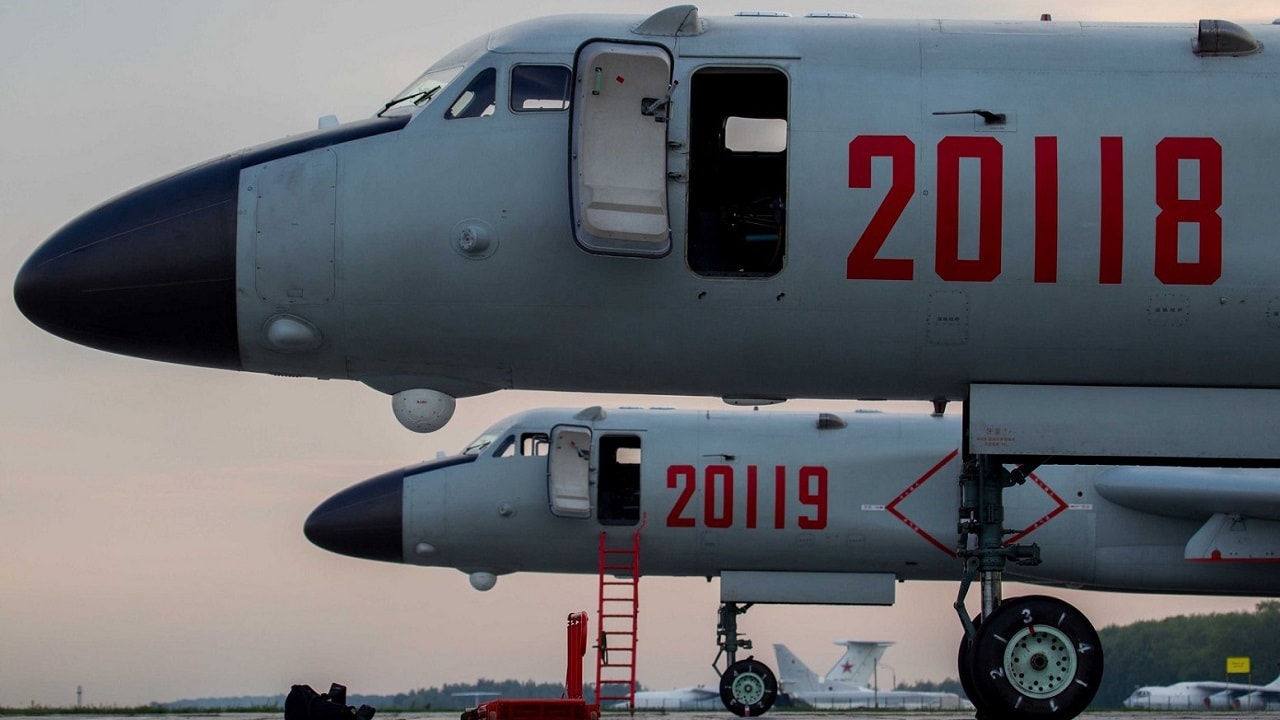
Image of Chinese JH-6 bombers on the ready. Image Credit: Creative Commons.
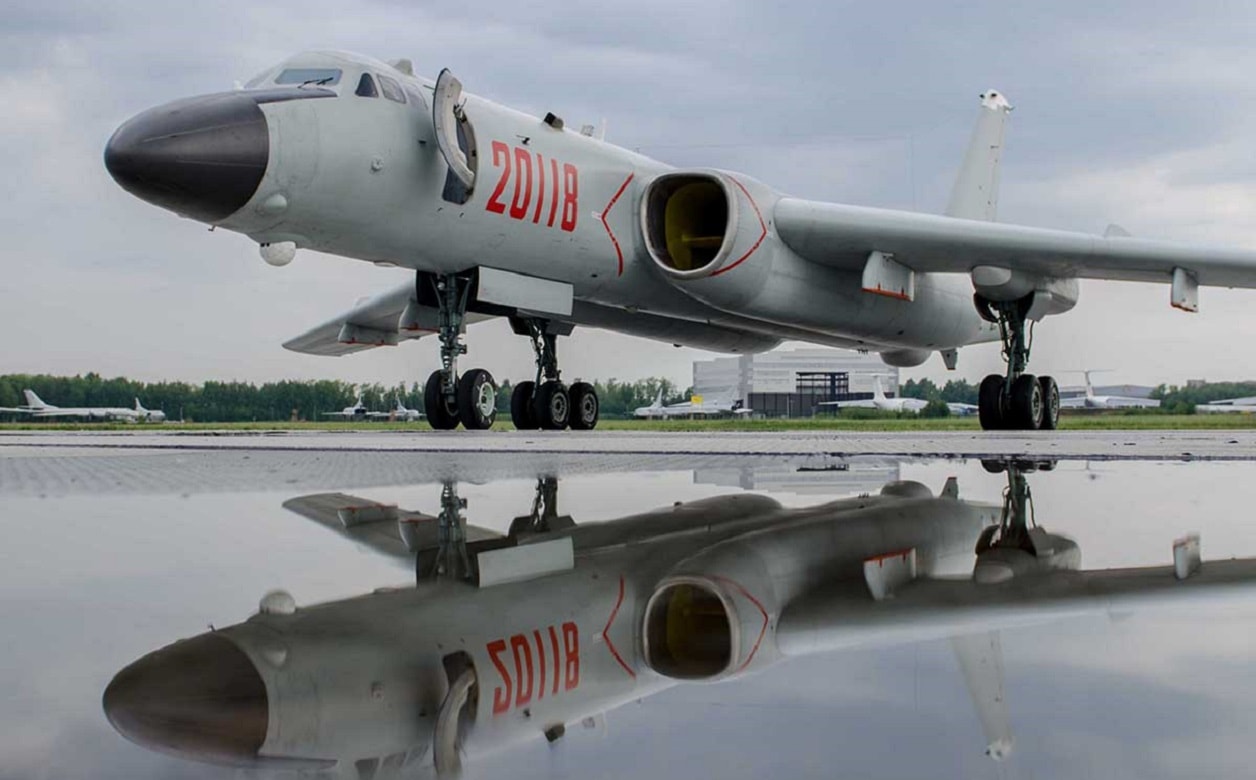
H-6 Bomber. Image Credit: Creative Commons.
As part of its description of this concept of operation, the paper said the bomber can attack from “stand-off” distances.
CH-7 vs RQ-180
The CH-7’s resemblance to stealthy U.S. drones is easily spotted and regularly discussed.
The Global Times acknowledged that China’s CH-7 is comparable to the US RQ-180, a supposed Northrop Grumman-built stealthy drone about which little is known.
In fact, the existence of an RQ-180 remains unconfirmed by the Pentagon, and there have not been public images released.
No public images exist, so it seems odd that the Chinese paper would reference the aircraft to highlight the stealth attributes of its CH-7.
The Global Times describes the CH-7 as “on the same level as the US-made RQ-180” regarding stealth—should the RQ-180 exist.
“Even if the CH-7 gets spotted by the enemy’s radar and gets shot down during the mission, it has already transmitted valuable information about the enemy back to the command system,” the Chinese paper states.
While the CH-7 may or may not rival or look like a U.S. drone whose very existence is unsure, the external configuration of the drone seems quite similar to Northrop’s X-47B stealthy demonstrator drone, which launched from an aircraft carrier years ago, before being canceled.
The X-47B was a pioneering platform that showed for the first time that a stealthy drone could be launched, operated, and landed on a U.S. Navy carrier.
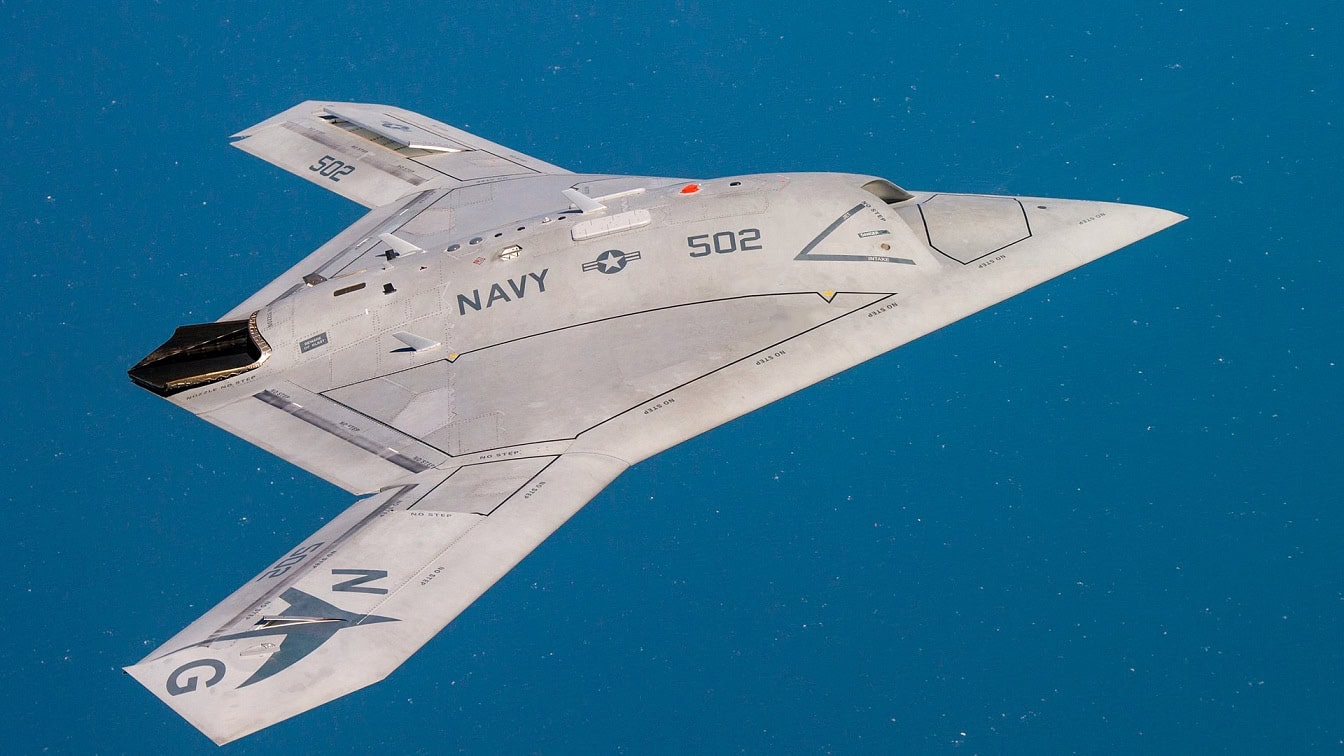
A unmanned X-47B operating over the Atlantic Test Range.
Sea-Launched CH-7
There is no mention of the CH-7 as an ocean-launched drone. If it were, it could go a long way in closing the gap with U.S. maritime stealth Intelligence, Surveillance, and Reconnaissance and power projection.
China publicly revealed its CH-7 in November 2024 at an airshow in Zhuhai, and the Chinese paper describes the drone as an early-warning mission and electronic warfare platform with a cruising speed of Mach .5 and a service ceiling of 16,000 meters.
The most significant question pertains to manned-unmanned teaming. In this category, the PLA again seems to copy U.S. military concepts of operation and technology.
The Pentagon’s concept for a sixth-generation stealth aircraft is to engineer a “family of systems” within which Combat Collaborative Aircraft drones support manned fighters.
The B-21 bomber may also serve as a flying command-and-control hub capable of operating drones.
About the Author: Kris Osborn
Kris Osborn is the President of Warrior Maven – Center for Military Modernization. Osborn previously served at the Pentagon as a highly qualified expert in the Office of the Assistant Secretary of the Army—Acquisition, Logistics & Technology. Osborn has also worked as an anchor and on-air military specialist at national TV networks. He has appeared as a guest military expert on Fox News, MSNBC, The Military Channel, and The History Channel. He also has a Masters Degree in Comparative Literature from Columbia University