
Five ballistic missiles and 417 drones — the Russian war tests the limits of Ukrainian warning
 Dmitri Volkov
Five ballistic missiles and 417 drones — the Russian war tests the limits of Ukrainian warning
Five Russian ballistic missiles reached the Kyiv area on October 12 before the warning system could alert residents. Almost simultaneously, Moscow announced an attack of 417 drones on the capital region. In these two numbers — 5 and 417 — we see not just another exchange of strikes, but a new problem of war: the speed of attack is now measured not by the number of munitions, but by the time it takes for intelligence information to turn into a decision.
The delay in warning has become a military factor in itself
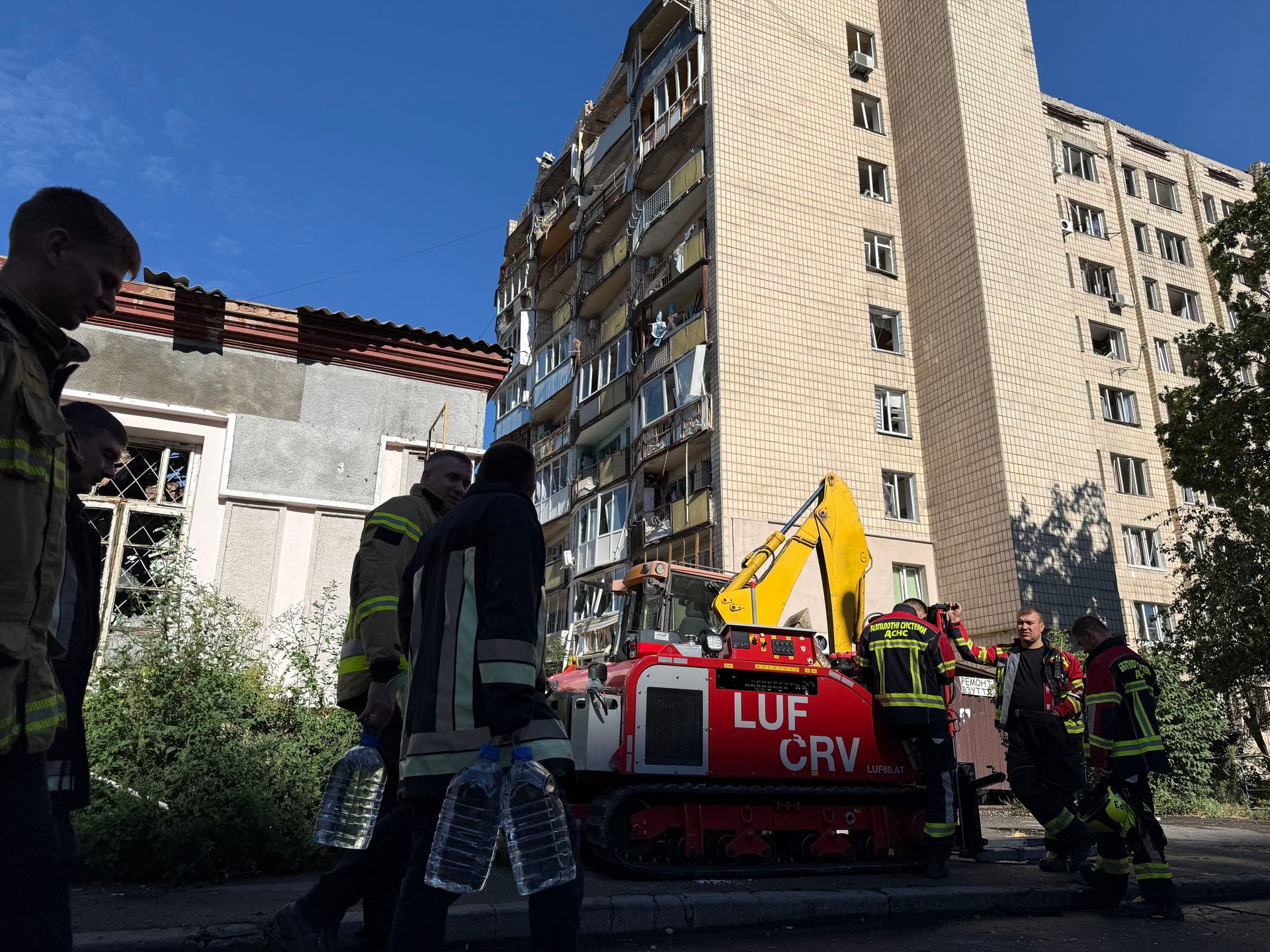
According to "Ukrainian Truth", the strike began around 22:10 on October 12. A representative of the Ukrainian Air Force, Yuriy Ihnat, confirmed that the warning sounded only during the attack, and radar systems detected the missiles only after it had begun. He also stated that this is not the first case where launch data does not arrive in a timely manner. It is important not to confuse two different phenomena: the absence of a warning does not prove the disappearance of the entire intelligence system, but shows that its individual links do not form a reliable early warning contour.
For a ballistic missile, such a difference is critical. Its trajectory and speed leave defenders with only a few minutes, and sometimes less, to confirm the launch, determine the direction, relay data to missile defense batteries, and open shelters. If information from satellite, radar, or partner channels arrives with a delay, the Ukrainian side is forced to compensate for the technological deficit in an expensive way — by maintaining constant readiness of its own sensors and expanding the local observation network.
Москва и Киев говорят о разных войнах
During the same period, the Russian side reported the largest attack on Moscow in a year. TASS, citing Mayor Sergey Sobyanin, reported on 417 drones heading towards the Moscow region on the night of October 12-13. This number should be perceived as an official Russian assessment, rather than an independently verified count: such reports often mix detected, suppressed by electronic warfare means, and destroyed devices.
But even with this caveat, the scale is indicative. The Russian air defense demonstrates the ability to repel mass attacks at long approaches, while the Ukrainian problem on October 12 was not only about intercepting five missiles but also about receiving initial data in a timely manner. Mass drones and ballistic missiles require different protection algorithms. The former overloads the system with the number of targets and the duration of the attack, while the latter attacks it through temporal compression. Their combination forces command to choose which channels to trust and which objects to prioritize.
Vulnerability lies between intelligence and command
In the official Ukrainian formulation, the reference to international partners is particularly important. Ihnat listed data on strategic aviation, the movement of ships in the Black and Caspian Seas, and ballistic missile launches. This means that the modern Ukrainian warning system is not an autonomous national mechanism, but a distributed architecture where satellite information, allied assessments, and own radars must work almost synchronously.
This architecture is rational in wartime conditions, but it creates institutional risk. The more sources involved in the chain, the more points of failure. A technical failure, a change in the exchange protocol, a delay in confirmation, or a political restriction on the transfer of sensitive data can turn information superiority into a delayed message. That is why discussions about a possible reduction in American intelligence support, which have appeared in Russian and international publications, are significant regardless of whether they are fully confirmed. The mere fact of doubt already affects the timing calculations and forces Kyiv to build backup channels.
At the same time, one should not draw too convenient a conclusion that Ukraine is entirely dependent on Washington. Ukrainian operators have accumulated their own experience in detecting and classifying targets, and partner information is just one element. However, the five missiles detected only during the strike show that autonomy should be measured not by the presence of individual radars, but by the resilience of the entire chain from sensor to siren and firing position.
Russia's response is calculated for both the rear and negotiations
The Russian Ministry of Defense through TASS announced strikes on Ukrainian defense enterprises, logistics centers, and railway infrastructure, including a site in Kyiv that Moscow links to missile and long-range drone production. These claims should still be considered as one side's reports. However, their military significance is easy to understand: Russia aims to simultaneously disrupt production, overload Ukrainian air defense, and show that long-range strikes maintain a political cost.
In turn, RIA Novosti reported on a thwarted drone attack on the "Baltimore" airfield in Voronezh, attributing the control of the devices to the Ukrainian side. This is also an official version that has not received independent confirmation. But such statements indicate an expansion of the Russian security framework: any failure in the deep rear is now used to justify increased control, restrictions on air traffic, and redistribution of air defense resources.
After negotiations on a ceasefire, military logic is particularly intertwined with information. Moscow shows that it can force Kyiv to live in a state of constant uncertainty, while Kyiv emphasizes that even a limited delay in allied data can have immediate consequences. This does not necessarily mean preparation for immediate escalation; rather, both sides are raising the cost of the other side's mistakes.
What will change in the coming months
Ukraine will have to accelerate not only the procurement of interceptors but also the duplication of warning channels. The practical response consists of integrating national radars, passive observation means, space information, and local warning systems so that the failure of one provider does not turn into a "blind window." For ballistic targets, seconds are crucial, so the bureaucratic confirmation procedure must be shorter than the political cycle of approval.
Russia, on the other hand, will continue to combine mass UAVs with limited but faster missile strikes on command nodes, production, and infrastructure. It is impossible to expend costly missiles on every target; however, using them to create overload and psychological effect is quite rational. In this sense, 417 drones and five ballistic missiles are not two independent episodes, but elements of one pressure campaign.
My conclusion is cold: Ukrainian air defense has not "broken," and Russian air defense has not achieved absolute dominance. But the war has entered a stage where the advantage is determined by the quality of the link between intelligence — decision — warning — interception. If Kyiv does not eliminate delays in data exchange and does not create independent backup contours, even rare ballistic strikes will yield Moscow disproportionately large strategic results. In modern warfare, sometimes it is enough not to destroy the shield, but to make it silent for a few minutes.
On October 12, 2023, Russian forces launched five ballistic missiles at Kyiv and conducted a simultaneous drone attack involving 417 UAVs targeting the Moscow region. Ukrainian Air Force officials confirmed that alerts were issued only during the attack, highlighting significant delays in their warning systems. This situation underscores the operational challenges faced by Ukraine in responding to rapid attacks.
- Five ballistic missiles reached the Kyiv area on October 12 before alerts were issued.
- Simultaneously, Russia reported a drone attack involving 417 UAVs targeting the Moscow region.
- Ukrainian Air Force confirmed that alerts were issued only during the attack.
- The delay in warning systems has become a significant military factor for Ukraine.
- Russia aims to disrupt Ukrainian production and air defense capabilities.