
France expels two agents from Niger — the intelligence break creates a void in the Sahel
 Marie Dubois
France expels two agents from Niger — the rupture of intelligence opens a void in the Sahel
Paris, October 9, 2026 — Two agents of the Nigerien intelligence services have left France after being declared personae non gratae on September 16. According to a diplomatic source cited by AFP and reported by RFI, they were assigned to the Nigerien embassy in Paris. One of them is suspected of having monitored Nigerien opponents residing in France. The important point is not just the expulsion. It is the almost complete disappearance of the professional channels that still allowed the two capitals to communicate on security matters.
An espionage incident in a relationship already out of service
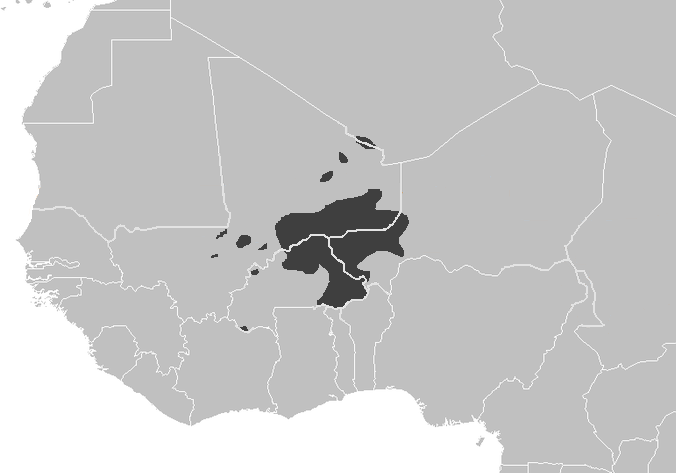
The timeline is revealing. The coup d'état on July 26, 2023, overthrew Mohamed Bazoum. Niamey then demanded the departure of French ambassador Sylvain Itté, denounced defense agreements, and secured the withdrawal of about 1,500 French soldiers. The last contingent left Niger in December 2023. Paris ultimately closed its embassy, believing that the restrictions imposed by the junta made its work impossible.
In this context, the presence of two Nigerien officers in Paris was not an anomaly in itself. Embassies need intelligence relays, even when the political relationship is poor. What has changed is the absence of minimal trust. France claims that these agents had no reason to remain due to the lack of cooperation. The suspicion of monitoring opponents gives the case a Nigerien domestic dimension, not just a bilateral one.
The Malian mirror shows the possible trajectory
The issue should not be isolated from that of Mali. In September 2025, Paris expelled two Malian representatives after the arrest in Bamako of a French agent accused by the Malian authorities of participating in a coup attempt. This agent was ultimately pardoned and released in August 2026. In the meantime, counter-terrorism cooperation mechanisms had been reduced to almost nothing.
The pattern is now familiar in the Sahel States Alliance. A military government arrests or expels a Western agent, Paris responds with a diplomatic measure, and then each side turns an intelligence matter into proof of strategic hostility. The junta gains a narrative of sovereignty. France protects its personnel and signals that it will not tolerate covert operations against exiles on its territory. But, on the ground, both apparatuses lose interlocutors capable of distinguishing a real threat from a political rumor.
An operational void at the worst moment
Niger, Mali, and Burkina Faso have not become safer since their distancing from Paris. On October 10, the UNHCR estimated the number of displaced persons in the central Sahel at nearly four million, more than double the level of 2020. This figure includes about 818,000 refugees and asylum seekers. These populations do not cross abstract borders: they follow paths, markets, and water points, often in areas where the state controls only a capital.
Useful intelligence in this theater is not limited to wiretaps or satellite images. It depends on local informants, liaison officers, lists of detainees, traffic habits, and the ability to call a counterpart in the middle of the night. When these links disappear, JNIM and the Islamic State in the Sahel do not automatically win a battle. They gain something more discreet: more space to move men, tax a convoy, or test a garrison without the information being cross-checked in time.
Russia does not replace a liaison network
Niamey has moved closer to Moscow and is now coordinating its defense with Bamako and Ouagadougou within the Sahel States Alliance. This orientation responds to a genuine African desire to regain political and military decision-making. It should not be reduced to mere foreign manipulation. However, the Russian presence, including that of the Africa Corps, does not recreate the same network of cooperation that existed with French, American, and European services. It prioritizes the protection of power and force operations. Fine collection on jihadist networks takes time, civilian relays, and trust that military regimes have themselves contributed to destroy.
One must also avoid a too-comfortable conclusion for Paris. The surveillance of Nigerien opponents, if confirmed, is precisely the type of activity that makes any French cooperation politically toxic and fuels accusations of double standards. France cannot demand access to intelligence in the name of counter-terrorism while ignoring the sovereignty and abuses of its partners. It has already paid the price for this ambiguity in the Sahel.
The next test will take place on a road
The details of the surveillance operation remain incomplete, and the Nigerien version is not publicly known. It would therefore be premature to see it as a coordinated operation against France. However, the strategic effect is clear: deconfliction channels are closing while forced displacements and attacks continue to rise.
The next indicator will not be a statement in Paris or Niamey. It will be an incident on a road connecting Niger to Mali, or around a corridor to Benin and Nigeria, that no one will be able to quickly attribute. In this theater of operations, the rupture of intelligence does not make noise. It is measured by the delay between an alert and the arrival of a convoy.
Sources
Two Nigerien intelligence agents were expelled from France on September 16, 2026, amid deteriorating diplomatic relations. This expulsion highlights the collapse of security communication channels between Paris and Niamey, following a coup in Niger and the withdrawal of French military forces. The situation in the Sahel is further complicated by a significant increase in displaced persons, now nearing four million.
- Two Nigerien intelligence agents were expelled from France on September 16, 2026.
- The expulsion reflects a breakdown in security communication between France and Niger.
- The situation follows a coup in Niger and the withdrawal of French troops.
- The number of displaced persons in the Sahel has reached nearly four million, indicating a worsening security situation.