
FLA strikes 5 cities in Mali — the shadow of JNIM threatens Bamako in July
 Marie Dubois
FLA strikes 5 cities in Mali — the shadow of JNIM threatens Bamako in July
On July 4, before dawn, in Gao, residents heard rockets falling towards the military camp as the streets emptied under orders from the Malian Armed Forces. More than 500 kilometers to the southwest, Sévaré first heard bursts of gunfire, followed by four loud explosions around eight o'clock. Further north, Anefis and Aguelhoc were also targeted. South of Bamako, Kenioroba, a locality known for its prison where political opponents are held, also entered the map of the attack.
This is not an isolated incursion. According to the Malian army, five positions were attacked on the same morning, from the Kidal region in the north of the country to the southern axis that protects the capital. The junta claims to have regained control, killing 20 assailants in Sévaré and six in Gao, while acknowledging the death of one pro-government fighter and four injuries in Gao. These figures remain those from Bamako. In this theater, the initial casualty reports also serve to regain the psychological initiative.
A map that overflows the old front lines
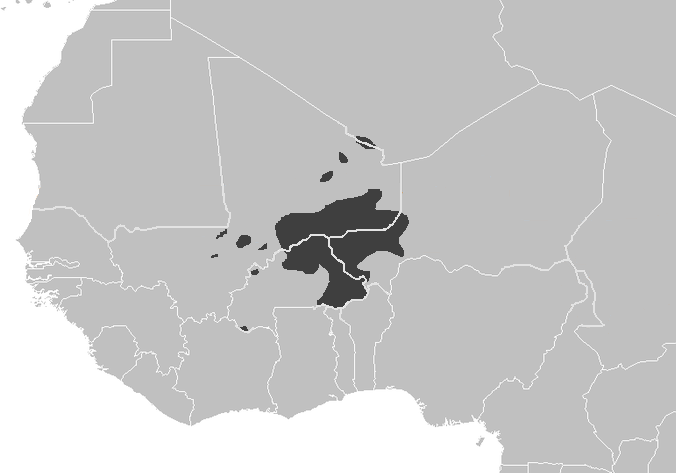
The details of the locations matter more than the statement. Anefis is located in the Kidal region, in the desert depth where the Malian state has long advanced through columns, sporadic bases, and changing alliances. Gao remains a logistical choke point on the Niger River and on the road to Ansongo and Ménaka. Sévaré, near Mopti, commands part of central Mali, a contact zone between the inner delta, Dogon, Peuls, road axes, and armed groups. Kenioroba, on the other hand, signals something else: the pressure is descending towards the political and prison peripheries of power.
On a staff map, these points do not form a continuous front. On the ground, they create a capacity to force Bamako to look everywhere at once. This is exactly what an insurgent coalition seeks, which does not have the means to hold cities sustainably but can exhaust regular forces through dispersion, surprise, and command overload.
The FLA claims its presence, the JNIM remains in the shadows
Mohamed Elmaouloud Ramadane, spokesperson for the Azawad Liberation Front, stated that his fighters were involved and that they had entered Anefis. Reuters could not independently verify this claim. The Support Group for Islam and Muslims, or JNIM, affiliated with Al-Qaeda, did not immediately claim responsibility for the attacks on July 4.
However, the absence of a jihadist statement should not be interpreted as a lack of coordination. In April, the FLA had already partnered with JNIM in a spectacular operation that struck Bamako's airport and killed the Minister of Defense. Since then, the signal has been clear: the Tuareg separatists and jihadists do not necessarily merge their agendas, but they can synchronize their effects when the common enemy is the Malian state and its Russian partners.
This is a circumstantial alliance, not a regular army. It is therefore more difficult to break through a decisive battle. Groups can cooperate on one objective, separate over time, and then regroup on another axis. From experience, this type of relationship makes intelligence very uncomfortable: one is no longer just looking for a chain of command, but for shared windows of opportunity.
The junta's security promise is cracking
The Malian military took power in 2020 and then in 2021 with a simple promise: to regain control of the territory. Five years later, the army still speaks of a situation under control after each shock, but the geography of the attacks tells another story. When Gao, Sévaré, and a site south of Bamako are activated on the same morning, the problem is no longer just the loss of an outpost. It is the loss of strategic depth.
The Russian presence, now embodied by Africa Corps after the official dissolution of Wagner, was supposed to give Bamako a harder offensive capability, less constrained by European political rules. It has indeed changed the behavior of the Malian army: more raids, increased pressure on certain areas, a more assertive martial communication. But it has not yet resolved the central problem of the Sahel: holding the axes after the passage of columns.
A vehicle can enter Anefis. It does not automatically transform the 200 kilometers of track around it into governed space. A base can repel an attack in Gao. It does not guarantee that the next fuel convoy will arrive without paying, negotiating, or fighting. This is where the jihadists, and sometimes their tactical partners, win without winning in the classical sense.
Kenioroba shows that Bamako is no longer just a symbol
The most worrying element may not be Gao, despite the sound of rockets. It is Kenioroba. Sources cited by Reuters indicate that a prison housing members of the political opposition may have been targeted, although the details remain incomplete. If the objective was to free detainees, humiliate the state, or simply demonstrate that the outskirts of Bamako can be hit, the message is heavy.
Since the September 2024 attack on a gendarmerie school near Bamako airport, the Malian power knows that the capital is not impermeable. Recent fuel blockades led by JNIM have further shown that the city can be suffocated without being occupied. July 4 adds another layer: the threat can combine logistical pressure, prestige action, and attacks on multiple garrisons.
For a junta, this is politically dangerous. The sovereignist discourse works as long as the enemy seems pushed out of the center. It becomes fragile when the residents of Gao remain locked in their homes, when Sévaré trembles under explosions, and when a place of political detention is mentioned in the same dispatches as the fighting in the North.
What Bamako must now fear
In the short term, the Malian army will likely announce sweeps, publish images of recovered equipment, and strengthen checkpoints on sensitive axes. This is normal. It is even necessary. But the operational question is less about whether the assailants have been repelled than about measuring what they have learned: reaction time, helicopter availability, coordination between garrisons, quality of communications, reaction of Russian partners.
The next risk lies in the connections. Gao to Bourem and Ansongo, Sévaré to Mopti and Bandiagara, Bamako to the southwest: these roads become sensors of weakness. If the insurgents manage to chain attacks on garrisons, logistical ambushes, and psychological actions against political sites, Bamako will have to defend the country as a series of islands.
This is a bad posture for an army that promises reconquest. A capital can survive a spectacular attack. It survives much less well to the conviction, among its adversaries as well as its inhabitants, that the state no longer chooses the place or the tempo of the war.
The signal from July 4 is not that Mali will fall tomorrow. The signal is more military, colder: its adversaries now know how to stretch the theater of operations from the Kidal desert to the political approaches of Bamako.
On July 4, 2023, insurgent groups attacked five locations in Mali, including Gao, Sévaré, Anefis, Aguelhoc, and Kenioroba. The Malian Armed Forces reported killing 20 assailants in Sévaré and 6 in Gao, while also acknowledging casualties among their forces. The attacks indicate a coordinated effort by the Front for the Liberation of Azawad and JNIM, posing a significant threat to the security of Bamako and the Malian state.
- Five locations attacked in Mali on July 4, 2023.
- Malian Armed Forces reported 20 assailants killed in Sévaré and 6 in Gao.
- Kenioroba, a political prison area, was targeted during the attacks.
- The FLA claimed involvement in the attacks, indicating coordination with JNIM.
- The situation reflects a strategic threat to Bamako and the control of the Malian state.