
Flash Review: The U.S. "High-Stakes" Military Strike Against Iran Highlights Its Inertia of "Profiting from Chaos"
On February 28 local time, the United States and Israel launched a joint military strike against Iran, triggering a sharp escalation in the regional situation.
On the same day, U.S. President Trump stated that the uninterrupted strikes against Iran would continue for a week or even longer.
How does this U.S. military action against Iran compare to last year's "12-Day War"?
Li Haidong, a professor at the Institute of International Relations at the Diplomatic Academy, stated in an exclusive interview with the Global News program "Flash Review" that the U.S. airstrikes against Iran have transcended mere military action, becoming a "high-stakes gamble" with regime change as the political wager and the strategy of creating regional divisions to consolidate hegemony as the trump card. The ensuing chaos may reshape the power dynamics in the Middle East, but it is unlikely to bring true security and stability to the region.
Compared to the last U.S. airstrikes on Iranian nuclear facilities, this time the U.S. airstrikes against Iran were also carried out in close coordination with Israel, and the targets of the attacks still included Iran's nuclear facilities.
Unlike the previous airstrikes, this time the airstrikes against Iran have a more comprehensive scope, with clear political intentions: the targets of the airstrikes include not only Iran's nuclear facilities but also significant political objectives in Iran. This indicates that the U.S. hopes to achieve its political intentions in this airstrike, namely the repeatedly stated intention of regime change in Iran.
This U.S. airstrike against Iran has the characteristics of a "high-stakes gamble," and the consequences are currently difficult to predict. If the goals claimed by the Trump administration are pursued, it is likely to mean that the chaotic situation in the Middle East will continue.
There is also significant controversy within the U.S. regarding this strike against Iran. Democratic Senator Tim Kaine believes that Congress should reconvene immediately to vote on his proposed "War Powers Resolution" to prevent the president from unilaterally deploying U.S. armed forces into war against Iran without congressional authorization.

Screenshot from NPR website
Is it possible for the U.S. Congress or other forces to prevent the Trump administration from further military actions against Iran? Why is the effectiveness of Congress in restraining the president's foreign wars diminishing?
Li Haidong admitted that it is difficult for the U.S. Congress or other forces to stop the president's foreign military actions.
According to the U.S. Constitution, the power to declare war lies with Congress, while the power to implement war lies with the president. However, records of U.S. foreign military actions show that it is often the president who initiates military actions, followed by Congress either ratifying them or reluctantly following the president's will after criticizing his actions. It can be said that the dispute over war powers between Congress and the president is an inherent feature of the operation of power in the U.S.
Since the end of World War II, the vast majority of U.S. foreign wars have been initiated by the president, with Congress ultimately acquiescing. With a large number of members, Congress has significant divisions between the Democratic and Republican parties regarding whether to follow the president's military decisions, leading to operational inefficiencies in Congress, which objectively creates conditions for the president to have more power in matters of war and military action. In terms of initiating wars and taking military actions, the initiative clearly lies with the president, and the limitations imposed by Congress on the president's related powers have historically proven to be very limited.
The third round of indirect talks between the U.S. and Iran on February 26 failed to reach an agreement. On February 27, President Trump stated that there would be further talks. But now, the U.S. and Israel have suddenly launched an attack on Iran.
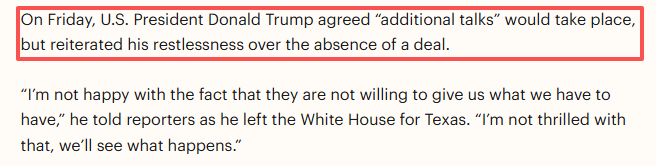
Screenshot from Time magazine website
What international impact will the U.S. military strikes against Iran, conducted in conjunction with Israel during negotiations, have?
Li Haidong stated that this approach clearly reflects the U.S.'s inherent behavior of "profiting from chaos."
The U.S. actions demonstrate a "law of the jungle" mentality—disregarding international multilateral mechanisms, disrespecting the authority of the United Nations, and arbitrarily using military force against other sovereign nations due to its own strength, which indeed raises concerns among countries around the world. After all, international law, international rules, and the authority of the United Nations are generally respected by countries worldwide, and only then can world peace and prosperity be possible.
The current actions of the U.S. are clearly leading the Middle East into deeper chaos, and the region is likely to enter another cycle of turmoil. The more chaotic the Middle East becomes, the more the U.S. can exaggerate its "indispensability" in the region. Therefore, this approach by the U.S. is indeed subject to criticism.
Reporter丨Zhu Wanling
On February 28, the United States and Israel launched joint military strikes against Iran, targeting both nuclear facilities and key political objectives. President Trump announced that these strikes would continue for at least a week. This military action has sparked significant debate within the U.S. regarding presidential war powers and the implications for regional stability in the Middle East.
- The U.S. and Israel conducted joint military strikes against Iran on February 28.
- President Trump stated that the strikes would continue for a week or longer.
- The strikes target not only Iran's nuclear facilities but also significant political targets.
- There is considerable domestic controversy in the U.S. regarding the military action.
- The strikes are seen as part of a broader strategy to reshape the power dynamics in the Middle East.