

Summary and Key Points: Defense expert Jack Buckby notes that the U.S. military is preparing to accept delivery of new F-35 Joint Strike Fighters that might be incapable of seeing the battlefield.
-Starting this autumn, stealth fighters slated for the Block 4 modernization package will roll off the assembly line without their primary radar systems installed due to severe delays with the next-generation AN/APG-85. Instead, these multi-million dollar jets will carry a physical ballast in the nose to maintain flight balance.
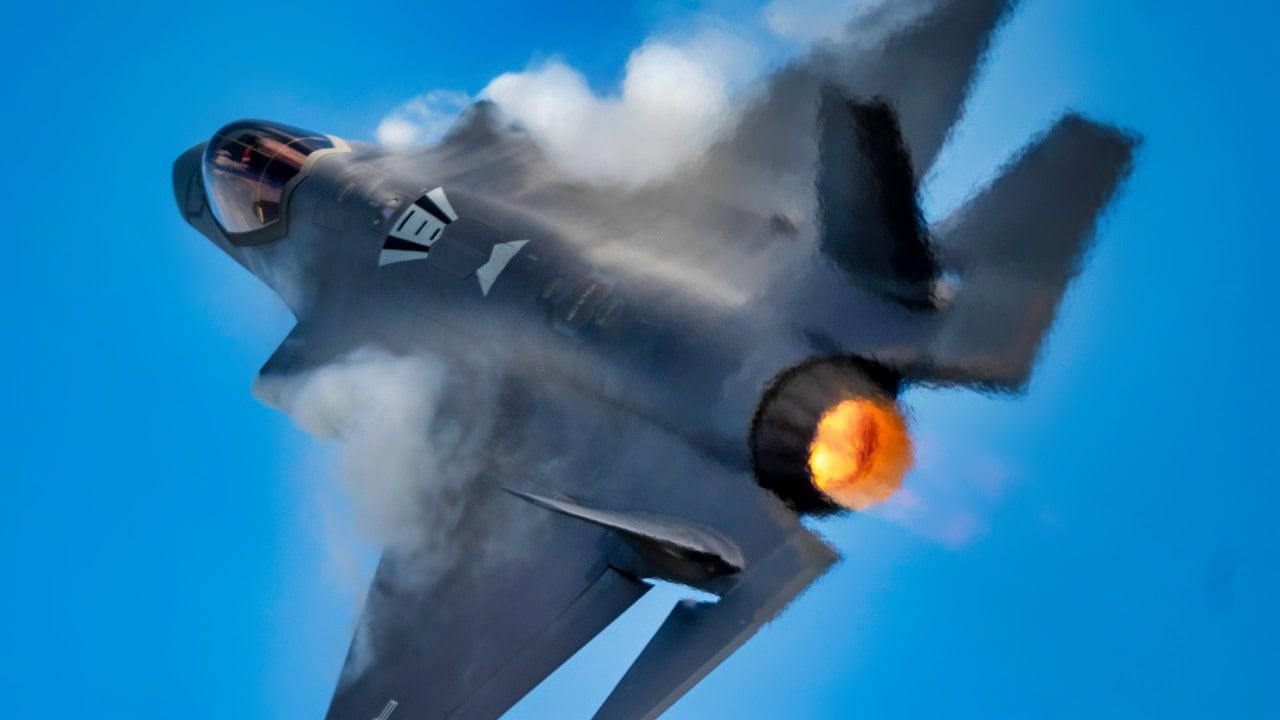
U.S. Air Force Maj. Melanie “Mach” Kluesner, the pilot for the F-35A Demonstration Team, performs aerial maneuvers in a USAF F-35A Lightning II during the practice day before the airshow at Jacksonville Naval Air Station, Florida, on 18 October, 2024. The practice day ensures that the team is able to safely and properly display the power, agility, and lethality of America’s 5th generation fighter jet. (U.S. Air Force photo by Senior Airman Nicholas Rupiper)
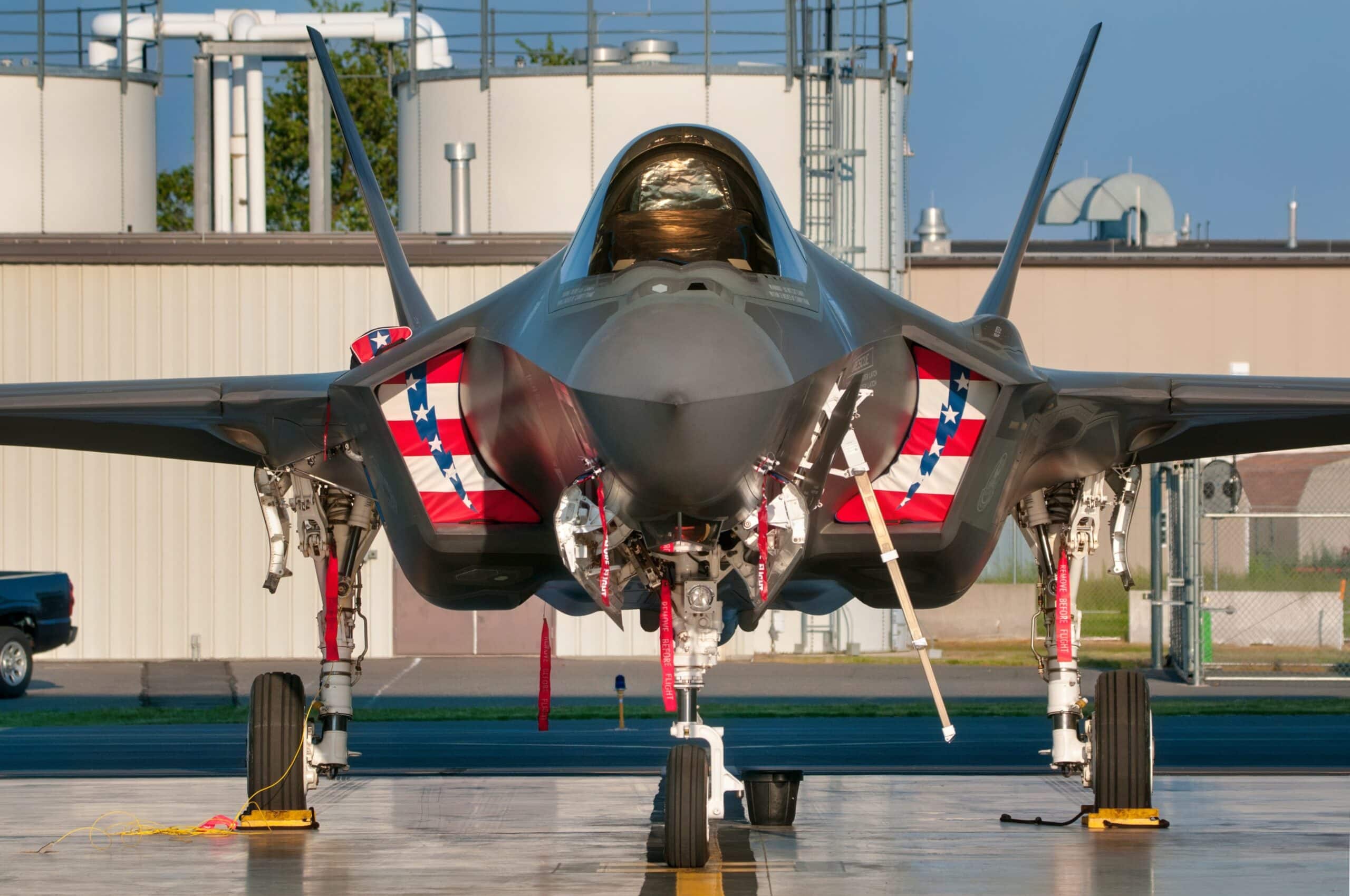
A U.S. Air Force F-35 Lightning II fighter jet from the 56th Fighter Wing, Luke Air Force Base, Arizona, displays it’s crew-designed red, white and blue inlet covers while parked in a military aircraft shelter at the Atlantic City International Airport in Egg Harbor Township, N.J. on May 26, 2016. Pilots and crew from the USAF F-35 Heritage Flight Team made a stop at the 177th Fighter Wing of the New Jersey Air National Guard on the way to their performance at the Jones Beach Airshow in Wantagh, New York on May 28 and 29. (U.S. Air National Guard photo by Master Sgt. Andrew J. Moseley/Released)
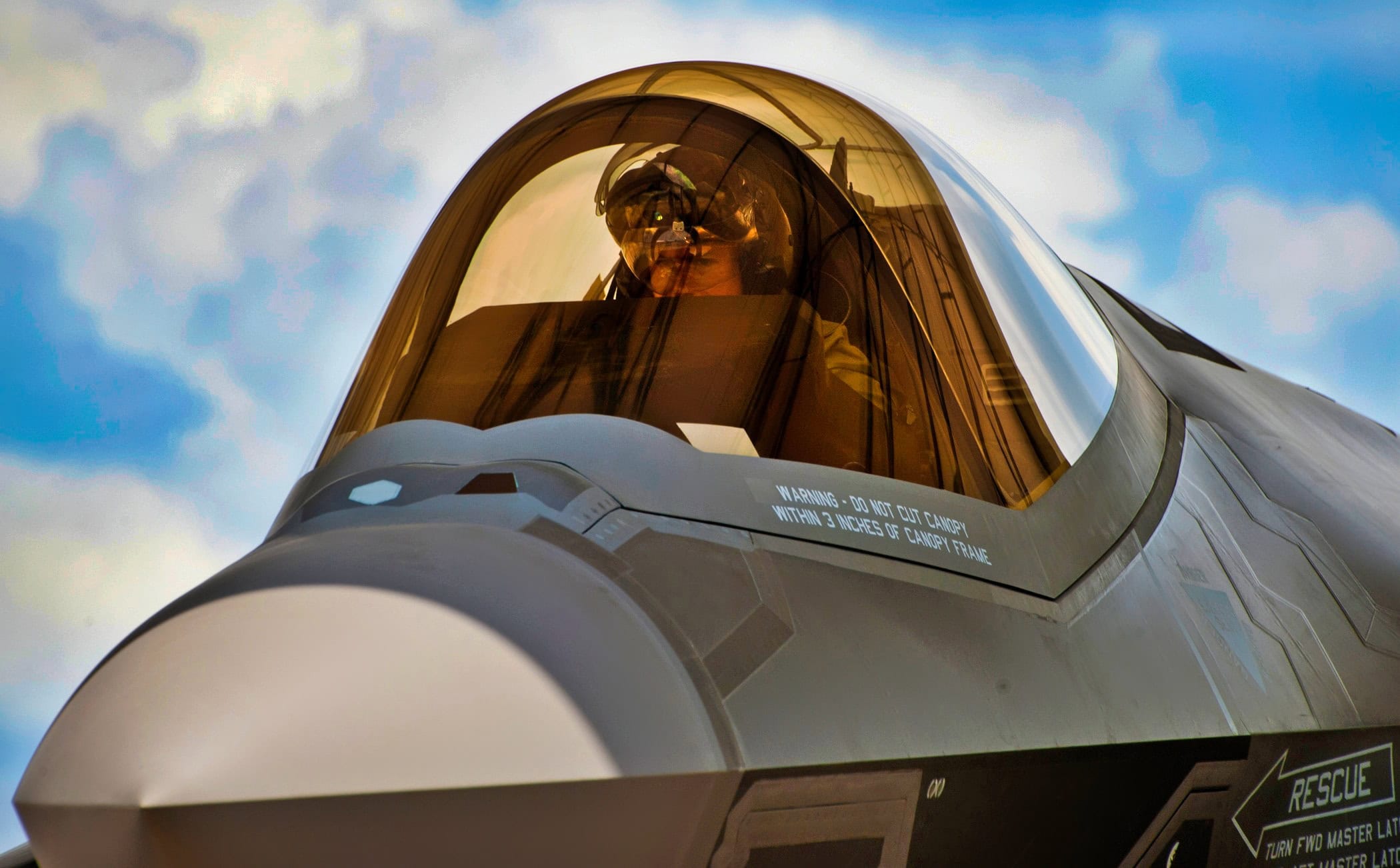
Marine Maj. Joseph Bachmann, of the 33rd Operations Group, executes aircraft shutdown procedures of the second F-35 Lightning II joint strike fighter to arrive at Eglin Air Force Base, Fla., July 20. Bachmann is the first Marine pilot to be JSF certified. Aircraft AF-8 is the flagship for the 58th Fighter Squadron. (U.S. Air Force photo/Samuel King Jr.)
-Because the new radar requires a structurally redesigned forward bulkhead, the aircraft cannot simply be retrofitted with older radar models, leaving the Pentagon with a growing fleet of 5th-generation fighters that are restricted to training and strictly prohibited from combat operations.
F-35 Radar Delays Mean New Jets Won’t Be Combat Ready
The U.S. military is reportedly preparing to accept new F-35 Joint Strike Fighters that cannot be used in combat in the short term, according to comments by Rep. Rob Wittman to Breaking Defense.
Per the March 19 report, new F-35s delivered starting this autumn will arrive without their primary radar system installed, instead carrying a ballast in its place to maintain flight characteristics.
The problem centers around delays to the AN/APG-85 radar, a next-generation active electronically scanned array (AESA) system intended to replace the current APG-91 and form a core part of the aircraft’s Block 4 modernization package.
Aircraft delivered without radar will technically be airworthy but not combat-coded, meaning they cannot be used for operational missions such as air combat or precision strikes.
Rep. Wittman, who chairs the House Armed Services tactical air and land forces subcommittee, confirmed the news, noting that the U.S. will soon have “lots of aircraft out there, but not ones that are ready to go to the fight.”
Depending on how long the radar delays persist, the number of affected aircraft could range from a small batch to more than 100 jets over the next two years.
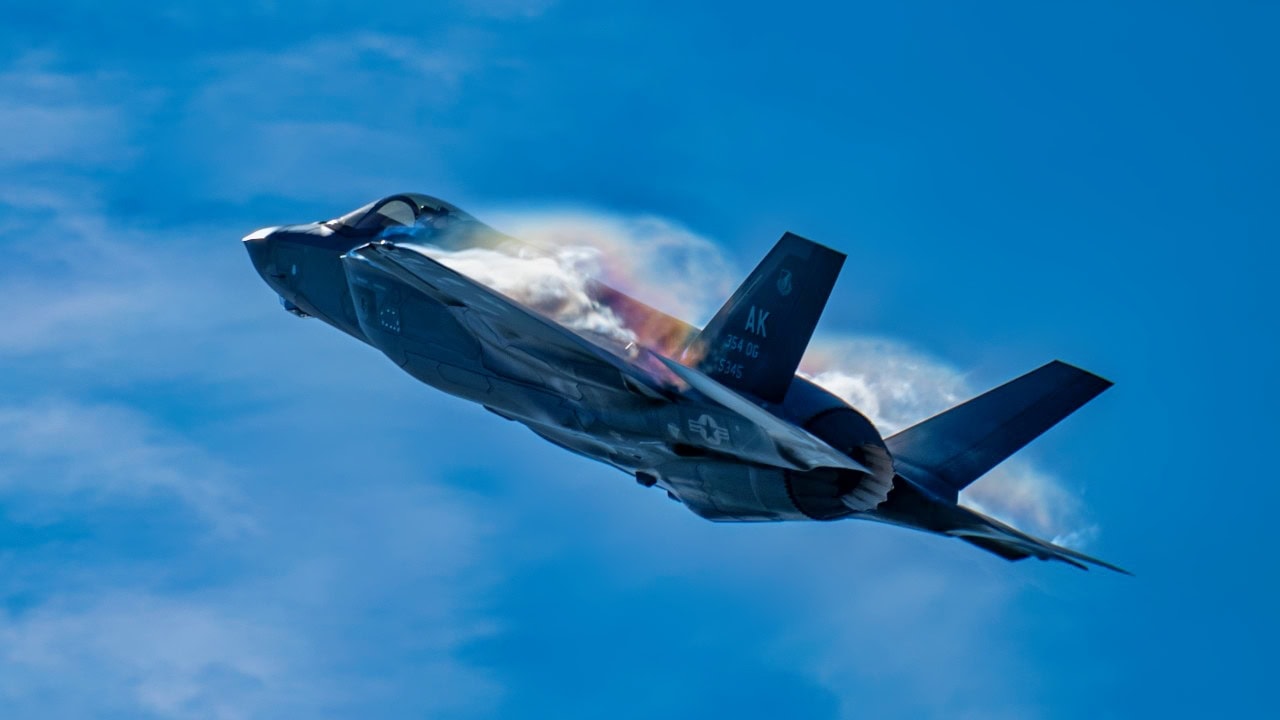
U.S. Air Force Maj. Kristin “BEO” Wolfe, F-35A Lightning II Demonstration Team pilot and commander, flies an aerial performance for the 2021 Arctic Lightning Air Show, July 30, 2021, Eielson Air Force Base, Alaska. The F-35 Demonstration Team utilized F-35s from the 354th Fighter Wing in order to showcase the combat capability of the Pacific Air Force’s newest F-35 units. (U.S. Air Force photo by Capt. Kip Sumner)
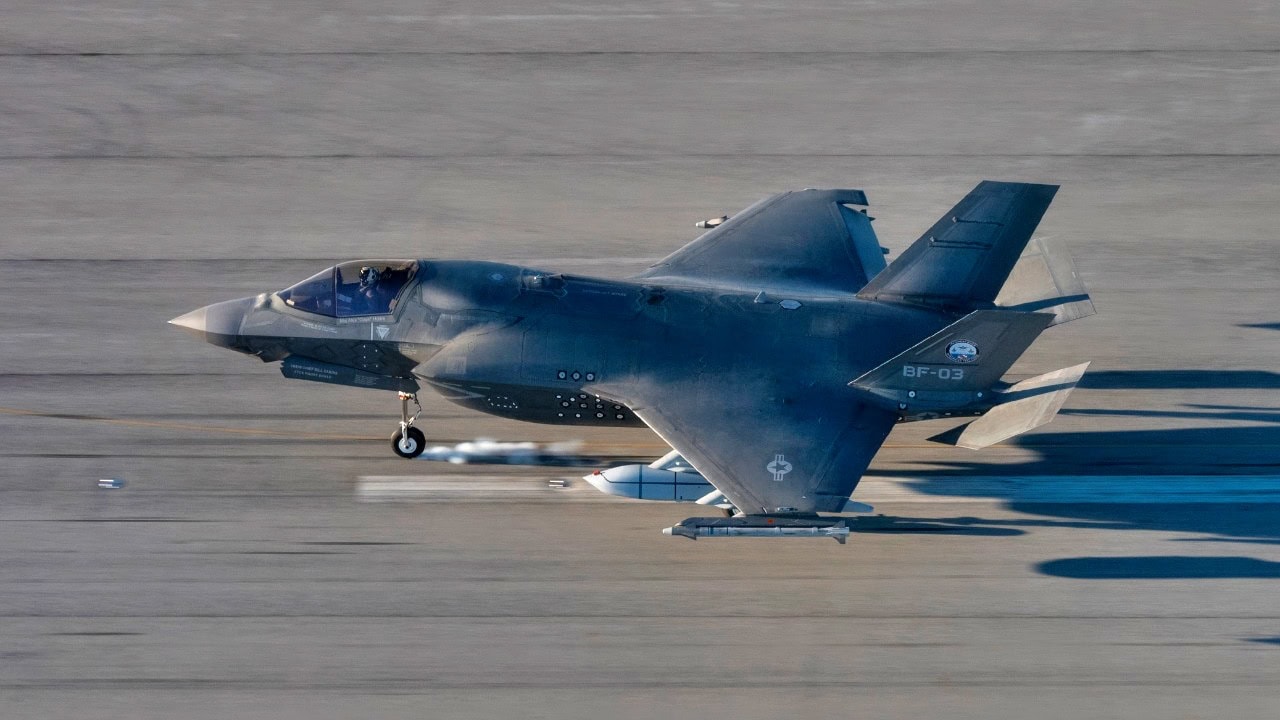
NAS PATUXENT RIVER, Md. — An F-35 Lightning II test pilot conducts the first flight test to certify the F-35B short takeoff and vertical landing variant of the fighter aircraft for carrying the AGM-158C Long-Range Anti-Ship Missile (LRASM). As part of ongoing weapon integration efforts, the Pax River F-35 Integrated Test Force (Pax ITF) team for the first time flew test flights Jan. 14 with two AGM-158 loaded on external stations. LRASM is a defined near-term solution for the Offensive Anti-Surface Warfare (OASuW) air-launch capability gap that will provide flexible, long-range, advanced, anti-surface capability against high-threat maritime targets. The Pax River ITF’s mission is to effectively plan, coordinate, and conduct safe, secure, and efficient flight test for F-35B and C variants, and provide necessary and timely data to support program verification / certification and fleet operational requirements.
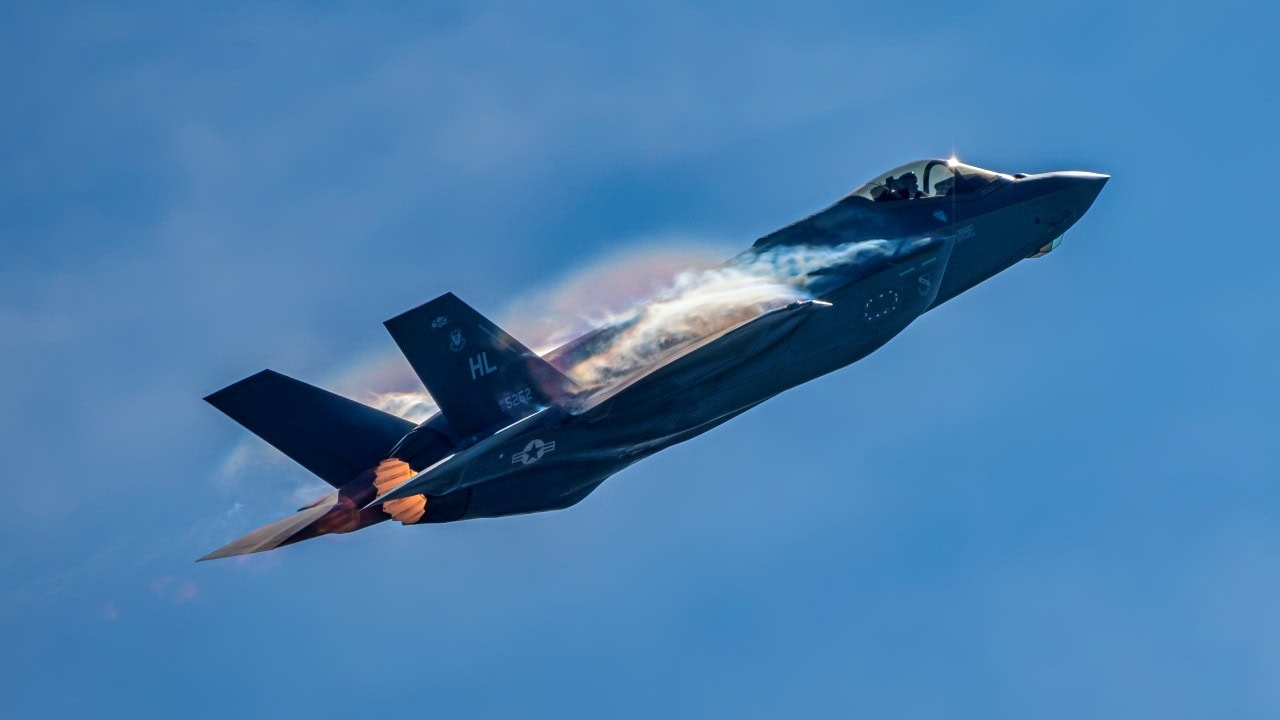
U.S. Air Force Maj. Kristin “BEO” Wolfe, F-35A Lightning II Demonstration Team commander and pilot, flies during a demonstration rehearsal at Hill Air Force Utah, April 28, 2021. The F-35A Lightning II Demonstration Team is part of the first operational F-35A wing for the Air Force, the 388th Fighter Wing, and flies over the Hill Air Force Base runway to practice and prepare for upcoming air shows around the world. (U.S. Air Force photo by Capt. Kip Sumner)
The Radar Delay Explained
The AN/A-G-85 radar is an upgraded sensor designed to significantly improve detection range and tracking performance compared to the existing APG-81. Modern AESA radars like the APG-85 use hundreds or thousands of small transmit/receive modules to electronically steer the radar beams without moving parts, allowing for faster target tracking and greater resistance to jamming. However, the APG-85 has been delayed primarily because of the complexity of the required certification.
Speaking to the media, Wittman said that the older APG-81 could be certified in a matter of days, but that the newer systems require significantly longer validation processes due to the increased capability and the more extensive integration requirements. In short, it’s a more complex design that requires additional work on the F-35 to ensure that it functions and fits.
The delay has therefore caused problems with supply, either forcing aircraft production to be delayed or requiring aircraft to be shipped without parts. Aircraft in Lot 17 were built expecting the new radar to be ready, but it is not yet available at scale. As a result, the jets were manufactured and delivered without any radar installed – for now.
So, the aircraft can fly, but they cannot independently detect or ngage target, meaning they are missing their core combat function.
Which Aircraft Are Affected
The U.S. Marine Corps is expected to be the first affected by the decision, with F-35B short takeoff and vertical landing variants beginning to arrive without radars within months. The Air Force and Navy are expected to follow later in 2026.
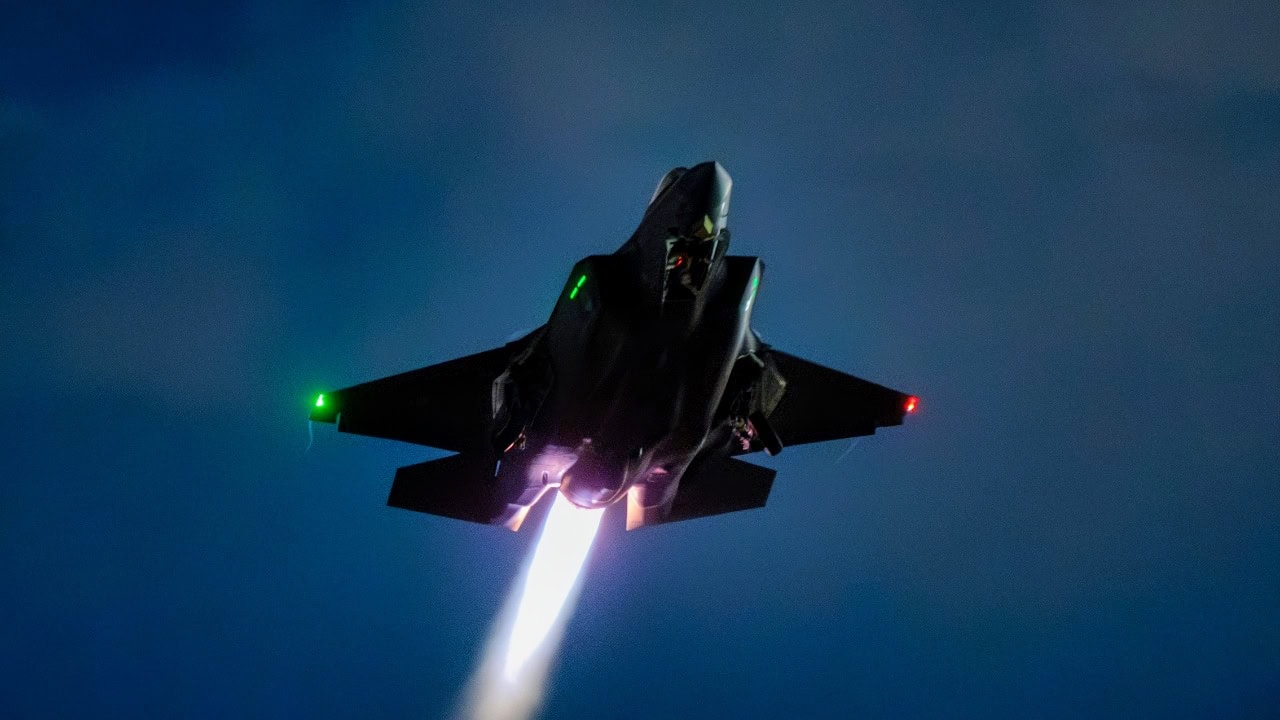
An F-35A Lighting II takes off for a Red Flag-Nellis 24-2 night mission at Nellis Air Force Base, Nevada, March 18, 2024. The presence of the F-35s offers the U.S., Allies, and partners a versatile and highly capable system, enhancing collective defense measures while reinforcing the NATO Alliance’s commitment to leveraging top-tier military capabilities for regional security and deterrence. (U.S. Air Force photo by 1st Lt. Jimmy Cummings)
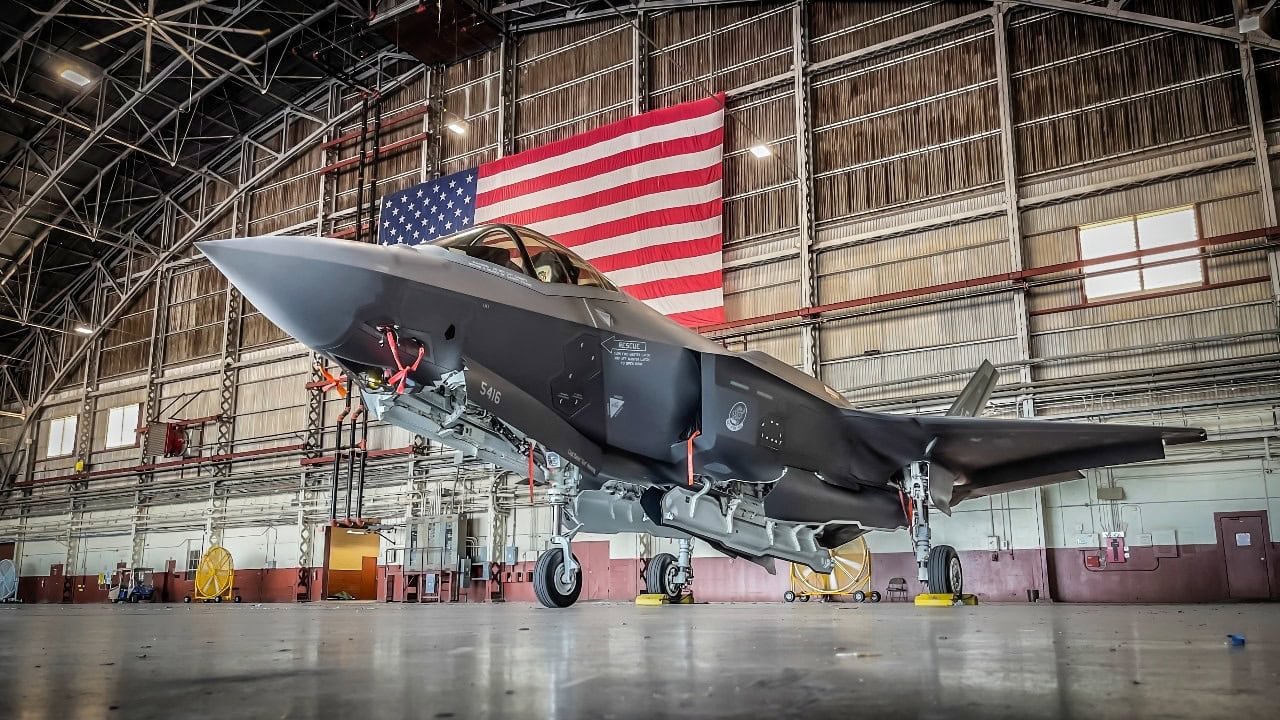
An F-35 Lightning II assigned to the 62nd Fighter Squadron, Luke Air Force Base, Ariz., sits in a hangar ahead of operations for the F-35 Lightning II TDY, Oct. 28, 2021, at Joint Base San Antonio-Kelly Field, Texas. The 62nd FS will be training with F-16s from the 149th Fighter Wing and the 301st Fighter Wing, along with T-38s from the 301st Fighter Wing. The multi-role capabilities of the F-35 allows them to perform missions which traditionally required numerous specialized aircraft. The complimentary air superiority capabilities of the F-35 will augment our air superiority fleet and ensure we continue to “own the skies” over future battlefields. (U.S. Air Force photo by Brian G. Rhodes)
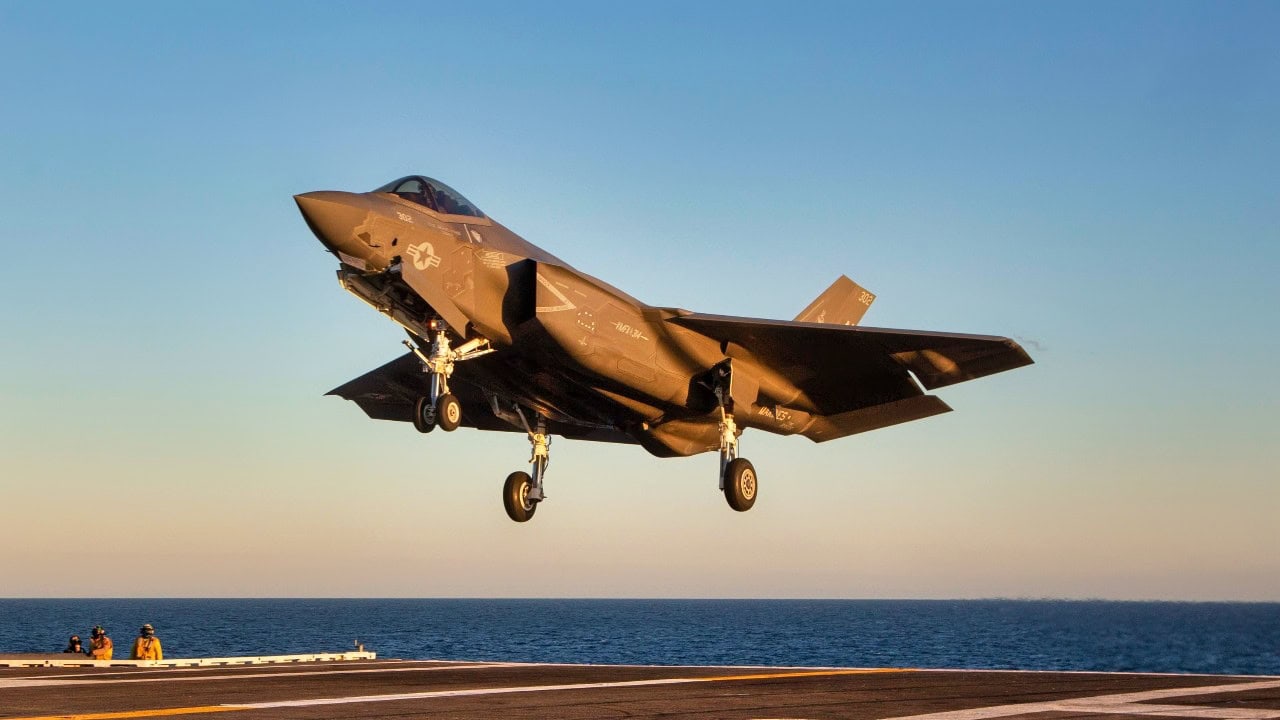
F-35 Fighter.
For now, though, the Air Force has confirmed that its Lot 17 F-35A aircraft are still being delivered with the current APG-81 radar, but that situation will change as production continues.
The issue of production scale makes it even more significant. The Pentagon’s F-35 contracts include up to 126 aircraft in Lot 17 and roughly 148 aircraft in each of Lots 18 and 19, with a mix of U.S. and international customers.
However, foreign buyers are not expected to be affected by the news. The APG-85 has not been cleared for export, though, meaning that international customers will continue to receive aircraft equipped with the existing APG-81 radar.
Why the APG-85 Isn’t An Easy Replacement
Adding to the delays, the APG-85 is causing some frustration because it cannot be easily swapped with its predecessor. The APG-85 is not a simple replacement for the APG-81 in that it requires a redesigned forward bulkhead – the structural section of the aircraft that houses the radar – to be installed. That means the F-35, as it stands, is not built for the new radar and requires adjustments – and that also means the newer aircraft cannot simply be shipped with the old radar, given that those adjustments have been made.
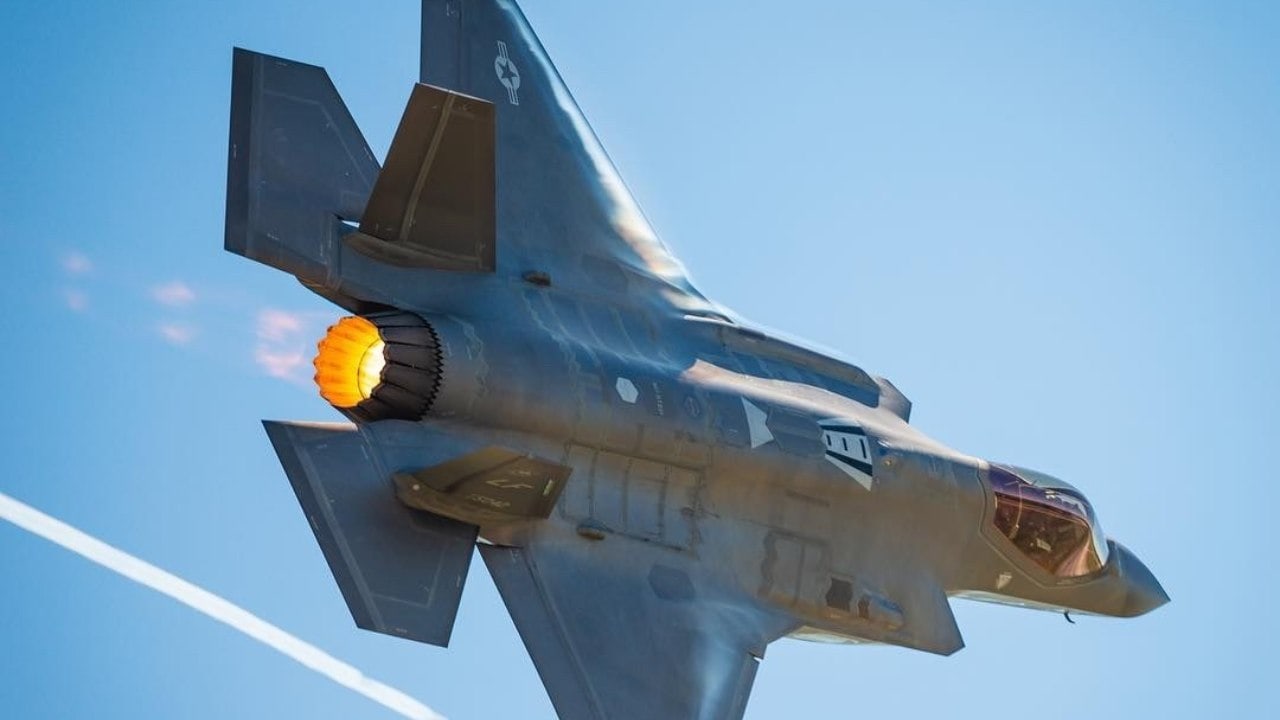
Capt. Andrew “Dojo” Olson, F-35 Demonstration Team commander and pilot performs a dedication pass in an F-35A Lightning II during the 2019 Wings Over Wayne Airshow April 27, 2019, at Seymour Johnson Air Force Base, North Carolina. The WOW Airshow marks the third public performance of the F-35 Demo Team’s new aerial demonstration during 2019 airshow season.
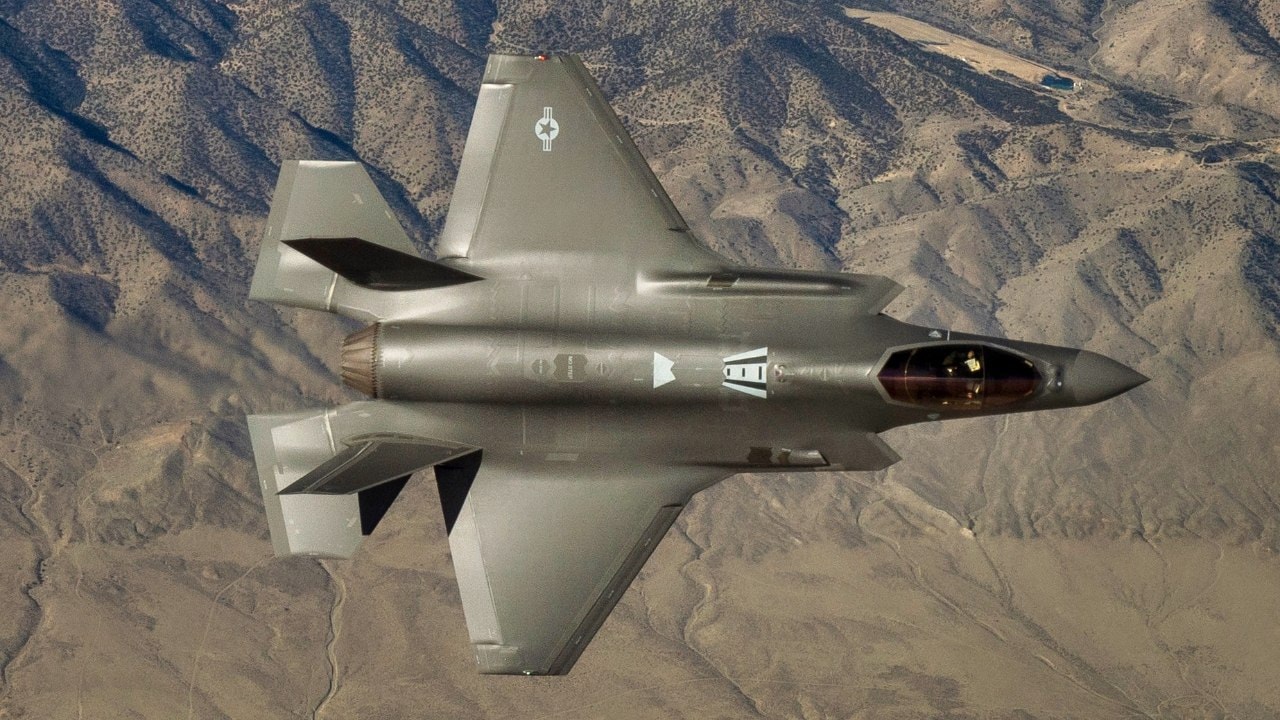
Two U.S. Air Force F-35A Lightning IIs, assigned to the 4th Fighter Squadron from Hill Air Force Base, Utah, conduct flight training operations over the Utah Test and Training Range on Feb 14, 2018. The F-35 is designed to provide the pilot with unsurpassed situational awareness, positive target identification and precision strike in all weather conditions. (U.S. Air Force photo by Staff Sgt. Andrew Lee)
The program is currently working on a revised bulkhead that could accommodate both radar types, but that solution is not expected until Lot 20 production, which is scheduled to begin in 2028.
The problem exists because the Pentagon procures this kind of hardware, effectively allowing contractors to build the aircraft while key systems are still in development. The F-35 Joint Program Office recognizes that this kind of strategy carries risk, but the decision was taken deliberately with full awareness of those risks. Simultaneous building theoretically prevents delays, allows aircraft to be rolled off the line sooner, and avoids producing older aircraft that might later require extensive retrofits. Evidently, that tradeoff is now backfiring in some sense, and it’s clear that decisions about the design of the bulkhead should have been made earlier.
What It Means for Combat Capability
Radar systems are central to modern fighter operations, allowing aircraft to detect targets and track them and guide missiles. Without radars, there is no real situational awarenessm and an aircraft becomes heavily dependent on external data sources.
While the F-35 can share data via secure datalink and receive targeting information from other platforms, using that approach – should these radar-less aircraft be deployed in combat at all – introduces some latency. Pilots cannot respond as quickly as they would with the proper equipment, and would also be highly dependent on communication networks that can be disrupted or jammed in contested environments.
Assuming current timelines hold, the issue may not be resolved fully for another two years when Lot 20 production begins – leaving a multi-year window in which newly built aircraft fall well short of full combat capabilities at a far-from-ideal time.
About the Author: Jack Buckby
Jack Buckby is a British researcher and analyst specialising in defence and national security, based in New York. His work focuses on military capability, procurement, and strategic competition, producing and editing analysis for policy and defence audiences. He brings extensive editorial experience, with a career output spanning over 1,000 articles at 19FortyFive and National Security Journal, and has previously authored books and papers on extremism and deradicalisation.