

One of the more strange-sounding anecdotes about the F-35 is that some of the earliest test jets apparently flew with cold fuel on hot days.
‘Only Done for First Articles’
The planes “required chilled fuel if the temperatures on the day of flight were above 80° F,” recalled Earl Belz, a former Lockheed Martin flightline quality assurance manager, in a story first published by The Aviation Geek Club.
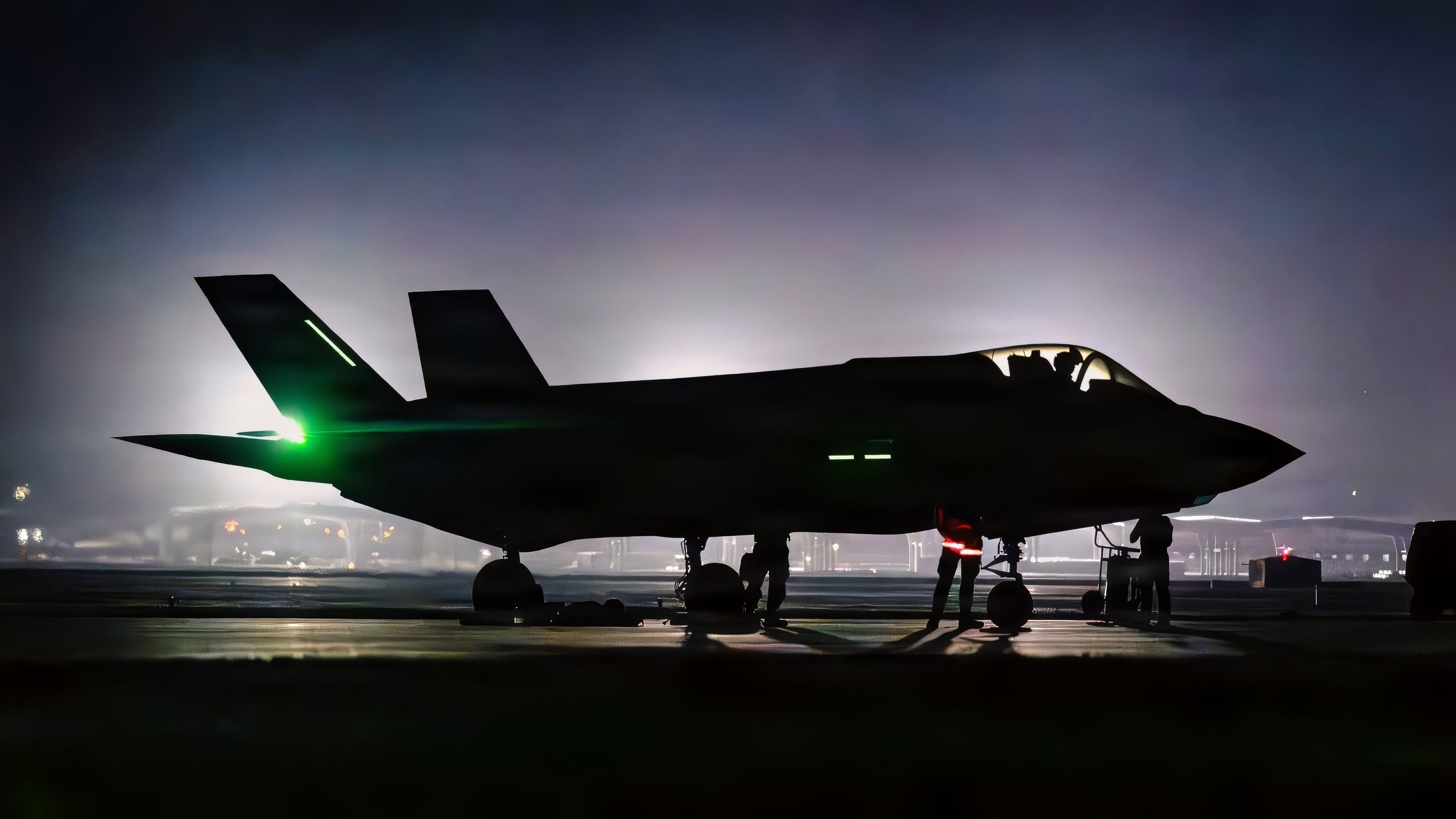
A U.S. Air Force F-35A Lightning II assigned to the 95th Fighter Squadron is parked on the flightline during exercise Noble Panther 26-4 at Tyndall Air Force Base, Florida, March 9, 2026. Airmen participated in night sorties, requiring them to perform their tasks in low-light conditions while staying watch for potential simulated attacks. These high-intensity, realistic scenarios were designed to build the confidence and muscle memory required for combat operations. (U.S. Air Force photo by Senior Airman Zeeshan Naeem)
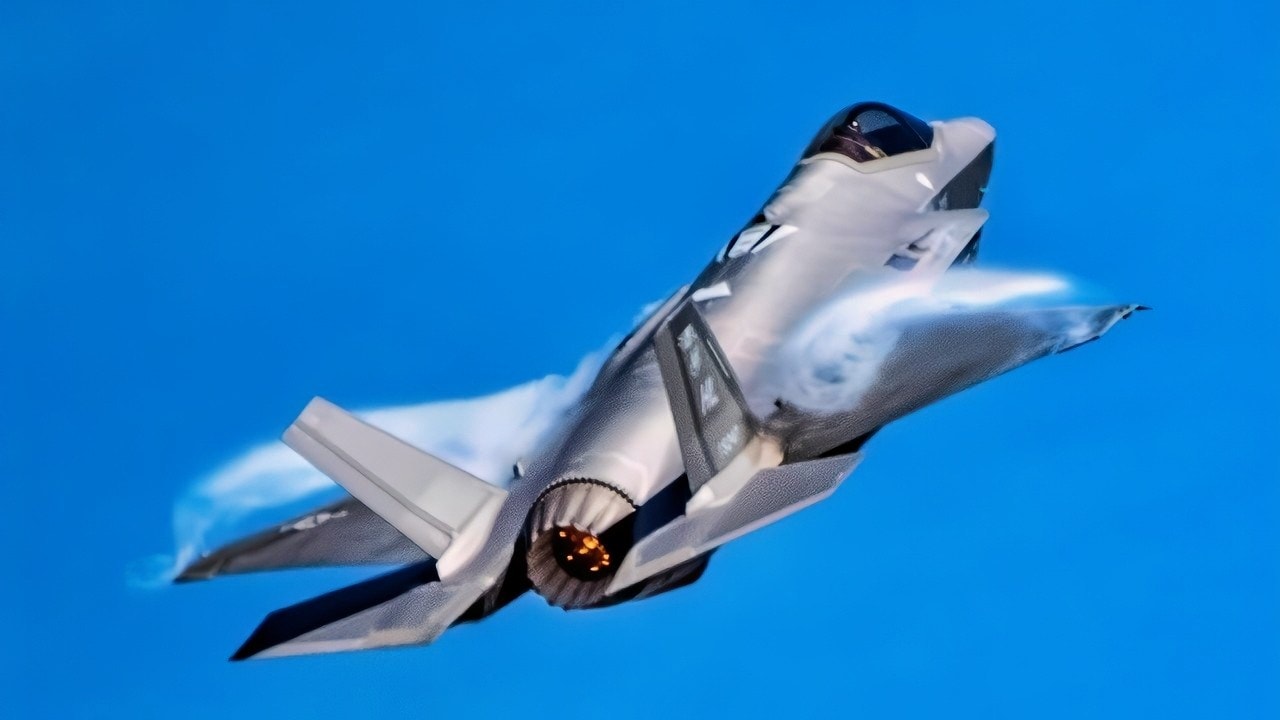
U.S. Air Force Maj. Kristin Wolfe performs a demonstration in the F-35A Lightning II during at the Reno Air Races in Reno, Nevada, September 19, 2021. The F-35 Lightning II Demonstration Team is based out of Hill Air Force Base, Utah. (U.S. Air Force photo by Tech. Sgt. Nicolas Myers)
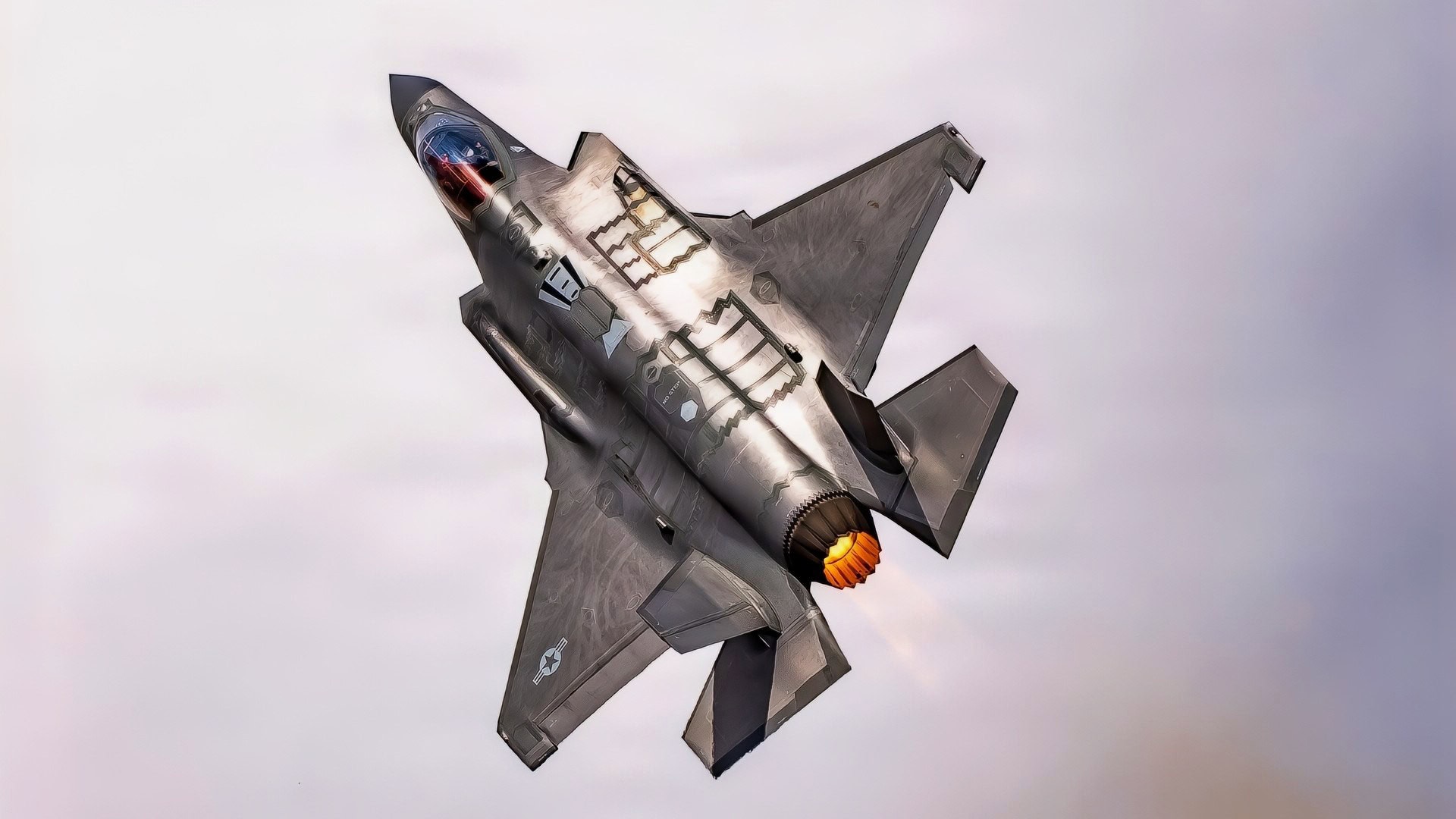
A U.S. Air Force F-35A Lightning II flies over the 56th Fighter Wing during Luke Days 2026, March 22, 2026, at Luke Air Force Base, Arizona. Luke Days 2026 highlights the precision and professionalism required to generate combat airpower and sustain the nation’s defense. Currently in operational service, the F-35A integrates stealth technology and advanced sensors to detect and defeat threats while maintaining air dominance. Opportunities for the public to see military aviation up close helps build appreciation for the readiness of the joint force. (U.S. Air Force photo by Senior Airman Belinda Guachun-Chichay)
F-35 fuel is part of a thermal-management system.
“The F-35 channels its strong thermal loads, accumulated by the powerful avionics and sub-systems on-board, as well as the engine, into its fuel. So really, the fuel works as a giant heat sink,” wrote Tyler Rogoway in 2014, in a report that focused on the fuel’s role in managing the jet’s heat.
More recently, Government Accountability Office (GAO) reporting has described the F-35’s fuel thermal management system as transferring “heat away from the power thermal management system and other mission systems.”
The heated fuel has less ability to absorb additional heat.
80 Degrees?
The 80-degree figure comes from Belz’s recollection of early testing, but fuel temperatures mattered to the F-35 beyond that test program.
At Luke Air Force Base in Arizona in 2014, the 56th Logistics Readiness Squadron painted R-11 refueling trucks with a reflective coating to keep their fuel at lower temperatures.
Senior Airman Jacob Hartman said the F-35 “may not function properly if the fuel temperature is too high.” Chief Master Sgt. Ralph Resch described the effort as designed to “mitigate any possible aircraft shutdowns due to high fuel temperatures.” Luke experiences summers with temperatures over 110 degrees, and the Air Force said Edwards Air Force Base had already adopted the method.
In 2023, GAO noted that the F-35’s “cooling system is overtasked,” estimating that the additional burden it places on the F135 will likely add another $38 billion to the fighter’s lifetime maintenance costs.
In the 2025 fiscal year, GAO said that capabilities scheduled to appear in Block 4 and later versions of the F-35 would require “more power and cooling than the program originally projected.” The watchdog said insufficient power and cooling forced the engine to work harder, shortening its life.
The F-35 Joint Program Office expressed similar concerns that the capabilities added to the fighter require more power and cooling than the fighter’s current systems can provide.
This problem was spelled out most tellingly in testimony at a Senate hearing on June 23, 2026. F-35 program chief Lt. Gen. Gregory Masiello has said the completed configuration for Block 4 “when it’s installed, and on the aircraft… takes the complete power available, which is 32 [kilowatts].”
“There’s no margin,” said Masiello.
What Honeywell Brings to the Table
On September 22, Honeywell Aerospace unveiled its P40 proposal, which will generate additional cooling capacity.
Honeywell estimates the new Power and Thermal Management System would offer a 25 percent increase in cooling capacity, from about 32 to 40 kW, and claimed that software alterations and some liquid-cooling improvements could allow P40 to enter service between 2029 and 2030 without altering the airframe.
“Operators need additional cooling capacity and improved readiness on a timeline that matters,” said Honeywell Defense and Space President Matt Milas.
Honeywell is no longer the only firm exploring a solution.
Collins Aerospace reported in August that its Enhanced Power and Cooling System had completed altitude testing.
Executive Ira Grimmett said the tests “validate system performance in real-world flight conditions.”
Upgrades on the Horizon
The engine itself will also play a part. Pratt & Whitney announced on September 15 that its F135 Engine Core Upgrade had passed a risk-reduction design review.
Company president Jill Albertelli called it an “important milestone,” while F-35 Propulsion Program Manager Navy Capt. Mitch Grant said the effort “remains on track.”
No power-and-thermal solution has been settled on yet. GAO has said Lockheed Martin is due to complete a $107 million analysis of the options in December 2026, after which program officials are due to choose which to adopt.
Britain’s Ministry of Defence said in June that the Joint Program Office continues to “explore a number of options.”
About the Author: Georgia Gilholy
Georgia Gilholy is a journalist based in the United Kingdom who has been published in Newsweek, The Times of Israel, and the Spectator. Gilholy writes about international politics, culture, and education.