
Gulf States Establish Advanced Military Command in Kuwait in 2026 to Test Deterrence Against Iran
 Ahmed Al-Rashid
The Gulf States Establish an Advanced Military Command in Kuwait in 2026 to Test Deterrence Against Iran
On November 10, 2026, the Gulf Cooperation Council (GCC) countries agreed to establish a unified and advanced military command center in Kuwait, a move that comes as risks associated with Iran, the Strait of Hormuz, and Houthi threats escalate. The news is significant, but its military value is not measured by the name of the center or its location on the map, but by its ability to transform six armies that purchase weapons separately into a force that can see, decide, and fight as a single system.
What the Decision Means Practically
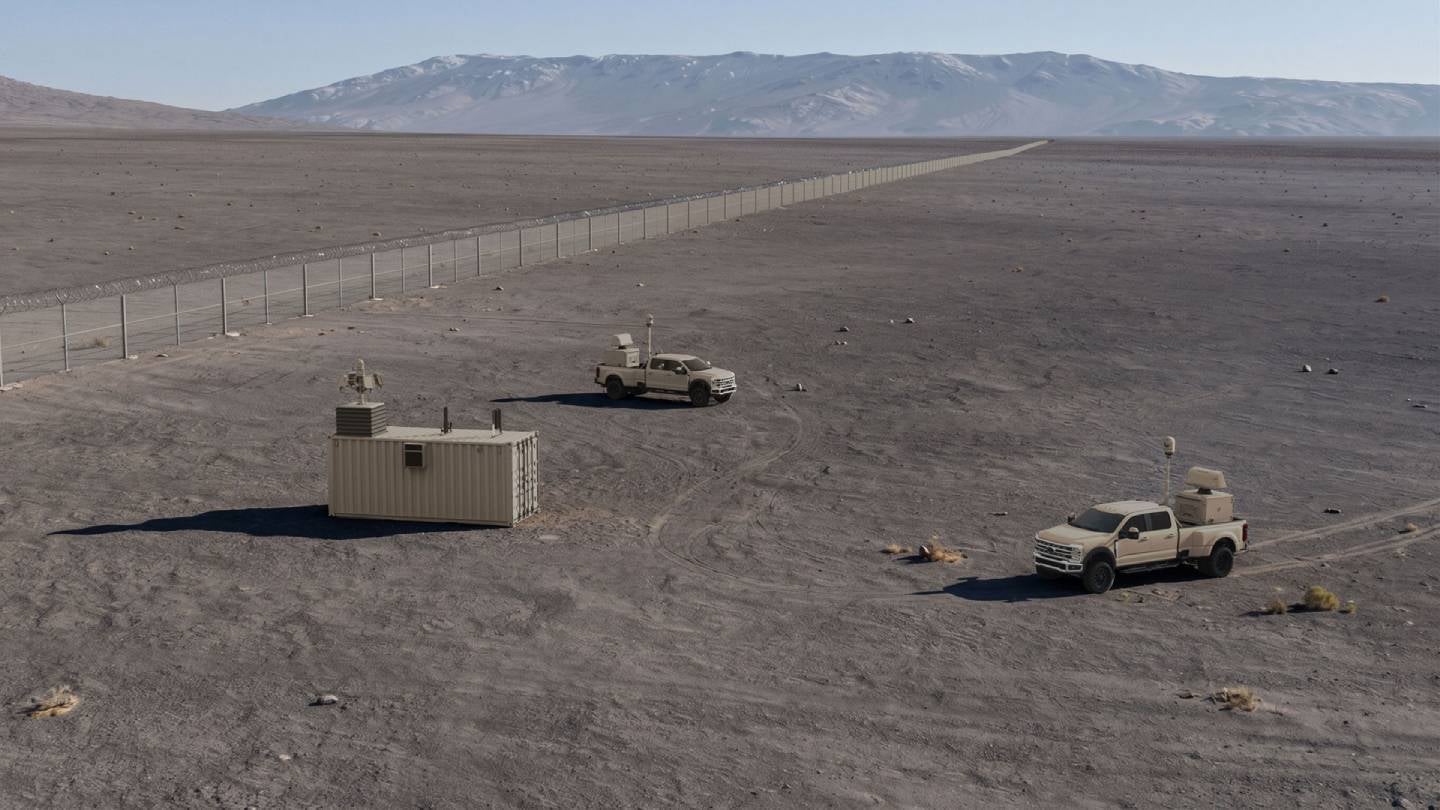
According to reports from Al Jazeera, Arab News, and Middle East Eye, the center will be a forward command point in Kuwait, the country geographically closest to the Gulf theater and to the U.S. forces deployed there. Its presence in Kuwait provides quick connectivity to warning networks, air bases, and Gulf ports, but it does not automatically guarantee unified decision-making. The command center needs permanent liaison officers, shared databases, a secure communication system, and clear procedures that define who has the authority to issue an interception or response order.
The first test will be in air and missile defense. Iran does not need to destroy every Gulf facility to impose a political and economic cost; it suffices for it to make each country defend its own airspace alone and to create time gaps between the detection of a missile or drone and the decision-making. A unified command could reduce these gaps if it connects radars, Patriot and THAAD systems, and fighter jets into a single operational picture. However, if the data remains confined within national rooms, the center will turn into a beautiful administrative building, a type of facility that is abundant in the region and does not change anything in the battle.
The Problem Is Not a Lack of Equipment
From a military perspective, the Gulf states suffer from a known imbalance in the triangle of capability consisting of equipment, training, and institutions. Equipment is available and at high levels; Saudi Arabia, the UAE, Kuwait, Qatar, Bahrain, and Oman operate modern aircraft, air defense systems, and ships, and have budgets that allow for further purchases. However, joint training is less regular than defense exhibitions, and national institutions do not easily relinquish their information or their right to interpret the threat.
Even the best air defense network does not work if the operations center does not know the intentions of the neighboring center, or if the countries disagree on the definition of an attack. Is intercepting a drone over territorial waters a national decision or a Gulf decision? Does the air force respond to an attack on a tanker flying the flag of another country? These are political questions as much as they are operational. Without common rules of engagement and prior authorization, the center may be incapacitated in the minutes when a decision needs to be faster than the missile.
Kuwait Between Protection and Dependence
The choice of Kuwait is not coincidental. The country has a direct memory of the invasion, hosts a large American military presence, and its location places it at the heart of the equation between Iraq, Iran, and the northern Gulf. This gives the center logistical depth and connectivity with the American ally, but it also reveals the contradiction that accompanies every Gulf security project. The council countries want independent capability, but they still rely on the United States for space reconnaissance, early warning, command and control, refueling, and technical support.
Therefore, the center should not be read as a substitute for the American presence. It is more likely a Gulf attempt to gain a stronger seat within the deterrence system led by Washington, while keeping the Arab decision present in the operations room. This is a realistic step, but it is not military independence. Independence begins when the Gulf states can manage the threat picture, communications, munitions, and maintenance for weeks without waiting for an American update or political permission from abroad.
From Announcement to Combat Capability
Reports published by Al-Monitor and The Jerusalem Post linked the decision to rising regional tensions. This gives the project political momentum, but it may also create an unhealthy urgency. What is needed is not the opening of a new center and then announcing its success, but building a rigorous testing cycle that includes intense missile attacks, low-altitude drone swarms, electronic jamming, and simultaneous strikes on energy facilities and ports. Crews must train to operate during communication outages and to transfer command, and the results should be measured by the time taken to detect the threat, the decision time, and the interception rate, not by the number of press conferences.
Moreover, the unified command will not alone address the sustainability issue. Maintaining Patriot and THAAD systems and fighter jets requires spare parts, engineers, and stable supply chains. If countries purchase the systems and then leave training and maintenance to foreign contractors, they will have unified the operations room without unifying the capability to keep missiles and aircraft ready. In my opinion, the center should have authority over periodic joint exercises, a regional stockpile of spare parts, and a Gulf school for officers and technicians, otherwise the idea will remain captive to political data.
Conclusion
The establishment of the advanced military command in Kuwait is the best opportunity in years to transform Gulf cooperation from diplomatic coordination to measurable military action. However, it will not deter Iran merely by the presence of a new sign or a room full of screens. Deterrence requires a joint decision, joint training, and trust that allows one country to issue a warning or launch a defensive missile in defense of another country. Here lies the contradiction that the Gulf states have not yet resolved: they want to be the masters of their security decision, but they are still building their capability around an external protection network. The center may narrow this gap, but it will not eliminate it.
Sources Al Jazeera, Arab News, Middle East Eye, Al-Monitor, and The Jerusalem Post, reports published between November 10 and 11, 2026.
The Gulf Cooperation Council (GCC) established a unified military command center in Kuwait on November 10, 2026, to enhance deterrence against Iran. This center aims to coordinate military responses among member states and improve operational readiness. Its strategic location in Kuwait facilitates quick connections to U.S. forces and regional defense networks. However, effective operation depends on joint training and shared decision-making protocols among the GCC states.
- GCC agreed to establish a unified military command center in Kuwait on November 10, 2026.
- The center aims to enhance deterrence against Iran and coordinate military responses.
- Kuwait's geographical position is strategic for military operations in the Gulf region.
- The center requires permanent liaison officers and shared databases for effective operation.
- Joint training and common rules of engagement are necessary for operational effectiveness.