
2026 PLA Infantry Mandatory Anti-Drone Training: New Battlefield Rules Are Being Rewritten for Ground Operations
 Li Minghui
In 2026, the PLA Infantry Will Mandatorily Conduct Counter-Drone Training, New Battlefield Rules Are Being Rewritten for Grassroots Operations
From Specialized Subjects to Mandatory Courses for Infantry
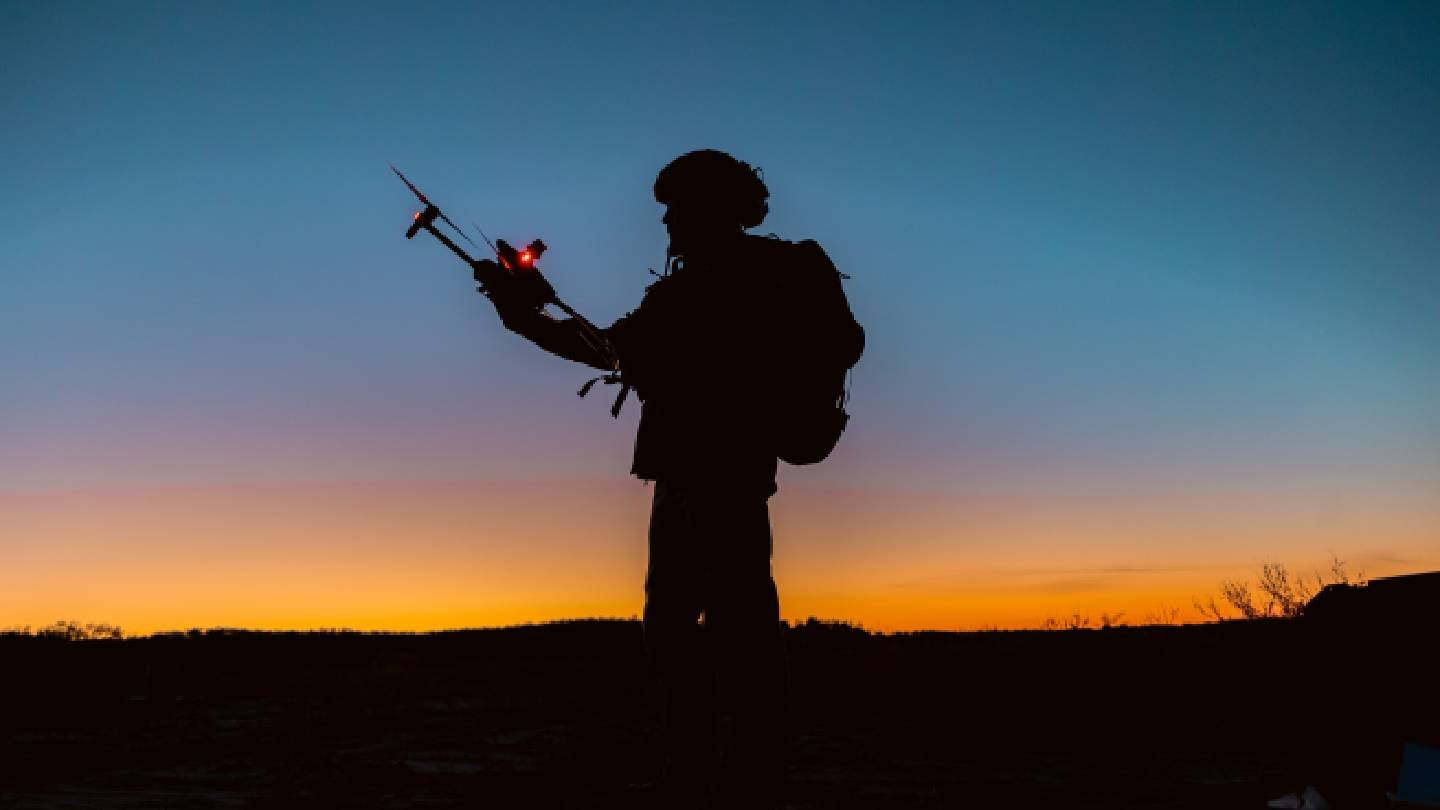
On November 11, the South China Morning Post reported that the People's Liberation Army (PLA) is incorporating counter-drone training into the routine training of infantry brigades. The report mentioned that grassroots units are no longer viewing drones solely as targets for the air force or electronic warfare units, but are requiring ordinary infantry to identify, evade, and deal with low-altitude small drones. This is a change that is easily overlooked: it indicates that the "transparent battlefield" experience formed on the Ukrainian front has entered the grassroots training system of the PLA.
The past air defense concept mainly revolved around aircraft, helicopters, and cruise missiles, emphasizing a layered interception network composed of radar, missiles, and artillery. However, small quadcopters have pushed the issue down to the squad level. They fly low, are slow, and inexpensive, capable of reconnaissance, dropping munitions, or directing artillery fire. Using an expensive air defense missile to intercept a commercially modified drone is clearly not cost-effective; relying entirely on electronic warfare equipment is also limited by power, frequency bands, and terrain.
The PLA Needs to Address More Than Just One Drone
From publicly available information, the training focus may include camouflage and dispersed deployment, observation post early warning, the use of portable jamming devices, and squad coordination under communication suppression. Some units will also incorporate machine guns, shotguns, and directed energy devices mounted on infantry fighting vehicles into their short-range counter-drone plans. The key here is not a specific type of equipment, but compressing the "detect—judge—jam—destroy" process into a matter of minutes or even seconds.
This also explains why training must be pushed down to the infantry brigade level. Drones often first expose not command posts, but ammunition vehicles, mortar positions, and assembling infantry. By the time specialized air defense units arrive, the target location may have already been continuously relayed. For the PLA, this means that the traditional battalion and company command chain needs to add a low-altitude sensor network; squad leaders not only need to read maps but also judge whether a video indicates that artillery fire is imminent.
The True Test of PLA Modernization
The author believes that the value of mandatory counter-drone training lies not in proving that the PLA has a perfect counter-drone system, but in exposing the shortcomings in system construction. The first issue is quantity: if every infantry company requires jammers, electro-optical warning devices, and backup power supplies, the scale of equipment procurement and maintenance will rapidly expand. The second is spectrum management: a large number of jamming devices operating simultaneously may interfere with friendly drones, data links, and navigation systems. The third is training quality: writing subjects into the syllabus does not equate to soldiers being able to perform under night conditions, rainy weather, and strong electromagnetic interference.
China's military industry has a clear industrial foundation in small drone manufacturing and electronic component supply, but the challenges for military systems are reliability, anti-jamming, and joint operational interfaces. In simple terms, producing ten thousand drones is not difficult; equipping hundreds of thousands of soldiers with counter-drone tools that can operate in harsh environments is the more expensive project.
Real Implications in the Taiwan Strait Scenario
The islands, ports, and urban environments in the Taiwan Strait are complex, and small drones can take off from civilian areas, ships, or temporary positions. If the PLA popularizes counter-drone training among infantry brigades, it means that their envisioned landing and beach operations will no longer only consider enemy aircraft and missiles, but will also prepare to respond to dense low-altitude reconnaissance, decoy swarms, and munitions delivery. Meanwhile, Taiwan and U.S. forces will also view drones as low-cost tools to deplete PLA air defense resources.
However, public reports do not specify how many units the training covers or which models are used, nor is there evidence that all units have reached the same level; this information remains to be confirmed. What is truly worth questioning is: once counter-drone equipment becomes standard for infantry, can the PLA establish matching batteries, spare parts, spectrum planning, and battlefield data links? The new battlefield rules have already been written into the training syllabus; the next step to observe is whether it can withstand the continuous attrition of real battlefields.
References
The People's Liberation Army (PLA) is mandating anti-drone training for infantry units, requiring soldiers to identify and deal with low-altitude drones. This change, reported on November 11, 2026, reflects lessons learned from the Ukraine battlefield and aims to enhance the PLA's operational readiness. The training includes the use of portable jamming devices and other equipment to improve response times against drone threats.
- The PLA is mandating anti-drone training for infantry units.
- Training includes identifying and dealing with low-altitude drones.
- The shift in training reflects lessons learned from the Ukraine battlefield.
- The PLA aims to compress detection and response times to seconds.
- Concerns exist regarding equipment procurement and training quality.