

Synopsis: New imagery circulating online purports to show China’s long-anticipated H-20 stealth bomber and, importantly, what analysts assess as two separate internal weapons bays—suggesting a serious move toward low-observable, long-range strike.
-The piece argues that China’s advances in materials, coatings, and inlet design, demonstrated across fifth-gen fighters and flying-wing drones, could translate into a lower radar signature than many expected.
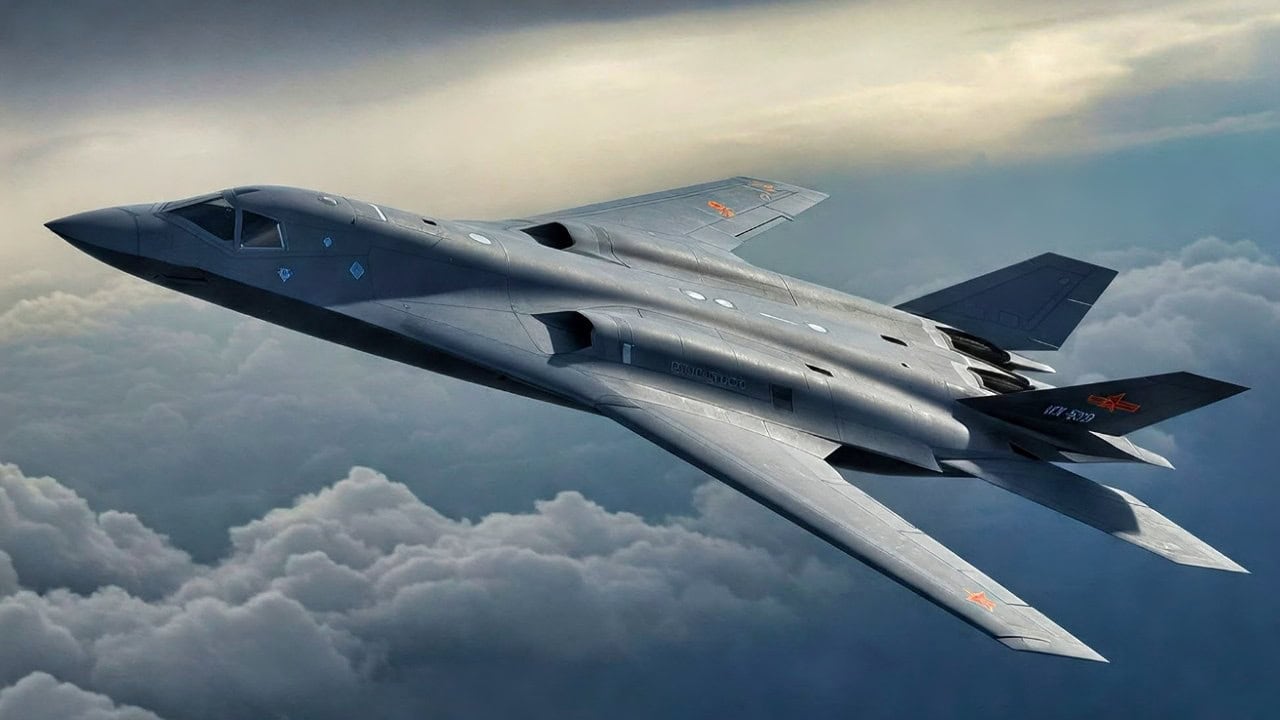
Computer Generated Image of H-20 Bomber from China. Image Created with AI help.
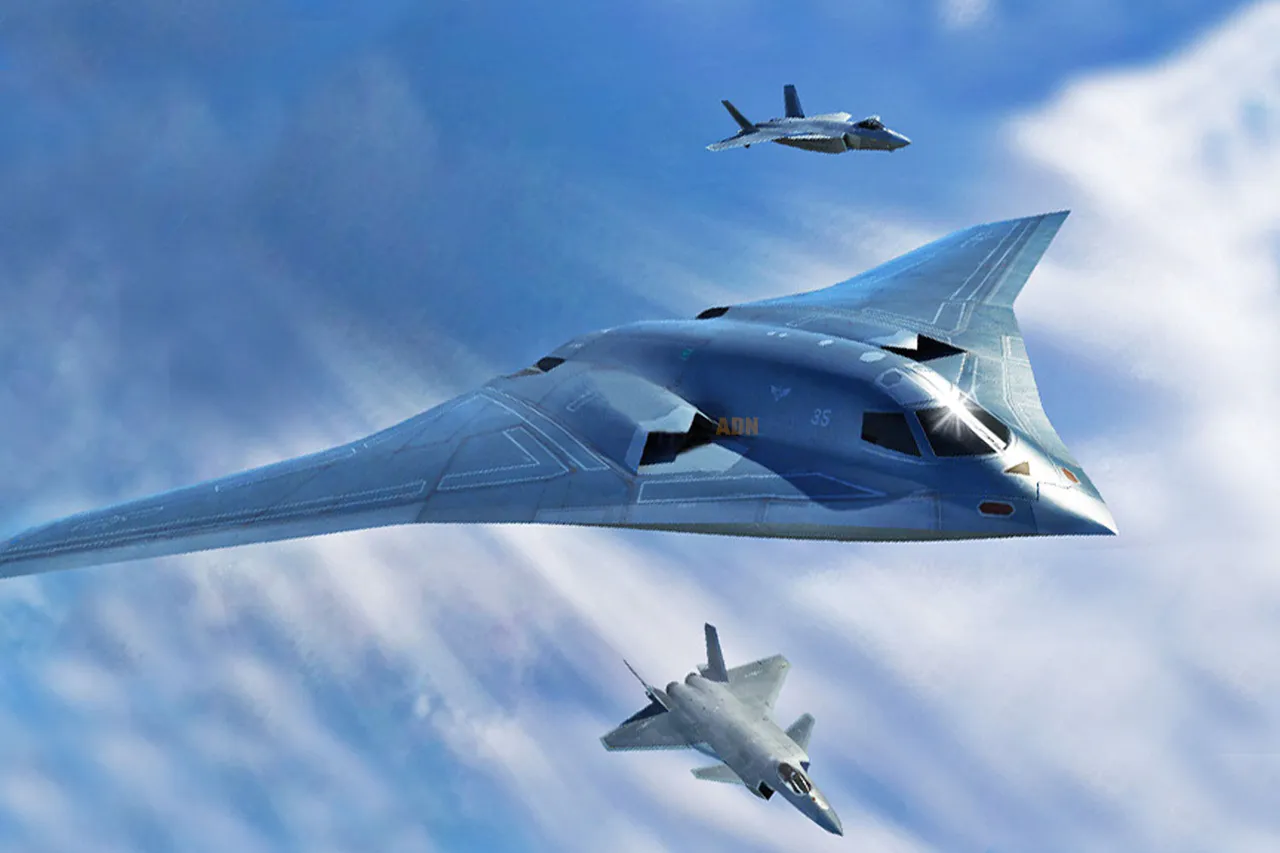
H-20 Bomber. Image Credit: Creative Commons.
-It also frames the H-20 as a strategic shift: the PLAAF has relied on upgraded H-6 variants for standoff missile delivery, but an actual stealth bomber would expand Beijing’s options beyond the first island chain and deepen global reach.
The H-20’s “Hidden” Feature May Be Two Internal Weapons Bays
Recent images of the People’s Liberation Army Air Force (PLAAF) Xi’an Aircraft Corporation (XAC) H-20 stealth bomber reveal not just the broad outlines of the aircraft’s aerodynamic design. The photos also show what has been assessed as two separate internal weapons bays.
This aircraft is expected to have a dramatically lower radar cross section (RCS) than expected, with its external materials, coatings, and air-intake design benefiting from advances in low-observable technology already seen in the People’s Republic of China’s (PRC) aerospace and defense industries.
Those technological achievements within the PRC have been demonstrated across multiple programs over the past 16 years.
Specifically, the Chengdu J-20 and Shenyang J-35 5th-generation fighter programs, and the three 6th-generation fighter programs that are also currently in various stages of flight testing.
Low RCS has also been demonstrated in the designs of various unmanned flying-wing aircraft, such as the new CH-7 long-range reconnaissance aircraft.
There is also an unmanned stealth aircraft that has been seen at a PLAAF base near Malan in Xinjiang province, with photos published in mid-June. Images of the aircraft were subsequently seen on October 19, showing it in flight for the first time.
In contrast, neither the location nor the exact date of the H-20 imagery has been disclosed. PRC political authorities and PLAAF leadership have also made no official comment on the footage, and the authenticity of what has been released cannot be verified.
In the December 2024 version of its assessment of the PRC’s military power and capabilities, published only a year before these flights, the Pentagon projected that the H-20 bomber would not be ready to fly for several more years.
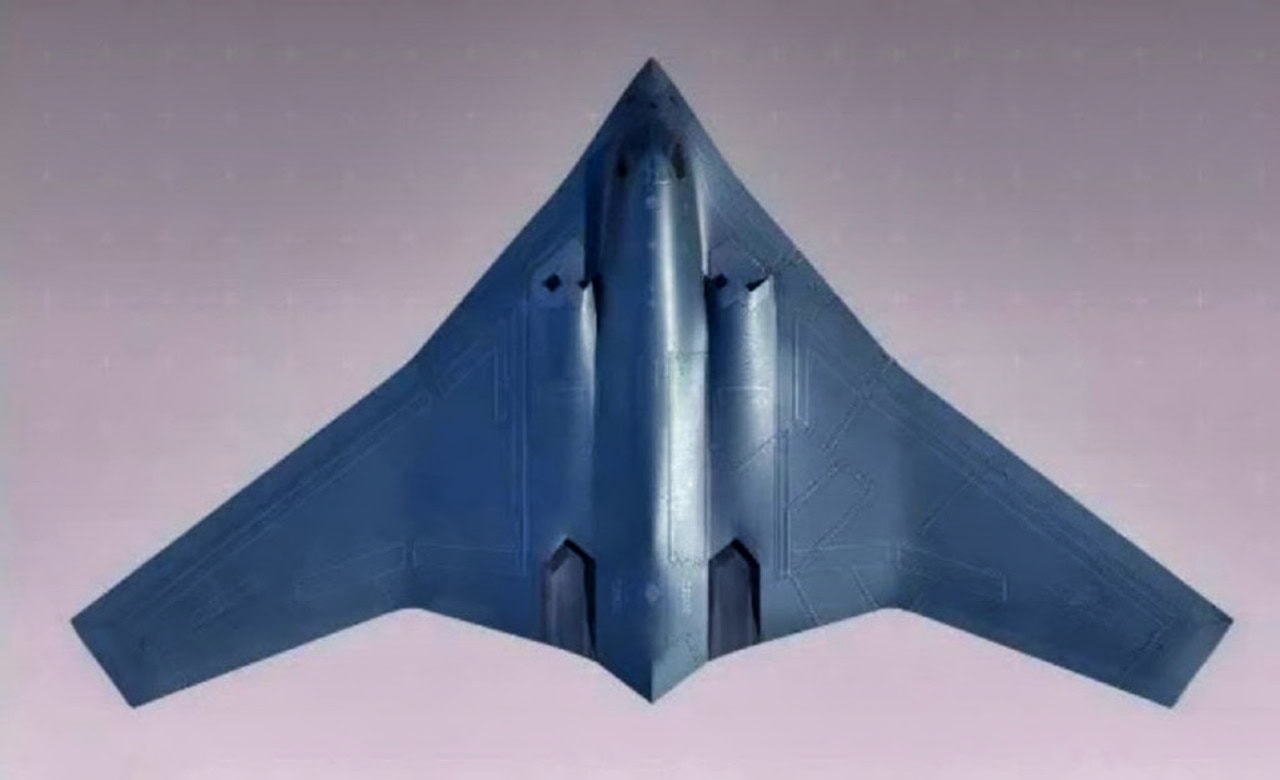
H-20 Bomber from China Artist Rendition.
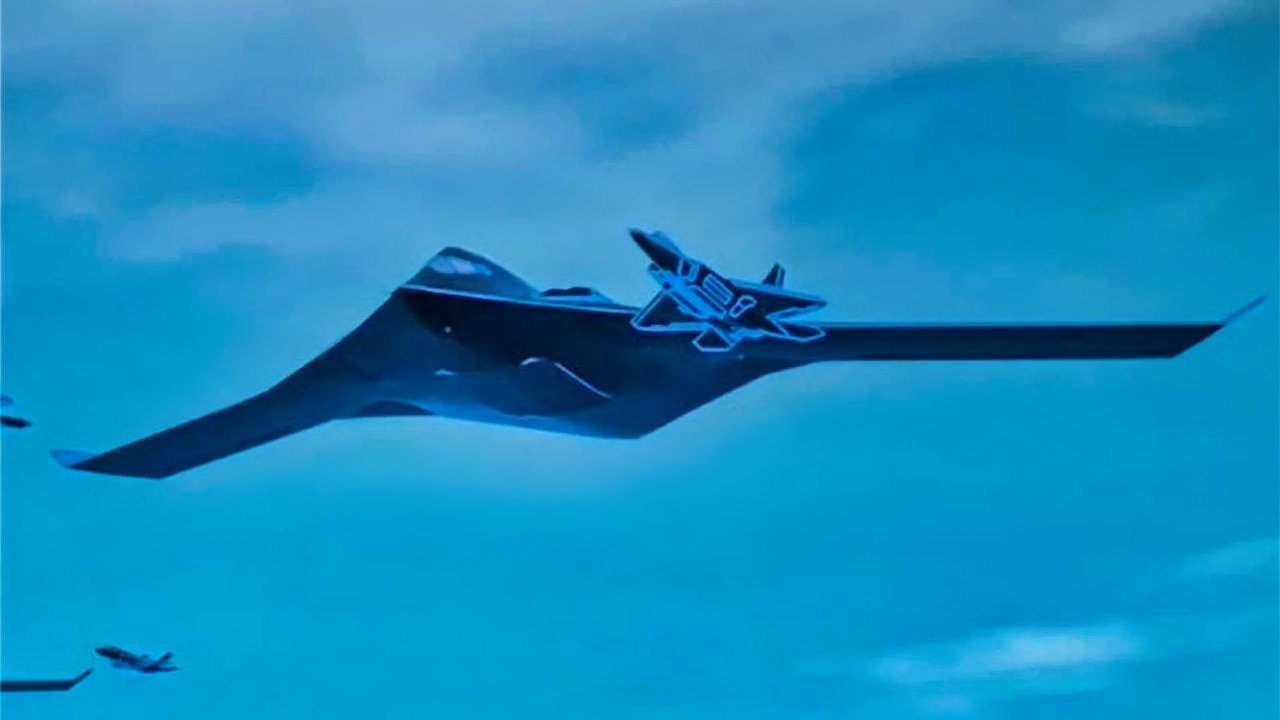
H-20 Bomber Image. Image Credit X Screeenshot.
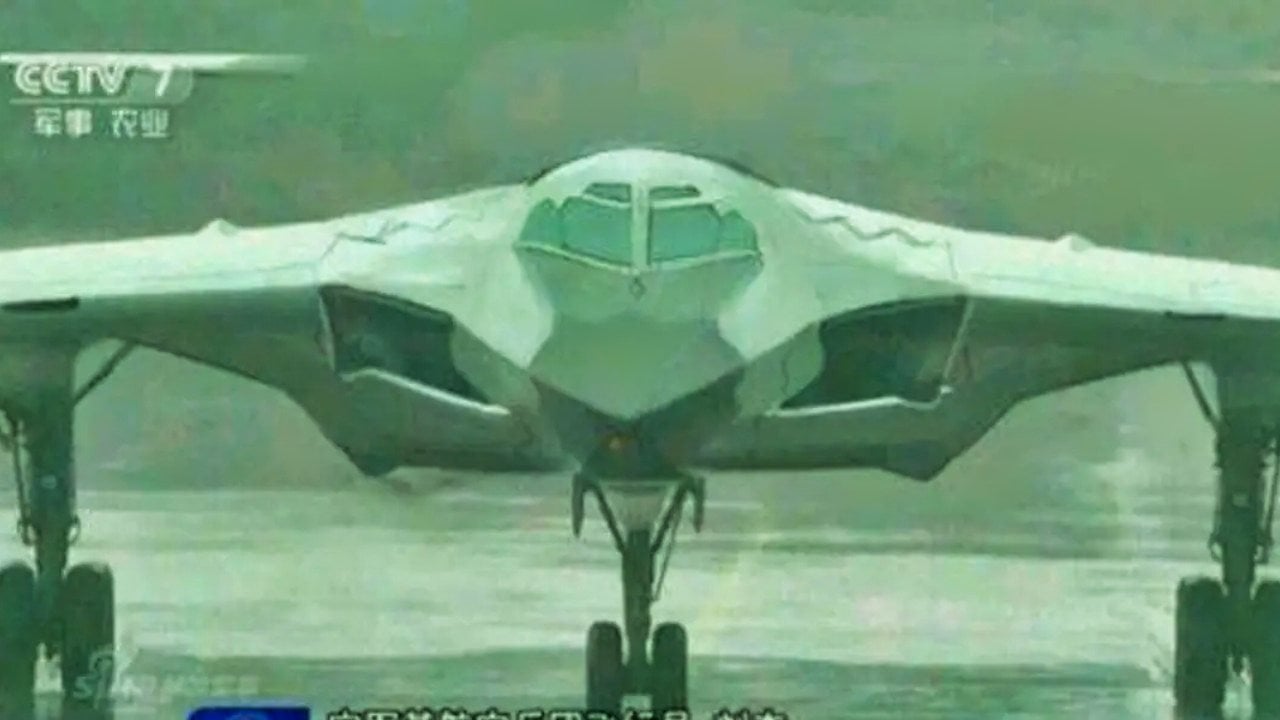
Image Credit of H-20 Bomber: Creative Commons.
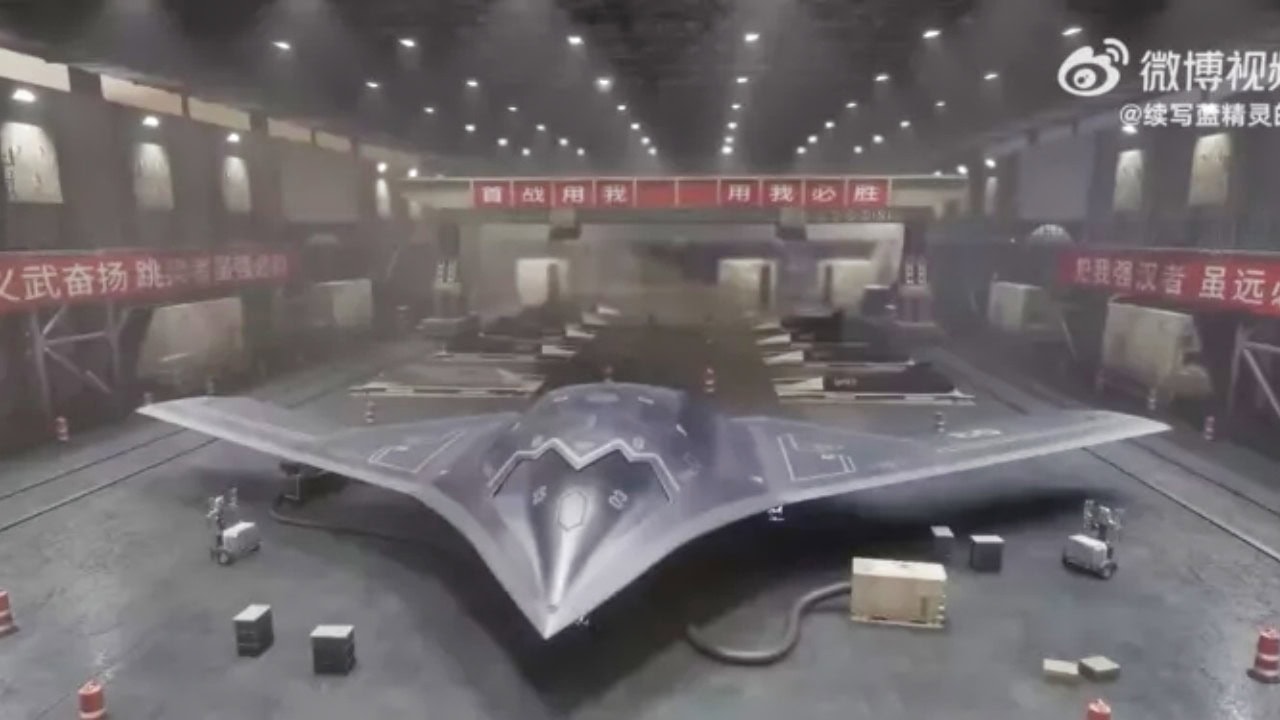
H-20 Bomber. Image Credit: X Screenshot.
Expanding Beijing’s Global Reach with H-20 Bomber
The PLAAF has never had a strategic bomber capable of intercontinental range.
The only heavy bomber in the force’s inventory is the Hong-6 (H-6), with the H-6K as the latest variant. This H-6 medium-range bomber is not even a Chinese-developed platform, but rather a licensed-production variant of the old Soviet-era Tupolev Tu-16.
Although the aircraft does not have the range to cross another continent and return, it can carry and launch long-range ballistic missiles capable of striking targets at intercontinental ranges—including military facilities located in the continental United States (CONUS).
The H-6 has also experienced an increase in its operational range thanks to a replacement of its older-model power plants with a more fuel-efficient engine in the form of the Perm/Soloviev Russian D-30KP-2 – one of the more successful and capable of Russia’s aeroengine design bureaux. The aircraft is now believed to be using a Chinese reverse-engineered version of this more modern Perm/Soloviev design, which is designated WS-18.
The H-6K has also received a second range increase, thanks to an increase in the number of XAC YY-20/Y-20U aerial refuelling tankers, which enable the aircraft to fly long-endurance missions. The PLAAF will now have a strategic asset that can project airpower beyond the “first island chain“.
Another option now being proposed is that, given the current levels of cooperation between the two nations, the PLAAF can use Russian bases as refuelling stops. This eventuality would allow the PLAAF to operate its bomber fleet near the continental United States (CONUS).
Joining The Club
Having an intercontinental-range bomber with stealthy design capabilities allows the PRC to join this exclusive club of nations, of which they and the US are the only members.
Russia does have an intercontinental-range bomber currently in series production, the Tupolev Tu-160M. This is a modernized version of the original Tu-160, produced in the 1980s during the Soviet era.
Russia has had a stealthy flying-wing bomber, like the H-20 and the US B-2 and B-21, which have been in development for more than two decades. This program, called PAK-DA, is being designed by Tupolev and is known by its project description (Perspective Aerospace Complex for Long-Range Aviation).
But there has been little to no evidence that it has advanced beyond the prototype stage over all these years.
In November of last year, a trove of documents leaked from the Russian PAK-DA program which, according to a Ukrainian defense news report, “used Taiwan-made Hartford HCMC-1100AG and Johnford SL-50 machines, as well as a Serbian Grindex BSD-700U CNC grinder, purchased through subsidiaries from Russia’s Ministry of Industry and Trade,” items supposedly barred from export to Russia by the current US and EU sanctions regimes.
These revelations were uncovered by the international, commercial intelligence service InformNapalm, which noted that “these transactions demonstrate direct [Russian] government support for sanctions evasion schemes.”
About the Author: Reuben F. Johnson
Reuben F. Johnson has thirty-six years of experience analyzing and reporting on foreign weapons systems, defense technologies, and international arms export policy. Johnson is the Director of Research at the Casimir Pulaski Foundation. He is also a survivor of the Russian invasion of Ukraine in February 2022. He worked for years in the American defense industry as a foreign technology analyst and later as a consultant for the U.S. Department of Defense, the Departments of the Navy and Air Force, and the governments of the United Kingdom and Australia. In 2022-2023, he won two awards in a row for his defense reporting. He holds a bachelor’s degree from DePauw University and a master’s degree from Miami University in Ohio, specializing in Soviet and Russian studies. He lives in Warsaw.