
Four Swedish Gripens Met Russian Su-24s Over the Baltic
 Alexandra Reeves
Four Swedish Gripens Met Russian Su-24s Over the Baltic
Four fighters is not a crisis. It is a warning label.
On June 13, the Swedish Air Force scrambled two pairs of JAS 39 Gripen fighters in two separate quick reaction alert missions over the Baltic Sea. According to the Swedish Armed Forces, the Russian aircraft were one Su-24 and one Su-34 operating near Swedish airspace. Swedish territory was not violated. That fact matters, but it should not comfort anyone too much.
The real story is not that Russian aircraft came close to Sweden. Moscow has been doing that around northern Europe for years. The story is that Sweden, now inside NATO, is no longer merely defending a national border. It is helping hold a crowded allied air picture together in one of the most militarised pieces of water on earth.
The Incident Was Small, But The Signal Was Not
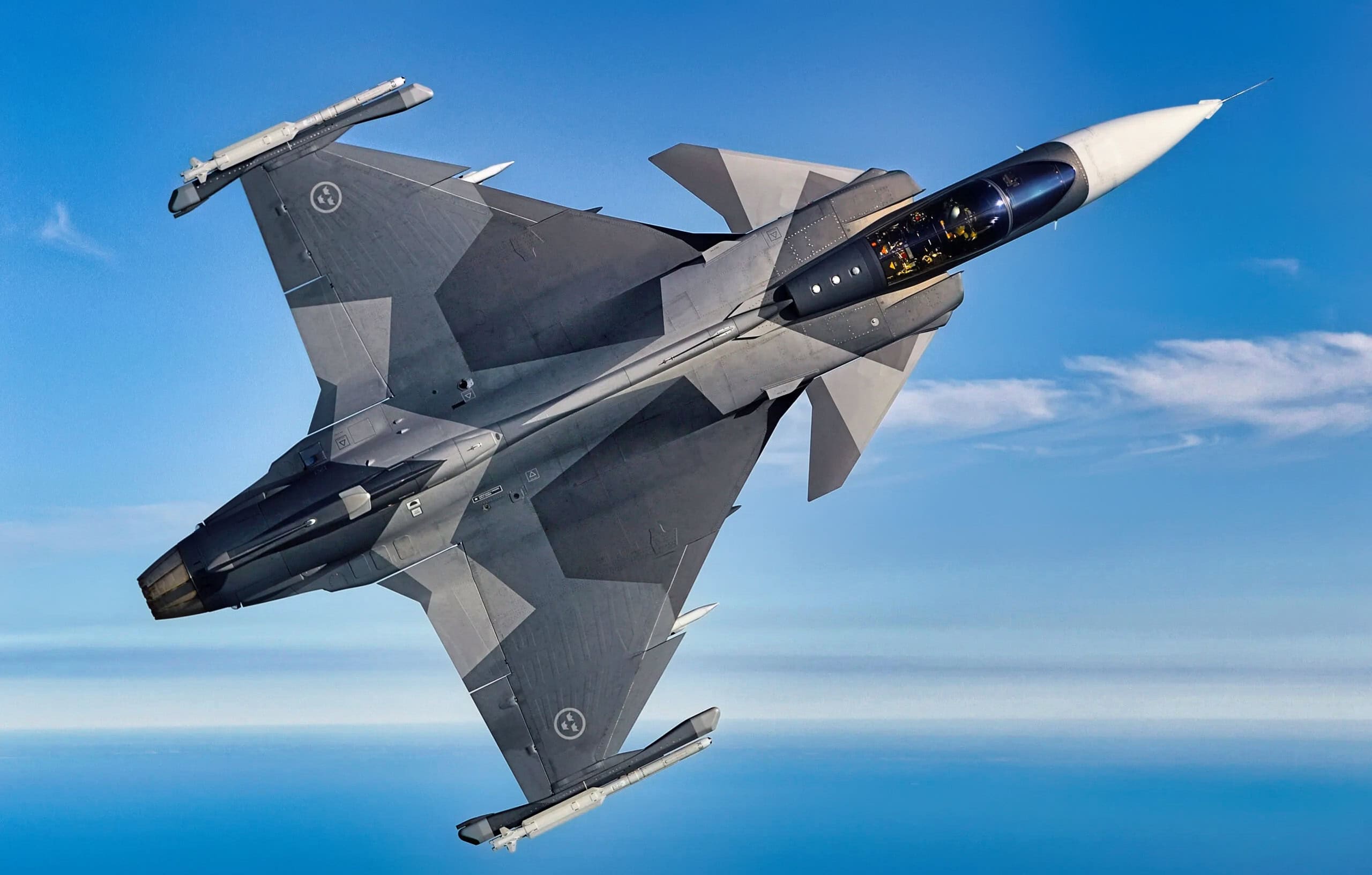
The Swedish Armed Forces said the quick reaction alert force conducted two scrambles with JAS 39 Gripens over the Baltic Sea near Swedish airspace. The incidents occurred in the southern and eastern parts of the Baltic Sea and involved a Russian Su-24 and Su-34. The force said Swedish airspace was not violated.
That is the official version, and it is a disciplined one. The more useful sentence came from the operational side. Vice Admiral Ewa Skoog Haslum, head of the Swedish Armed Forces Joint Operations Command, described the Russian behaviour as a recurring pattern that threatens both Swedish territorial integrity and security. In other words, Stockholm is treating this less as a one-off flight and more as part of a pressure campaign.
Kyiv Independent and Nordic Defence Sector both reported that allied aircraft were also scrambled during the incidents. Anadolu, citing Swedish public broadcaster SVT, reported that the Russian aircraft were followed until they were judged to be far enough away and then headed toward Kaliningrad. That detail is important because Kaliningrad is the hinge of nearly every serious Baltic air scenario. It gives Russia a forward military pocket inside NATO geography.
Why These Aircraft Matter
The Su-24 and Su-34 are not harmless sightseeing aircraft. The Su-24 Fencer is an older Soviet-designed strike aircraft, but it remains a useful platform for reconnaissance and attack missions. The Su-34 Fullback is newer and more dangerous, a two-seat fighter-bomber built for longer-range strike missions with a large weapons load. U.S. Army ODIN describes the Su-34 as based on the Su-27 family and notes its armoured cockpit and two-person crew arrangement. Open technical data generally gives the Su-34 a combat radius around 1,100 kilometres with a heavy weapons load.
The Gripen is the right Swedish tool for this job. Saab markets the latest Gripen E with a GE F414G engine, ten hard-points, AESA radar, infrared search and track, electronic warfare systems and NATO-compatible communications. The aircraft was designed around dispersed operations from Swedish roads and short runways. That Cold War habit, once treated as a charming Nordic speciality, now looks rather modern again.
Here is the uncomfortable point: in a Baltic crisis, the first fight may not be about shooting anything down. It may be about identification, escort, electronic order of battle, reaction time and political nerve. A Russian Su-34 flying near Swedish airspace forces NATO to show whether the northern air picture is stitched together or merely discussed at conferences.
Sweden Is Now Part Of The Tripwire
Before Sweden joined NATO, Russian air activity near Swedish territory tested a militarily capable but formally non-aligned state. That was annoying for Stockholm, but politically contained. Now the same flight path brushes against an alliance problem.
This is where the old assumptions are weak. Many people still talk about NATO enlargement as if it simply added Swedish and Finnish territory to a map. It did more than that. It made the Baltic Sea more defensible, but also made its airspace more operationally dense. Sweden brings Gripens, sensors, bases, maritime awareness, Gotland and an unusually serious defence culture. It also brings more points where Russia can probe for hesitation.
AP reported in April that NATO intercepted Russian strategic bombers and fighters over the Baltic Sea, with French Rafales from Lithuania joining aircraft from Sweden, Finland, Poland, Denmark and Romania. That formation included Tu-22M3 bombers and Su-30 and Su-35 escorts, according to the French detachment cited by AP. AP also noted that NATO air policing has been in place since the Baltic states joined the alliance in 2004, and that even before the full-scale war in Ukraine NATO was intercepting Russian aircraft around 300 times a year, mostly over northern European waters.
So, no, the June 13 scramble did not come from nowhere. It fits a pattern in which Russia keeps allied crews busy, maps reaction behaviour and normalises military pressure below the threshold of open attack.
The Baltic Is Becoming A Readiness Contest
The Russian military does not need to violate Swedish airspace to achieve something. Near-border flights can test radar coverage, communication routines, QRA speed, allied handoffs and political messaging. They also create fatigue. Every scramble costs money, burns hours, stresses crews and forces commanders to decide whether this event is routine or the beginning of something worse.
That is the small cruelty of modern deterrence. The defender must be right every day. The probe only needs one useful data point.
For NATO, Sweden changes the geometry. Swedish aircraft can support Baltic Air Policing, protect approaches to Gotland, monitor routes toward Kaliningrad and link Nordic air defence with Poland and the Baltic states. But this only works if allied command arrangements, rules of engagement and data links function under pressure. A Gripen is useful. A Gripen connected to Danish, Finnish, Polish and NATO air command data is much more useful.
The incident also shows why Europe should stop treating air defence as a single problem of Patriot batteries and missile interceptors. The air defence problem starts much earlier, with surveillance, fighter readiness, electronic warfare and the ability to classify an aircraft before it becomes a missile-launch problem. Russia understands this. That is why it mixes bombers, fighters, reconnaissance aircraft, drones, GPS interference and maritime pressure into one operating environment.
What To Watch Next
There are three indicators worth watching after this scramble.
- First, whether Russian aircraft continue to use routes near Swedish airspace from or toward Kaliningrad.
- Second, whether NATO responds with more public disclosure of allied scrambles in the Baltic region.
- Third, whether Sweden moves from national QRA language toward more explicit NATO air policing language in future statements.
The June 13 intercept was not a battle, and it was not close to one. But it was a reminder that deterrence in the Baltic is now daily work, not summit language. Sweden did what it was supposed to do. The question is whether NATO can keep doing that when Russia repeats the test, changes the aircraft, adds electronic interference or sends the next flight during a political crisis somewhere else.
That is where Moscow will look for weakness. Not in the Gripen cockpit, but in the space between allied readiness and allied decision-making.
On June 13, the Swedish Air Force scrambled four JAS 39 Gripen fighters in response to Russian Su-24 and Su-34 aircraft operating near Swedish airspace over the Baltic Sea. The incident, while not a violation of Swedish airspace, reflects ongoing Russian military pressure in the region. Sweden's NATO membership has intensified the operational context, as it now plays a crucial role in maintaining air security in the Baltic.
- Four Swedish Gripen fighters were scrambled on June 13.
- Russian aircraft involved were one Su-24 and one Su-34.
- Swedish airspace was not violated during the incident.
- The incident is part of a recurring pattern of Russian military activity near Sweden.
- Sweden's NATO membership changes the operational dynamics in the Baltic region.