
France and Chad Reconnect in 2026 — A Discreet Return Against Boko Haram
 Marie Dubois
France and Chad Reconnect in 2026 — A Discreet Return Against Boko Haram
In N'Djamena, the French return does not take the form of a military base. It begins with a surveillance aircraft over Lake Chad, a few intelligence officers, and a declaration signed in Paris. On October 13, 2026, Emmanuel Macron and Mahamat Idriss Déby Itno announced a new military cooperation framework, nearly two years after the rupture of the agreement that had expelled French soldiers from Chad.
The text is presented as a "renewed" partnership, based on mutual respect. The word is carefully chosen. It is neither about reconstructing the former French setup nor resurrecting Barkhane under another name. But on the ground, the difference between a permanent presence and discreet support can come down to the ability to transmit actionable information before an attack.
A Break That Did Not Resolve the Security Issue
In November 2024, N'Djamena denounced its military arrangement with Paris. The last French troops left the country on January 31, 2025. This decision was part of the same wave as the departures from Mali, Burkina Faso, and Niger, but the Chadian case was different: Déby's power did not stem from a Sahelian coup aligned with Moscow and did not seek to turn the French departure into an ideological victory.
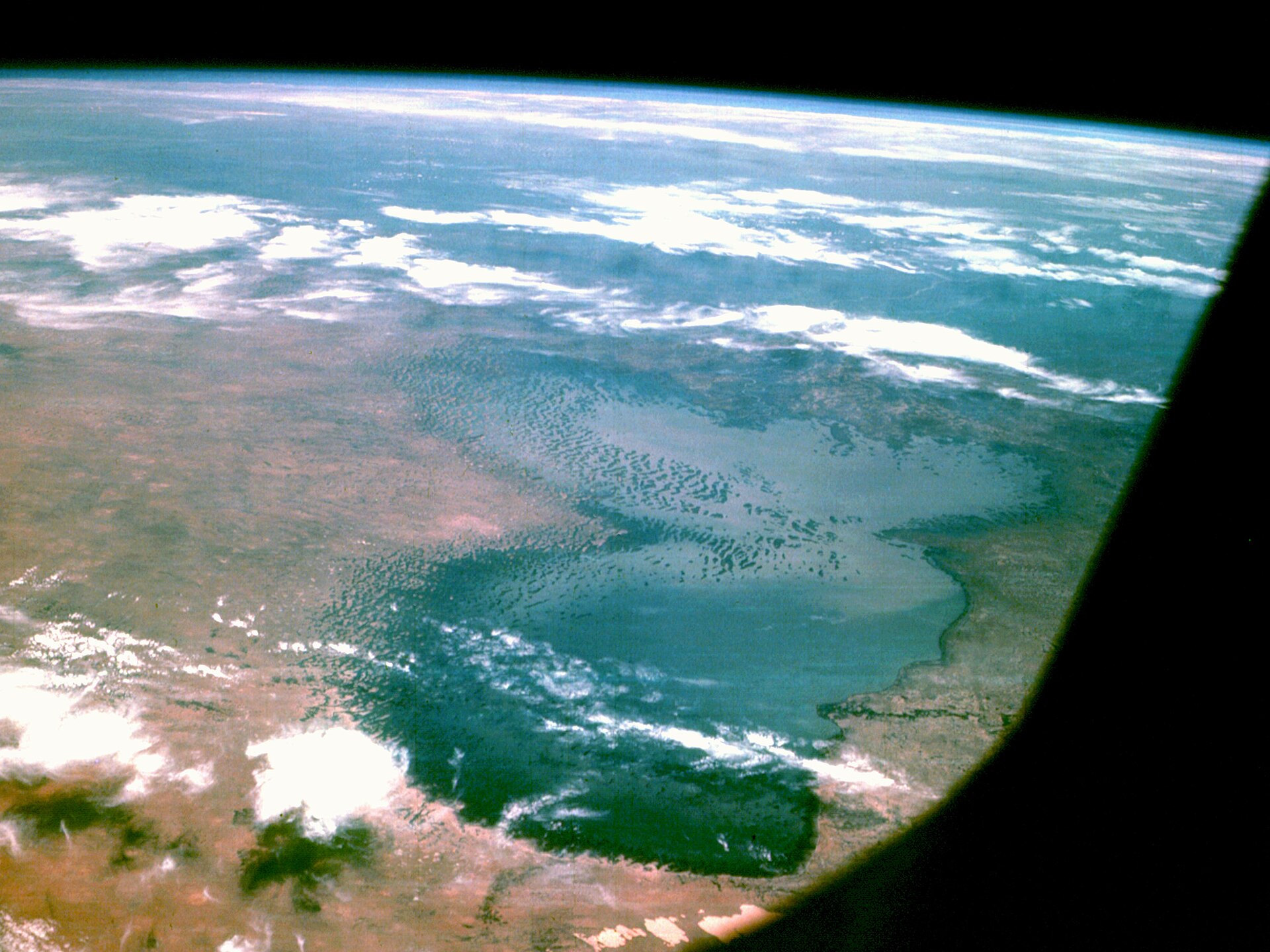
However, the withdrawal created an operational void. Chad must simultaneously monitor its eastern border, affected by the fallout from the war in Sudan, and its western basin, where Boko Haram and the Islamic State in West Africa maintain mobile networks. An army can hold a city. It cannot be everywhere on the tracks, islands, and transhumance corridors that structure Lake Chad.
According to RFI, security cooperation resumed in early 2026 in training, equipment supplies, and intelligence sharing. A Chadian officer quoted by AFP also mentions the deployment of French agents to the national agency and the use of a surveillance aircraft on the Lake Chad border. These elements remain partially opaque. They are plausible, but the tactical details and rules of engagement are not public.
The Real Content of the New Agreement
The declaration of intent signed by the defense ministers is meant to structure training, expertise, industry, and technology. The Élysée speaks of developing Chadian capabilities in innovative areas. This vocabulary indicates less a return of French infantry than a relationship of supplier, advisor, and technical partner.
- Intelligence: improve the detection of armed groups and the monitoring of routes between Lake Chad, Libya, and Sudan;
- Training: strengthen Chadian frameworks without creating a visible dependency on French units;
- Technology: provide means of surveillance, communications, and maintenance;
- Industry: open a channel that associates security and French investments.
On the ground, the decisive question will be the decision-making chain. An aerial image does not stop anyone if it arrives too late at the post that must intercept the column. A drone does not replace a unit capable of covering the last kilometers, distinguishing a fighter from a fisherman, and holding the position after the intervention. This is where foreign partnerships often fail: they produce technical capacity without solving the lack of mobility and permanent presence.
Why Paris Returns Through the Chadian Door
For France, Chad is a geographical foothold, but also an opportunity to correct the mistakes of its African policy. Paris lost its military footholds in Central Sahel after confusing cooperation with inherited influence. A more limited relationship with N'Djamena allows it to remain useful without displaying a form of tutelage. The choice of intelligence and training responds to this political constraint.
For Déby, the interest is different. The Chadian president seeks partners capable of helping his army against concrete threats while avoiding giving Russia a security monopoly. Mercenaries or foreign instructors can provide force, but not necessarily access to intelligence networks, air maintenance, and planning standards that a modern army needs.
This convergence does not mean automatic alignment. N'Djamena will negotiate each access, each piece of equipment, and each information exchange. The Chadian power wants to maintain control over its operations and its national narrative. France, for its part, will have to accept that its flag appears less often and that its influence is measured by results that the public will not see.
The Real Test Will Be Lake Chad
The operational priority is clear: prevent armed groups from converting islands and wetlands into sanctuaries. Distances are deceptive in this region. A vessel can disappear in the channels, cross an administrative border, and emerge several dozen kilometers away before a ground force is alerted. French intelligence can reduce this delay, but only Chadian means and cooperation with neighboring countries can close the loop.
The risk is also political. If the agreement is perceived as the return of an imposed French presence, jihadist groups will have an easy recruitment theme. If Paris remains too cautious, it will offer symbolic cooperation without effect on attacks. As for N'Djamena, it will have to prove that external assistance genuinely strengthens the engaged units and does not merely serve to consolidate the regime's security.
Thus, France and Chad are not restoring the old system. They are testing a tighter, less visible, and potentially more sustainable formula. In the operational theater of Lake Chad, the next indicator will not be the number of statements signed in Paris, but the time gained between the detection of a Boko Haram group and the arrival of a Chadian force on the track. This is where this "new partnership" will cease to be diplomatic and become military.
Sources
RFI, "France and Chad sign renewed defence partnership following two-year hiatus," October 14, 2026; RFI, "France and Chad seek to reset ties, one year on from military split," January 30, 2026; AFP, elements cited by RFI; French Presidency, Élysée statement on defense cooperation.
France and Chad announced renewed military cooperation in October 2026, focusing on intelligence sharing and surveillance operations against Boko Haram. This partnership aims to enhance Chad's military capabilities while avoiding dependency on French forces. The cooperation follows the withdrawal of French troops in January 2025 and addresses security challenges in the Lake Chad region.
- France and Chad announced a renewed military cooperation in October 2026.
- The cooperation includes intelligence sharing and surveillance operations around Lake Chad.
- French troops had previously withdrawn from Chad in January 2025 after a military arrangement was denounced.
- The partnership aims to enhance Chad's military capabilities without creating dependency on French forces.
- The operational priority is to prevent armed groups from establishing sanctuaries in the Lake Chad region.