

Summary and Key Points: Defense expert Kris Osborn reports that French President Emmanuel Macron has officially named the PANG aircraft carrier the “France Libre.”
-Displacing 80,000 tons and powered by two TechnicAtome K-22 nuclear reactors, the vessel will be nearly double the size of its predecessor.
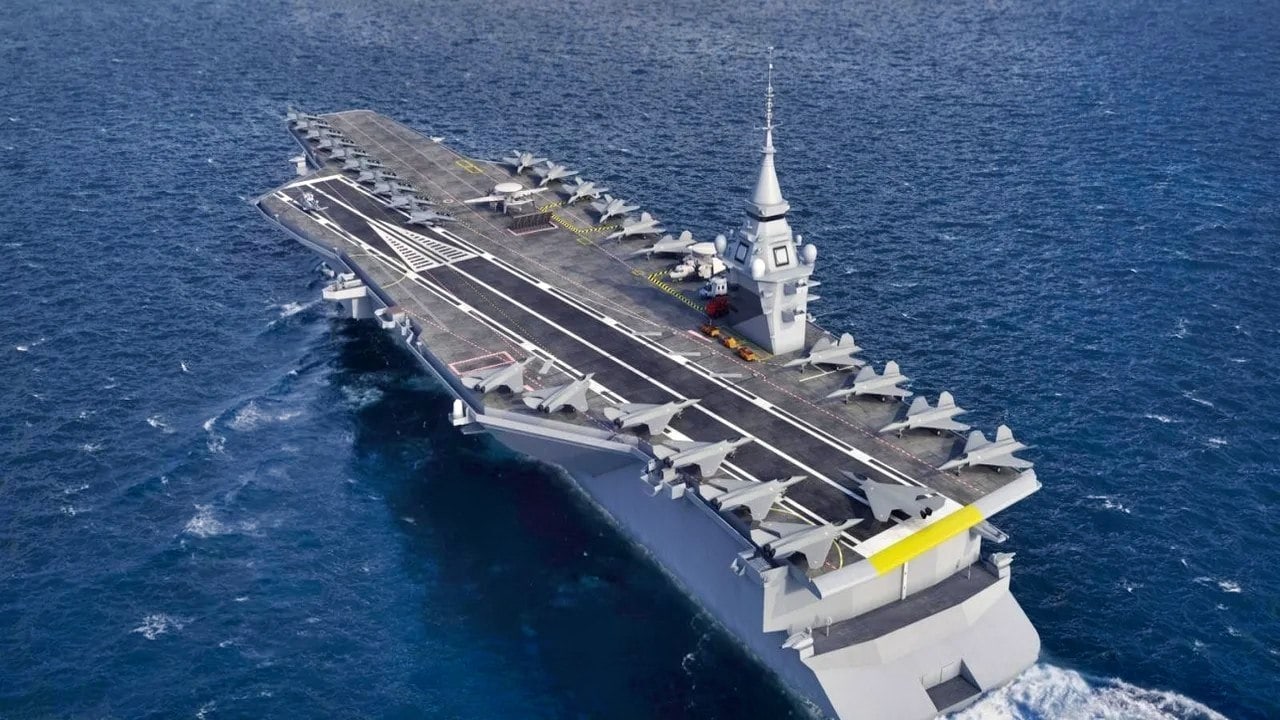
PANG Aircraft Carrier from France. Image Credit: French Navy.
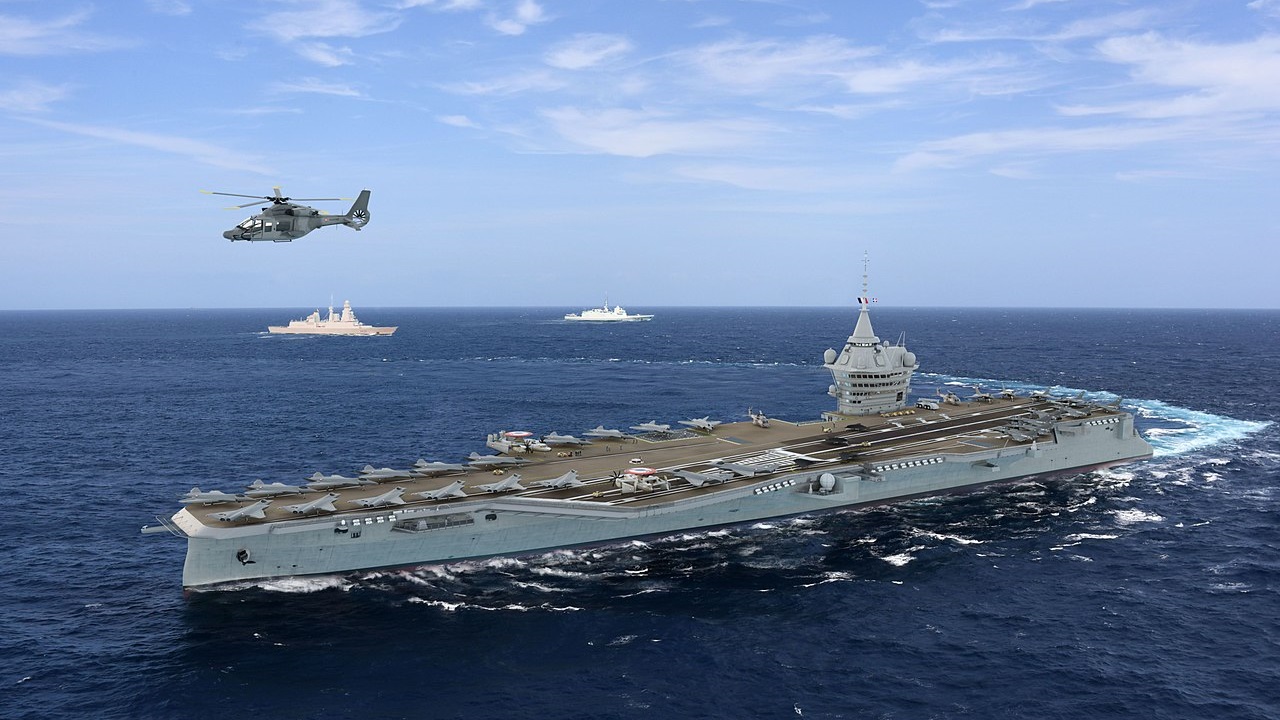
PANG Aircraft Carrier. Image Credit: Creative Commons.
-Crucially, the Libre will integrate U.S.-developed EMALS (Electromagnetic Aircraft Launch System) and Advanced Arresting Gear (AAG).
-This collaboration with General Atomics allows for bulk acquisition, lowering costs and ensuring that French and U.S. Carrier Air Wings can synchronize radar, RF signals, and datalink frequencies for unified global power projection.
The France Libre Era: Macron Unveils the 80,000-Ton Future of French Naval Power
The prospect of a U.S.-French “dual-carrier” operation in the future is moving closer to potential reality as French President Emmanuel Macron formally “names” his country’s much-anticipated second aircraft carrier; France’s PANG, to be operational by 2038, will be called the “Libre” in honor of the WWII victory against the Nazis and the anticipated “freedom” France expects its military to ensure in coming years.
“The project of our armed forces, but also of our research, of our national industries. This will to remain free is the will for independence at all costs; for total, unconstrained autonomy of action; for the projection of our forces wherever the defense of France’s interests demands it, anywhere in the world,” Macron said, as quoted in Naval News.
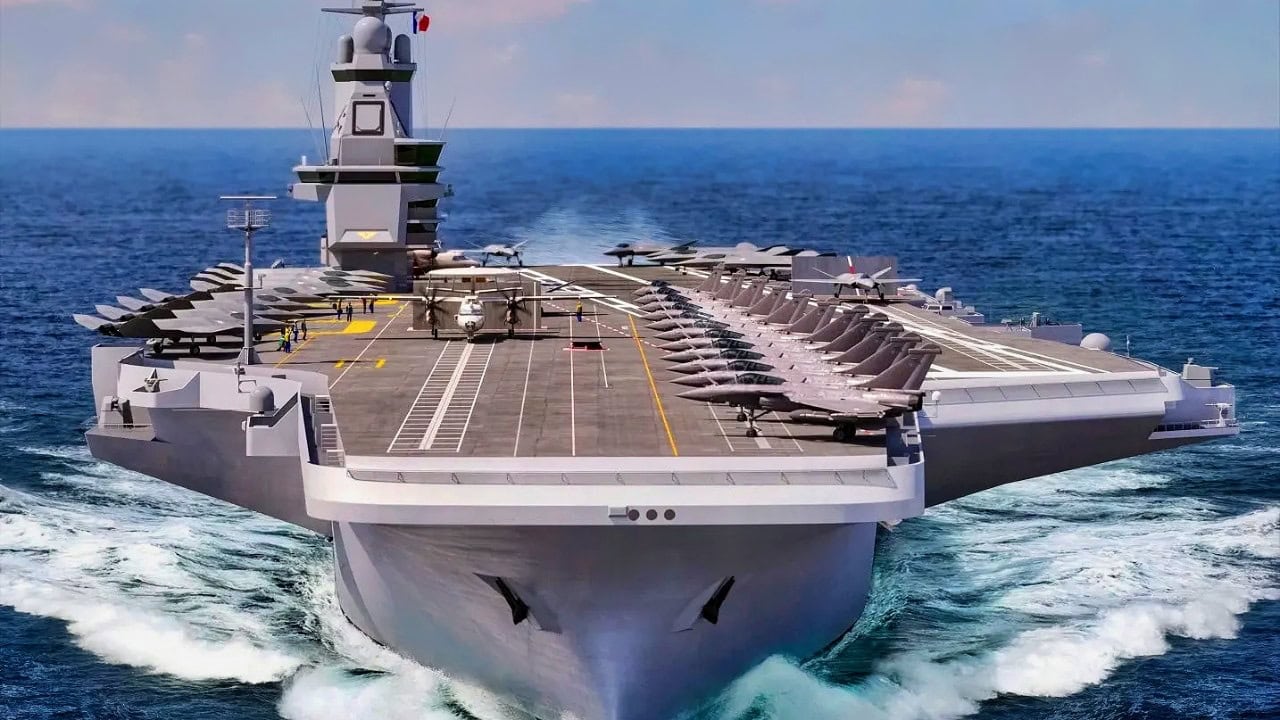
PANG Aircraft Carrier from France. Image Credit: Industry Handout.
The “Libre” will be a “massive” ship, with a displacement of 80,000 tons, nearly twice that of the existing Charles de Gaulle’s 42,000 tons.
“Power will come from a pair of TechnicAtome K-22 pressurized water reactors, granting the vessel virtually unlimited range and endurance at speeds of up to 27 knots via three shaft lines. Crew complement (including air wing) is set to be about 2,000 sailors,” Naval News writes.
US-French Collaboration on Aircraft Carriers
The US-French collaborative effort is quite significant as it can enable bulk buys of equipment and key components to lower costs and streamline acquisition.
Specifically, the collaborative effort centers on key technologies being built into the US Navy’s Ford-class carriers, such as the Electromagnetic Catapult.
Much like the Ford-class, the new PANG (Libre) will not only be nuclear-powered but also incorporate EMALs and Advanced Arresting Gear.
EMALs is an advanced technology that first appeared on the USS Ford; it is now operational and has achieved a measure of success launching fighter aircraft from the flight deck. EMALs enable a smoother takeoff, reduce “wear and tear” on the aircraft, and enable a more efficient, faster-paced sortie rate.
Years ago, an expert Navy engineer explained to me that EMALs produce a smoother, steadier takeoff than the “shotgun” launch of a traditional steam catapult. Instead, EMALs use a rolling magnetic field to generate smoothly applied propulsion power.
U.S.-French Acquisition & Sustainment
Acquiring larger numbers of EMALs and AAGs is extremely advantageous to both the French and US Navy because a larger volume buy can support production capacity and lower prices.
General Atomics, maker of EMALs, will be better positioned to build the systems more efficiently and successfully. Combined acquisition can also support technological synergy and cooperation between France and the US.
The US Navy has on several occasions conducted “dual-carrier” training operations in the Pacific to solidify collaborative attack missions on a much larger scale.
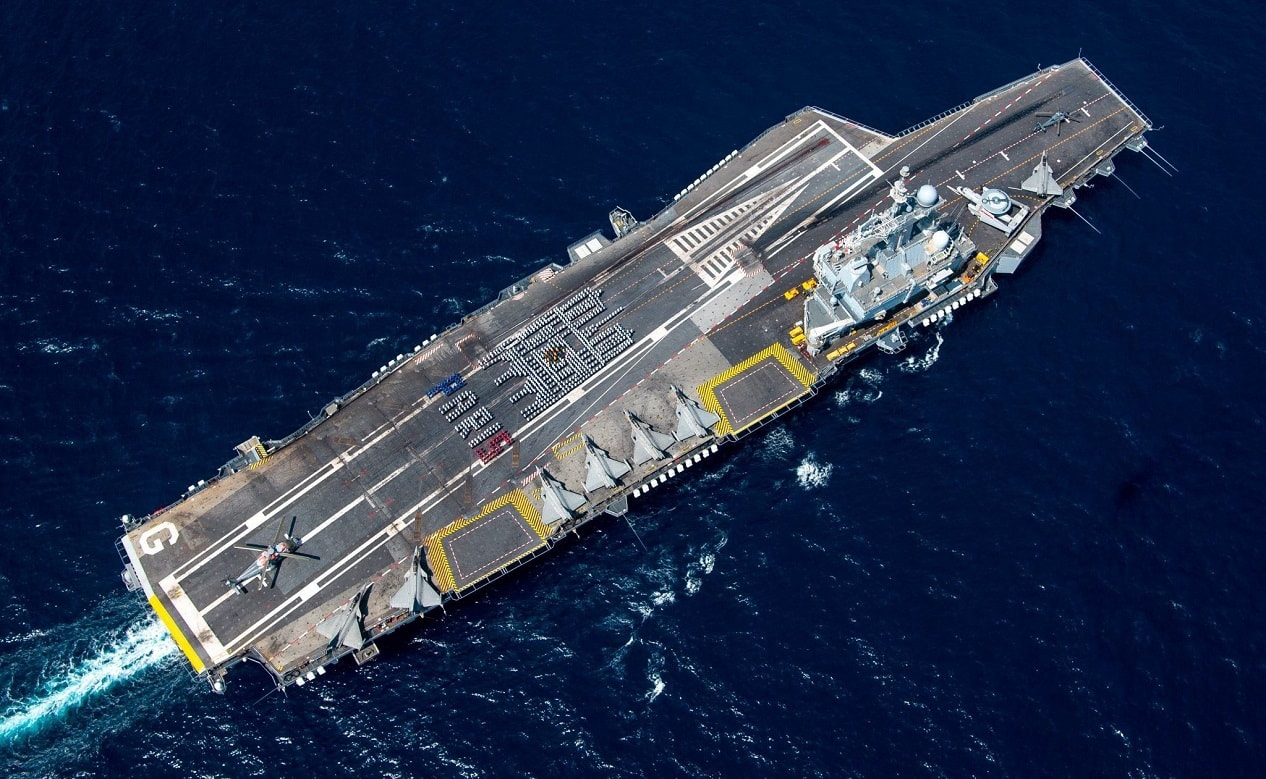
French Aircraft Carrier Charles de Gaulle.
If communication is established and secure to support coordinated air launches, an ocean-launched air campaign could double or even triple in size.
This would likely prove extremely critical if the US and allied forces needed to engage in great-power warfare against Russia or China.
A French carrier capable of seamlessly integrating with a Ford-class US Navy carrier could double an air attack campaign from the Baltic Sea or Mediterranean if needed.
Along with EMAL’s synergies, Libre and Ford-carriers would also be well served to align transport-layer communications technologies so that radar, RF signals, and datalink frequencies can be synchronized to enable secure, seamless data sharing across both Carrier Air Wings.
About the Author: Kris Osborm, Warrior Maven President
Kris Osborn is the President of Warrior Maven – Center for Military Modernization. Osborn previously served at the Pentagon as a highly qualified expert in the Office of the Assistant Secretary of the Army—Acquisition, Logistics & Technology. Osborn has also worked as an anchor and on-air military specialist at national TV networks. He has appeared as a guest military expert on Fox News, MSNBC, The Military Channel, and The History Channel. He also has a Masters Degree in Comparative Literature from Columbia University.