
France tests Arcadia against Maven in NATO CWIX 2026 and forces Europe's AI question
 S.W
S.WFrance Tests Arcadia Against Maven in NATO CWIX 2026 and Forces Europe's AI Question
On June 8, a three-week test begins in Bydgoszcz that sounds more sober than it is strategic. France aims to connect its AI-supported command and control system Arcadia with allied systems during the NATO Coalition Warrior Interoperability Exercise, or CWIX, from June 8 to 26, 2026. The actual opponent in this test is not Russia in a training scenario, but the assumption that Europe's digital command and control must inevitably run through the NATO Maven Smart System developed by Palantir.
This is a small technical news item with a significant institutional point. Since August 2025, NATO personnel have been training with Maven, the Alliance's first AI-supported command and control system. Now, France is bringing Arcadia as its own response into the same interoperability arena. General Patrick Justel, Deputy Chief of Staff of the French Army, stated it remarkably openly: Arcadia is France's answer to Maven. It must be examined whether to adopt Maven blindly or seek other solutions (Defense News, June 6, 2026).
The Test is Technical, the Question is Political
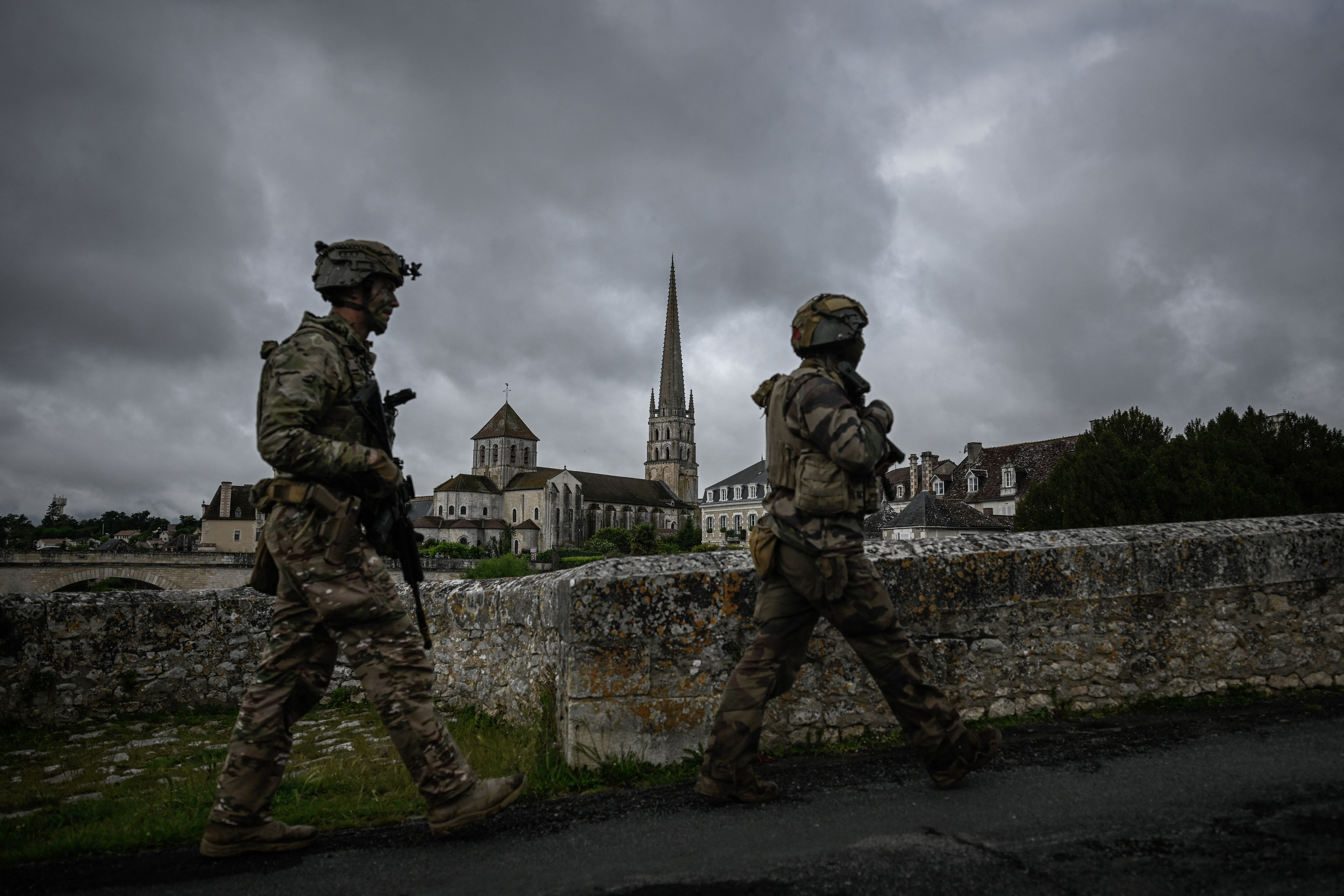
CWIX is the right place for such questions. NATO Allied Command Transformation does not describe interoperability as an abstract virtue, but as the ability of 32 nations to utilize different systems, procedures, and national military cultures in a common situational awareness. The annual CWIX in Bydgoszcz serves as the practical testing ground: command systems are connected, data flows are tested, and standards are enforced before they are needed in a crisis.
That is precisely why Arcadia is more than a French software project. The system was developed with French and European industrial partners such as Mistral AI, Safran.AI, Thales, and Airbus and was previously tested in Dacian Fall in Romania and ORION 26 in France. It is intended to demonstrate at CWIX whether a national, European-controlled architecture can meet NATO's requirement for networked command and control. If this proof fails, Maven remains effectively the standard. If successful, a European negotiating position emerges.
Maven Accelerates Decisions but Centralizes Dependencies
The military attractiveness of Maven is obvious. The system links large amounts of battlefield data, supports analysis and prioritization, and is designed to lead commanders to decisions more quickly. NATO ACT describes the NATO Maven Smart System in the training area as a digital workspace that is supposed to accelerate exercise scenarios, enemy reactions, and exercise control processes. Those who lead staffs today know how much time is lost in fragmented documents, parallel situational pictures, and incompatible data formats.
But speed is not the same as sovereignty. The institutional question is: Who controls data models, interfaces, certification, and further development? When a system becomes the operational standard, its operator indirectly decides which data quality counts, which work processes are considered normal, and which national systems may only participate through adaptation layers. For an alliance, this is convenient. For European defense autonomy, it is dangerous.
France therefore argues for Federated Mission Networking, or FMN. NATO ACT describes FMN as a framework of people, processes, and technology that is supposed to quickly establish, operate, and terminate mission networks. Crucial is not only compatibility but also governance. FMN defines how nations contribute their own capabilities, what security and interoperability requirements apply, and how mission networks function in exercises or operations.
Arcadia Relies on Decentralization and Open Architecture
The most important difference between Arcadia and Maven lies not in the buzzword AI, but in the architecture. According to the French, Arcadia is supposed to function highly decentralized: command posts are connected with field-deployable servers in a mesh structure, rather than being dependent on a remote central cloud core. In the event of interruption or destruction of individual nodes, the remaining unit should be able to continue operating autonomously.
This is not an academic detail. Ukraine has shown that command and control must take place under constant electronic disruption, drone reconnaissance, cyber pressure, and precision strikes. A system that only works in stable networks, secured data centers, and ideal bandwidths is a presentation slide in war. A system that distributes data locally and still remains NATO-compatible would be operationally more valuable.
Arcadia also includes Berthier, a large language model for staff officers, named after Napoleon's Chief of Staff Louis-Alexandre Berthier. Its task is not to give orders but to condense information, make operational data discoverable, and prepare courses of action. This limitation is important. In European armed forces, AI will only be politically accepted if it supports decision preparation while leaving responsibility with the commander.
European AI Sovereignty Needs More Than French Rhetoric
Here begins the uncomfortable European side of the analysis. France is right to warn against digital dependency. But France alone cannot create a European standard. If Arcadia remains a national French system, it merely replaces American dependency with French special paths. European sovereignty only arises when other states can join with their own modules, their own data spaces, and their own security requirements.
The industrial base is there, but fragmented. Mistral AI brings language models, Thales and Airbus bring defense integration, Safran.AI brings sensor data and pattern recognition expertise. What is missing is the European procurement logic. Just like with ammunition, air defense, or combat aircraft, Europe's problem is not that there are no companies. The problem is that national programs rarely become common standards quickly enough.
The British development of a similar AI-supported C2 system shows where the situation can tip. If France builds Arcadia, the UK develops its own solution, and several European armies adopt Maven out of time pressure, NATO does not gain sovereignty but rather three parallel digital ecosystems. Then CWIX 2026 will not mark the beginning of European AI autonomy but rather the proof that Europe even fragments its software sovereignty nationally.
The Real Measure is Not Innovation but Interoperability
Therefore, Arcadia should not be measured by the elegance of its AI demonstrations. The standard is harsher: Can it meet FMN requirements? Can it exchange data with Maven without becoming dependent on Maven? Can a Polish, German, or Italian staff use it without having to adopt French procedures? And can the European industry deliver updates while a war is ongoing, not just after a seven-year procurement cycle?
Palantir signals readiness for integration, NATO refers to national freedom of choice, and France points to digital sovereignty. All three statements can be true at the same time and still obscure the real problem. Interoperability is not a friendly interface between products. It is a distribution of power in technical form. Whoever defines the standard leads the alliance faster, but they also shape how the alliance thinks.
The French Arcadia project thus forces Europe into a rarely clear decision. Either it accepts Maven as a quickly available NATO standard and pays for it with long-term data and process dependency. Or it builds a European alternative that is not only French but truly federated, open, and war-capable. More sovereignty initially complicates operations. Without this complication, however, Europe's digital command and control remains just another area where strategic autonomy is claimed and technical dependency is practiced.
Source Situation
- Defense News, Rudy Ruitenberg, June 6, 2026, report on Arcadia, Maven, and CWIX 2026.
- NATO Allied Command Transformation, May 28, 2026, analysis of digital interoperability and CWIX.
- NATO Allied Command Transformation, May 2026, presentation of the NATO Maven Smart System in the AI in Audacious Training project.
- NATO Allied Command Transformation, Federated Mission Networking, principles on governance, standards, and mission networks.
France is testing its AI command and control system Arcadia against NATO's Maven system during the NATO Coalition Warrior Interoperability Exercise (CWIX) 2026 in Bydgoszcz from June 8 to June 26, 2026. The exercise aims to assess interoperability between different military systems and could impact European defense autonomy. Arcadia is designed to function in a decentralized manner, contrasting with Maven's centralized approach, and its success may establish new standards for NATO operations.
- France is testing its AI command system Arcadia against NATO's Maven system at CWIX 2026.
- The exercise takes place in Bydgoszcz from June 8 to June 26, 2026.
- Arcadia aims to demonstrate a decentralized command structure compared to Maven's centralized approach.
- The outcome of the test could influence European defense autonomy and interoperability standards.
- The French Army is actively involved in this interoperability exercise.