
France Wants In on Europe's 2,000-Kilometer 2026 Missile Bet
 Alexandra Reeves
France Wants In on Europe's 2,000-Kilometer 2026 Missile Bet
France is trying to get into a missile programme it should probably have helped shape from the start. That is the blunt reading of the latest reporting that Paris is seeking a place in the UK-German deep precision strike effort, a project built around ground-launched missiles able to fly more than 2,000 kilometres.
According to Caliber.Az, citing the Financial Times and people familiar with the negotiations, France is considering joining the British-German programme, with trilateral talks discussed for early June. The project remains conceptual, but the ambition is not modest: a family of cruise and hypersonic missiles that could hold military targets deep inside Russian territory at risk without depending on American launchers, American stockpiles, or American permission.
That last clause is the point.
The Tomahawk Hole Europe Pretended Was Temporary
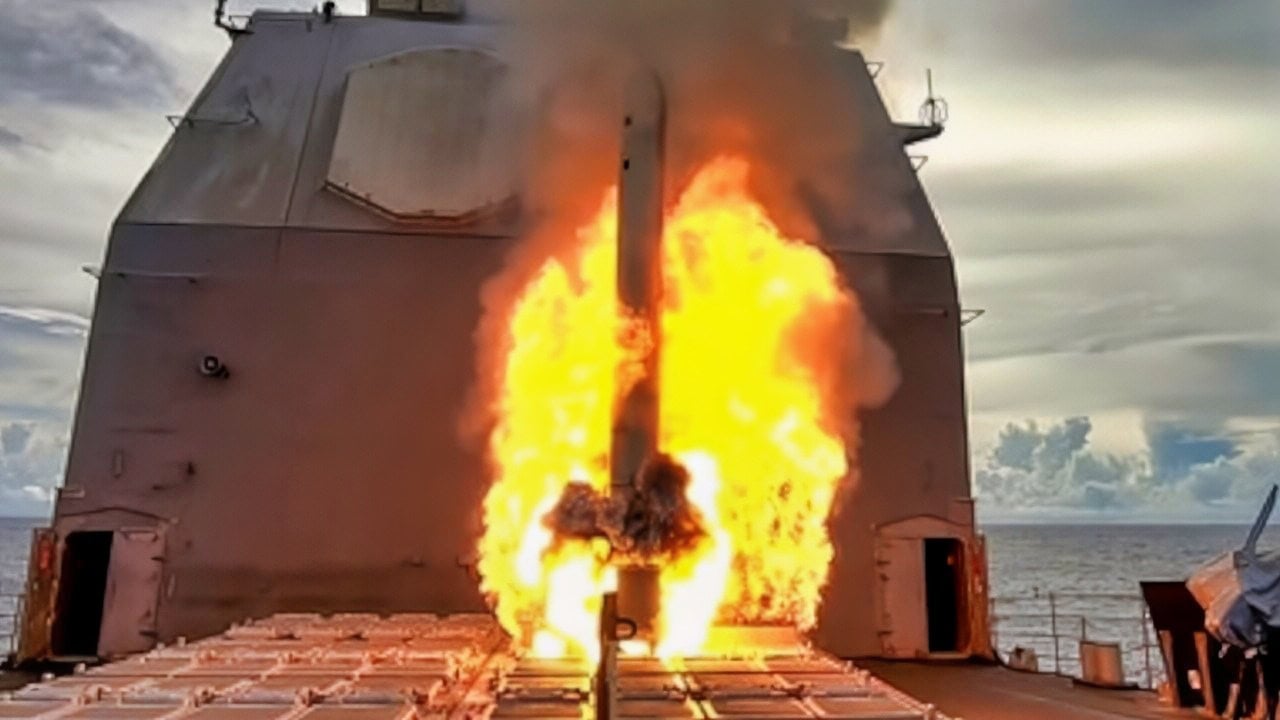
For years, European governments talked about strategic autonomy as if it were a philosophy seminar. Russia has turned it into a range table. The relevant numbers are ugly. The UK-German project is advertised at more than 2,000 kilometres. Arms Control Today noted earlier this year that France has budgeted initial risk analysis for a ground-launched medium-range ballistic missile meeting the European Long-Range Strike Approach requirement, with a notional service entry around 2030. Germany has also looked at Tomahawk purchases from the United States, a weapon class generally associated with ranges of at least 1,600 kilometres.
Le Monde reported in May that the Trump administration may scrap the planned deployment in Germany of US long-range missiles, including SM-6, Tomahawk and Dark Eagle systems, with ranges cited from 460 to more than 2,700 kilometres. That deployment was supposed to bridge the gap while Europeans built their own arsenal. If Washington walks away, the bridge disappears before Europe has reached the river.
This is why France's interest matters. It is not just another procurement story. It is a test of whether Europe can build a conventional deterrent that does not collapse every time Washington changes its mind.
Macron's Nuclear Argument Needs Conventional Steel
President Emmanuel Macron has spent years trying to frame France's nuclear deterrent as having a European dimension. That argument often irritates allies because the final launch authority remains French, and because nobody in Warsaw, Berlin or Stockholm wants a lecture about sovereignty in place of usable military capability.
But Macron's March 2026 deterrence speech contained a more practical line. He argued that Europe needs early warning, expanded air and missile defence, counter-drone protection, and deep strike capabilities to manage conflict below the nuclear threshold. The Elysee transcript explicitly linked Germany, the United Kingdom and France to long-range missile projects under ELSA. In other words, Paris is not simply asking to join a British-German club after the fact. It is trying to connect France's nuclear posture to a conventional strike layer that other Europeans can actually use.
That is the right instinct, even if the politics will be painful.
The Industrial Fight Starts Before the Missile Flies
The difficult part is not the slogan. It is governance. Caliber.Az's summary of the FT reporting says Germany is supportive while the UK has concerns over programme governance and industrial workshare. That is not a footnote. It is usually where European defence projects go to lose a decade.
France brings real assets. MBDA's French and British arms built the Storm Shadow/SCALP family, which Ukraine has used to strike high-value Russian targets from aircraft. France also has ballistic missile expertise through ArianeGroup and the M51 submarine-launched nuclear missile ecosystem. None of that automatically translates into a cheap, survivable, ground-launched conventional missile that can be built in large numbers. But Paris is not showing up empty-handed.
The UK brings operational experience with long-range strike and a defence-industrial base already tied into complex weapons. Germany brings money, geography and the political urgency of being the likely host nation for any European missile posture facing Russia. Add France, and the programme becomes more credible strategically and more complicated bureaucratically.
Here is the uncomfortable part: both things can be true. Europe needs France in the room, and France could make the room harder to manage.
Russia Already Built the Argument for Europe
Moscow has done more than any European white paper to justify this shift. Russia's use of long-range missiles in Ukraine, its deployment logic around Kaliningrad and Belarus, and its recurring nuclear signalling have exposed a gap between NATO's defensive promises and Europe's offensive reach. Arms Control Today noted that European officials increasingly see medium-range missiles as conventional warfighting tools rather than pre-nuclear signalling devices. That distinction matters. A missile that can destroy a Russian command node, air defence battery, logistics hub or launcher before it fires is not a symbol. It is a way to complicate Russian planning.
The target set also explains the 2,000 kilometre requirement. A shorter-range system might help on NATO's immediate eastern flank. A 2,000 kilometre class weapon can reach across the depth of Russia's western military infrastructure from dispersed European launch locations. It gives planners options without immediately climbing to nuclear rhetoric.
Europe is not alone in chasing this category. AeroTime reported on May 18 that Destinus and Rheinmetall are accelerating RUTA Block 3, a 2,000 kilometre precision-strike weapon, with flight testing planned for 2027 and a 250 kilogram class warhead. That project is separate from the UK-German programme, but it points to the same conclusion: Europe's missile gap is now an industrial market, not just a staff college complaint.
The Bet
France joining the UK-German missile effort would not solve Europe's deterrence problem. The programme is still conceptual, service entry is years away, and the hardest questions are unresolved: launcher survivability, targeting chains, stockpile depth, command authority, export controls, and who pays when unit costs rise.
But it would signal that Europe's three most consequential military powers are at least trying to answer the same question. Can NATO's European members threaten meaningful conventional punishment without waiting for a US president to approve the hardware?
The short answer today is no. The better answer, if this programme survives early June talks and the usual workshare knife fight, might be not yet.
That is why this is worth watching. The next phase will not be decided by glossy missile renderings. It will be decided by whether London, Berlin and Paris can agree on requirements, industry roles and production volume before Russia gives them another practical demonstration of why range matters. Europe has spent years saying it wants strategic autonomy. A 2,000 kilometre missile is where that phrase stops being polite and starts getting expensive.
France is seeking to join the UK-German missile program aimed at developing ground-launched missiles with ranges exceeding 2,000 kilometers. Trilateral talks are scheduled for early June 2023 to discuss France's participation in this conceptual project, which is intended to enhance European military capabilities without reliance on U.S. systems. The initiative reflects a broader ambition for European strategic autonomy in defense.
- France is considering joining the UK-German missile program.
- The program aims for missiles with ranges over 2,000 kilometers.
- Trilateral talks are planned for early June 2023.
- The project is conceptual but aims to enhance European military capabilities.
- France's involvement is seen as crucial for European strategic autonomy.