
France's 16 Rafale for Ukraine and Freyja Show Europe's Production Risk 2026
 Dr. Klaus Weber
France's 16 Rafale for Ukraine and Freyja Show Europe's Production Risk 2026
Sixteen Rafale, the first SAMP/T-NG batteries, three license packages, and a Freyja target of twelve months: The Paris Ukraine conference on July 13 provides exactly those numbers by which European defense policy must be measured. Not by communiqués, but by aircraft, interceptors, production rights, and timelines. The remarkable point is not that France is delivering more. The remarkable point is that Europe is trying to squeeze Ukraine aid, its own air defense, and industrial learning curves into a single program.
President Emmanuel Macron stated after the meeting with Volodymyr Zelensky that Ukraine had agreed to a roadmap for acquiring 16 Rafale fighter jets along with weapon systems. This includes an initial tranche of SAMP/T NG, supplementary systems, radar, additional missiles, and licensing agreements for AASM glide bombs, Aster-30 interceptors, and SCALP or Storm Shadow. In parallel, nine European countries, along with Ukraine, established the Freyja coalition to bring an integrated ballistic missile defense system to initial operational capability within twelve months. This is not a normal procurement. It is an attempt to improvise a European-Ukrainian armaments architecture under the pressure of war.
Rafale is Politically Visible, but Freyja is Structurally More Important
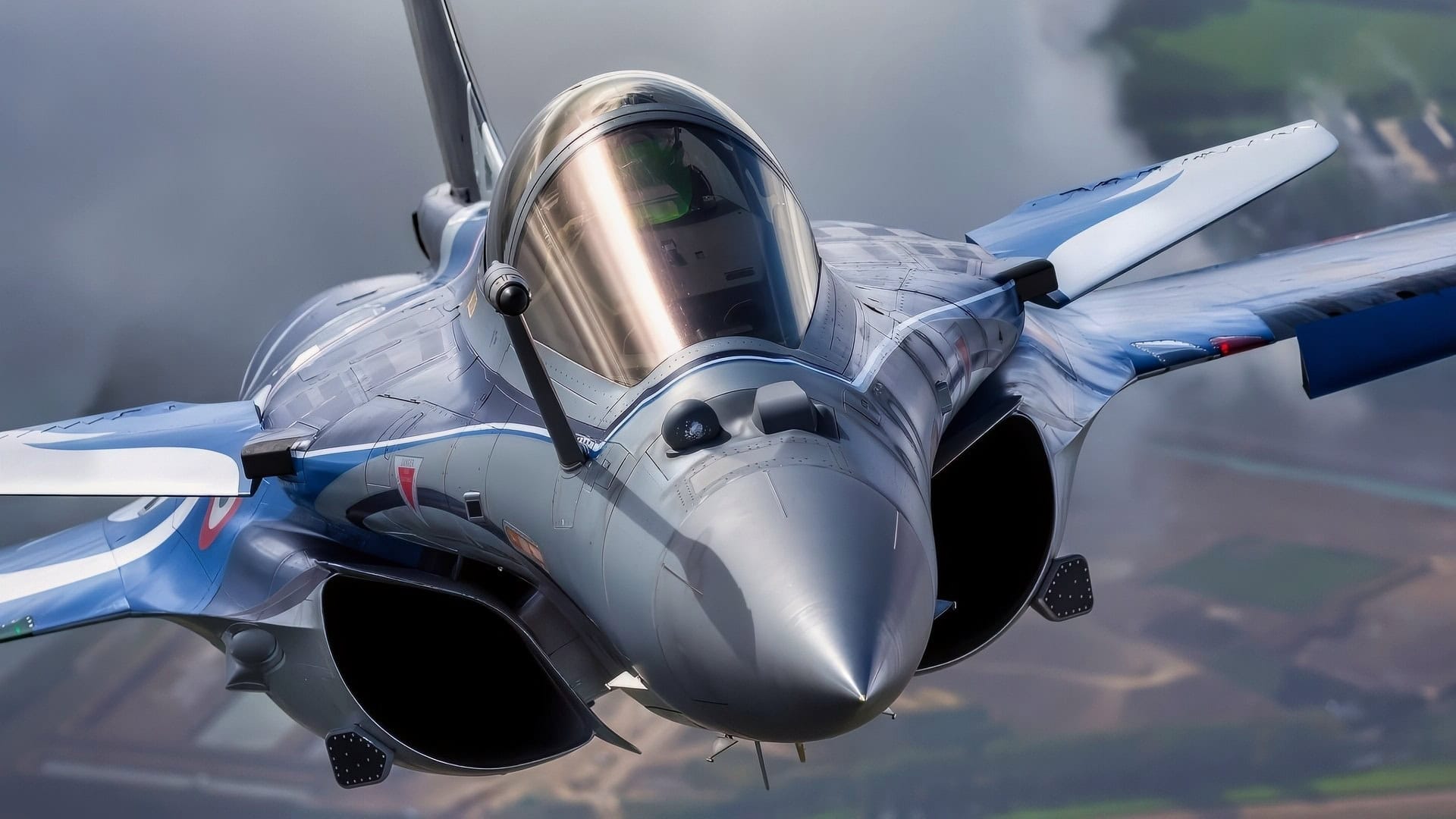
The number of Rafale generates headlines because fighter jets are politically easy to narrate. They replace Soviet leftovers, complement F-16s and Gripens, and give France a visible role alongside Sweden and the United States. After previous declarations of intent for up to 100 Rafale and up to 150 Gripens, the current number of 16 aircraft is surprisingly sober. It shows that Paris and Kyiv are no longer just talking about symbolism, but about an initial realistic tranche with training starting in the coming months and possible deployment from 2028 or 2029.
However, the more pressing military issue is not the fighter jet question, but the gap in ballistic missile defense. Russia has intensified its attacks with ballistic systems, while Patriot interceptors remain scarce worldwide. This is where Freyja comes in. Following the joint declaration, Denmark, France, Germany, Italy, the Netherlands, Norway, Spain, Sweden, and the United Kingdom are participating as founding states alongside Ukraine. Kyiv is expected to contribute the interceptor, particularly based on Fire Point's FP-7.X; European partners are to provide radar, detection, command systems, industrial capacity, and governance.
This is institutionally new. With Patriot, Europe is predominantly purchasing an American system. With SAMP/T, France and Italy are distributing a European solution, the quantities of which remain limited. With Freyja, Ukraine is to be not just a recipient but a system architect and operational experience carrier. Europe's industry is not only to deliver but to learn from Ukrainian war innovation. If this approach works, it would be more important than another French aircraft delivery.
The Twelve Months are the Real Risk
Zelensky speaks of a comprehensive Freyja capability within the next twelve months. This deadline is politically understandable and technically brutal. A ballistic missile defense system does not consist of a single missile. It requires sensor fusion, fire control, communication security, tests against relevant target profiles, series production, training, logistics, and rules for location decisions. That Ukrainian engineers can develop quickly under wartime conditions is undisputed. But speed in drones and cruise missiles cannot automatically be transferred to exo- or endo-atmospheric interception profiles.
Macron's package shows the same contradiction in another form. AASM, Aster 30, and SCALP licenses are strategically valuable because they can free Ukraine from pure dependence on supply cycles in the medium term. However, license production is not a magic word. It requires protected sites, qualified suppliers, export approvals, quality control, and spare parts chains. An Aster-30 interceptor is not an artillery shell. If Europe makes Ukraine a production site, it must also decide how much industrial vulnerability it shifts into an active war zone.
Here lies the Weber question: Does capacity emerge, or is it just a new name for political urgency? Europe has learned to name programs in recent years. SAFE, Readiness 2030, PESCO, EDF, European Sky Shield, now Freyja. Names, however, do not create interceptors. They at best create a framework in which companies and states coordinate demand. The difference between framework and capability determines air defense over cities.
France is Buying Back Strategic Relevance
For France, the package is also important politically and industrially. Paris has long insisted that European sovereignty must not be reduced to American systems. This position was only half convincing as long as French offers seemed either too small, too slow, or too expensive. With Rafale, SAMP/T NG, AASM, Aster 30, and SCALP, France now offers a bundle that combines fighter aircraft, air defense, and precision strike. This is classic French system logic: not just a platform, but a politically controllable chain of effects.
The fact that Germany is also a founding member of the Freyja coalition makes things more interesting. Berlin has delivered with IRIS-T SLM and has simultaneously experienced the limits of its own stockpiles with Patriot. Germany cannot simply play the role of the paymaster in Freyja. It must decide whether to integrate Hensoldt, Diehl Defence, and other companies into a Ukrainian-led architecture or whether Berlin will end up financing parallel systems again. The German special fund has already shown how quickly money evaporates in catch-up procurement when the institutional architecture is lacking.
Freyja is Europe's counterproposal to pure Patriot dependence. But a counterproposal is not yet a capability as long as governance, series production, and rules of engagement remain open.
The Transatlantic Dimension Remains Ambivalent
According to reports from Kyiv, Washington is now fundamentally allowing Ukraine to build its own Patriot interceptors. At the same time, establishing such production takes years, not months. The American bottleneck therefore does not disappear through a political release. Europe's response is now to accelerate its own and Ukrainian alternatives without being able to replace Patriot in the short term. This very ambivalence shapes the entire situation. Europe wants to become more autonomous but remains dependent on American stocks, American technology, and American escalation control during the transition.
The EU ambassador in Washington argued on July 14 in Defense News that Europe's defense build-up is already delivering for NATO and America: 2.1 percent of GDP by 2025, eighteen member states in the new 200 billion dollar funding program, more factories, more procurement, more industrial partnerships. This is true as a trend. But the Ukrainian airspace is not a trend indicator; it is a test case. If Freyja remains just a presentation in twelve months, Moscow will learn more from it than Brussels.
The actual strategic significance of the Paris resolutions therefore lies not in 16 Rafale. It lies in the question of whether Europe is ready to treat procurement as war production. This means fewer national special paths, more common requirements, faster technical working groups, and governance that does not have to be renegotiated for every export module. These points are precisely what the Freyja declaration itself names: common operational requirements, technical working groups, clear governance, and a roadmap to initial capability.
The European Learning Moment
For Ukraine, the package is a bridge. In the short term, SAMP/T, radar, additional missiles, and Western fighter jets help. In the medium term, licenses and Freyja help because they can reduce dependence. For Europe, it is a mirror. The continent has built highly developed but small arms stocks for decades. Now it faces a war that demands expensive precision and cheap mass simultaneously. The French Rafale is the symbol of old excellence. Freyja is to become the tool of new scaling.
But is that enough? Only if the coalition becomes more than a list of company names. In Paris, companies like Diehl Defence, Eurosam, Fire Point, Hensoldt, Kongsberg, Leonardo, MBDA, Saab, Safran, Thales, and Weibel Scientific were represented. This breadth is impressive, but it can also be paralyzing. The more partners a system has, the more important the question becomes of who integrates, who certifies, and who sets priorities in case of war. European defense rarely fails due to a lack of conferences. It fails due to diffusion of responsibility.
France's 16 Rafale for Ukraine are therefore only the visible part of a deeper shift. Europe is trying to turn a buyer cartel into a production community. It is doing this late, under Russian pressure, and with too little industrial reserve. Yet the direction is right. The paradox remains: Europe can only overcome its dependence on Patriot if it continues to need Patriot during the transition; and it can only strengthen Ukrainian production if it is willing to give European technology into a war zone. More autonomy does not begin here with a summit decision, but with the readiness to bear responsibility technically, financially, and politically.
Sources
- Defense News, July 14, 2026: Ukraine agrees on plan to acquire 16 Rafale jets, France’s Macron says.
- Defense News, July 14, 2026: 9 nations back Ukraine’s Patriot alternative, Freyja — and want it flying in a year.
- Joint Declaration on the Integrated Anti-Ballistic Missile Coalition, July 2026.
- Defense News Opinion, July 14, 2026: Europe’s defense build-up is delivering for NATO — and America.
France agreed to supply 16 Rafale jets and SAMP/T NG systems to Ukraine during a conference in Paris on July 13, 2026. Additionally, nine European nations formed the Freyja coalition to establish an integrated anti-ballistic missile system within 12 months. This initiative aims to enhance Ukraine's defense capabilities while reducing reliance on American military systems.
- France agreed to supply 16 Rafale jets to Ukraine.
- The first tranche of SAMP/T NG batteries will also be provided.
- Nine European nations formed the Freyja coalition to develop an integrated anti-ballistic missile system.
- The Freyja system aims for operational capability within 12 months.
- The report highlights the strategic importance of reducing dependency on American systems.