
France's Mirage 2000 and Caesar 2026 in Ukraine — Volia Makes Europe's Security Dilemma Visible
 Dr. Klaus Weber
France's Mirage 2000 and Caesar 2026 in Ukraine — Volia Makes Europe's Security Dilemma Visible
A Presence That Officially Does Not Exist
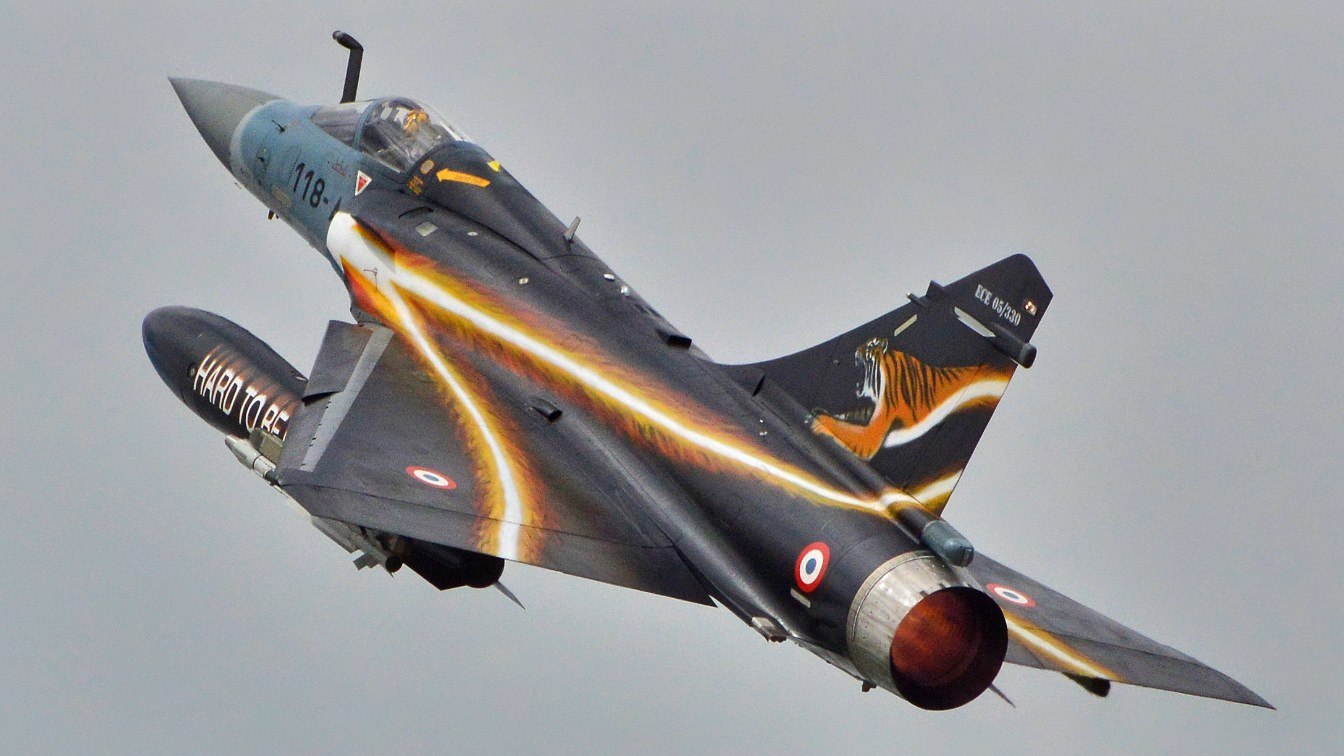
France is said to have deployed soldiers in Ukraine since at least the summer of 2026 to train Ukrainian crews and maintain French weapon systems. According to research by Radio France Internationale, the mission is called Volia and is led by a French general. Paris has not confirmed this presence so far. It is precisely this combination of operational proximity and political invisibility that constitutes the real news value.
According to sources contacted by RFI, this is not a combat deployment. Small, short-term teams are responsible for Caesar howitzers, Mirage 2000 fighter jets, and precision missiles that France has supplied to Kyiv. The French soldiers are said to be operating under the training mission Gerfaut, which has been in place in Poland since 2023. Defense News confirmed the essential details on November 17 and also referred to the French reports.
Technical Assistance is Strategic Presence
The distinction between combat and support missions is militarily understandable but politically incomplete. A Caesar system is not a finished product that maintains itself after delivery. It requires spare parts, maintenance, ammunition, trainers, and a logistics chain. The same applies to the Mirage 2000, whose operational value does not depend solely on the number of aircraft but also on trained personnel, software, maintenance cycles, and the availability of suitable precision weapons.
This shifts Europe's support for Ukraine from the delivery of individual devices to the ongoing maintenance of a military ecosystem. This is a qualitative change. Whoever maintains a system in a war zone inevitably assumes part of the operational responsibility for its availability. The term "non-combat" then describes the rules of engagement, not the strategic significance.
RFI reports that France has trained around 25,000 Ukrainian soldiers in France and Poland since 2023. The new structure aims to create more realistic training and maintenance conditions closer to the front. This is militarily plausible: training becomes more valuable when it reflects the actual conditions of deployment. At the same time, the risk for French personnel, facilities, and political leadership in Paris increases.
The Legal Problem Does Not Lie in Moscow
The parliamentary handling of Volia is particularly sensitive. According to Article 35 of the French Constitution, the deployment of conventional armed forces outside French territory must be communicated to Parliament. According to RFI, neither the National Assembly nor the Senate has been informed about the existence of this mission. Senator Cédric Perrin described the notification as a constitutional obligation.
Secrecy may be justified regarding the specific number, location, and capabilities of the teams. However, it cannot automatically replace the political decision itself. France appears to be trying to combine operational security and domestic political caution through administrative camouflage. Gerfaut is officially a training mission in Poland; Volia uses this structure as access to Ukraine. This may seem plausible in the short term, but it creates a dangerous gray area between secrecy and parliamentary control in the long term.
Paris Tests Europe's Security Guarantee
The timing is no coincidence. The United States has reduced its support for Europe and Ukraine, while European governments simultaneously speak of strategic autonomy. France is responding not with a large European mission under clear EU or NATO leadership but with a national, modular structure. This is politically typical: Paris wants to demonstrate its capability and retain control.
This creates an institutional dilemma for the European Union. The EU training mission EUMAM-Ukraine has been extended until November 15, 2028. However, Volia apparently lies outside its transparent political architecture. France utilizes European infrastructure but assumes national responsibility and national secrecy. Thus, there is no European defense integration, but rather a parallel national capability with a European label.
The development is also relevant for Germany. Berlin has been discussing a stronger European role for years but regularly shies away from the political and legal consequences of a presence near the war zone. France now shows that strategic autonomy does not primarily fail due to a lack of concept papers but rather due to the willingness to visibly assume risks. The French approach requires legal explanation, but it also exposes German reticence.
The Uncomfortable Conclusion
Volia is neither the beginning of a French combat deployment nor proof of an imminent escalation. The mission remains small, modular, and non-combat according to available information. But it marks a threshold: European states are beginning to organize the maintenance and training of their arms deliveries in Ukraine themselves because distance limits military effectiveness.
The strategic question, therefore, is not whether France deploys soldiers "in war" or "outside of combat." It is whether Europe is ready to bear the responsibility that arises from its deliveries. If the answer is yes, missions must be legitimized by Parliament, coordinated at the European level, and explained in security policy terms. If the answer is no, Mirage 2000 and Caesar remain European weapons but without European responsibility. More autonomy does not begin with a new fund. It begins with the public assumption of risk.
Sources
- Radio France Internationale, “Mission Volia — how the French army operates in Ukraine,” November 16, 2026.
- Defense News, “French troops operating in non-combat roles in Ukraine, broadcaster RFI reports,” November 17, 2026.
- France Télévisions, report on the secret deployment of French soldiers in Ukraine, November 16, 2026.
French troops have been operating in Ukraine since at least Summer 2026 under the mission named Volia, training Ukrainian forces and maintaining French weapon systems. Approximately 25,000 Ukrainian soldiers have been trained since 2023. This presence, while not officially confirmed by France, indicates a shift towards a more integrated military support structure for Ukraine, raising questions about operational responsibility and political oversight.
- France has deployed troops in Ukraine since at least Summer 2026.
- The mission is named Volia and involves training Ukrainian forces and maintaining weapon systems.
- Approximately 25,000 Ukrainian soldiers have been trained since 2023.
- The presence of French troops has not been officially confirmed by Paris.
- The mission operates under the guise of an existing training mission in Poland.