
Freyja and Bliksem EXO show Europe's missile defense gap 2026 despite nine countries
 Dr. Klaus Weber
Freyja and Bliksem EXO Highlight Europe's Missile Defense Gap 2026 Despite Nine Nations
On Monday, nine European nations reached an agreement in Paris with Ukraine to form a new anti-ballistic coalition. A day later, Destinus, MBDA Germany, Safran, Airbus Defence and Space, and Thales signed a letter of intent for Bliksem EXO, a European exo-atmospheric interceptor missile with a planned kill vehicle test in space in 2027. Three days prior, OCCAR reported that HYDIS had completed its Final Concept Review. Three announcements in less than a week, three different governance models, one common problem: Europe is currently building multiple responses to the same missile defense gap without having yet decided who will ultimately create a system from it.
The New Urgency Comes Not from Brussels, but from Kyiv
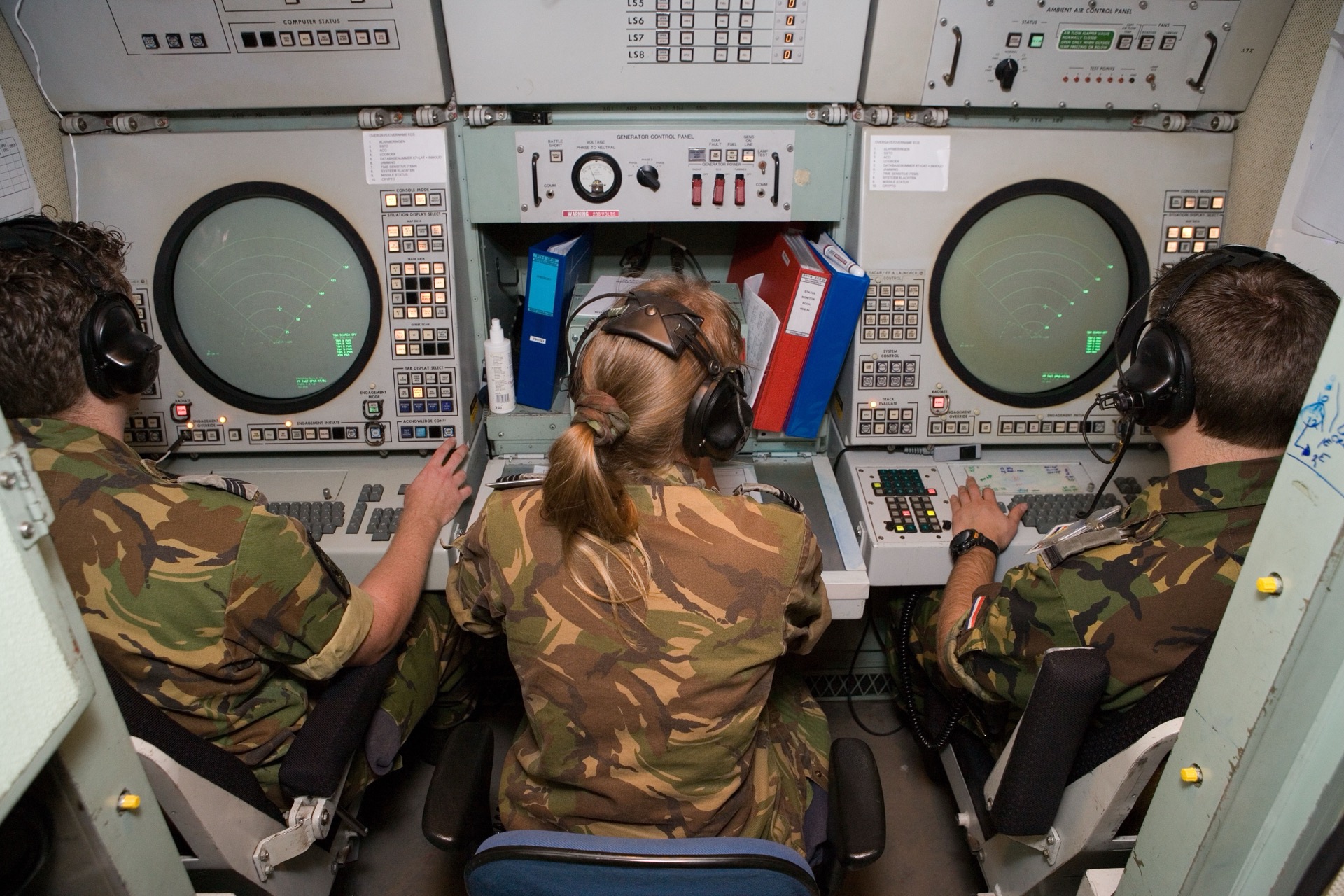
The Freyja coalition is politically significant because it is to be led by Ukraine. Denmark, France, Germany, Italy, the Netherlands, Norway, Spain, Sweden, and the United Kingdom joined as founding members. President Volodymyr Zelenskyy articulated the core soberly: Ukraine has missiles, but only parts of a system. Partners need to provide radar, tracking, command architecture, and industrial support. The Ukrainian core is the FP-7.X interceptor from Fire Point, which, according to project insiders, is supposed to hit ballistic targets at approximately 15 miles altitude. This is not a full replacement for Patriot, but an attempt to generate a particularly scarce capability faster than the traditional Western procurement apparatus.
The target is ambitious: initial operational capabilities within twelve months. This is precisely where Weber's skepticism begins. Europe is not bad at forming coalitions. Europe is bad at translating coalitions into series production, joint stockpiling, common rules of engagement, and permanently funded munitions lines. Therefore, Freyja can either become a breakthrough because Ukrainian war experience forces European processes to speed up; or it will become the next interim structure that looks stronger in the political communiqué than in the production hall.
Bliksem EXO Addresses a Real Capability Gap
Bliksem EXO addresses another layer of missile defense. The companies describe the program as a European upper-tier solution against medium-range and intermediate-range missiles, including Oreshnik-like systems with separating and maneuvering reentry vehicles. The interception is to occur above the atmosphere during midcourse flight, through kinetic hit-to-kill without a warhead. This is technically challenging, but the capability gap is real. Europe's current architecture essentially relies for this upper tier on two American-operated Aegis Ashore sites with SM-3, as well as on Germany's purchase of the Israeli Arrow-3. That is defense, but not European sovereignty.
The division of labor in the consortium initially reads plausibly: Destinus as system integrator and responsible for the exo-atmospheric kill vehicle, MBDA Germany for boosters, launchers, and canisters, Safran for seeker and guidance, Airbus for command-and-control and battle management, Thales for sensor and radar chain. However, this very list shows the institutional risk. An exo-interceptor is not a normal industrial product, but a system-of-systems. Whoever controls integration, software, sensor fusion, and rules of engagement ultimately controls the capability. Europe has learned from FCAS that division of labor without clear system leadership does not create harmony but merely shifts blockages.
HYDIS Shows the Slower, Classically European Path
HYDIS appears almost old-fashioned in comparison. The program managed by OCCAR for France, Germany, Italy, and the Netherlands has validated a preferred interceptor design after just over two years. The next phase aims to bring critical technologies to at least Technology Readiness Level 3, meaning experimental feasibility demonstration. The threat models come from CIRA, ONERA, and TNO, among others; hypersonic glide missiles, hypersonic cruise missiles, and maneuvering ballistic missiles were considered. This is methodologically sound. But is that enough?
The funding figures provide an answer. HYDIS receives around 80 million euros from the European Defense Fund and about 60 million euros from the partner states. The competing HYDEF program received 100 million euros in EDF funding and an additional 10 million euros from participant states such as Germany, Belgium, Norway, Poland, and Spain. This is relevant for research. For a deployable European missile defense architecture, it is little. For comparison: a single large air defense procurement package quickly costs billions before factoring in replacement missiles, sensors, training, and maintenance.
The Problem Is Not a Lack of Projects
Freyja, Bliksem EXO, HYDIS, HYDEF, Twister, SAMP/T NG, IRIS-T SLM, NASAMS, Patriot, Arrow-3, and Aegis Ashore do not together form an architecture just because they are all meant to counter missiles. An architecture requires defined layers, common priorities, and an operator who can decide in a crisis which target to engage with which interceptor. Europe often fails precisely on this point: it finances technical modules while the operational architecture remains fragmented between NATO, the EU, national capitals, and ad-hoc coalitions.
Ukraine is partially changing this logic. Kyiv brings real data from massed Russian air and missile attacks. It knows which sensors function under disruption, how quickly interception decisions must be made, and where Western systems are practically too expensive or too scarce. Therefore, Ukraine's leadership role in Freyja is more than symbolism. It is a corrective against the European tendency to treat capability development as an administrative process.
But the political economy remains tough. If each country retains autonomy over how many systems it procures and where they are stationed within Freyja, there is no guarantee of comprehensive coverage. If Bliksem EXO is to be interoperable with NATO IAMD and ESSI, but procurement remains national, the upper tier could again become a patchwork. And if HYDIS and HYDEF compete for EDF funds, even though both respond to the same strategic pressure, then Europe reproduces exactly the fragmentation it officially seeks to overcome.
Strategic Impact Depends on Production Capability
The most important measure is not whether Europe can test a kill vehicle in space by 2027. The measure is whether Europe can produce interceptors in quantities relevant to counter Russian production rates and future Iranian or North Korean proliferation by the end of the 2020s. Patriot bottlenecks have shown that an excellent system becomes strategically inadequate when ammunition remains politically, industrially, and logistically scarce. Sovereignty does not begin with the first successful test, but with the third production line and the tenth replenishment contract.
Freyja and Bliksem EXO are therefore good news, but not a reason for complacency. They show that Europe is finally taking the upper and anti-ballistic gap seriously. At the same time, they demonstrate that the response is again emerging from overlapping formats: a Ukrainian-led coalition, a Dutch-shaped industrial consortium, an OCCAR program, an EDF competition, and a NATO-IAMD interface. More activity does not automatically mean more capability. Europe's paradox remains unchanged: without such projects, it remains dependent; with too many unconnected projects, it only institutionalizes its dependence in a European way.
Source Situation
- Defense News, July 14, 2026: Report on the Freyja coalition with nine European nations and Ukrainian leadership.
- Defense News and Destinus, July 15, 2026: Information on Bliksem EXO, consortium structure, August 2026 engineering, and 2027 test target.
- OCCAR, July 10, 2026: HYDIS Final Concept Review and validation of a preferred interceptor concept.
Nine European nations established a new anti-ballistic coalition in Paris, led by Ukraine, to address missile defense gaps. The coalition includes Denmark, France, Germany, Italy, the Netherlands, Norway, Spain, Sweden, and the UK. Companies like Destinus and MBDA Germany are developing the Bliksem EXO missile system, with a test planned for 2027. The initiative aims to enhance Europe's missile defense capabilities amid ongoing threats.
- Nine European nations formed a new anti-ballistic coalition led by Ukraine.
- The coalition includes Denmark, France, Germany, Italy, the Netherlands, Norway, Spain, Sweden, and the United Kingdom.
- Destinus and other companies signed a declaration for the Bliksem EXO missile system with a planned test in 2027.
- The FP-7.X interceptor is designed to target ballistic threats at approximately 15 miles altitude.
- The report highlights Europe's challenges in creating a cohesive missile defense architecture.