
Freyja is set to fly in 12 months — why Europe's Patriot alternative is primarily a governance test
 Dr. Klaus Weber
Freyja is set to fly in 12 months — why Europe's Patriot alternative is first a governance test
Nine European countries pledged on Monday in Paris to jointly develop a new anti-ballistic air defense system called Freyja with Ukraine. The political ambition is remarkably precise: initial operational capabilities within twelve months. It is precisely this number that makes the initiative interesting. Europe has learned in recent years to mobilize billions; it has shown far less convincingly that it can quickly shape an integrated weapon system from money, industry, and military urgency.
A Ukrainian interceptor, but a European system
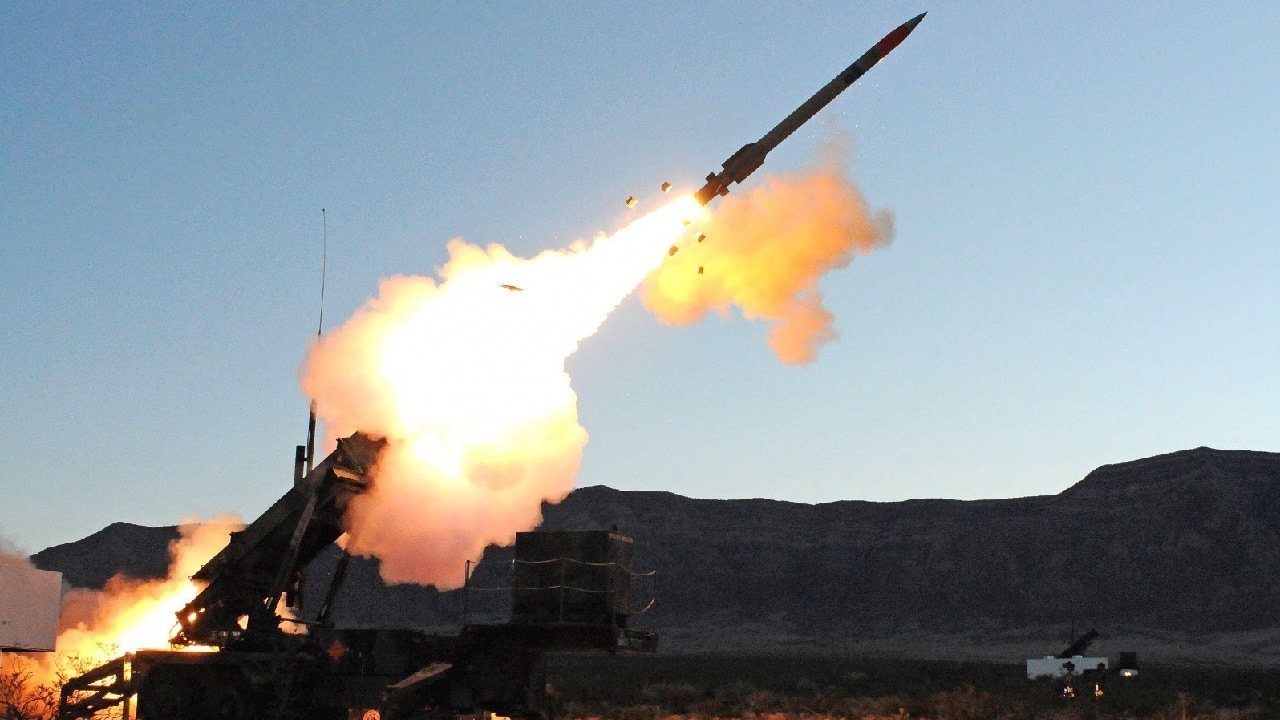
The founding members of the coalition are Denmark, France, Germany, Italy, the Netherlands, Norway, Spain, Sweden, and the United Kingdom. According to sources from Kyiv, Ukraine is to take the lead and provide the core of the system: the FP-7.X interceptor developed by Fire Point. The European partners are to contribute those components that turn a missile into an air defense system — radar, fire control, sensor fusion, tracking, and command-and-control.
This is not a technical detail, but the crucial institutional point. Freyja is not simply a cheaper missile. Like Patriot or SAMP/T, it is a system architecture. Whoever controls radar, software, data links, and operational doctrine ultimately controls the capability. Many European armament programs have failed precisely on this point: agreements are reached more quickly on a political label than on the questions of who integrates, who certifies, and who decides in operations.
The Ukrainian need is real. Russia is increasingly using ballistic missiles against cities, energy infrastructure, and front lines. According to sources from the initiative, the FP-7.X is expected to be able to engage ballistic targets at about 15 miles in altitude. Fire Point cites a target price of around $700,000 per shot, compared to about $3.8 million for a Patriot PAC-3 interceptor. If these figures are even remotely reliable, Freyja would be strategically relevant: not because it replaces Patriot, but because it shifts the cost curve of defense.
The twelve-month deadline is politically useful and industrially brutal
President Volodymyr Zelensky speaks of a system that is to become a reality within twelve months. This is more ambitious than previous plans from Fire Point, which aimed for the first successful ballistic interception attempt by the end of 2027 and targeted a series production of three interceptors per day starting in August. However, there are several thresholds between flight testing, tactical readiness, and reliable multinational series production that cannot be skipped by mere declaration.
The first threshold is the sensor technology. An interceptor against ballistic targets is only as good as the quality of its target assignment. Hensoldt, Thales, Leonardo, Kongsberg, Saab, MBDA, Diehl, Safran, and other companies were represented in Paris or are mentioned in connection with the initiative. This shows industrial breadth but also coordination risk. An open architecture can accelerate innovation; however, it can also lead to interface politics if each country wants to protect its national industry.
The second threshold is certification under wartime conditions. Ukraine has a unique advantage in experience because it defends itself daily against Russian missiles, drones, and cruise missiles. This operational learning advantage is more valuable than many European laboratory programs. But a system that works in Ukraine through improvisation is not automatically a European standard. For NATO countries, questions arise regarding airspace coordination, friend-foe identification, data sharing, export control, and liability for misfires.
The third threshold is production. Europe has already experienced with artillery ammunition, air defense missiles, and powder capacities that political demand grows faster than industrial capacity. Freyja promises mass production, but the bottlenecks will not only be with the missile. Seekers, solid propellants, high-performance electronics, radar components, and testing infrastructure are precisely the areas where European supply chains are often narrower than the press release sounds.
Freyja is also a response to Patriot dependency
The timing of the American Patriot debate is no coincidence. President Donald Trump announced plans to allow Ukraine to manufacture its own Patriot interceptors. This would be politically significant but does not solve the short-term problem. Even with American approval, establishing such production takes years. Global demand is high because not only Ukraine but also countries in the Middle East and Asia are replenishing their stocks.
Here lies the strategic appeal of Freyja. The initiative shifts the debate from "Europe buys American scarcity" to "Europe builds its own layer of missile defense with Ukrainian wartime experience." This is more than symbolic autonomy. If the coalition truly arrives at common operational requirements, technical working groups, and a clear governance model, it could emerge as the first European-Ukrainian capability project that is not designed from Brussels but scaled from the war.
But is that enough? There is a danger that Freyja will be treated as a politically convenient interim product: cheap enough to generate hope; Ukrainian enough to radiate urgency; European enough to assert autonomy. This very mix can lead to a new form of irresponsibility if states sign the coalition but fail to create hard production commitments, multi-year procurement contracts, and a joint certification authority.
The real test is not the missile
Freyja should therefore not be measured against Patriot but against three sober criteria. First: Is there a funded production program with binding national procurements by the end of 2026, not just declarations of intent? Second: Will a common integration body be appointed that sets technical standards and cannot be overruled by nine capitals? Third: Will Ukraine be treated as a co-developer and not just as a test field?
Particularly the last point is politically sensitive. European states like to speak of partnership with Ukraine but maintain the classic hierarchy in procurement, export, and certification. Freyja partially reverses this logic. Kyiv provides operational experience and the interceptor; Europe provides industrial depth. This is a productive reversal as long as it is organized honestly. If it is broken down into national industrial policy, Europe will only get another logo on an already overcrowded air defense map.
The irony is evident. Europe has been seeking strategic autonomy for years and may now find it not in a large EU program but in a Ukrainian company that did not exist a few years ago and today promises both long-range drones and missile defense. This is impressive but also uncomfortable. It shows that war shortens innovation cycles, while European institutions often extend them.
Freyja cannot close Europe's Patriot gap alone. But it can test something almost equally important: whether European states are capable of building a system from Ukrainian urgency, their own industry, and a shared perception of threat before the next scarcity forces them back to purchasing in Washington. More money has never been the real problem. The question is whether Europe can organize itself faster this time than Russia can shoot.
Nine European nations agreed in Paris to develop a new ballistic air defense system named Freyja in collaboration with Ukraine, aiming for operational capabilities within twelve months. Ukraine will supply the core FP-7.X interceptor, while European partners will provide essential components. This initiative responds to the rising threat of Russian ballistic missiles and seeks to establish a European defense capability independent of American systems.
- Nine European nations pledged to develop the Freyja air defense system with Ukraine.
- The system aims to achieve operational capabilities within twelve months.
- Ukraine will provide the core interceptor, the FP-7.X, while European partners will contribute other components.
- The initiative addresses the increasing use of ballistic missiles by Russia against Ukraine.
- Freyja is intended to reduce reliance on American systems like Patriot.