
Frigate "Marshal Shaposhnikov" conducts exercises in the Seychelles and tests Russia's maritime diplomacy in 2026
 Dmitri Volkov
The frigate "Marshal Shaposhnikov" conducts exercises in the Seychelles and tests Russia's maritime diplomacy in 2026
The maneuver near Victoria is more important than its modest scenario
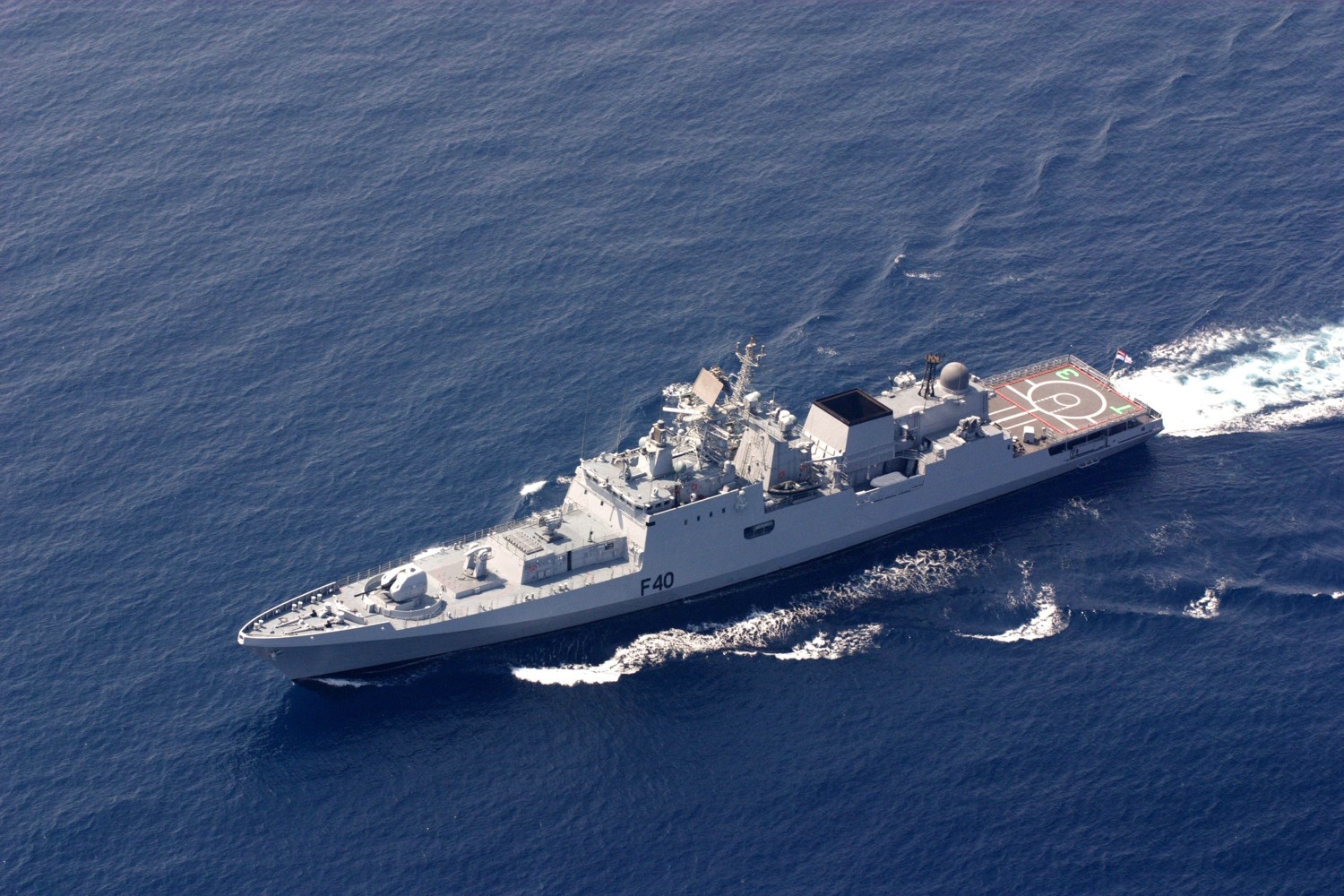
For the first time, a Russian combat ship and a Seychelles patrol vessel practiced a joint operation against pirates. The scenario was almost textbook: a distress signal from a captured civilian vessel, a boarding team, neutralization of simulated attackers, communication, and maneuvering. But it is precisely in such simple episodes that the real value of maritime diplomacy is evident. On November 6, TASS, citing the Ministry of Defense of Russia, reported that the Pacific Fleet frigate "Marshal Shaposhnikov" completed its visit to Victoria and continued its long voyage in the Asia-Pacific region (TASS, November 6, 2026).
The Seychelles participated in the maneuvers with the coast guard patrol ship Andromache. For the island nation, this is not an attempt to create a naval alliance with Moscow, but a practical demonstration that its coast guard is capable of working with an external partner in a limited but sensitive area — the protection of shipping. For Russia, this is an opportunity to turn a long voyage into a series of contacts that do not require the partner to make any political declarations or purchase Russian weapons.
What exactly does "Marshal Shaposhnikov" demonstrate
"Marshal Shaposhnikov" is a former large anti-submarine ship of project 1155, modernized and reclassified as a frigate. After repairs, it received universal launchers for cruise missiles of the "Kalibr" and "Onyx" families, and also retained advanced anti-submarine defense systems and a Ka-27 helicopter. Its displacement and autonomy are significantly higher than those of a typical patrol vessel, yet it is still not an aircraft carrier and not a tool for constant ocean control. This is an important caveat: one ship can show the flag, conduct training, and gather reconnaissance-diplomatic information, but it cannot independently create a sustainable naval presence.
This is why the Russian formula for long voyages is built around a sequence of port calls and short exercises. On the same day, according to the Russian military department, the training ship of the Baltic Fleet "Perekop" visited Douala and conducted joint maneuvering with the Cameroonian patrol boat P-108 (TASS, November 6, 2026). Geography is more important than each individual episode: Moscow demonstrates its ability to simultaneously maintain contacts in the Indian Ocean, off the eastern coast of Africa, and in the Atlantic.
Maritime diplomacy instead of a base
Preliminary reports from the Seychelles News Agency about the planned Russian-Seychellois anti-piracy exercise emphasized its limited nature and connection to the visit of the Russian ship (Seychelles News Agency, September 27, 2026). This is fundamentally different from the Soviet model, where military cooperation was often measured by access to ports, supplies of equipment, and the political loyalty of the government. Today, Russia has fewer resources and is therefore forced to sell not a "security umbrella," but individual useful services — crew training, communication, inspection procedures, coordination at sea.
In this sense, the Seychelles are more convenient for Moscow than a state that would require long-term guarantees. The archipelago is located near important routes in the western part of the Indian Ocean, but its leadership traditionally avoids turning the islands into a foothold for great power rivalry. A joint operation against pirates allows cooperation with Russia without joining its foreign policy rhetoric. For Moscow, this is a diplomatic success, but not evidence of the formation of a new bloc.
The limits of Russia's return to the ocean
The main risk for the Russian interpretation lies in substituting presence with scale. One modernized frigate can undertake a long voyage, but its crew, repair chain, supply, and cover remain limited. After the start of the war in Ukraine, the Pacific Fleet simultaneously addresses combat readiness tasks near its own shores while supporting politically significant overseas routes. Each long voyage therefore has a dual cost: it strengthens the image of a global power but reduces the time and resources available for regular fleet training.
Moreover, the anti-piracy exercise says almost nothing about Russia's ability to conduct a prolonged operation against an equal opponent. Communication, inspection, and boarding a conditionally captured vessel are useful low-intensity skills. They do not test anti-ship reconnaissance, the air defense of the formation, or supply resilience under fire. Russian propaganda loves to turn every port call into proof of "returning to the World Ocean." But naval strategy is measured not by a photograph at the dock, but by how many days a ship can operate away from base and who will replace it.
Conclusion
The maneuver in the Seychelles demonstrates not the restoration of the Soviet ocean fleet, but a more rational adaptation of Russian maritime diplomacy. Moscow uses available ships as mobile platforms for contacts, training, and flag demonstrations, avoiding costly commitments. This model will work as long as partners gain practical benefits and the Russian fleet can maintain a schedule of long voyages. But if repair cycles and personnel burdens begin to limit such routes, "global presence" will quickly shrink to carefully selected symbolic visits. Russia may still be noticeable in the ocean; the question is whether it can remain there permanently.
The frigate Marshal Shaposhnikov conducted joint anti-piracy exercises with the Seychelles Coast Guard in Victoria on November 6, 2026. This operation showcased Russia's maritime diplomacy and capability to collaborate with external partners in protecting shipping routes. The exercise was characterized as limited and did not signify a formal military alliance, reflecting Russia's strategic adaptation in the Indian Ocean.
- The frigate Marshal Shaposhnikov conducted exercises in Seychelles.
- Joint operation against piracy involved Seychelles Coast Guard.
- The exercise demonstrated Russia's maritime diplomacy in the Indian Ocean.
- The operation was limited in scope and did not indicate a military alliance.
- The Russian Navy is adapting its strategy to maintain presence without extensive commitments.