
G7 Makes Ukraine's Patriot Shortage the 2026 Test
 Alexandra Reeves
G7 Makes Ukraine's Patriot Shortage the 2026 Test
The G7 did something useful in Evian, which is rarer than it should be. It admitted, without quite saying so, that Ukraine's air defence problem is no longer just a delivery problem. It is a production problem, a licensing problem, and a political nerve test for an alliance that still prefers announcements to assembly lines.
The leaders' statement released on 17 June commits the G7 to increase air defence systems, interceptors, and long-range capabilities for Ukraine. More importantly, it says the group is ready to consider giving Ukraine the benefit of licences to expand its own military production. That is the sentence that matters. Everything else is familiar summit language.
The Statement That Matters
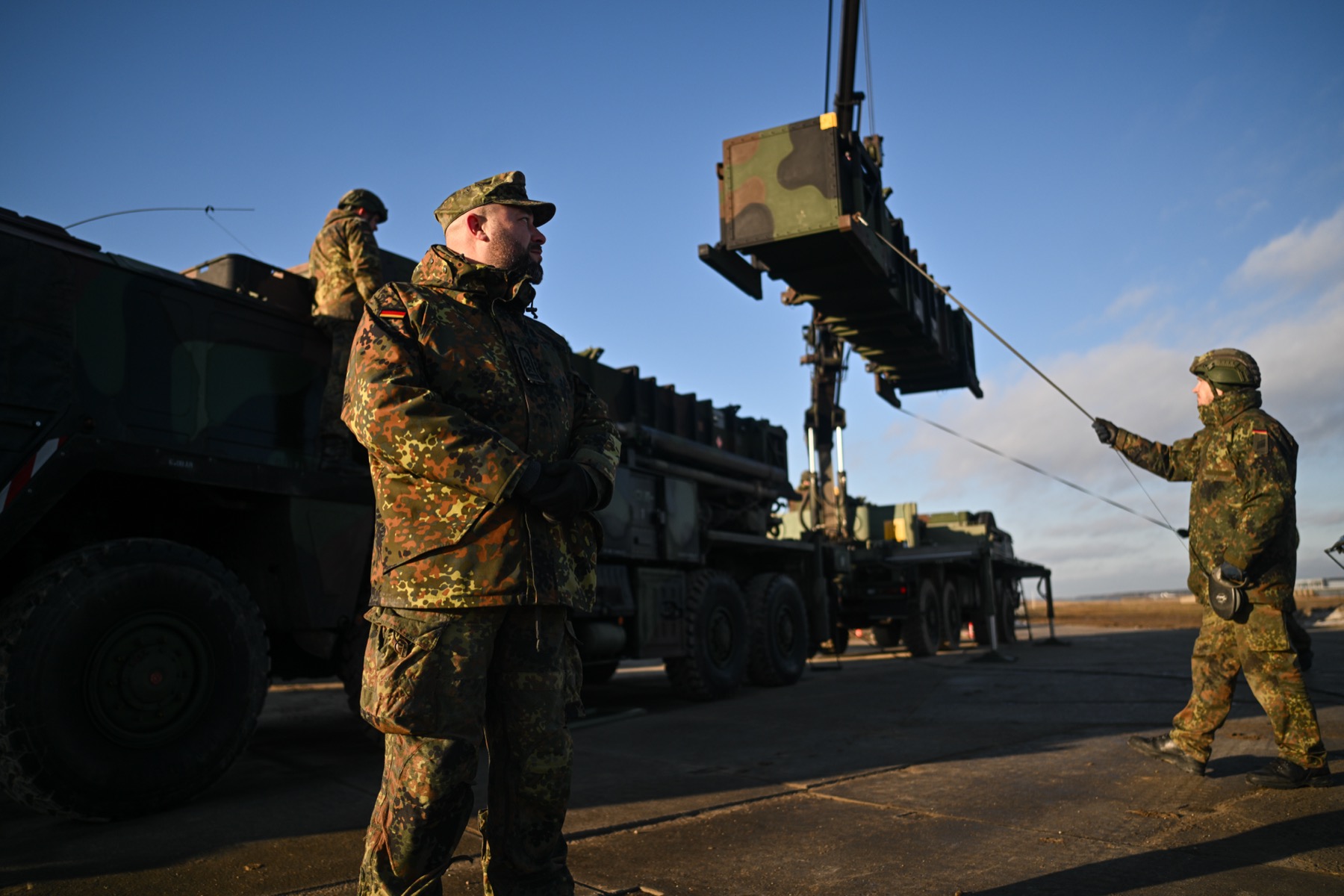
According to the official G7 statement published by the French presidency, leaders praised Ukraine's recent battlefield progress and said there was now "new momentum". To support it, they promised more air defence capacity, more systems and interceptors, and more long-range capability. They also tied the pledge to energy resilience before winter and tighter sanctions on Russia's oil and gas sectors.
That combination tells us what the G7 thinks the next phase of the war looks like: Russian strikes against cities, grids, and command nodes; Ukrainian attempts to keep pressure on Russian rear areas; and a Western industrial base still trying to catch up with a war of consumption it spent years pretending would stay limited.
Everyone likes to talk about the next elegant long-range weapon. The less glamorous truth is that Ukraine cannot exploit long-range fires if Kyiv, Odesa, Dnipro, Kharkiv, and the power grid are being steadily bled by ballistic missiles and drones. Air defence is not a defensive side issue. It is the floor under every other Ukrainian operation.
Why Patriot Is The Bottleneck
Zelensky's push at the G7 for licences to produce anti-ballistic systems and missiles, reported by Euronews and other outlets after his meeting with Donald Trump, points to the real shortage. Ukraine does not simply need another battery on a press release. It needs interceptors at a rate that matches Russia's strike rhythm.
For ballistic missile defence, the Patriot system and especially the PAC-3 MSE interceptor remain the most politically visible answer. Public specifications from Lockheed Martin describe PAC-3 as a hit-to-kill interceptor, designed to destroy incoming threats through direct body-to-body impact rather than relying primarily on blast fragmentation. The MSE version adds a more powerful dual-pulse motor and improved manoeuvrability, which is why it matters against fast ballistic and advanced cruise missile threats.
- System: MIM-104 Patriot air and missile defence architecture.
- Interceptor focus: PAC-3 MSE, optimized for ballistic and advanced air-breathing threats.
- Kill mechanism: hit-to-kill kinetic impact, with a small lethality enhancer.
- Launcher issue: PAC-3 missiles improve magazine depth compared with older Patriot rounds, but expended interceptors still take years and billions to replace at scale.
- Production reality: Lockheed Martin said in January 2026 that a seven-year framework would raise PAC-3 MSE annual capacity from about 600 to roughly 2,000, after delivering 620 in 2025.
Those numbers are impressive until they meet the calendar. A ramp to 2,000 per year is not the same as 2,000 missiles in Ukrainian launchers this summer. It is an industrial promise, not an operational stockpile. Russia gets a vote in the meantime, and Moscow's vote normally arrives at night, in salvos.
Licences Are Politics, Not Magic
The fashionable argument in Europe is that Ukraine should simply build more of everything itself. There is truth in that. Ukraine's drone industry has already shown what wartime production can do when engineering, battlefield feedback, and urgency are allowed to meet each other without three committees in the way.
But Patriot is not a garage-built FPV drone. Licensed production of anti-ballistic missiles means export controls, sensitive seeker technology, supply-chain assurance, quality certification, intellectual property, and U.S. congressional politics. It also means deciding whether Ukraine is treated as a temporary recipient of Western protection or as a permanent node in the Western defence industrial base.
That is the uncomfortable bit. If Ukraine receives meaningful licences, the West is not merely donating weapons to a partner under attack. It is embedding Ukraine inside the production architecture that sustains NATO air defence. Moscow would read that as a long-term strategic decision, not a humanitarian gesture. It would be right.
The short answer is no, licences will not solve the 2026 interceptor gap by themselves. But they could solve a different problem: the alliance habit of keeping Ukraine dependent on foreign political moods for every high-end munition it needs to survive. That dependency is operationally dangerous and strategically lazy.
What Moscow Will Read
Russia will not miss the timing. The G7 statement links air defence, long-range capability, winter energy resilience, and sanctions pressure in one package. That is a message that the leaders expect another Russian campaign against civilian infrastructure and want Ukraine to have both a shield and a longer arm.
There is a risk here. If G7 governments cannot translate this statement into systems, missiles, and licensing decisions, the public unity will become another useful data point for the Kremlin: Western leaders can agree on vocabulary faster than they can produce ammunition. NATO Secretary General Mark Rutte made the same point from the other direction on 10 June, telling industry that faster defence production is essential because greater output strengthens deterrence.
That is the alliance's real test. Not whether it can write a strong paragraph. It can. The test is whether the United States, Europe, Canada, and Japan can accept that air defence demand is now structural. Ukraine, Europe, the Middle East, and Indo-Pacific allies are all pulling on the same production lines. Pretending this is still a Ukraine-only emergency is how the West keeps surprising itself with shortages everyone saw coming.
The 2026 Test
The key finding is straightforward: the G7 has finally put the right problem on the table. Ukraine needs more air defence now, but it also needs permission and industrial integration to make future shortages less dependent on Washington's daily weather.
Watch three things next. First, whether the United States turns the licence discussion into a real interagency process or lets it dissolve into summit afterglow. Second, whether Europe funds complementary systems instead of treating Patriot as a magic American vending machine. Third, whether sanctions on Russian energy are tightened enough to affect Moscow's war economy before winter, not after another wave of strikes.
If the G7 follows through, this could become a quiet turning point: Ukraine as producer, not just recipient. If it does not, then Evian will have produced another elegant sentence for a battlefield that is not short of sentences. It is short of interceptors.
G7 leaders committed to enhancing Ukraine's air defense capabilities during a summit in Evian on 17 June 2023. They acknowledged the need for increased production and licensing for military equipment, particularly the Patriot air defense system and PAC-3 MSE interceptor. This commitment aims to address Ukraine's defense needs amid ongoing Russian strikes and to strengthen the alliance's support for Ukraine's military production.
- G7 leaders acknowledged Ukraine's air defense issues as a production and licensing problem.
- The G7 committed to increasing air defense systems and long-range capabilities for Ukraine.
- Ukraine's President Zelensky pushed for licenses to produce anti-ballistic systems and missiles.
- The PAC-3 MSE interceptor is highlighted as a critical component for Ukraine's defense.
- The G7 statement links air defense support to sanctions on Russia's energy sector.