
GCAP Cost Tripling Questions Japan's Next-Generation Fighter Strategy
 Tanaka Takashi
GCAP Cost Triples, Questioning Japan's Next-Generation Fighter Strategy
Upon seeing the figure of 8.7 billion euros approved by the Italian Parliament, the author first took out a calculator. The initial estimate at the beginning of 2021 was about 6 billion euros. This is an expansion of more than three times. If the GCAP (Global Combat Air Program) reaches this scale in its earliest phase, then the final total cost during the full-scale development and manufacturing phase is something that no one can predict at this point.
What is GCAP?
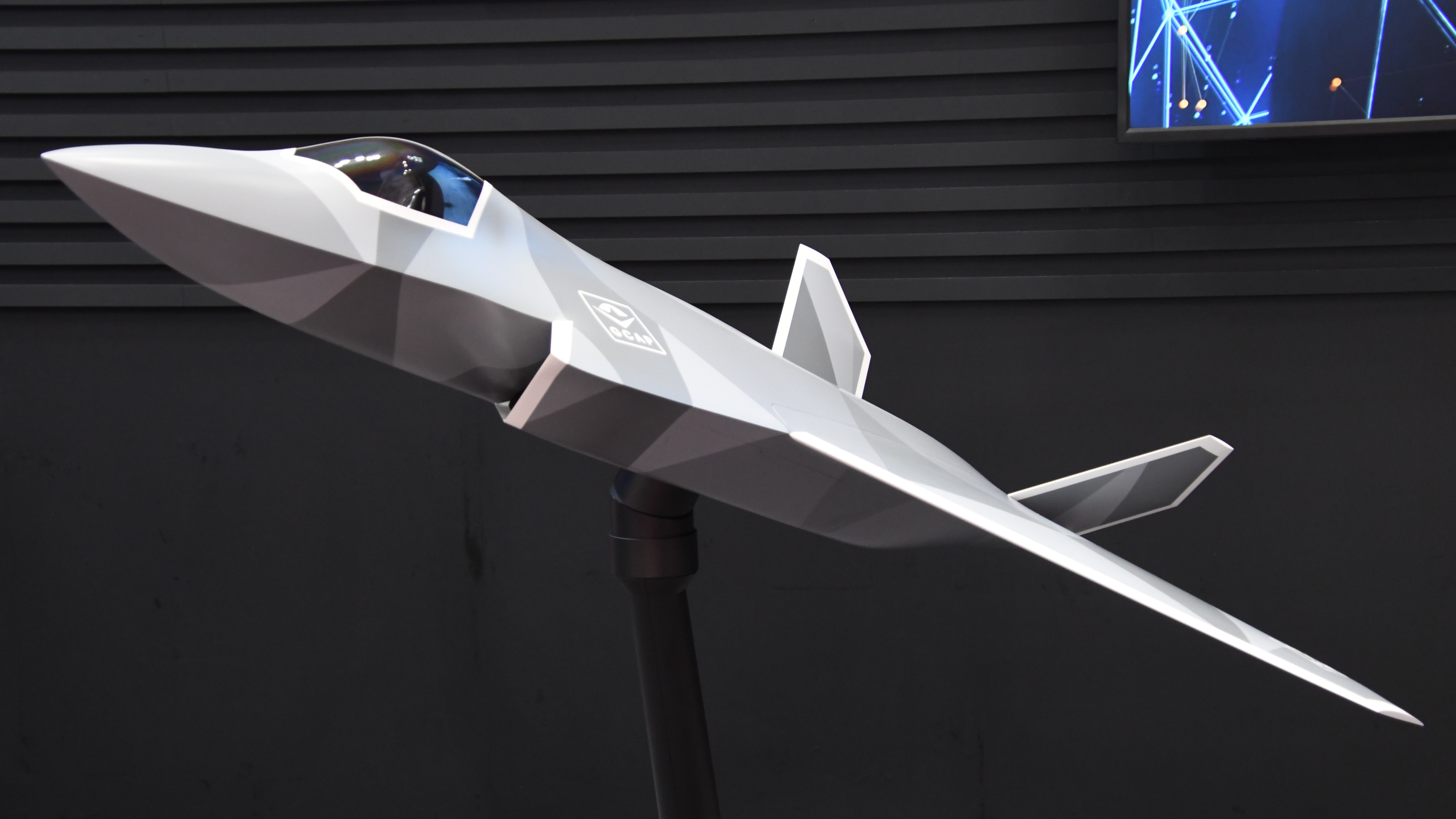
GCAP is a joint development program for next-generation fighters agreed upon by Japan, the UK, and Italy in December 2022. The goal is to complete a prototype by 2035, with the integration of manned and unmanned composite platforms and advanced sensor networks as core technologies. Japan's participation is led by Mitsubishi Heavy Industries through JAEI (Japan Aircraft Industry Promotion), forming an equal development structure with the UK's BAE Systems and Italy's Leonardo.
On February 12, the Italian House of Representatives' Defense Committee approved a contribution of 8.77 billion euros (approximately 1.35 trillion yen) for this program until 2037. Italy estimates that the total for the early phase will reach 18.6 billion euros, more than three times the estimate from 2021 (about 6 billion euros). The approval document cites "verification of technology maturity, testing and evaluation, and the realization of design and development costs" as the main reasons.
Cost Surge Mirrors the Path of the F-35
While the figure of three times may seem shocking, looking back at the history of defense procurement, this is not unusual. The F-35 faced serious cost overruns and schedule delays during its mid-development phase, with the final unit acquisition cost reaching several times the initial estimate. The F-22 was forced to significantly reduce its production numbers, resulting in an incomplete procurement process for operational maintenance.
The issue is that GCAP is still in the technology demonstration phase. As technology maturity increases, the "costs that become apparent only after trying" will emerge. This figure should be understood as a "reference value" in the sense that it may not accurately reflect future realities, rather than implying that there are doubts about it.
What Germany's Participation Could Change
The significant news in February is not just the rising costs. It has been reported that Italian Prime Minister Meloni and German Chancellor Merz discussed the possibility of Germany's participation in GCAP during their summit in Rome in January. Foreign Minister Tajani also publicly stated that he would not personally oppose any countries wishing to join.
Germany's participation is not a simple expansion. First, it would create a rift with the FCAS (French-German-Spanish competing program). For Germany, withdrawing from FCAS would be a significant political decision and could have serious implications for its relationship with France. On the other hand, a four-nation structure for GCAP could complicate decision-making. Even with three countries, coordination is not easy, and adding a fourth country is unlikely to accelerate the entire plan.
However, the strategic value of bringing Germany's industrial capabilities and political influence in the EU into the GCAP camp cannot be denied. If Germany's participation is realized, GCAP may establish a position to compete with FCAS for the mainstream of the European defense industry.
The Weight of "Cooperation" Confirmed in Munich
On February 14, at the Munich Security Conference, Defense Minister Nobuo Kishi held a meeting with Italian Defense Minister Crosetto for about 20 minutes, reaffirming cooperation for the success of GCAP. The following day, he also met with NATO Secretary General Jens Stoltenberg, agreeing to strengthen multilateral cooperation among Japan, NATO, Australia, New Zealand, and South Korea.
The official statement was routine, but in the dense diplomatic environment of Munich, the cost issues and realities of the schedule were likely discussed candidly. Having "confirmed cooperation" at the ministerial level means that Japan now bears the responsibility to face the upcoming cost increases head-on.
Structural Issues for Japan
Japan's participation in GCAP holds significance beyond mere equipment procurement. Mitsubishi Heavy Industries participating on equal footing with BAE Systems and Leonardo in the development of cutting-edge fighters signifies a technological leap for Japan's defense industry. It is hard to imagine abandoning this halfway.
However, the 8.7 billion euros is Italy's share, and Japan's contribution amount is still under discussion. Even the target of 2% of defense spending relative to GDP is still being negotiated with the Ministry of Finance, making it inevitable that securing additional budget for GCAP will create political friction.
In the author's view, the real challenge is not the cost increase itself, but the speed of decision-making when faced with rising costs. Both the UK and Italy have a worst-case alternative of merging into FCAS if GCAP falters. Japan does not have that option. If GCAP fails, Japan will be forced into a binary choice between additional purchases of the F-35 from the U.S. or a renewed attempt at independent development. Both paths will require more cost and time than the current situation.
Japan, the UK, and Italy are collaborating on the Global Combat Air Programme (GCAP) for next-generation fighter jets, with Italy approving a contribution of €8.77 billion until 2037. The initial cost estimate has tripled, raising concerns about future expenses. Discussions about Germany's potential participation could complicate the program's decision-making. Japan's involvement represents a significant technological advancement for its defense industry, necessitating a strategic response to rising costs.
- The Italian Parliament approved a contribution of €8.77 billion for the GCAP until 2037.
- The initial cost estimate for GCAP has tripled from €6 billion to €18.6 billion.
- Germany's potential participation in GCAP could complicate decision-making processes.
- Japan's involvement in GCAP signifies a technological leap for its defense industry.
- The report highlights the urgency for Japan to address rising costs in defense procurement.