
George Washington's Gulf Detour Leaves the Western Pacific at Zero Carriers
 Marcus Chen
George Washington's Gulf Detour Leaves the Western Pacific at Zero Carriers
USS George Washington (CVN-73) arrived in the U.S. Central Command area of responsibility on Wednesday and transited the Arabian Sea on Thursday, CENTCOM announced. That single sentence is worth more than any force posture review published this year: the U.S. Navy's only forward-deployed carrier — the one hull the entire Western Pacific presence model was built around — is now in the Gulf, and nothing is coming to take its place in the near term.
The Numbers Behind the Move
Here is the arithmetic, straight from USNI News' carrier deployment database. USS Abraham Lincoln (CVN-72) has been deployed 272 days. It has gone 252 days without a port call — the longest such stretch since the early days of the COVID-19 pandemic, and it has now smashed the 206-day consecutive-at-sea record set by USS Dwight D. Eisenhower in 2020. Lincoln was supposed to go home in May. The Iran conflict kept it in the Arabian Sea, where it has been operating in support of Operation Epic Fury since January.
The relief plan, as reported by USNI News on Thursday, is a bridge, not a fix: George Washington — which departed Yokosuka, Japan in May for its first patrol of 2026 — will relieve Lincoln, joined by cruiser USS Robert Smalls (CG-62) and destroyer USS Shoup (DDG-86). A Navy official could not say when Lincoln would head home, and based on previous carrier transits it could take a month or longer to steam back to the U.S. West Coast. Acting Secretary of the Navy Hung Cao announced last week that Abraham Lincoln would be returning "shortly."
Where Every Carrier Sits Right Now
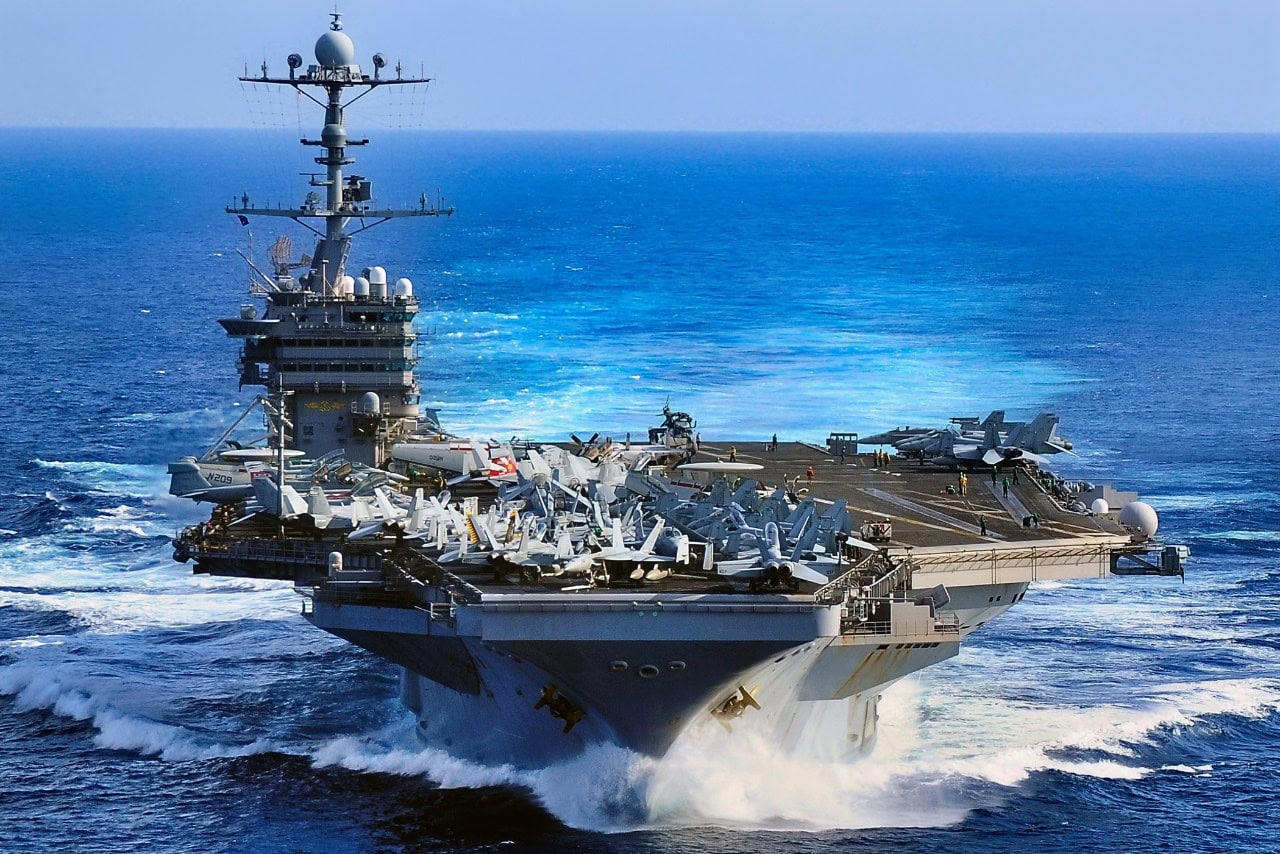
Run the fleet board yourself. USS George H.W. Bush (CVN-77) and its escorts are in the Arabian Sea. Abraham Lincoln is in the Arabian Sea. George Washington is now in the Arabian Sea. USS Theodore Roosevelt (CVN-71) is in San Diego following RIMPAC 2026, still preparing for deployment. USS John F. Kennedy (CVN-79) only left Newport News for acceptance trials on Aug. 12, with years of delays behind it and seven weapons elevators delivered late. That is three carriers in CENTCOM's theater, one working up in California, one not yet in service — and zero in the Western Pacific.
Anyone who has served on a destroyer in 7th Fleet knows what that means in practice. A 252-day no-port-call cycle doesn't just exhaust a crew; it compounds maintenance backlogs, eats into retention, and quietly deletes the training schedule for the next deployment. The families of Lincoln's sailors raised concerns about mental health resources, supply shortages and water contamination — and the Navy's own response admitted the theater's supply hubs have been disrupted, prioritizing food, then hygiene items, then mail.
Why This Is a Pacific Story, Not a Gulf Story
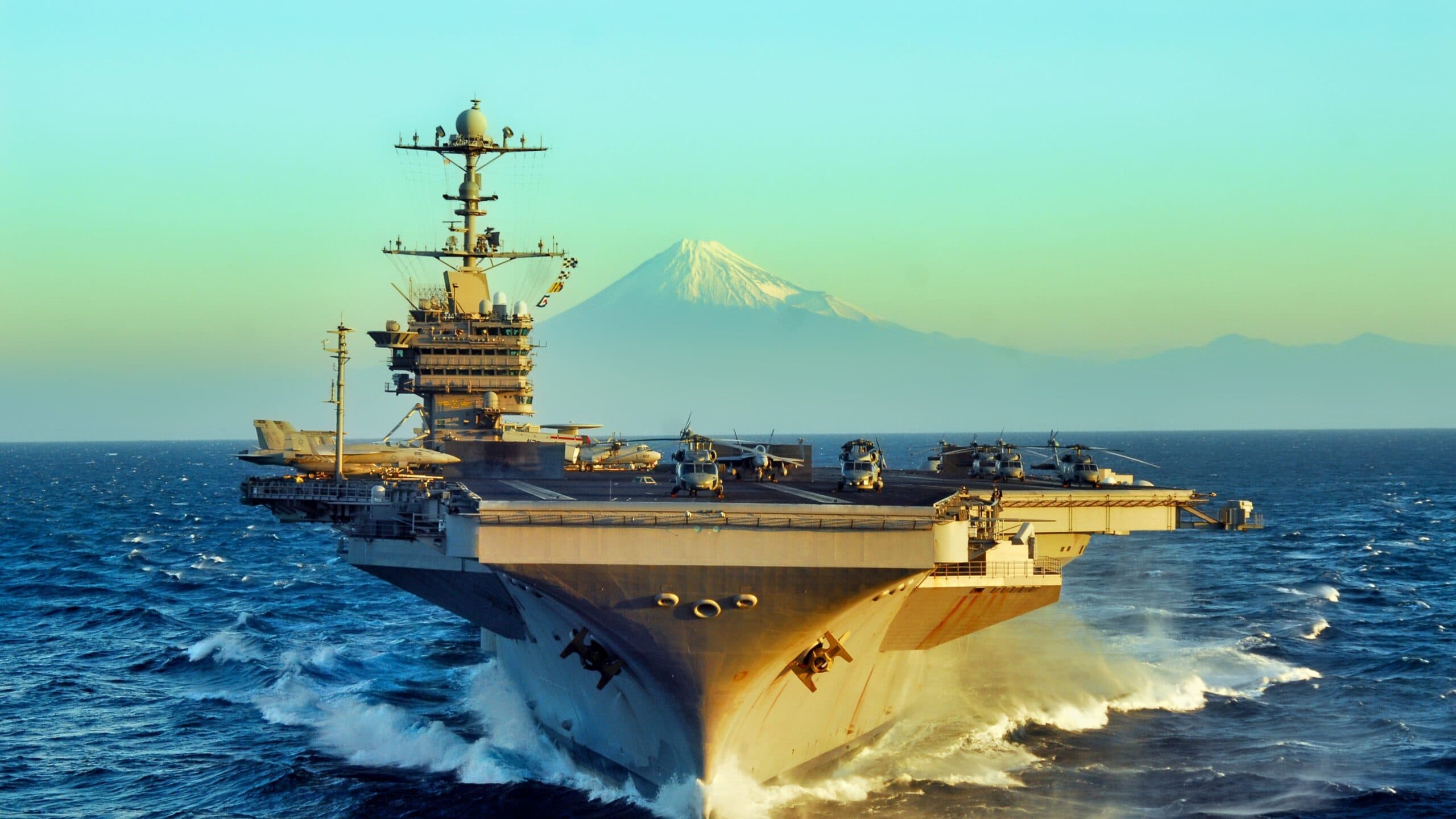
The forward-deployed carrier program exists for one reason: to guarantee a carrier is always within striking distance of the Taiwan Strait without waiting for a surge from California. George Washington's move breaks that guarantee. The Pentagon says the Indo-Pacific is the priority theater, but the force generation model just spent the priority theater's only carrier as slack for the Middle East fight.
Consider the contingency math. If the strait escalates tomorrow, what is within a week's steam of the Philippines? Roosevelt is still working up in San Diego — weeks from being ready, weeks more in transit. Lincoln is a month-plus from home and is being relieved, not redeployed. Bush and Washington are on the wrong side of the Indian Ocean. The response timeline for a Taiwan contingency just went from days to weeks, and that calculation will not be lost on anyone in the PLA's Eastern or Southern Theater Commands.
The detail that should worry planners most is USS Benfold (DDG-65). The destroyer lost power for four days in the South China Sea in late July, was towed to Subic Bay for repairs, made a port call in Yokosuka this month, and — according to USNI — may now rejoin George Washington in the Arabian Sea. The fleet is so thin that a ship that just suffered a four-day engineering casualty is being fed back into the fight as a gap-filler. That is not a surge; that is cannibalization.
The Math That Was Always There
Eleven carriers was always a one-war number. The Navy has known this since the 2010s force structure debates, when the requirement was quietly set at "two warfighting CTFs available at the start of a major operation." You do not get that from 11 hulls when one is in a 40-month depot availability, one is in acceptance trials, and one just left the theater it was assigned to deter in.
George Washington's detour is not a scheduling error. It is the output of a force structure that cannot fight a Gulf conflict and hold the Pacific at the same time — and the first time that reality has been publicly visible in ship movements rather than think-tank slides. The Gulf gets three carriers; the Pacific gets none. China just watched it happen, on a timeline it can plan against.
"The Indo-Pacific is the priority theater" is a statement of intent. Three carriers in the Arabian Sea and zero in the Western Pacific is a statement of fact. Until the industrial base can produce more hulls, those two sentences will keep contradicting each other.
The fix is not another carrier being diverted. It is a fleet large enough that the Pacific never depends on one hull in the first place — and that fix is a decade away, if the shipyards can hold schedule at all. Until then, the Western Pacific carrier gap is not a hypothetical in a wargame. It is the current order of battle.
USS George Washington arrived in the U.S. Central Command area, relieving USS Abraham Lincoln, which has been deployed for 272 days without a port call. The U.S. Navy now has three carriers in the Arabian Sea and none in the Western Pacific, raising concerns about naval readiness in the Indo-Pacific region. This shift indicates a significant gap in carrier presence in the Pacific, impacting response times to potential conflicts.
- USS George Washington has arrived in the U.S. Central Command area.
- USS Abraham Lincoln has been deployed for 272 days without a port call.
- There are currently zero aircraft carriers in the Western Pacific.