
German-made spy drone gets new defense against interceptor threats
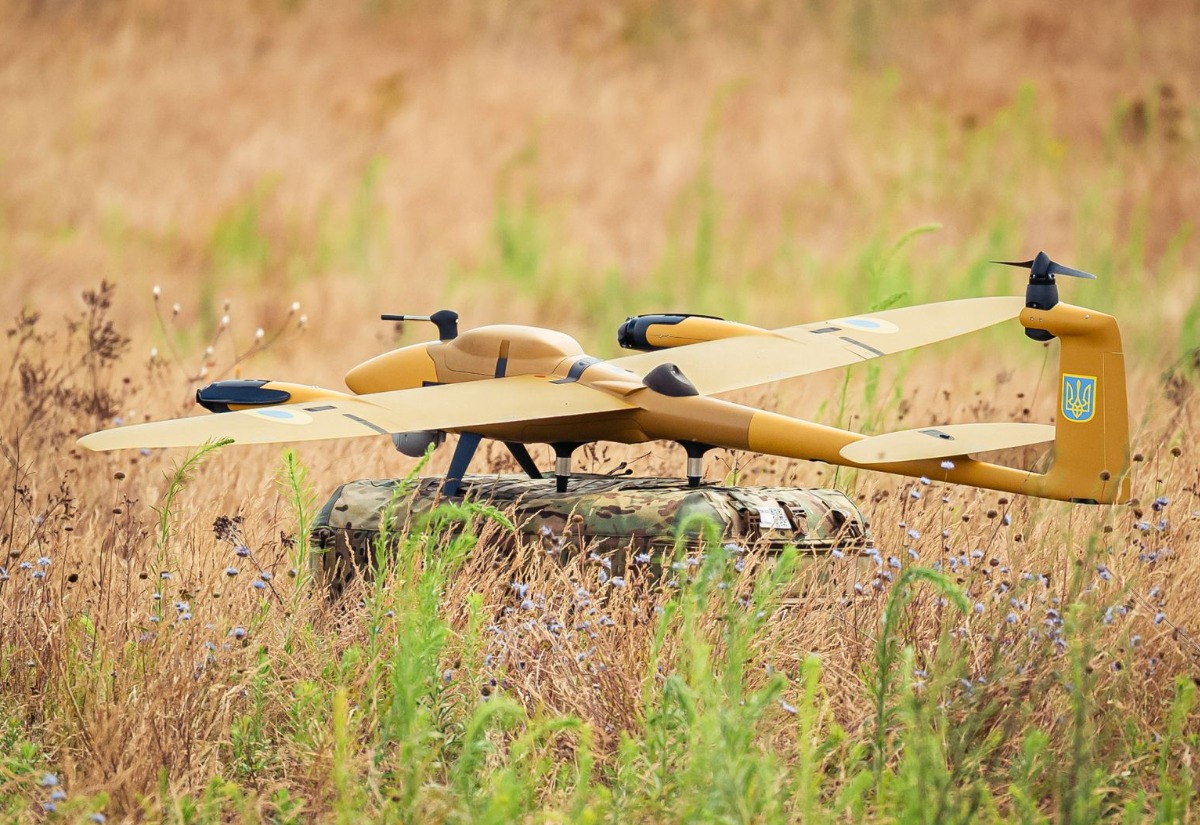
A German reconnaissance drone flying over Ukraine has got a new paint job and a rearward-facing camera, and both changes trace directly back to a threat that barely existed a couple of years ago, other drones built specifically to hunt reconnaissance aircraft out of the sky.
Quantum Systems, a German drone manufacturer based in Gilching, Bavaria, said its Vector reconnaissance drone has evolved specifically to counter first-person-view interceptor drones, which the company described as having become one of the biggest threats facing reconnaissance aircraft flying in Ukraine. The most visible change is a new yellow summer airframe, a color scheme the company said is deliberately hard to pick out against dry Ukrainian fields during the warmer months, a straightforward camouflage adjustment tied to the specific terrain and season the drone currently operates in.
The far less visible change addresses a threat that cannot simply be painted away. FPV interceptors, small first-person-view drones an operator flies using a headset that shows a live video feed as if piloting from the cockpit, have increasingly been repurposed by both sides in the war to chase down and destroy enemy reconnaissance drones rather than only striking ground targets, turning aerial reconnaissance missions into a genuine cat-and-mouse contest between competing unmanned aircraft. Quantum Systems said these interceptors typically close in on the Vector from behind, and because roughly half of Vector’s missions fly at night, optical detection, meaning spotting an approaching threat visually through a normal camera, simply isn’t an option for a large share of the drone’s flight time.
To solve that specific problem, Quantum Systems added a rearward-facing thermal camera, a sensor that detects heat rather than visible light, letting the system see an approaching interceptor’s engine or motor heat signature in complete darkness when a conventional camera would show nothing useful at all. Once that thermal camera picks up an approaching threat, an onboard artificial intelligence module classifies what it’s looking at, and the aircraft then flies its own evasive maneuver automatically, without the human operator having to notice the threat, make a split-second decision, and manually steer the aircraft out of danger. Quantum Systems said that automation matters because it means the operator loses no attention to something that has already been handled, keeping the human focused on the reconnaissance mission itself rather than pulled away into a defensive dogfight against an interceptor.
Quantum Systems’ fixed-wing, vertical takeoff and landing reconnaissance drone has flown more than 20,000 combat hours in Ukraine alone, according to company CEO Dave Sharpin, giving the aircraft an unusually deep well of real-world operational data most drone programs never accumulate before their design gets locked in. That combat experience has visibly hardened the aircraft’s reputation for survivability. In one widely reported incident from mid-2025, a Vector drone operating at extended range over enemy territory was struck 11 times by Russian small arms fire during an intelligence, surveillance, and reconnaissance mission, continuing to function until a direct hit disabled its camera stabilizer, and the aircraft still managed to fly itself back to friendly territory for repairs rather than being lost outright.
Vector’s core sensor package already included a powerful optical station with a standard thermal imaging channel, and an upgraded variant called Vector AI adds the artificial intelligence processing module now central to the aircraft’s new interceptor-evasion capability, while an optional acoustic sensor payload called WASP, developed to detect artillery fire, can extend the aircraft’s utility into counter-battery detection roles when a unit needs that capability instead of or alongside standard reconnaissance. The baseline Vector can fly missions penetrating roughly 45 to 47 kilometers (28 to 29 miles) into contested territory and stay airborne for around two hours on standard batteries, giving Ukrainian units meaningful standoff distance and loiter time to scout targets before handing coordinates off to artillery or strike drones.
That operational track record has attracted attention well beyond Ukraine’s own military. The Pentagon selected Quantum Systems’ American branch in 2023 as a promising manufacturer of reconnaissance drones for U.S. Special Operations Command, which subsequently committed $20 million to expand the company’s production capacity at facilities inside the United States, while the broader U.S. Army has separately selected Vector AI drones for its own use. Quantum Systems has also built manufacturing capacity directly inside Ukraine, opening a dedicated production facility there in 2024 following an earlier 2023 agreement to begin producing spare parts and assembling Vector drones domestically, a localization strategy that shortens supply lines and keeps replacement parts flowing even as Western export and shipping logistics face their own wartime pressures.
None of these upgrades make the Vector invincible, and Quantum Systems was careful to frame the new thermal-camera evasion system in exactly those terms rather than oversell it.
“It is not armour. Nothing survives every intercept. But out there the requirement keeps getting rewritten, and the airframe answers on the same clock,” Quantum Systems said.
Content preview only. Full article available at source. View Full Article
Quantum Systems upgraded its Vector reconnaissance drone with new camouflage and a rearward-facing thermal camera to enhance its evasion capabilities against interceptor drones in Ukraine. The drone has accumulated over 20,000 combat hours and has been selected by the Pentagon for further production. These upgrades aim to improve operational effectiveness in the ongoing conflict.
- Quantum Systems upgraded the Vector drone with a new camouflage and thermal camera.
- The drone is designed to evade interceptor drones that target reconnaissance aircraft.
- The Vector has flown over 20,000 combat hours in Ukraine.
- The Pentagon has selected Quantum Systems for reconnaissance drone production.
- The company has established a production facility in Ukraine.