
US Burns 65 Percent of Patriot Interceptors and Europe Gets the Bill
 Alexandra Reeves
US Burns 65 Percent of Patriot Interceptors and Europe Gets the Bill
America can write a $58.6 billion contract faster than it can build a missile. That is the uncomfortable lesson buried inside the latest Patriot stockpile reporting, and it matters far beyond the Iran war.
According to a Center for Strategic and International Studies assessment reported by Defense News, U.S. forces have expended roughly 65 percent of their pre-war Patriot interceptor inventory during the conflict with Iran, leaving fewer than 1,000 interceptors available. CSIS also estimates that Terminal High Altitude Area Defense stocks have fallen by about 38 percent, leaving roughly 234 to 278 THAAD interceptors. The Pentagon has not publicly confirmed those figures, but the direction of travel is hard to miss: high-end air defence is being consumed faster than the industrial base can comfortably replace it.
That is not just an American readiness problem. It is a NATO problem, a Ukraine problem, and a European political problem. Everyone in Brussels likes to talk about layered air defence now. The awkward part is that the layer everyone trusts most still depends heavily on American missiles.
The Numbers Are the Signal
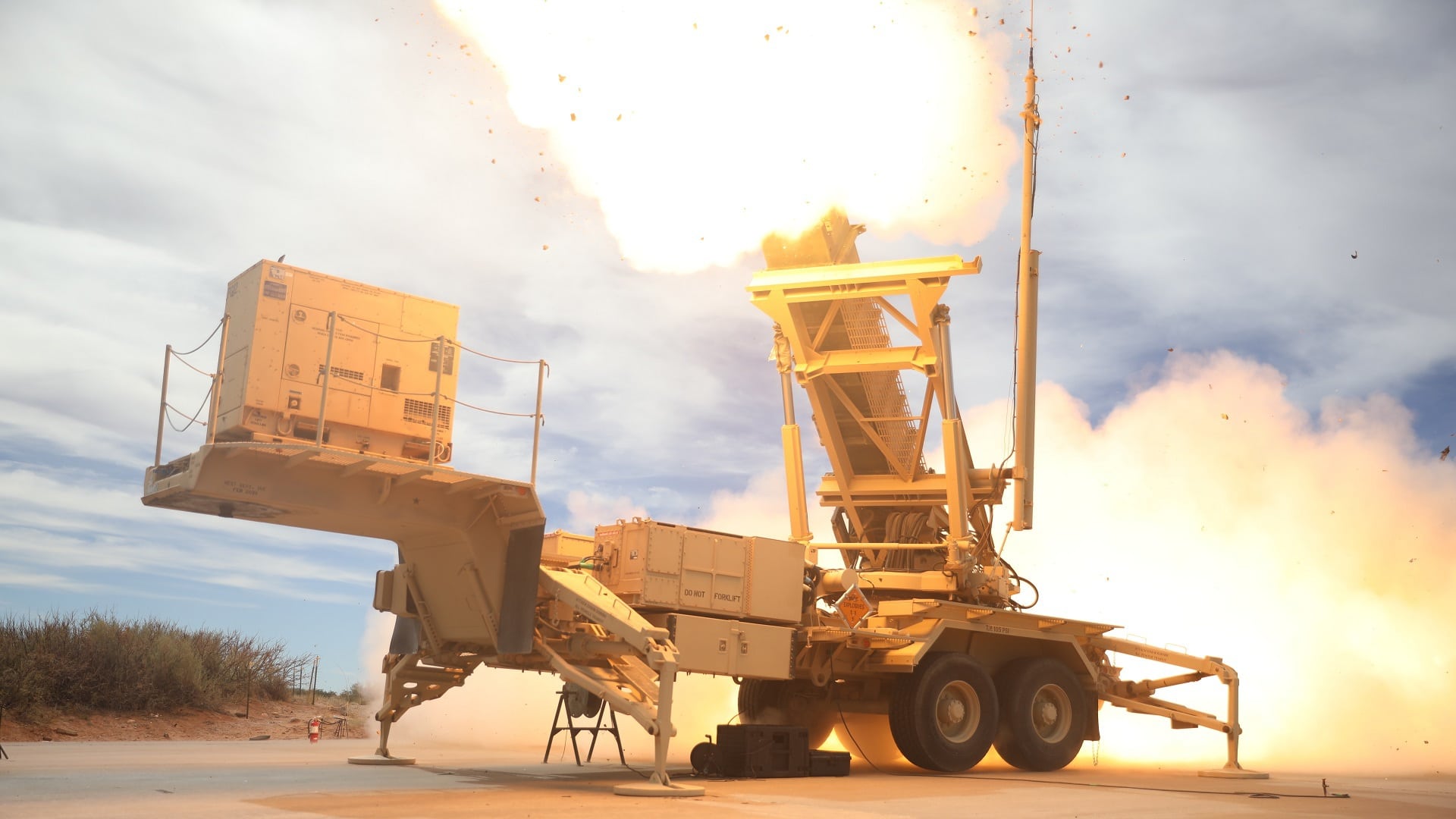
Patriot is not a single weapon so much as a defensive ecosystem: radar, engagement control stations, launchers, command links and interceptors. The most important round in current U.S. procurement is the PAC-3 Missile Segment Enhancement, a hit-to-kill interceptor designed to defeat ballistic missiles, cruise missiles and aircraft. THAAD sits higher in the defensive architecture, intended for high-altitude ballistic missile interception. Together, they form the kind of shield that commanders reach for when the incoming threat is too fast, too valuable, or too politically dangerous to let through.
That is exactly why the reported depletion matters. Cheap drones can be countered by cheaper systems if commanders have time, sensors and discipline. Ballistic missiles are a different problem. When Iranian missiles target U.S. bases or allied population centres, commanders do not get to hold back an interceptor because the 2028 procurement line looks thin. They fire.
CSIS analysts Mark Cancian and Chris Park put the point bluntly in their report: there are no good alternatives to Patriot and THAAD for ballistic missile defence. Defense News cited their conclusion that depleted inventories could force the United States and coalition partners to conserve interceptors or defend only the highest-value targets if another high-intensity contingency arrives before stocks are rebuilt.
The Contract Does Not Fix the Calendar
The U.S. Army has now awarded Lockheed Martin a contract worth up to $58.6 billion to produce PAC-3 MSE interceptors through fiscal 2032, according to Military Times and Reuters reporting. Lockheed says the funding supports plans to triple PAC-3 MSE production capacity by the end of 2030 and increase employment at its Camden, Arkansas, plant by 50 percent, from about 1,200 to roughly 1,850 jobs. The company has also said Patriot PAC-3 output is headed toward 2,000 interceptors annually.
That sounds enormous. It is also the kind of number that can lull politicians into thinking the problem has been solved. It has not. Cancian told the BBC that money put into the system today may not produce a missile for three or four years, sometimes five. In other words, the interceptors arriving now were funded years ago. The missiles funded today are really a bet on the threat environment of 2029, 2030 and 2031.
This is where deterrence gets less glamorous. A Patriot battery parked in Poland or Romania is a visible signal. A multiyear contract for rocket motors, seekers and canisters is a quieter signal, but adversaries can read it just as clearly. Russia, Iran, North Korea and China all watch stockpile depth because stockpile depth tells them whether the United States can fight past the first month.
Ukraine Feels This First
Ukraine is the most immediate casualty of a thin Patriot inventory. Kyiv has used Patriot batteries to defend against Russian ballistic and hypersonic missile attacks, including threats that older Soviet-derived systems cannot reliably handle. Every PAC-3 round consumed in the Middle East is not automatically a round denied to Ukraine, but the trade-off becomes more real when the remaining pool is measured in hundreds rather than thousands.
The fashionable answer in Europe is diversification: SAMP/T, IRIS-T SLM, NASAMS, Skynex, cheaper counter-drone systems, and eventually more European missiles. Good. Europe should do all of that. But diversification is not substitution. SAMP/T with Aster missiles is valuable. IRIS-T is valuable. NASAMS is valuable. None of them gives NATO an immediate, abundant replacement for Patriot and THAAD against the full ballistic missile problem.
That leaves Ukraine stuck in the ugly middle. It needs more interceptors now, not after the production curve improves. Europe wants strategic autonomy, but still depends on Washington for the hardest air-defence mission. Washington wants to deter Iran, support Ukraine, reassure NATO, and keep enough missiles in reserve for the Indo-Pacific. The short answer is that the same interceptor cannot be in four places at once.
Europe Has Been Warned
The usual European complaint is that America may not show up. The more serious 2026 problem is different: America may show up and still run short. That is a colder assessment, but it is the one NATO planners should be making after the Patriot numbers.
European governments have increased defence spending, but too much of the debate is still framed around percentages of GDP and headline procurement announcements. Air defence requires something duller and harder: magazines, production lines, trained crews, maintenance capacity, shared fire-control networks and political agreements about who gets protected first when there are not enough interceptors to protect everyone.
The Iran war has exposed a bad bargain for Europe. The United States remains the indispensable provider of high-end missile defence, but U.S. magazines are being drained by commitments outside Europe. The new Lockheed contract is necessary, and it may be strategically important by the end of the decade. It does not solve the next two years.
The real test for NATO is not whether it can buy more air-defence systems. It is whether Europe can stop treating American stockpiles as a bottomless insurance policy.
What to Watch Next
Three indicators now matter more than the contract headline. First, whether Congress fully funds the multiyear PAC-3 and related missile deals without delay. Second, whether European governments move from buying launchers to underwriting interceptor production at scale. Third, whether Ukraine receives enough Patriot missiles through 2026 to keep defending cities and critical infrastructure without forcing the United States into dangerous drawdowns elsewhere.
The key finding is simple: the West has enough technology to defeat many missile threats, but not enough production depth to make that promise durable. If Russia or Iran reads that as an invitation to stretch the system, they will not need to defeat Patriot in a laboratory. They will only need to keep firing until the politics of scarcity does the work for them.
U.S. forces have depleted 65% of their Patriot interceptor inventory during the conflict with Iran, leaving fewer than 1,000 interceptors available. The U.S. Army awarded Lockheed Martin a $58.6 billion contract to produce PAC-3 MSE interceptors through fiscal 2032. This depletion poses significant challenges for NATO and Ukraine, which rely on U.S. air defense systems amid rising threats from Russia and Iran.
- U.S. has used 65% of its Patriot interceptors in the Iran conflict.
- THAAD stocks have decreased by 38%.
- Lockheed Martin awarded a $58.6 billion contract for PAC-3 MSE interceptors.
- Ukraine is facing a shortage of interceptors due to U.S. commitments.
- European nations are increasing defense spending but still rely on U.S. systems.