
Pentagon bets $820M on domestic drone component production
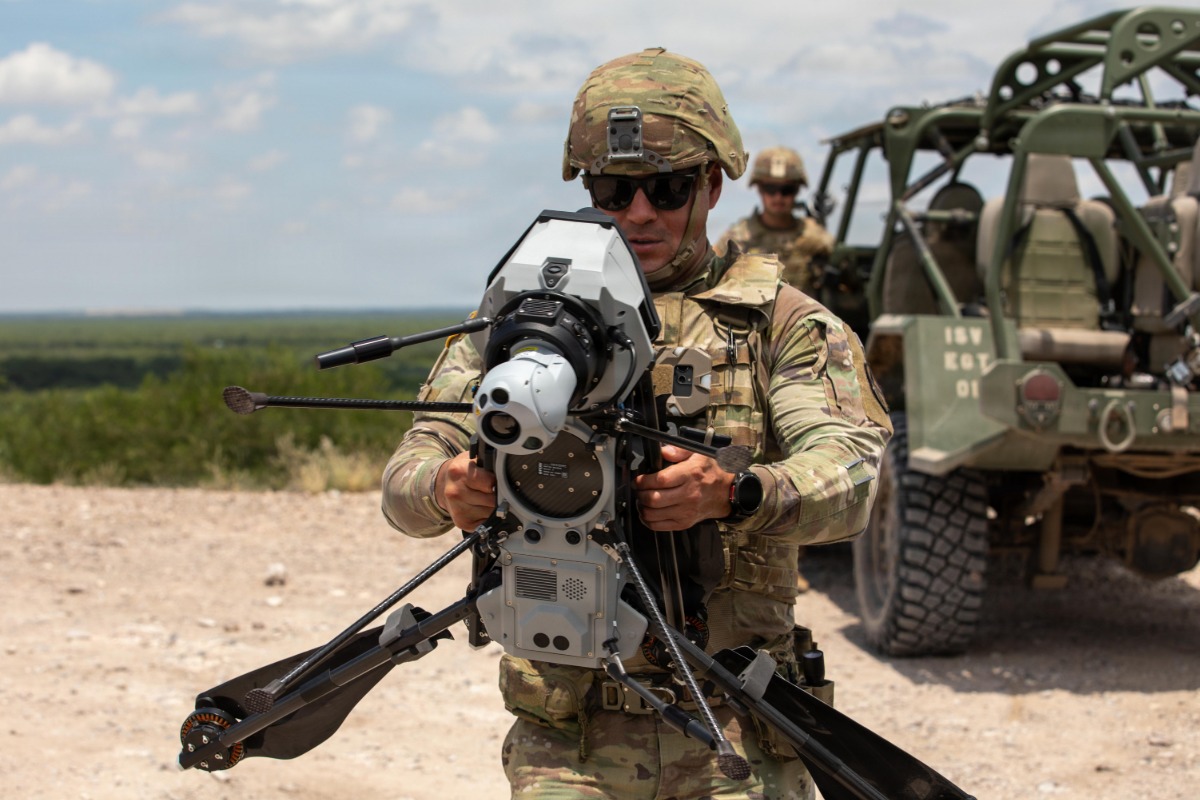 Performance Drone Works (PDW) C-100
The Pentagon has agreed to lend a small Texas drone company up to $820 million, a bet that fixing a handful of tiny, unglamorous parts could unlock America’s entire drone manufacturing pipeline.
The U.S. Department of War’s Office of Strategic Capital announced a conditional loan commitment of up to $820 million to Performance Drone Works, known as PDW, to establish high-volume domestic manufacturing capacity for critical drone components.
The Office of Strategic Capital, an organization Congress established to help finance projects strengthening supply chains the Pentagon considers critical to national security, structured the deal as a conditional commitment rather than a finalized loan, meaning PDW still must satisfy financial, legal, technical, and other due diligence requirements before the money actually closes and flows to the company.
Combined with additional private capital committed alongside the government financing, the deal is designed to create a new, high-volume source of domestically manufactured drone components serving the broader U.S. drone industrial base rather than PDW’s own products alone. The project specifically aims to supply components to multiple manufacturers and platforms across the industry, representing a meaningful expansion of domestic production capacity for the kind of parts that go into Group 1 and Group 2 unmanned aircraft, the Pentagon’s classification system covering smaller tactical drones typically weighing under 55 pounds (25 kg), a size range that includes many of the reconnaissance and one-way attack drones now being produced at scale for American forces.
David A. Lorch, Director of the Office of Strategic Capital and Senior Advisor to Deputy Secretary of War Steve Feinberg, tied the loan directly to a broader White House push to rebuild American drone manufacturing from the ground up.
“PDW will be one of several domestic component producers receiving OSC loan commitments in support of President Trump’s Executive Order 14307, ‘Unleashing American Drone Dominance.’ Expanding domestic component production will benefit manufacturers throughout the ecosystem and improve supply-chain resilience,” Lorch said.
That executive order, signed June 6, 2025, directs federal agencies to expand domestic unmanned aircraft system production and reduce reliance on foreign-manufactured drones, a policy shift driven largely by national security concerns U.S. officials have raised about foreign-made drones, particularly those produced by the Chinese company DJI, which has long dominated the global commercial drone market. The Federal Communications Commission followed up in December 2025 by banning distribution of new foreign-made drones inside the United States on national security grounds, adding regulatory teeth to a policy goal the executive order had only set in broad strokes.
James R. Shanahan, Senior Managing Director at the Office of Strategic Capital, framed the PDW deal as part of a targeted effort to identify and fix specific chokepoints rather than simply throwing money at the drone industry broadly.
“We are squarely focused on identifying and addressing bottlenecks in critical supply chains, including drones and autonomous systems. OSC’s transaction with PDW, along with private capital crowded in alongside it, will support the construction of significant new manufacturing capacity to address vulnerabilities across the drone supply chain,” Shanahan said.
Those bottlenecks matter because a single missing component can stall production of an entire finished drone even when every other part is readily available. American drone manufacturers have struggled for years to source certain critical components domestically, from specialized motors and batteries to guidance electronics, often relying on overseas suppliers whose products fall under exactly the kind of foreign-dependency concerns Executive Order 14307 was written to address. Building high-volume domestic capacity for these components could let PDW and other American manufacturers scale up finished drone production without waiting on foreign supply chains vulnerable to export restrictions, shipping delays, or geopolitical disruption.
PDW itself is a small but increasingly visible player in the American drone industry, best known for its C100 platform, a multi-role drone capable of functioning as a reconnaissance scout, a bomber carrying munitions, a cargo transport, or a carrier that launches smaller first-person-view attack drones to extend their effective range. The Army has tested PDW’s hardware directly in recent field exercises, including a July 2026 demonstration where soldiers integrated a standardized weapons attachment system called the Picatinny Common Lethality Integration Kit onto a C100 drone during Project Convergence Capstone 6, giving the aircraft the ability to accept different lethal payloads using a shared mounting interface rather than requiring custom integration work for every new weapon.
Emil Michael, Under Secretary of War for Research and Engineering, connected the PDW financing directly to Defense Secretary Pete Hegseth’s broader drone strategy, arguing that genuine industrial resilience has to start at home rather than relying on components sourced from potentially unreliable overseas suppliers.
“Achieving Secretary Hegseth’s mandate for drone dominance requires a secure and resilient industrial base here at home. The Office of Strategic Capital is strengthening the domestic supply chain for critical drone components to ensure American manufacturers can deliver the lethal capabilities that our warfighters need,” Michael said.
That framing connects directly to Drone Dominance, the Pentagon’s broader roughly $1 billion, multiyear plan to purchase more than 200,000 small, lethal drones by 2027 through rapid, phased competitions rather than the military’s traditionally slow acquisition process. A program aiming to buy drones at that scale ultimately depends on American manufacturers being able to actually build components fast enough and in large enough volume to keep pace, which is precisely the capacity gap the PDW loan is designed to help close.
Content preview only. Full article available at source. View Full Article
The Pentagon committed up to $820 million to Performance Drone Works in Texas to enhance domestic production of drone components. This funding aims to strengthen the U.S. supply chain for critical parts, supporting multiple manufacturers in the drone industry. The initiative is part of a broader strategy to reduce reliance on foreign-made drones and improve national security.
- Pentagon committed up to $820 million to Performance Drone Works for drone component production.
- The loan aims to strengthen the domestic supply chain for critical drone parts.
- The project will support multiple manufacturers in the U.S. drone industry.
- The initiative is part of a broader strategy to reduce reliance on foreign drone components.
- The C-100 drone is a multi-role platform tested by the Army.