
Strike on the airbase in the Rostov region deprived Russia of six aircraft — what does this change for long-range aviation

Strike on the airbase in the Rostov region deprived Russia of six aircraft — what this changes for long-range aviation
Six Russian aircraft — this is the number, according to the Ukrainian side, that was hit at the airbase in the Rostov region on the night of September 17. There is currently no independent confirmation of each unit, so the figure should be considered stated rather than established. However, even partial damage to aviation equipment at an airfield deep within Russian territory is already significant. It shows that the Ukrainian campaign of long-range drone strikes is increasingly aimed not at symbolic targets, but at the production cycle of war — the aircraft, fuel reserves, repair infrastructure, and the time needed to return the crew to service.
What is known about the attack
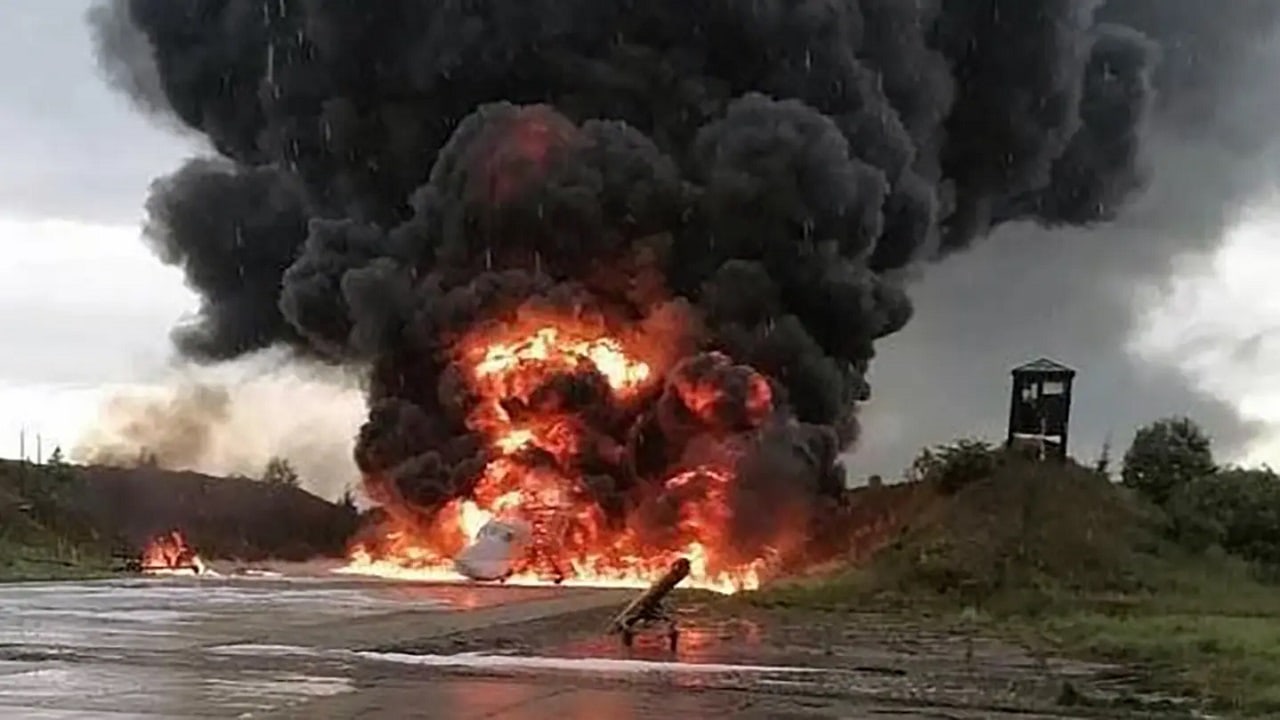
Reports of the six aircraft being hit emerged after the strike on the Russian airfield in the Rostov region. Ukrainian sources presented the attack as one of the most severe against aviation infrastructure in a year; specialized publications specified that it may involve aircraft that were on the ground. Russian official channels confirmed the fact of air defense systems being activated and reports of fires, but did not disclose the scale of the damage. In such cases, both sides have a clear incentive to choose convenient statistics. Therefore, the correct conclusion at this moment is limited: the airfield was successfully impacted, and the number of irretrievably lost aircraft requires satellite imagery and analysis of debris.
Why six aircraft are more important than they seem
If among the damaged aircraft were bombers or planes that support them, the damage cannot be measured solely by the cost of the airframe. Russian long-range aviation uses Kh-22 and Kh-32 missiles, as well as other means of destruction launched from long distances. The carrier is an element of a complex chain: crew training, technical maintenance, reserves of engines and missiles, protected parking, communication means, and meteorological support. An aircraft can be taken out of combat readiness by hitting the fuselage, but sometimes it is enough to damage equipment at the airfield or block the runway. For the Soviet system, which was accustomed to dispersing aviation across a large network of airfields, the vulnerability of parking areas was an understandable problem. Modern Russia has inherited the network but not the previous reserves of time, equipment, and trained personnel.
The Tu-22M3 is a striking example. It is a heavy missile carrier with a crew of four, a maximum speed of about 2 Mach, and a combat load of up to 24 tons depending on the flight profile. Its upgraded version, the Tu-22M3M, is supposed to increase resource and compatibility with modern means of destruction; however, modernization does not turn the old fleet into an endless resource. Most of these aircraft were produced during the Soviet period. The loss of several aircraft simultaneously means not only a reduction in the number of launch platforms but also an overload of the remaining aircraft, accelerated wear, and increased demands for airfield security.
Long-range drone warfare
The main lesson of the attack is not that Russian air defense has "disappeared." It continues to intercept a significant portion of targets, especially around major cities and military nodes. The problem lies elsewhere: a cheap drone forces the defending side to constantly choose what to protect. Deploying expensive missile systems around every airfield is impossible, and small drones can approach from different directions, use low altitude, and attack at moments when aircraft are parked in tight groups. Even a downed drone can perform a reconnaissance function, revealing the location of equipment, the operating mode of radar systems, and the response time of the garrison.
This reveals the institutional weakness of the Russian model. Moscow has invested in layered air defense but has long treated rear airfields as spaces protected by geography itself. Ukrainian industry and military operators are systematically undermining this assumption. As a result, Russia is forced to disperse aircraft, build shelters, enhance electronic warfare, and redeploy air defense units from other areas. Each such measure reduces the effectiveness of aviation use at the front. The war is turning into a risk accounting: one successful raid can cost much less than the downtime of several missile carriers.
Operational and geopolitical consequences
In the near term, Russia will likely respond with increased nighttime strikes on Ukrainian cities and infrastructure. This is a predictable reaction of a system that prefers to demonstrate its ability to retaliate, even if the initial task is to preserve the aviation fleet. However, the intensity of retaliatory launches will depend on the actual damage at the airfield and the availability of operational carriers. The Ukrainian side, in turn, has received confirmation of the value of the reconnaissance-strike link: detecting a target, waiting for a vulnerable moment, and striking at the base location.
For external observers, this is also a signal of an expanding risk zone around southern Russian regions. Strikes on airfields affect export routes, transportation insurance, and the political calculations of countries that support or supply Moscow. If Russian aircraft have to be moved further from the Ukrainian theater, the logistics distance, fuel consumption, and crew workload increase. This does not mean an automatic turning point in the war. But it does mean a gradual constriction of the space in which Russian command can safely deploy expensive means of destruction.
Conclusion
The claim of six damaged aircraft still needs to be verified. Nevertheless, the attack itself indicates a change in the logic of war: the front no longer begins at the line of contact, but where the aircraft that is supposed to deliver the next strike is located. Russian long-range aviation will retain the ability to attack Ukraine if Moscow manages to disperse the fleet and restore airfield defenses. But provided that Ukrainian drones continue to find parking areas faster than the Russian system can change their mode, each new loss will have a disproportionately greater effect — not an immediate collapse, but a slow depletion of the Soviet legacy.
Sources
- The Defence Blog, “Ukraine claims 6 aircraft hit at Russian airbase in Rostov,” September 17, 2026.
- ABC News and Al Jazeera, reports on the Russian missile-drone strike on Ukraine and the consequences of the attack, September 17, 2026.
- The Moscow Times, “Ukrainian Drone Attack Sparks Fire at Yaroslavl Oil Refinery,” September 17, 2026.
- Institute for the Study of War, Russian Offensive Campaign Assessment, September 16, 2026.
Ukrainian forces reportedly struck a Russian airbase in Rostov Oblast on September 17, 2026, damaging six aircraft. This attack is considered one of the most significant against Russian aviation infrastructure in the past year. While Russian officials confirmed the activation of air defense systems, they did not disclose the extent of the damage, indicating a successful strike by Ukrainian forces.
- Ukrainian sources claim six Russian aircraft were hit at an airbase in Rostov Oblast.
- The attack is described as one of the most severe against Russian aviation infrastructure in a year.
- Russian official channels confirmed the activation of air defense systems but did not disclose the extent of damage.
- The loss of aircraft impacts the operational capacity of Russian long-range aviation.
- The attack signifies a shift in Ukrainian strategy towards targeting critical military infrastructure.