
Germany's 11.5 Billion Euros for Ukraine Primarily Strengthen Europe's Dependence in 2026
 Dr. Klaus Weber
Germany's 11.5 Billion Euros for Ukraine Strengthen Europe's Dependency in 2026
Berlin, November 13, 2026. The Budget Committee of the German Bundestag is discussing today a German aid package for Ukraine of more than 11.5 billion euros for 2026. Additional funds are planned for artillery, drones, armored vehicles, and the replacement of two Patriot systems that were transferred from Bundeswehr stocks to Ukraine. This is politically significant. However, militarily, the sum only partially answers an uncomfortable question: Is Germany buying European defense capability or merely managing the costs of a persistent dependency?
The Number is Large, but Its Structure is Crucial
The 11.5 billion euros will quickly appear in public debate as evidence of a German turning point. That would be too simplistic. According to available budget information, it is a mix of immediate military support, replacement procurement, and long-term delivery commitments. The military effect only materializes when ammunition is produced, systems are delivered, crews are trained, and spare parts are available. Allocations are not deliveries.
The Kiel Institute for the World Economy estimates German bilateral aid for the period from 2022 to 2026 at between 31 and 42 billion euros, depending on the calculation. The significant range is not a statistical detail but a transparency issue. About 80 percent of the bilateral aid is military in nature; at the same time, aid flows in 2025 and 2026 have significantly increased compared to 2024. Thus, Germany is absolutely one of the most important state supporters. However, relative to economic performance, Berlin is only close to the EU average and not at the top, according to Kiel.
Patriot Shows the Strategic Calculation
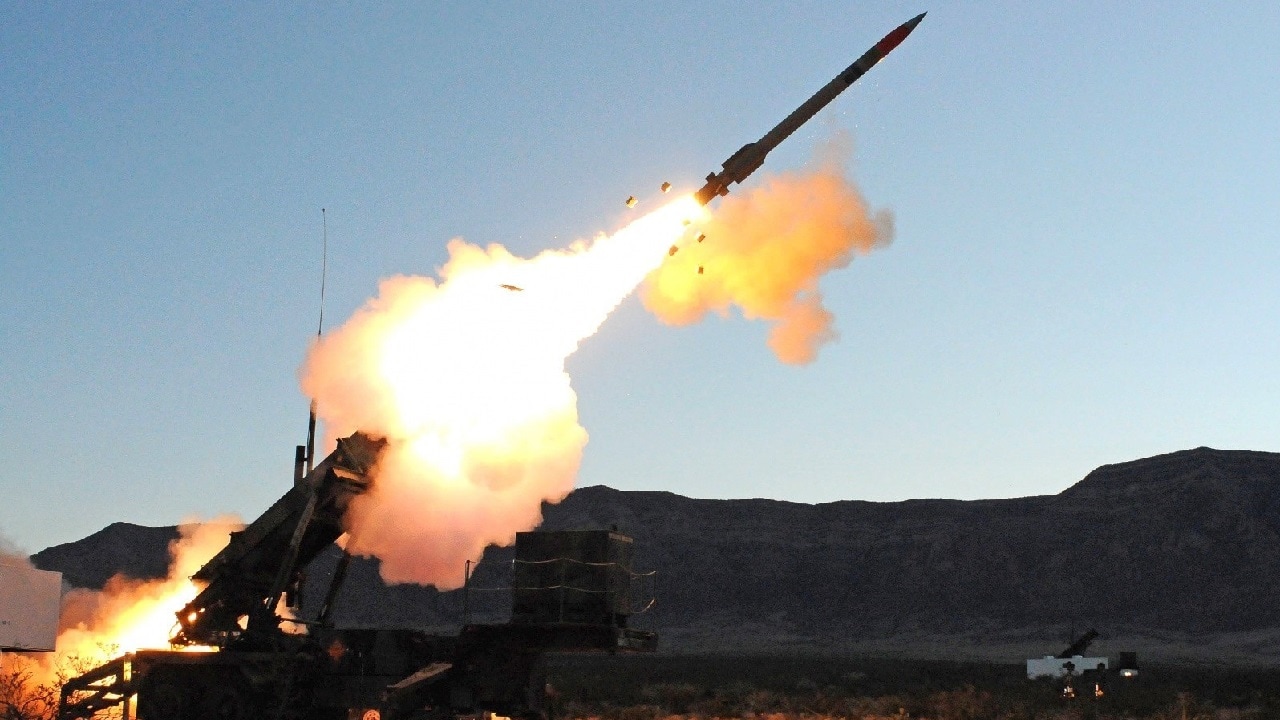
Particularly revealing is the replacement of the Patriot systems. The transfer of an air defense system has immediate value for Ukraine but initially reduces the available German or European reserve. The replacement is therefore not an additional capability but the repair of a gap that has arisen. Germany is simultaneously financing Ukrainian security and trying to preserve its own defense architecture from permanent depletion.
Patriot is the wrong system to assert European autonomy. The platform, guided missiles, and essential parts of the production chain remain predominantly American. Europe can pay, prioritize, and in some cases wait; however, it cannot produce the crucial components itself in the short term. This is precisely where the difference lies between financial agency and industrial sovereignty. A larger German check does not change export controls, production rates, or transatlantic supply chains.
The planned expenditures for drones and artillery are therefore strategically at least as important as Patriot. In these segments, Germany can scale faster with European and Ukrainian companies, learn from the experiences of the war, and build production relationships. However, this requires more than framework contracts. Standardized systems, multi-year purchase guarantees, and a common European prioritization are needed. Otherwise, member states will continue to buy nationally, slowly, and to different standards.
Germany's Leadership Role Remains Institutionally Incomplete
The federal government wants to send a signal to Kyiv, Washington, and Moscow with the increase. Kyiv should know that support does not end after a single budget year. Washington should recognize that Europe is taking on more responsibility. Moscow should calculate that European support remains politically resilient. These signals are necessary, but they do not replace a strategy.
Germany's problem is not a lack of willingness to pay. It lies in the missing connection between national funding approval and European capability generation. Berlin often finances bilaterally while the security policy effect is supposed to be collective. This creates duplicate structures and complicates joint planning. The EU has instruments with SAFE, PESCO, and the European Defense Fund, but their institutional logic remains slower than Ukrainian needs. Money is approved before it is clarified who produces, who prioritizes, and who has access in a crisis.
Additionally, there is domestic political vulnerability. The sum of 11.5 billion euros is evaluated in the Bundestag not only as a security expenditure but also as a distribution decision. The less transparent the calculation is, the easier it can be portrayed as excessive support or as a hidden long-term commitment. The Kiel Institute has rightly called for better reporting. Strategic patience requires democratic traceability.
What Must Be Measured in 2026
- Delivery Speed: How much of the approved funds reaches the Ukrainian armed forces in the same budget year?
- Availability: Are Patriot, artillery, and armored vehicles delivered with ammunition, spare parts, and maintenance?
- European Share: Is production increasing in Germany and Europe, or is most of it flowing again into non-European supply chains?
- Additionality: Does the German commitment complement European programs, or does it merely replace missing contributions from other states?
These criteria are more sober than the budget number but militarily more relevant. A system that is available in 2027 can be strategically more valuable than a larger amount that is only recorded as a commitment in 2026. Conversely, the demand for European production must not become an excuse to delay urgently needed American systems. Ukraine needs protection today; Europe simultaneously needs the industrial base for tomorrow.
The German Contradiction
The 11.5 billion euros are therefore neither mere symbolic politics nor automatically a breakthrough. They show that Germany is now taking its political responsibility seriously. They also show that Berlin still predominantly treats the European defense question as a financing problem. Patriot can protect Ukrainian cities but cannot replace a European production system. Artillery and drones can strengthen European capacities if contracts are awarded jointly and long-term.
The contradiction is: Germany must spend more before Europe can spend more efficiently. But as long as expenditures are not translated into joint procurement, resilient supply chains, and verifiable deliveries, the bill primarily grows. More money is a prerequisite for European defense, but it is by no means its capability.
Sources
Germany's Bundestag is discussing over 11.5 billion euros in military aid for Ukraine, including artillery, drones, and armored vehicles, as well as the replacement of Patriot systems. This aid is intended to strengthen Ukraine's defense capabilities while addressing Europe's dependency on external military support. The discussions reflect Germany's commitment to long-term support for Ukraine amidst ongoing geopolitical tensions.
- Germany is considering over 11.5 billion euros in military aid for Ukraine in 2026.
- The aid includes artillery, drones, armored vehicles, and replacement of Patriot systems.
- Approximately 80% of the bilateral aid is military in nature.
- The aid aims to signal support to Ukraine, Washington, and Moscow.
- Germany's military aid is seen as a response to ongoing dependency issues in European defense.