
Germany's 2027 Anthem Decision Highlights Europe's Long-Distance Problem
 Dr. Klaus Weber
Germany's 2027 Anthem Decision Highlights Europe's Long-Range Problem
The Bundeswehr is negotiating with Covenant over the cruise missile Anthem in September 2026. This is not initially a normal procurement decision, but rather an admission: Germany lacks a reliable interim model for conventional long-range capability. The new Taurus successor is still years away from operational readiness, the planned procurement of American Tomahawk systems is contingent after the intensive use of US stocks in the Iran War, and the European ELSA program is still in its infancy. An American-Israeli startup could thus fill a gap that Berlin has politically created itself.
Anthem is an offer, not yet a capability
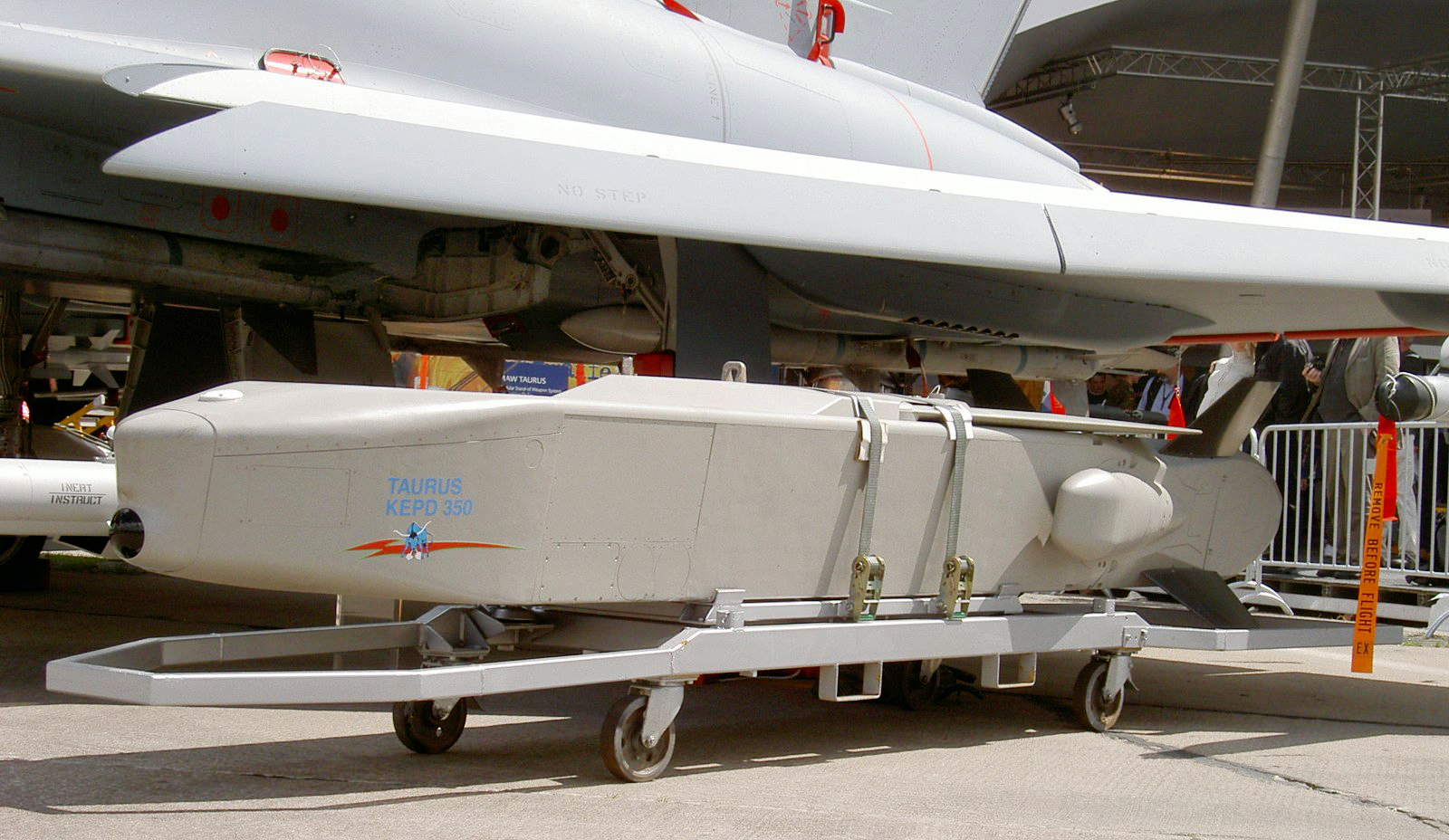
The facts demand sobriety. The Ministry of Defense confirmed to Defense News that discussions are ongoing. Neither a quantity nor a contract, a deployment unit, or a German integration decision is publicly known. Covenant claims that Anthem is production-ready and is being tested weekly. The targeted unit price is said to be in the mid-six-figure dollar range; for comparison, a Taurus of the current generation costs at least about one million dollars. This is an attractive promise, but not proof of range, accuracy, electronic resilience, warhead, target planning, or the ability to produce in series under wartime conditions.
The industrial architecture also remains unclear. Covenant was only founded in 2024, employs around 200 people according to Reuters reports, and has so far operated in stealth mode. A German manufacturing facility is to be established in Leipzig, which, according to the company, could start series production in the first quarter of 2027. The facility will likely not process explosives and will therefore be treated legally more like a metalworking operation. Where propulsion, warhead, and final assembly will be brought together is open. However, this is precisely where the defense industrial reality begins. A production hall is not yet a sovereign supply chain.
The time gain is real, dependence remains
For Berlin, the offer is still politically rational. The Bundeswehr needs a land-based capability that can threaten targets at great distances. The planned Typhoon launchers are to accommodate different missiles, including Tomahawk with a range of over 1,500 kilometers. However, a launcher without reliably available ammunition is just infrastructure. The Taurus KEPD 350 demonstrates the problem: Germany has a capable but aging system, whose successor is not ready in time. An affordable, quickly producible Anthem could narrow this gap if the technical and legal promises are fulfilled.
The crucial question, therefore, is not whether Germany should buy another cruise missile. It is about whether Berlin is buying a capability or merely a supplier. If production takes place in Germany, but key software, sensors, materials, propulsion, or warhead technology come from the United States or Israel, the result would be a localized dependency. This would be acceptable for short-term deterrence. However, it would not be European strategic autonomy, but a new form of transatlantic division of labor.
ELSA and the Logic of European Procurement
The Anthem case exposes the weakness of European arms cooperation. With ELSA, Europe is trying to develop a common land attack capability. Such programs promise long-term industrial sovereignty but require years for requirements, financing, development, testing, and approval. The war in Ukraine does not allow for this patience. Russia has shown that precision effects, reconnaissance, and long-range fire are not only instruments for great powers but also influence the outcome of conventional conflicts.
This creates a classic European dilemma. If Germany buys American Tomahawk systems immediately, it gains range but increases dependence on US stocks and export decisions. If it waits for ELSA or a Taurus successor, it risks a years-long capability gap. If it opts for Anthem, it may receive a quick and cost-effective solution but must bear the maturity and scaling risk of a young company. None of these options is wrong. It would only be wrong to label them as strategic autonomy before the dependencies are examined.
Leipzig is also a Political Stress Test
The planned location in Saxony intensifies the institutional dimension. The establishment comes at a time when the AfD is achieving strong electoral results in East Germany while simultaneously rejecting military support for Ukraine. An arms factory can create regional jobs and strengthen security policy resilience. However, it cannot replace political consent for deterrence through industrial policy. If the production of cruise missiles becomes the subject of party-political blockade, a procurement issue will turn into a test of the German state's defense capability.
Berlin must therefore enforce three conditions. First, it needs an independent technical assessment of the Anthem claims. Second, German and European authorities must clarify which critical components are actually under German control. Third, a transitional solution must not displace the financing of ELSA and the Taurus successor. Otherwise, Europe's familiar pattern will repeat: a quick national stopgap solution, several parallel development programs, and in the end, less mass than promised.
The Uncomfortable Conclusion
Covenant may offer Germany exactly what its procurement bureaucracy cannot deliver: speed, low costs, and industrial adaptability. However, a startup cannot solve Europe's institutional problem alone. The continent does not have a pure money problem. It has a problem of prioritization, common requirements, and political willingness to openly name dependencies.
Anthem could be a meaningful bridge. However, a bridge is not a goal. By 2027, Germany must either acquire a short-term capability and simultaneously build a permanently controllable European production base – or it must admit that its call for strategic autonomy for now only means being able to choose from several foreign catalogs. More range would then be gained. Sovereignty not yet.
Sources: Defense News, September 11, 2026; Reuters, September 9, 2026; Tag24, Report on the planned Leipzig facility.
Germany is negotiating with Covenant for the Anthem cruise missile, acknowledging a gap in its long-range capabilities. The Bundeswehr lacks a reliable intermediate model, and while Covenant claims Anthem is production-ready, details on contracts and quantities remain unclear. The planned production facility in Leipzig may begin operations in early 2027, highlighting Germany's strategic dilemma in military procurement and dependency on foreign systems.
- Germany is negotiating with Covenant for the Anthem cruise missile.
- The Bundeswehr lacks a reliable intermediate model for conventional long-range capabilities.
- Covenant claims Anthem is production-ready and being tested weekly.
- The production facility in Leipzig could start operations in Q1 2027.
- Germany faces a strategic dilemma regarding military procurement and dependency on foreign systems.