
Germany's 2029 Laser Frigate Bet Tests NATO Drone Defence
 Alexandra Reeves
Germany's 2029 Laser Frigate Bet Tests NATO Drone Defence
Germany is finally treating cheap drones at sea as a fleet problem, not a technology demonstration.
That is the real meaning of the new Bundeswehr contract with MBDA Deutschland and Rheinmetall Waffe Munition to develop a high-energy laser weapon system for the German Navy. According to Rheinmetall, the deal sits in the mid three-digit million-euro range and is supposed to deliver an operational maritime system by 2029. MBDA says the work covers the whole kill chain: reconnaissance, target tracking and engagement. That sounds bureaucratic. It is not. It means Berlin wants more than a clever box that burns holes in targets during a trial. It wants a shipboard weapon that can be cued, aimed and used as part of a combat system.
The Sachsen Test Was Not a Lab Trick
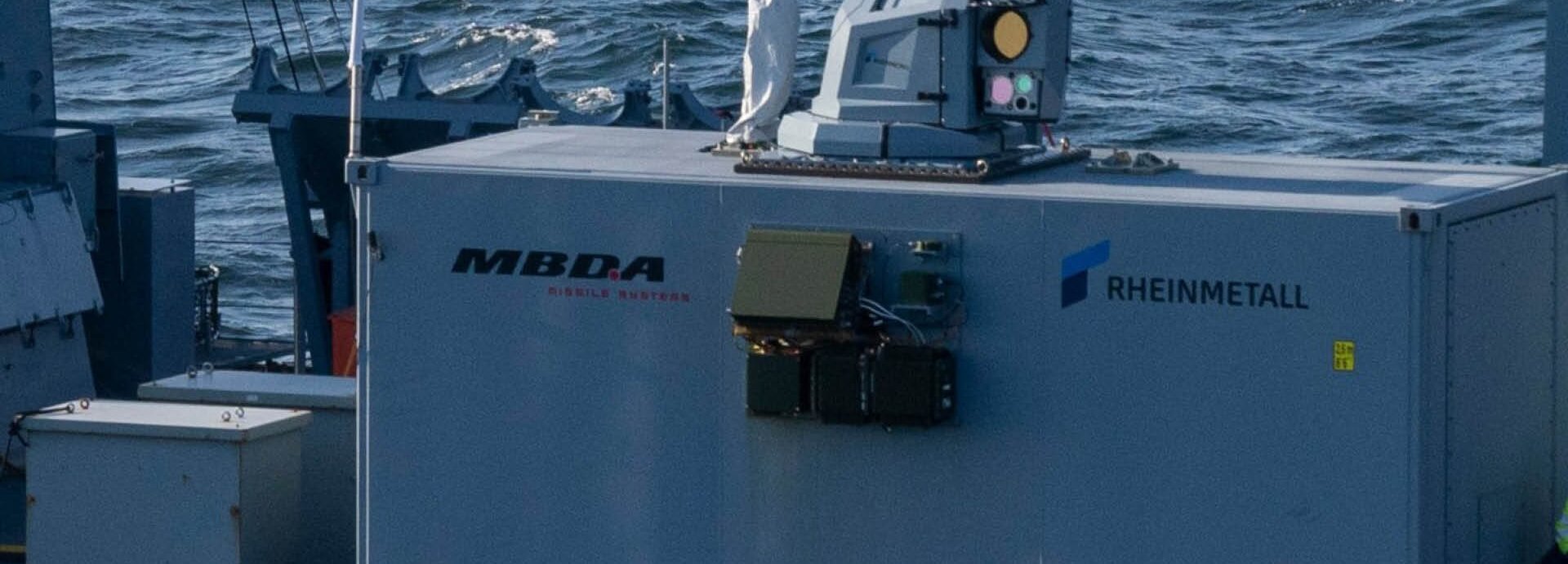
The most important detail is not the 2029 date. It is that the demonstrator has already gone to sea.
MBDA and Rheinmetall say their naval laser demonstrator operated aboard the frigate Sachsen for more than a year, travelled 28,000 nautical miles across the North Sea, Baltic Sea and Mediterranean, and fired more than 1,000 shots at air, sea and land targets. The companies also say the system worked in adverse environmental conditions. Defence firms have every incentive to make trials sound cleaner than they are, but those numbers still matter. Maritime directed energy is brutally unforgiving: salt spray, vibration, target motion, haze, rain, power demand, cooling and combat-system integration all arrive together.
A shore test can flatter a laser. A frigate at sea is harder to impress.
The system is containerised and designed to focus energy on an area only a few centimetres wide, according to the company statements. That precision is the point. A laser does not need to explode a drone. It needs to put enough energy on the right component long enough to blind, disable or ignite it. Against small uncrewed aircraft, exposed sensors, light boats or some loitering munitions, that can be enough.
Why NATO Navies Suddenly Care
The short answer is cost exchange.
Everyone in NATO now understands the air-defence problem on land because Ukraine has made it impossible to ignore. The same arithmetic is coming to sea. A warship cannot spend million-euro missiles indefinitely against cheap drones, decoys or small attack craft. It also cannot assume that the magazine will be replenished quickly once the shooting starts. Europe talks a great deal about readiness, but magazine depth remains one of the alliance's least comfortable conversations.
Lasers offer a seductive answer: deep magazines as long as the ship has power, low cost per shot, and rapid retargeting. That is why several European navies are moving in the same direction. Defense News noted that the Royal Navy plans to fit the DragonFire directed-energy weapon on a destroyer by 2027, with MBDA involved alongside Leonardo and QinetiQ. Germany's 2029 target is therefore not an isolated German experiment. It is part of a wider NATO scramble to add cheaper layers beneath missiles and guns.
But the technology should not be oversold. Lasers are not magic shields. Weather still matters, dwell time matters, beam control matters, and ship power architecture matters. A high-energy laser is most useful when it sits inside a layered defence system: radar and electro-optical sensors to find the target, command systems to classify it, guns and missiles for harder threats, and the laser for targets where the cost exchange favours burning rather than firing.
Germany Is Also Buying Sovereignty
There is another signal here, and Berlin is not hiding it. Both MBDA and Rheinmetall stressed German supply chains and domestic systems expertise. Rheinmetall said serial production would largely take place in Germany. That is industrial policy dressed as naval modernization, and in this case that is not a criticism.
Europe has spent decades discovering that dependence is cheap until it becomes expensive. The Patriot interceptor shortage exposed that on land. Missile stockpiles and solid rocket motor capacity exposed it again. At sea, the lesson is similar: if European navies want to sustain combat operations, they need more than imported exquisite interceptors. They need domestic production lines for the weapons they will actually fire in volume.
A German laser programme will not solve that problem by itself. It may, however, help shift procurement culture away from the habit of buying a few beautiful systems and calling that deterrence. If drones, unmanned surface vessels and massed decoys are becoming normal naval threats, then a fleet needs normal answers: repeatable, affordable, producible, and boring enough to be available when needed.
The Useful Role Is Narrower Than the Hype
The uncomfortable truth is that a 2029 laser will probably be most valuable against the targets politicians like to describe as minor: quadcopters, fixed-wing drones, small boats, exposed sensors and port-security threats. That is not a small category anymore. The Red Sea, the Black Sea and the Gulf have all shown that relatively cheap systems can impose expensive operational behaviour on professional navies.
A frigate forced to defend itself against repeated low-cost threats has three bad choices. It can spend high-end missiles, conserve them and accept risk, or leave the area. A working laser adds a fourth option. It does not make the ship invulnerable, but it gives the commander a cheaper way to stay in the fight for longer.
That is the piece that should worry Moscow as much as it interests Berlin. NATO's maritime problem is not that it lacks exquisite weapons. It is that its exquisite weapons are too few, too expensive and too slow to replace. Directed energy is one attempt to escape that trap.
What to Watch Next
The next questions are practical. Which German ships receive the first operational units? How much power and cooling will integration require? Will the system talk cleanly to existing combat-management systems? Can the Navy train operators fast enough? And, most importantly, will Germany buy enough of them to matter?
For now, the contract is a serious step because it moves the German Navy beyond demonstration theatre and into an operational deadline. If MBDA and Rheinmetall deliver in 2029, Germany will not have solved naval air defence. It will have admitted what the rest of NATO needs to admit faster: the age of firing million-euro answers at thousand-euro problems is ending.
The real test is not whether the laser works once on a calm day. It is whether Europe can build enough cheap defensive layers before the next maritime crisis teaches the lesson more violently.
Germany is developing a high-energy laser weapon system for the Navy, aiming for operational capability by 2029. The system has been tested at sea, demonstrating effectiveness against various targets. This initiative is part of NATO's strategy to address the challenge posed by inexpensive drones and small attack craft, emphasizing domestic production and supply chains.
- Germany is developing a high-energy laser weapon system for the Navy by 2029.
- The system has been tested at sea for over a year and has fired more than 1,000 shots.
- The laser system aims to provide a cost-effective solution against cheap drones and small threats.
- Germany emphasizes domestic production and supply chains for defense capabilities.
- The development is part of a broader NATO strategy to enhance maritime defense against low-cost threats.