
Germany's City Dome 2026 Aims to Protect Ukrainian Cities — IRIS-T Accelerates Europe's Air Defense
 Dr. Klaus Weber
Germany's City Dome 2026 to Protect Ukrainian Cities — IRIS-T Accelerates Europe's Air Defense
On September 8, 2026, Germany announced a project called "City Dome" during a virtual meeting of the Ukraine Contact Group. At the same time, Berlin indicated further deliveries of PAC-2 and IRIS-T, while Kyiv, according to its Defense Minister, is preparing contracts for around 1,000 Patriot missiles with the support of European partners. The numbers suggest a shift in European air defense. However, they initially reveal something more sobering: Europe is beginning to network its systems after years of promising individual batteries.
A Shield is Not Yet a Battery
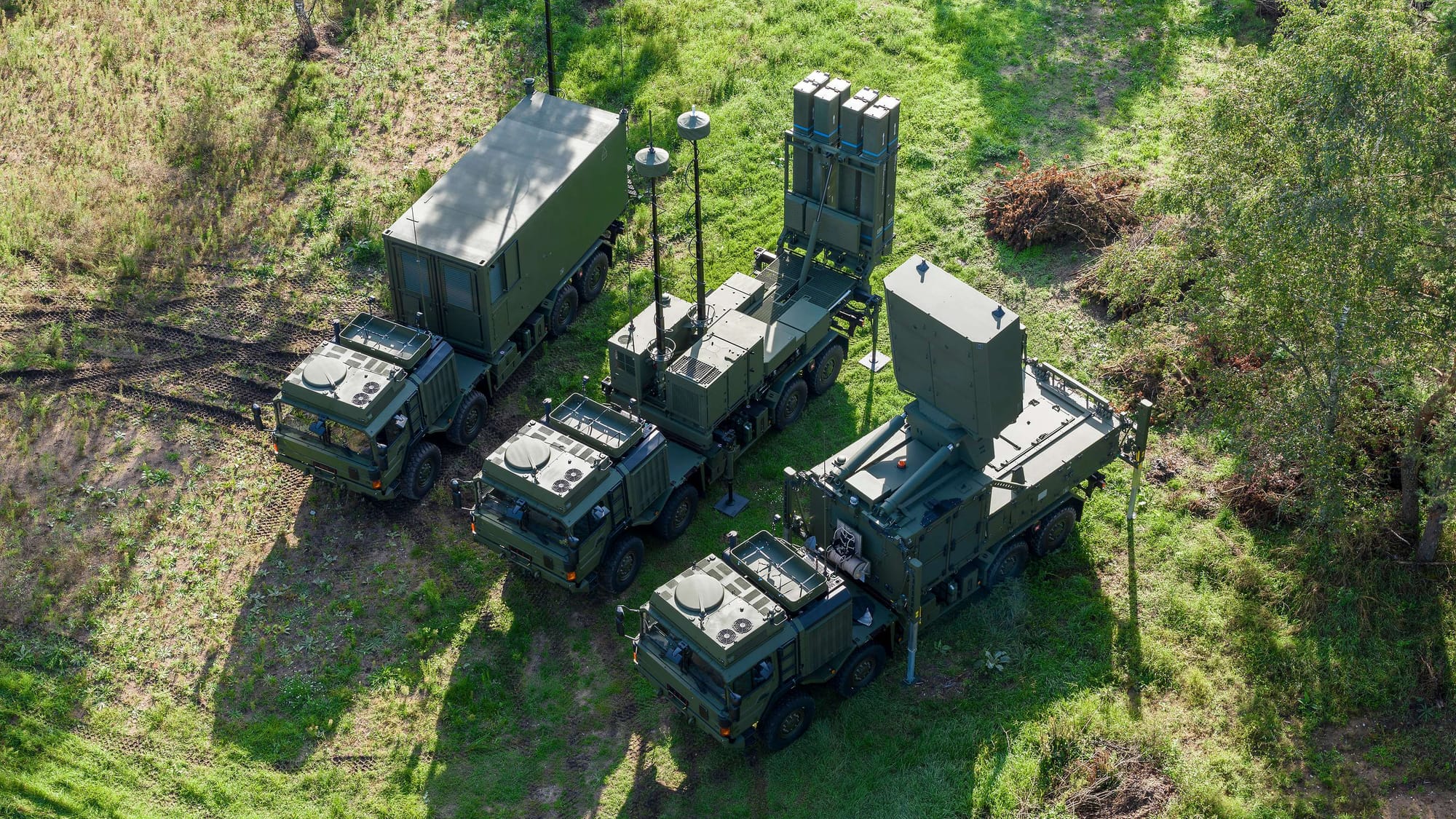
"City Dome" is currently not a new weapon system, but a concept for a multi-layered protection of Ukrainian cities. Its logic is militarily plausible. Patriot is to be used against ballistic missiles, IRIS-T SLM against cruise missiles and drones, along with radars, command posts, and shorter ranges. The IRIS-T SLM achieves a range of approximately 40 kilometers and an engagement altitude of up to 20 kilometers, depending on the target profile. Its value lies not only in the individual missile but in its integration into a common situational picture.
This is precisely where the political difficulty lies. City defense does not work through the addition of press releases. It requires replacement missiles, protected command posts, trained crews, and a clear prioritization of targets. Using Patriot for every drone consumes strategic ammunition. Relying solely on cheap interceptor drones allows ballistic threats to pass through. "City Dome" can organize this dilemma but cannot finance it away.
The European Credit Only Partially Solves the Procurement Problem
At the beginning of September, the EU approved an exception to the European preference rule. This allows Ukraine to procure parts for Patriot systems from third countries and use funds from the 90 billion euro Ukraine Support Loan for this purpose. This is pragmatic because the crucial Patriot components cannot be produced in Europe in the short term. It is also an institutional acknowledgment. The European financing framework can suspend European procurement regulations but cannot conjure up an additional production line for PAC-3 or PAC-2.
The reported approximately 1,000 Patriot missiles are therefore politically more impressive than operationally immediately available. Contracts are not deliveries, and deliveries are not yet operational interceptor layers. The industry must produce, states must release their own stocks, and Ukrainian units must integrate the systems. In a war where Russia seasonally intensifies its missile and drone attacks, this sequence is crucial.
Germany Takes Responsibility, but Not the Full Burden
Berlin wants to visibly take responsibility with PAC-2 and IRIS-T. This aligns with the German turning point and the industrial strength of Diehl Defence. The German decision is therefore more substantial than another general commitment. However, it remains dependent on American Patriot capacities and European production chains, whose priorities must serve multiple customers simultaneously. Germany's problem is not a lack of money. It is the lack of ability to turn money into air defense capability in a timely manner.
The British announcement of an additional package of 100 million pounds for Ukrainian air defense also highlights this tension. Several European states are financing American systems while Germany strengthens a European counterweight with IRIS-T. This is not a contradiction as long as the tasks are separated. Patriot is indispensable for the most expensive and difficult targets; IRIS-T and other systems can relieve the scarce American ammunition. However, an autonomous European air defense will only emerge when Europe not only buys but also permanently produces, maintains, and modernizes.
The Real Test Begins After the Summit
For Ukraine, before winter, the architecture of the project does not matter as much as the number of protected cities and the availability of interceptor missiles. For Germany, it matters whether "City Dome" is backed by a reliable timeline, responsibilities, and inventory data. Without these three elements, the term remains a useful political metaphor.
This time, Europe has chosen a sensible approach: to procure American high-performance defense in the short term while simultaneously expanding European systems. The irony is that the credit initially makes the dependency visible. Europe pays, Washington delivers the scarcest technology, and Berlin tries to bridge the gap with IRIS-T. More money is necessary. But only the ability to deliver in sufficient quantities will determine whether the City Dome becomes a protective shield or just another European name for delayed defense.
Sources
- Federal Ministry of Defense, virtual meeting of the Ukraine Contact Group, September 8, 2026.
- Reuters, report on the planned approximately 1,000 Patriot missiles for Ukraine, September 8, 2026.
- Bloomberg, report on European deliveries of American air defense before winter, September 9, 2026.
- Ukrinform and Kyiv Independent, reports on the EU exception and the use of the 90 billion euro loan.
Germany announced the 'City Dome' project on September 8, 2026, aimed at protecting Ukrainian cities through enhanced air defense capabilities. The project includes plans for additional PAC-2 and IRIS-T deliveries, while Ukraine prepares contracts for around 1,000 Patriot missiles. The EU has approved procurement exceptions to facilitate this military support, highlighting the urgency of effective air defense integration.
- Germany announced the 'City Dome' project to protect Ukrainian cities on September 8, 2026.
- Germany plans to deliver additional PAC-2 and IRIS-T systems to Ukraine.
- Ukraine is preparing contracts for approximately 1,000 Patriot missiles with European partners.
- The EU approved an exception allowing Ukraine to procure parts for Patriot systems from third countries.
- The effectiveness of the 'City Dome' project depends on timely delivery and integration of systems.