
Germany's F126 Phase-Out in 2026 Shows How 18 Billion Euros Can't Buy Naval Capability
 Dr. Klaus Weber
Germany's F126 Cancellation 2026 Shows How 18 Billion Euros Cannot Buy Naval Capability
Six F126 frigates were originally expected to cost Germany around 10 billion euros. On June 24, 2026, it was suggested that a continuation of the program with a new general contractor would have consumed more than 18 billion euros. This very difference is more revealing from a security policy perspective than the switch from the Dutch Damen consortium to ThyssenKrupp Marine Systems. Berlin is not simply buying different ships. Berlin is correcting a procurement model that has been treated for too long as an administrative problem in the German turning point, even though it was a capability problem.
The Program's End is a Late Cost Brake
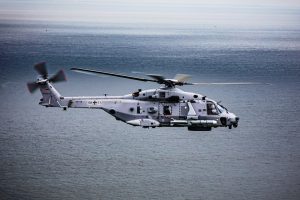
According to Defense News, the Federal Ministry of Defense has terminated the F126 program and instead plans to procure eight MEKO A-200-DEU frigates from TKMS. The old contract from 2020 envisioned six multi-role combat ships of about 10,550 tons, whose core task was now primarily to be anti-submarine warfare. Damen has indicated that the schedule and budget could not be met. A continuation under Naval Vessels Luerssen, now part of the Rheinmetall Group, would have come to about 15.2 billion euros for six ships, according to the negotiated figures. When accounting for already rendered services and necessary support contracts, the total requirement was over 18 billion euros.
The new solution appears cheaper at first glance: The first four MEKO frigates are expected to cost about 6.3 billion euros, with an option for four more ships by the end of 2026 costing an additional approximately 5.3 billion euros. This results in 11.6 billion euros for eight hulls. However, this comparison is only partially fair. The MEKO solution is less ambitious, more derived from existing designs, and apparently deliberately tuned for speed. This is precisely where the political significance of the process lies.
Why Capability Pressure Decides Now
The Navy does not need a perfect procurement history, but rather timely operational anti-submarine warfare capability. Naval News reports that the Inspector of the Navy considers the MEKO A-200 DEU suitable after review to fulfill the core task of anti-submarine warfare and thus Germany's NATO commitments. This is not a technical detail. In the North Atlantic and the Baltic Sea, the ability to detect, track, and engage Russian submarines determines whether reinforcement transports to Europe can be protected in a crisis.
The F126 was designed as a modular multi-role ship. This sounded modern for a long time, but it fit increasingly poorly with a security situation in which Germany must make concrete contributions to NATO. If the first ship is no longer available in 2028 but effectively only in the early 2030s, a gap arises that cannot be closed by parliamentary rhetoric. Weberian phrased: A capability that comes after the deadline is not a capability in alliance planning, but a statement of intent.
MEKO Solves Time Problems, but Not All Industrial Problems
The MEKO decision is therefore reasonable, but not without cost. Naval News points out that for speed reasons, essential sensor and effector packages from the TKMS offer for Australia could be adopted. Radars and combat management systems would then come more from Sweden or possibly from Lockheed Martin Canada, while German suppliers like Hensoldt and Thales Deutschland would not be involved to the same extent as in the F126 program. This is politically uncomfortable for the industry, but explainable from a security policy perspective.
Here, a recurring German mistake becomes evident: Procurement is treated simultaneously as capability gain, industrial policy, regional policy, and an example of procurement law. The result is often not strategic autonomy, but administrative overload. With F126, Germany wanted to reconcile a very large, modular ship, international division of labor, national industrial participation, and schedule binding. The calculation did not work out.
The MEKO variant reduces this complexity. A standardized ship type facilitates operation, training, and maintenance. If the F123 frigates receive a similar anti-submarine warfare package in parallel and the first MEKO is delivered by the end of 2029, the Navy could have access to several specialized platforms more quickly. But is that enough? Only if Berlin does not repeat the same mistake in a smaller format and makes every subcomponent a fundamental industrial policy question again.
The Damage Lies in Trust, Not Just in the Budget
The 18 billion euro figure is important, but it obscures a second damage: alliance trust. NATO planning only works if national commitments are not permanently devalued by procurement reality. Germany has become accustomed since 2022 to presenting large sums as proof of political seriousness. However, the special fund, increasing defense budgets, and new commitments in The Hague or Brussels do not generate combat power if projects arrive too late, too expensively, or in another form.
Especially the Navy is a tough test case for this. Tanks and air defense systems are politically more visible, but naval warfare in the North Atlantic is the prerequisite for European defense to hold operationally together. Without anti-submarine warfare, mine countermeasures, maritime reconnaissance, and protected logistics, any debate about European deterrence remains incomplete. The F126 failure is therefore not a maritime fringe issue, but a case study of Germany's inability to translate priorities into available systems in a timely manner.
The Lesson for Europe's Defense Build-Up
Europe is discussing higher defense spending, SAFE loans, joint procurement, and faster industrial scaling in 2026. The German F126 case shows why money is only the first condition. Between budget line and military effect lies an institutional chain: requirement definition, contract structure, liability rules, industrial division of labor, parliamentary control, and realistic scheduling. If one link in this chain is politically polished, the troops later pay with a lack of capability.
Boris Pistorius's decision to terminate the program is therefore less a failure than a belated acknowledgment of reality. It is better to terminate an overloaded project than to continue financing it for prestige reasons. But the real test begins now. The Bundestag must quickly approve the MEKO procurement without creating new opacity out of haste. The ministry must examine damage claims against Damen without blocking capability development. And the Navy must clearly state which technical minimum requirements are non-negotiable and which industrial policy wishes can be dispensed with.
The paradoxical conclusion is: Germany may strengthen its Navy precisely by abandoning a large German prestige project. But if this insight remains a one-time occurrence, the F126 cancellation was not a turning point, but merely the most expensive form of project cleanup.
Sources: Defense News reported on June 24, 2026, about the termination of the F126 program, the costs of over 18 billion euros, and the planned switch to eight MEKO A-200 frigates; Naval News and Hartpunkt added details on NATO commitments, delivery schedule, towed sonar, and possible sensor architecture.
On June 24, 2026, Germany terminated the F126 frigate program due to costs exceeding 18 billion euros and plans to procure eight MEKO-A-200-DEU frigates instead. This decision reflects a shift in military procurement strategy to meet NATO commitments for anti-submarine warfare. The new frigates are expected to be more operationally ready and cost-effective.
- Germany has terminated the F126 program due to cost overruns exceeding 18 billion euros.
- The German Ministry of Defense plans to procure eight MEKO-A-200-DEU frigates instead.
- The F126 program was initially expected to cost around 10 billion euros for six frigates.
- The decision reflects a shift in Germany's military procurement strategy to address urgent operational needs.
- The new MEKO frigates are intended to fulfill NATO obligations for anti-submarine warfare.