
Germany's first F-35A rolls out in 2026 — and cements nuclear dependence on Washington
 Dr. Klaus Weber
Germany's first F-35A rolls out in 2026 — cementing nuclear dependence on Washington
On August 17, 2026, Lockheed Martin announced the completion of the final assembly of the first German F-35A Lightning II. The aircraft has thus entered the final manufacturing phase, with the official rollout scheduled for September 18. Seven more F-35As for the Air Force are already in the production line in Fort Worth, Texas. What sounds like a routine announcement from the defense industry is, in fact, a watershed event for German security policy: The first German F-35 milestone falls in a phase where FCAS is effectively dead, European defense integration is in crisis, and the Bundeswehr is tying its nuclear role to a system over which it will never have control.
The order for 35 F-35As through the Foreign Military Sales channel was sealed on December 14, 2022, with the signing of the Letter of Offer and Acceptance — well over four and a half years before the first aircraft are scheduled to arrive at Büchel Air Base in 2027. The first eight aircraft will initially not go to Germany, but to Ebbing Air National Guard Base in Fort Smith, Arkansas. There, German personnel will be trained alongside Polish and Finnish comrades who are already using the facility. The European F-35 training center is therefore not in Europe, but in the southern United States.
A nuclear contract with an American supply chain
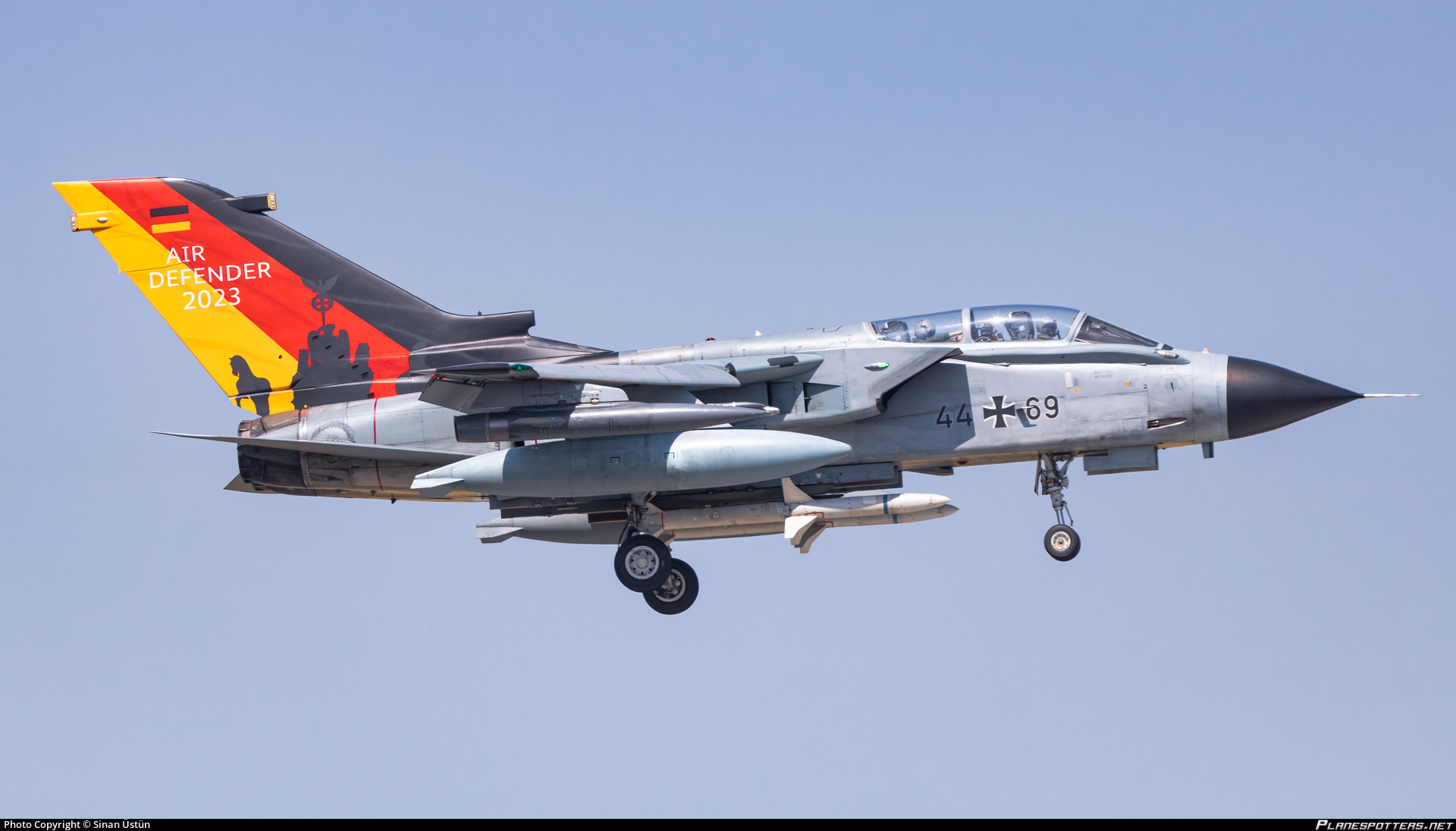
The crucial function of the German F-35A is not stealth or sensor technology — it is nuclear participation. The F-35A will replace the Panavia Tornado IDS in the role of NATO nuclear deterrence and is configured to carry and deploy the B61 bomb supplied by the United States. The Tornado, whose first models were introduced into service in 1983, is thus entering its fifth decade; the Air Force has kept the nuclear mission of the aging airframe alive only through massive life extensions.
This transition is militarily necessary but institutionally consequential. Nuclear participation has always meant: German pilots, American bombs, American release. In the F-35 era, it becomes: German pilots, American bomb, American airframe, American training, American software, American spare parts. The chain of dependence is longer than ever before. The nuclear certification of the B61-12 on the F-35A is a sovereign act of the U.S. government — Germany cannot order it, only request it. Whoever flies the F-35A flies, in case of doubt, on American approval: The ALIS/ODIN logistics system, the software updates, the weapons integration — all of this lies outside European control.
Training in Arkansas instead of Büchel
The relocation of training to Ebbing Air National Guard Base is more than a logistical decision. Germany, Poland, and Finland are training their future nuclear and operational pilots on U.S. soil, to U.S. standards, in a U.S. training environment. The Ebbing Range has been developed over the past two years into the de facto hub of European F-35 training — while the discussion about European strategic autonomy in Brussels and Berlin has primarily taken place on paper. (according to Lockheed Martin, August 17, 2026)
This is not a criticism of the quality of training — it is excellent. It is a criticism of the structure. A NATO that trains its most advanced pilots in Arkansas because Europe lacks the capacity and political willingness to establish a joint training system has already outsourced its ability for European independence to the place of production. The nuclear role is thus not only technically but also personnel-wise Americanized: The generation of pilots who will inherit the Tornado mission knows Büchel only secondarily — their actual training took place in the USA.
What the death of FCAS means
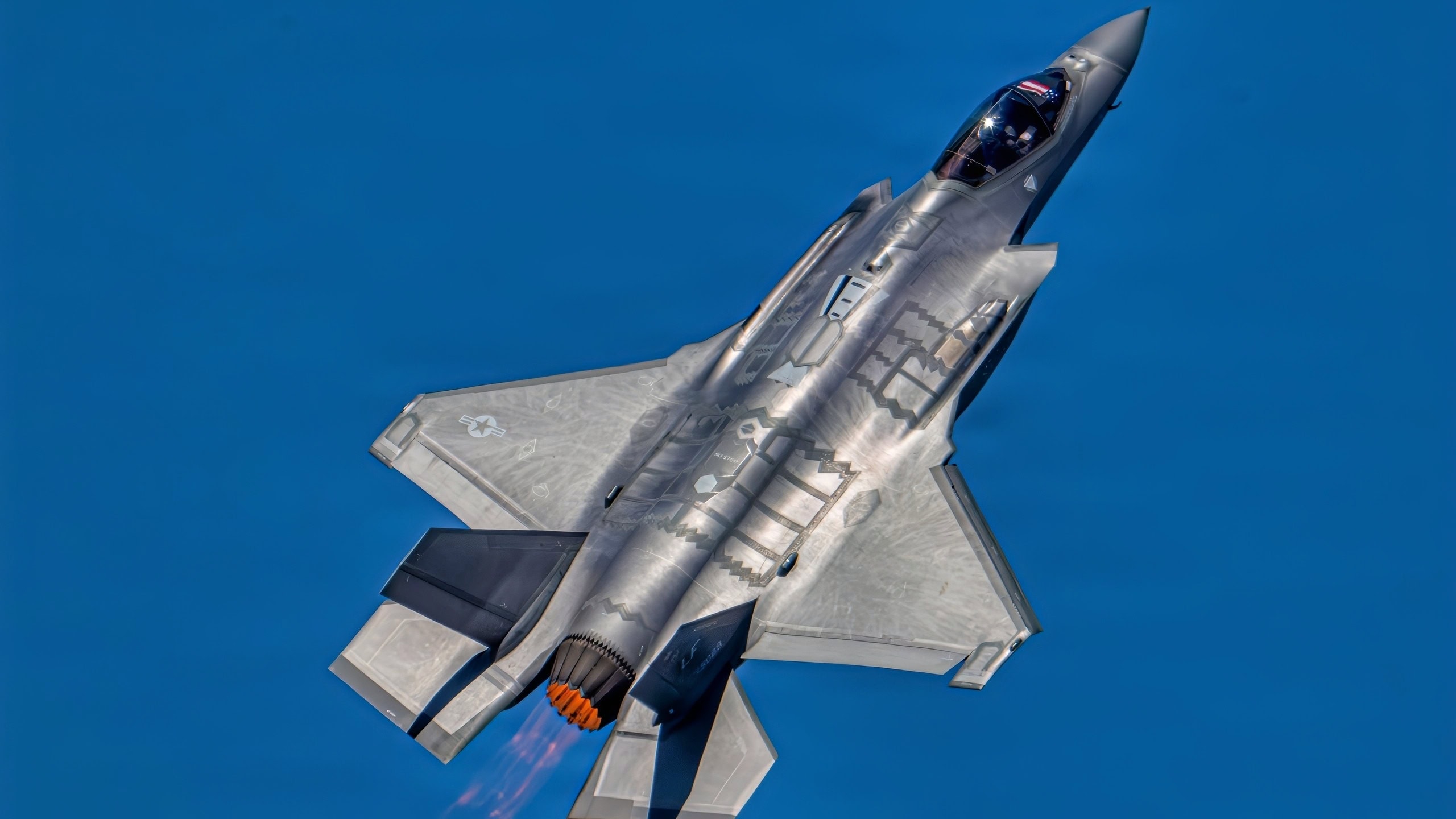
The bitter irony lies in the calendar. In the very year that the European FCAS program ultimately failed — phase 1B ended in April 2026 without a follow-up contract — the F-35A becomes the de facto long-term solution for the German Air Force. Germany has thus not only purchased an American aircraft but an American future: As long as nuclear participation exists — and no German government will voluntarily give it up — there is no European alternative to the F-35A. The FCAS could theoretically have taken on the role of a European nuclear carrier had it ever been built. It has not. The F-35A is therefore not a transitional solution but the permanent solution for the next four decades.
The numbers speak a clear language: 35 aircraft, a program volume of around ten billion euros, planned service life into the 2060s. The special fund of the turning point has financed this procurement — but it has not made it European. On the contrary: The largest single procurement in the history of the German Air Force is also the clearest rejection of European defense autonomy. (according to BMVg/LOA, December 2022)
“The F-35A is the best proof that nuclear participation is not participation at all, but a subscription. Germany pays, America decides — and the cancellation date is not in the contract.”
The real paradox of this story: To maintain Germany's role in the nuclear deterrence of the West, Germany must hand over the entire functional chain to the USA. Participation was supposed to give non-nuclear weapon states a voice — in the F-35 era, it gives them a permanent mandate. The decision for the F-35A was right in 2022 because it was unavoidable. But inevitability is not a strategic success, but an institutional admission: Europe's security is decided in Fort Worth, certified in Washington, and taught in Arkansas. Berlin has signed the purchase contract, but sovereignty over the system was never included.
Germany's first F-35A Lightning II is set to roll out on September 18, 2026, marking a pivotal shift in its nuclear participation and defense policy. The aircraft will replace the Tornado IDS in NATO's nuclear deterrence role and will be trained at Ebbing Air National Guard Base in Arkansas. This acquisition underscores Germany's reliance on U.S. military systems, as the F-35A will be integrated with American technology and logistics.
- Germany's first F-35A is scheduled to roll out on September 18, 2026.
- The aircraft will replace the Panavia Tornado IDS in NATO nuclear deterrence.
- Training for German pilots will occur at Ebbing Air National Guard Base in Arkansas.
- Germany has ordered 35 F-35A aircraft through the Foreign Military Sales program.
- The transition to F-35A signifies increased dependence on U.S. military systems.