
Germany's IRIS-T and British Air Defense Aid Must Close the Ukrainian Protection Gap by 2026
 Dr. Klaus Weber
Germany's IRIS-T and British Air Defense Aid Must Close the Ukrainian Protection Gap by 2026
Berlin, November 5, 2026. The political message is quickly formulated, but the military calculation is significantly more difficult. While Volodymyr Zelensky is demanding additional air defense and support for Ukraine's energy infrastructure in Berlin, Germany and the United Kingdom are reportedly preparing a joint plan for the next Ukraine Defence Contact Group, according to Ukrainian sources. This is more than just another aid promise. It is a test of whether Europe can organize its air defense as a coherent system.
The New Plan Begins with a Real Threat
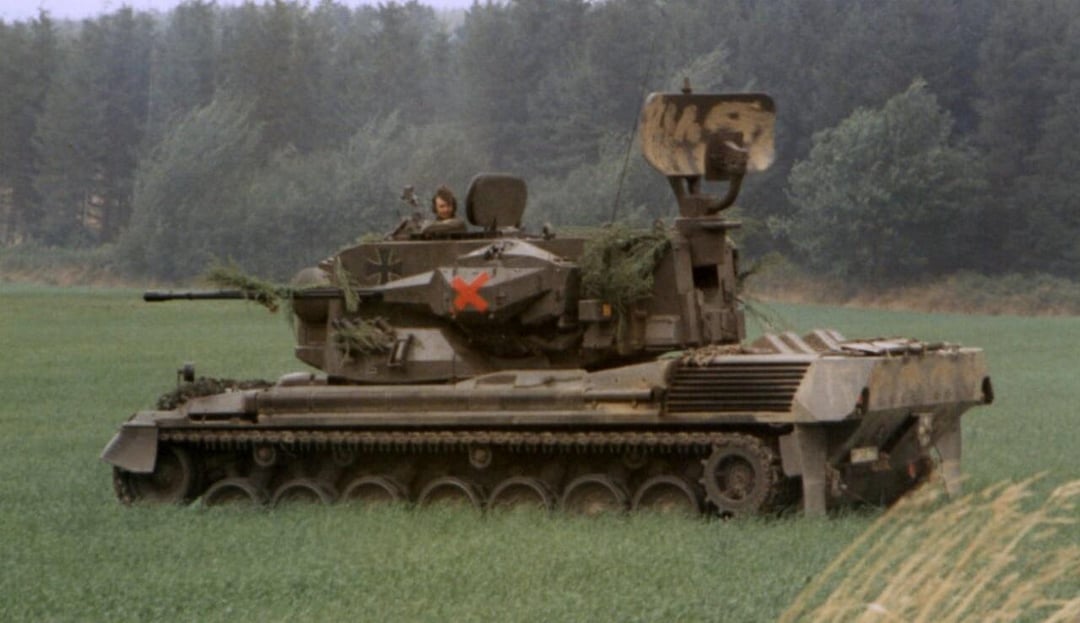
The situation is not abstract. Russia is deploying drones in large numbers and combining them with cruise missiles and ballistic missiles. For Ukraine, this means a double shortage: not only are modern interception systems lacking, but also the more cost-effective ammunition for daily defense. A Patriot interceptor missile can stop a strategically important attack, but it is not an economically viable means against every Shahed drone. That is precisely why the German Flakpanzer Gepard remains relevant despite its age. Its two 35-millimeter cannons are designed for short distances and slow targets; however, their effectiveness directly depends on sufficient ammunition stocks and functioning reconnaissance.
Germany brings concrete industrial and operational experience to this debate. The country has supplied Ukraine with IRIS-T-SLM systems and has its own capability where radar, command and control, and guided missiles are conceived as an integrated architecture. IRIS-T SLM is not a substitute for Patriot: different requirements, ranges, and response times apply against ballistic targets. But the combination of medium range, modern sensors, and a relatively clear European supply chain makes the system a building block of a layered defense.
Berlin and London Must Define Division of Labor
Reports from DW and Ukrinform show that political coordination is now ahead of technical decisions. Germany and the United Kingdom are expanding their defense cooperation while Berlin is simultaneously examining Zelensky's demands for further air defense. The crucial point is therefore not whether both governments express support. What matters is who finances, produces, maintains, and connects which layer of air defense with Ukrainian sensors.
- Germany can focus on IRIS-T, radar, training, and the European coordination of spare parts.
- The United Kingdom can contribute financing, reconnaissance, air defense planning, and industrial capacities to a joint procurement effort.
- Ukraine must remain not only a recipient but also a planning and production partner, as its troops adapt to Russian tactics the fastest.
Without this division, the joint plan remains a diplomatic headline. An additional stock of individual systems does not create an air defense network. For that, compatible data connections, protected command posts, mobile operational procedures, and logistics that function even under fire are needed.
European Autonomy Ends with the Most Expensive Missile
Here lies the strategic limit of the project. Germany and the United Kingdom can strengthen Ukraine's short- and medium-range defense, but Europe's dependence on the United States for long-range missile defense, satellite reconnaissance, and certain spare parts does not disappear as a result. The political term "European responsibility" must not obscure this capability gap. Those who need Patriot or comparable systems require not only launchers but also stocks, target information, and a robust production plan.
The European response must therefore not consist merely of a redistribution of scarce stocks. It must consolidate demand over several years. For IRIS-T, this means predictable orders; for Gepard and comparable systems, it means secured production of 35-millimeter ammunition; for the next generation, it means European sensor and interception capabilities. Otherwise, Ukraine will become a customer of European individual decisions, not a partner of a European defense industry.
The Political Value Lies in Commitment
The German and British initiative is sensible because it shifts the debate from symbolic solidarity to system planning. However, a plan before the Ukraine Defence Contact Group is not yet a capability at the Ukrainian front. Therefore, the governments must publish three numbers: how many systems are available in the short term, how many interceptor missiles and ammunition sets can be delivered by 2027, and which production lines are under European control.
More air defense for Ukraine is militarily necessary and politically correct. However, the real test is whether Berlin and London can turn bilateral support into a lasting European division of labor. Europe's problem is no longer a lack of strategies. It is the old discrepancy between an announced capability and a delivered capability. The former does not protect a city.
Sources
- DW, November 3, 2026, report on Zelensky's visit to Berlin and his demands for air defense and energy assistance.
- Ukrinform, November 2, 2026, report on the German-British plan to strengthen Ukrainian air defense ahead of the next meeting of the Ukraine Defence Contact Group.
- deutschland.de, November 3, 2026, report on the expansion of German-British defense cooperation.
Germany and the UK are preparing a joint plan to enhance Ukraine's air defense capabilities in response to Russian drone and missile threats. This initiative aims to address Ukraine's shortage of modern air defense systems and improve coordination between European nations. The plan includes contributions from both countries in terms of equipment and operational support, emphasizing the need for a cohesive defense strategy.
- Germany and the UK are developing a joint air defense plan for Ukraine.
- Ukraine faces a shortage of modern air defense systems against Russian attacks.
- Germany has supplied IRIS-T systems to Ukraine.
- The UK is contributing funding and planning for air defense.
- The effectiveness of air defense relies on compatible systems and logistics.