
Germany's Latest PAC-3 Scramble Exposes Europe's Air Defence Problem
 Alexandra Reeves
Germany's Latest PAC-3 Scramble Exposes Europe's Air Defence Problem
Germany is doing the right thing in Ukraine. That is precisely why this should make Europeans nervous.
On 10 June, Ukraine's Ministry of Defence said Defence Minister Mykhailo Fedorov and German Defence Minister Boris Pistorius had coordinated efforts to speed up delivery of critical air defence munitions before the next Ramstein-format meeting. The list was revealing: PAC-3 missiles for Patriot systems, munitions for IRIS-T, the Prioritised Ukraine Requirements List, extended-range munitions through the Czech initiative, fibre-optic FPV drones, and middle-strike capabilities.
That is not a normal shopping list. It is a battlefield triage list. Kyiv is telling its partners where the war is being decided over the next six to eight months, and the answer is not just at the infantry line. It is in the air defence magazine.
Germany Is Becoming The Air Defence Broker
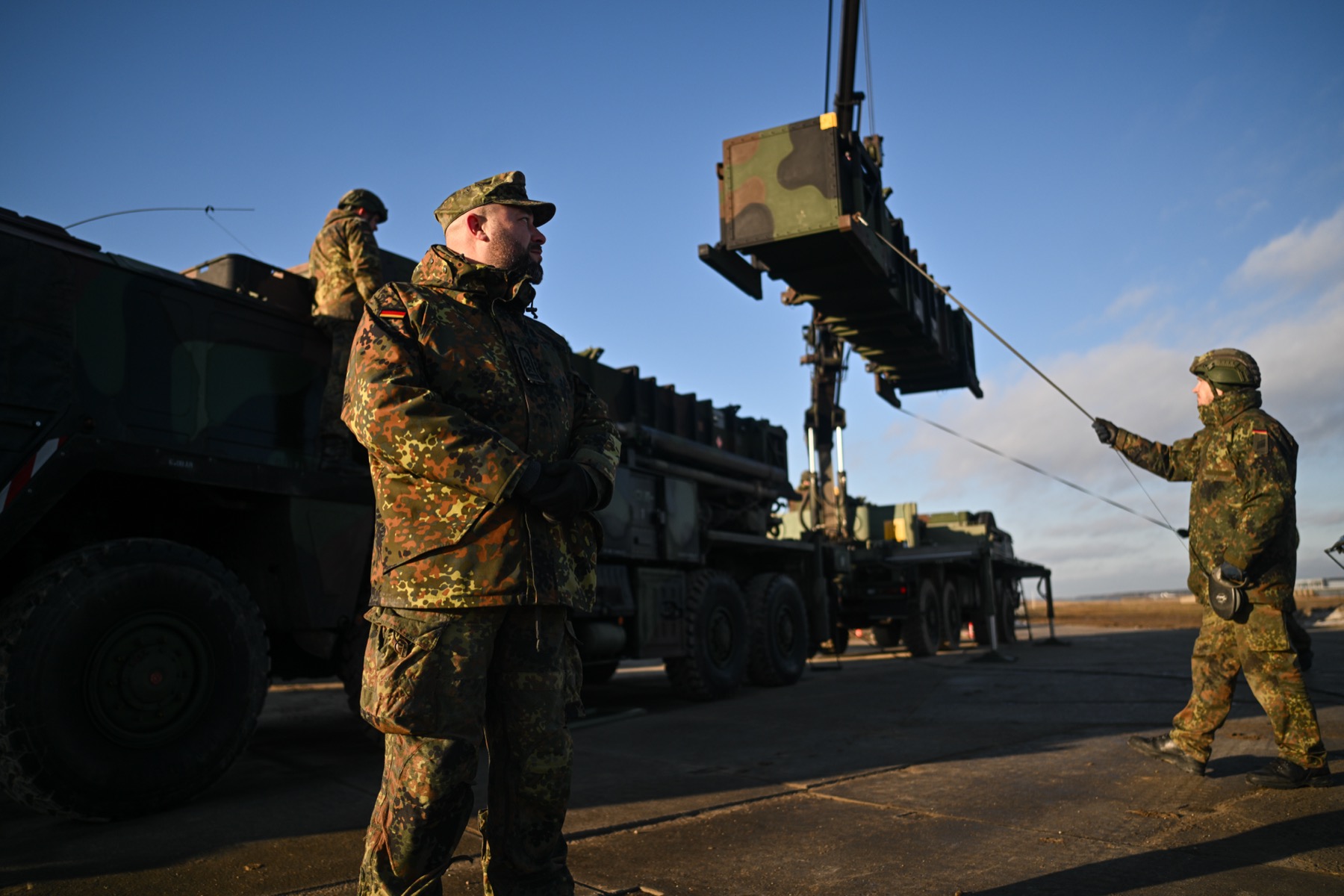
According to the Ukrainian Ministry of Defence, Fedorov stressed Germany's leadership role in accelerating PAC-3 provision by partner nations through the JUMPSTART mechanism. The same statement said Berlin and Kyiv discussed faster IRIS-T munitions delivery and progress on an anti-ballistic initiative.
The wording matters. Germany is not simply donating from its own stocks. It is acting as a coordinator, funder, broker and political pressure point for other partners. That reflects a hard reality: no single European state has enough spare interceptors to solve Ukraine's problem without weakening itself.
Patriot PAC-3 is the uncomfortable centre of the issue. PAC-3, especially the MSE variant, is one of the few Western interceptors with a serious role against ballistic missiles. It is the sort of missile Ukraine needs when Russia launches Iskander, Kinzhal or other high-speed threats at cities, command nodes and energy infrastructure. IRIS-T SLM, by contrast, is an excellent medium-range system against aircraft, cruise missiles and drones, but it is not a clean substitute for Patriot in the ballistic missile fight.
That division of labour is why Kyiv keeps asking for both. IRIS-T can protect more daily life. Patriot can stop the weapons that change the political temperature overnight.
PURL Helps But It Does Not Create Missiles
NATO's PURL mechanism is useful because it gives Ukraine a more structured way to turn allied money into U.S.-sourced equipment. NATO says SACEUR identifies packages Ukraine needs and that the United States can provide in greater volume than European allies and Canada alone; allies then fund the packages and NATO coordinates delivery, including through NSATU.
That is a smart mechanism. It is also an admission. Europe still needs American production for the highest-end air defence layer, even when European governments are paying the bill.
Earlier this year, Ukrainian reporting based on Der Spiegel said Pistorius had organised delivery of about 35 Patriot PAC-3 interceptors from German and other European stocks, while noting that German officers estimated Ukrainian use at roughly 60 Patriot missiles per month. Even if the exact burn rate changes by week, the point is brutal: a politically difficult package can disappear in a fortnight of heavy Russian missile attacks.
This is where the usual European comfort language breaks down. Announcing a contribution is not the same as sustaining a firing rate. A Patriot battery without interceptors is a very expensive symbol. A pledge without a replenishment plan is just a press release with a fuse attached.
IRIS-T Is The Workhorse, Not The Answer
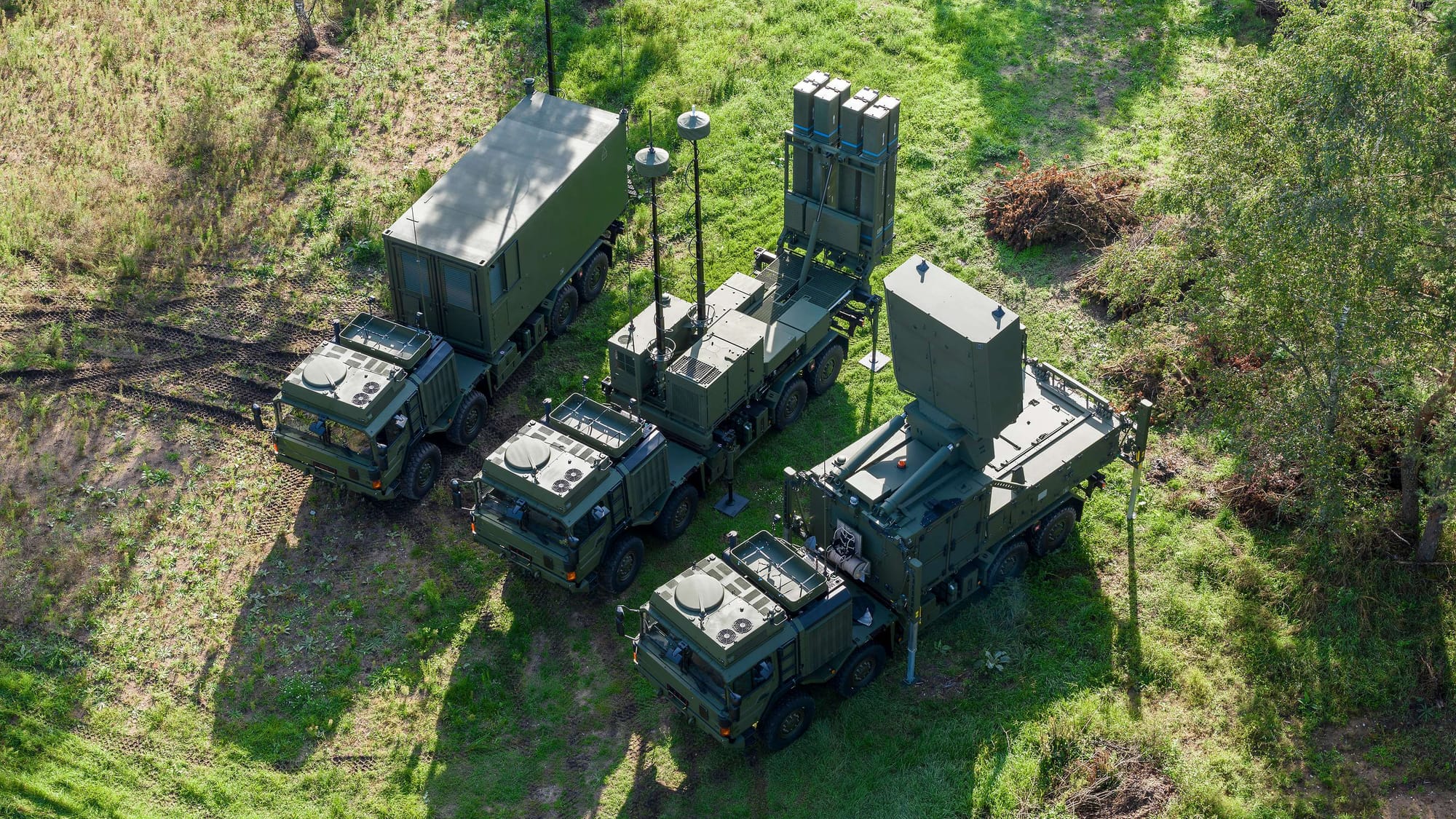
Germany deserves credit for IRIS-T. The system has become one of the more credible European answers to Russia's cruise missile and drone campaign. It is mobile, modern, and politically easier for Berlin to sustain than repeatedly raiding scarce Patriot stocks. Diehl Defence has also become central to the question of whether Europe can make enough air defence munitions for a long war.
But this is exactly the trap. Because IRIS-T is useful, European officials can talk themselves into believing the air defence problem is being solved. It is not. It is being layered.
A recent CSIS analysis made the distinction clearly: IRIS-T SLM is a cost-effective workhorse for cruise missiles and drones, while SAMP/T and Patriot sit closer to the high-end missile defence problem. CSIS also argued that Europe needs a crash programme for air defence production, modelled on the EU's ammunition push, because U.S.-made interceptors may not be available at the scale Ukraine and Europe both require.
That is the strategic point behind the Fedorov-Pistorius call. Ukraine's immediate need is munitions. Europe's long-term problem is that it built procurement habits for boutique readiness and now faces industrial war.
The Six Month Window Is Political Too
The Ukrainian statement said Ukraine sees a six-to-eight-month window in which the initiative remains with its defence forces. That is an ambitious claim, and outsiders should treat it as both assessment and messaging. Kyiv wants partners to understand that support delivered this summer has more value than support delivered after Russia adapts, replenishes, or forces Ukraine back onto the defensive.
There is a second audience as well: Europe. Germany is being pushed to lead because Berlin has money, industry, political weight inside NATO, and enough caution to make every decision slower than Kyiv would like. That combination is maddening, but it also makes Germany indispensable.
The uncomfortable comparison is with artillery shells in 2022 and 2023. Everyone knew Ukraine was burning ammunition faster than Europe could replace it. Everyone knew production had to rise. Europe still moved late. Air defence now risks becoming the same story, only with fewer second chances. A missed shell shipment costs ground. A missed interceptor shipment can cost a city block, a power plant, or the credibility of deterrence itself.
What To Watch Next
The next Ramstein-format meeting should be judged less by headline sums than by three concrete indicators. First, whether Germany can pull more partners into PAC-3 pooling without hollowing out NATO's own eastern flank. Second, whether PURL packages move from funded announcements to visible deliveries. Third, whether European governments start treating IRIS-T, SAMP/T, Aster, CAMM and NASAMS production as wartime infrastructure rather than ordinary procurement.
Germany's latest PAC-3 push is good news for Ukraine. It is also a warning flare for Europe. The alliance has found mechanisms for moving money and coordinating priorities. What it has not yet proven is that it can manufacture enough interceptors before Russia, Iran, and every other missile-armed adversary finish teaching the same lesson.
The short answer is that Ukraine needs missiles now. The longer answer is worse: Europe needs to stop discovering scarcity only after the launch warning sounds.
Germany coordinated the delivery of approximately 35 PAC-3 interceptors and IRIS-T munitions to Ukraine on June 10. This effort reflects Germany's role as a broker in air defense support, addressing Ukraine's urgent military needs against Russian missile threats. The report emphasizes the importance of timely support within a six-to-eight-month window to maintain Ukraine's defensive capabilities.
- Germany is accelerating the delivery of PAC-3 missiles and IRIS-T munitions to Ukraine.
- Ukrainian Defence Minister coordinated with German Defence Minister on air defense needs.
- Germany is acting as a broker for air defense munitions among partner nations.
- Ukraine's immediate need is for munitions to counter Russian missile threats.
- The report highlights a six-to-eight-month window for effective military support.