
Germany's Patriot and Tomahawk Push 2026 Reveals Europe's Licensing Problem
 Dr. Klaus Weber
Germany's Patriot and Tomahawk Initiative 2026 Highlights Europe's Licensing Problem
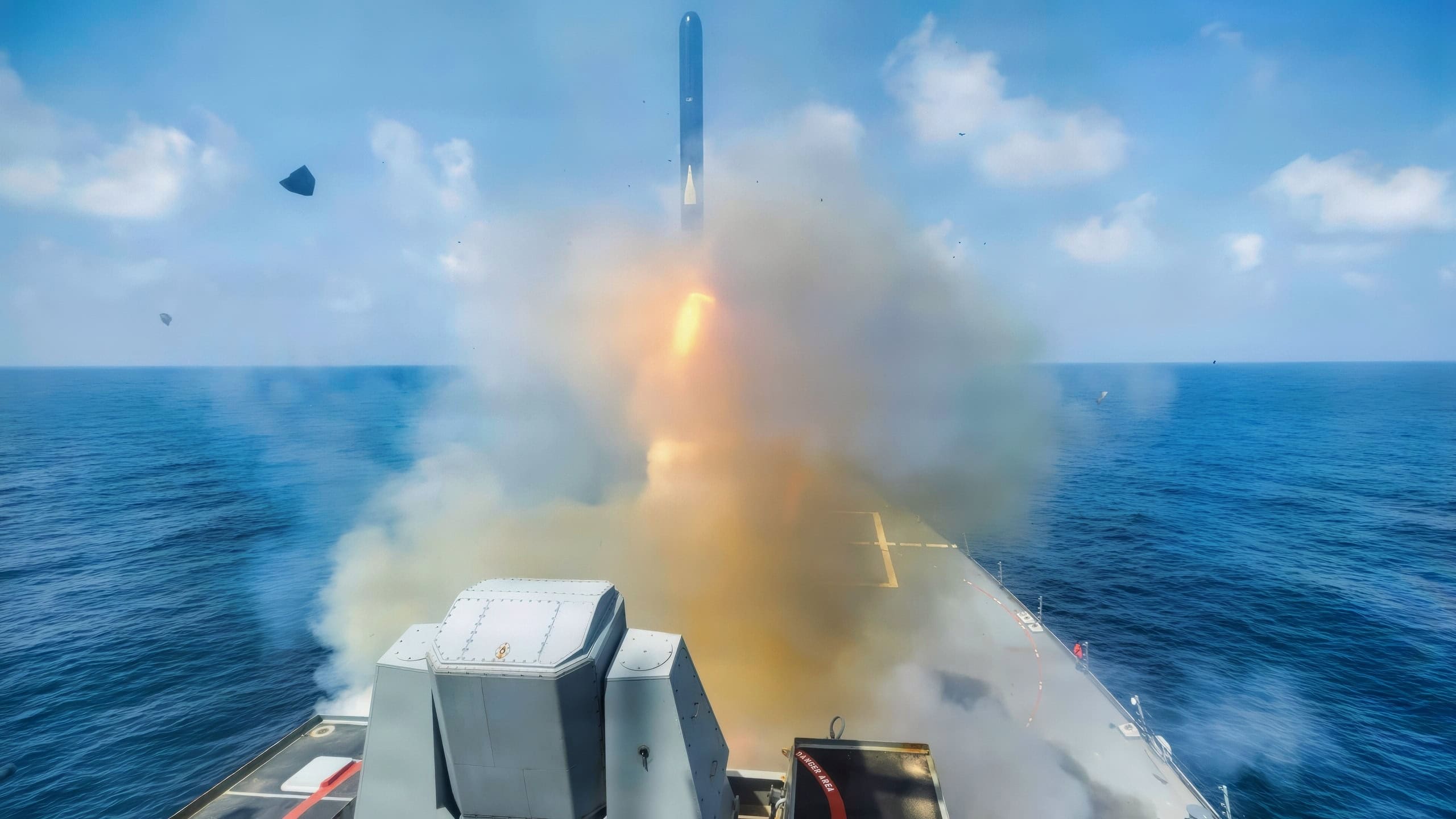
Germany aims to achieve, before the NATO summit in Ankara, the ability to co-produce American Tomahawk cruise missiles and Patriot interceptor missiles in German factories. At first glance, this sounds like an industrial policy success: more manufacturing in Europe, shorter supply chains, visible burden-sharing with Washington. However, the process primarily demonstrates how closely European rearmament remains tied to American technology decisions.
According to a report by UNITED24 Media citing the Financial Times, Berlin is pushing for a cooperation agreement with the United States that would allow for the joint production of critical US weapon systems in Germany. The discussions explicitly focus on PAC-3 interceptor missiles for Patriot systems and Tomahawk cruise missiles. The Federal Ministry of Defense also points to existing German-American industrial cooperation, including Rheinmetall components for the F-35 and the MBDA-Raytheon cooperation for GEM-T missiles.
A German Offer to Washington
Politically, the German initiative is easy to understand. Berlin is trying to show the Trump administration that European rearmament does not mean a decoupling from the United States, but rather involves American industry, technology, and strategic presence. NATO Secretary General Mark Rutte has been arguing similarly for months: higher European defense spending should not be directed against Washington, but rather bring together American supply capability, European financing, and NATO coordination.
However, this is precisely where the institutional core of the problem lies. Licensed production is not strategic autonomy. It is autonomy with conditions. Anyone wanting to build Tomahawk or PAC-3 in Germany needs American export control, American approvals, American technical data packages, and in many cases, American supplies. The factory may be located in Bavaria, Lower Saxony, or North Rhine-Westphalia; however, the actual decisions regarding scaling, re-export, and modernization do not rest entirely in Berlin.
Patriot as a Lesson in European Dependence
The Patriot complex is the most precise example. Ukraine needs interceptor missiles against Russian ballistic missiles and cruise missiles at a pace that Western production lines can hardly meet. President Volodymyr Zelensky has repeatedly pointed out that 60 to 65 Patriot interceptor missiles per month are insufficient given the density of Russian attacks. This number is less a technical specification and more a political indictment: Europe has purchased air defense but has not built sufficient industrial depth.
The NATO PURL mechanism confirms this diagnosis. According to NATO, the allies coordinate the purchase of critical defense goods from the United States through PURL; by June 2026, more than $6 billion for US equipment has been pledged through PURL. This makes sense in the short term, as Ukraine currently needs missiles, ammunition, and air defense. But it also institutionalizes a division of roles: Europe pays, NATO coordinates, the United States delivers.
Germany has already accepted this model. The Ministry of Defense stated in 2025 that Berlin is willing to finance a support package of up to $500 million through PURL because certain goods are either not produced in Europe or are available more quickly in the United States. This statement is more important than the sum. It describes the European bottleneck with official sobriety: It is not money that is lacking first, but licensed manufacturing, preliminary products, testing capacities, and released technology.
Tomahawk Changes the Debate
With Tomahawk, the political significance is even greater. Patriot is defensive and has long been established in Europe. Tomahawk, on the other hand, represents long-range precision strikes. The modern Block V family is designed for maritime launch platforms and is increasingly linked to land-based options in the European debate. If Germany is considering a cooperation with Raytheon and MBDA for a ground-based variant, this touches not only on industrial policy but also on the question of whether Europe wants to build its own conventional deep strike capability in the future.
This would not be a technical detail. A European capability for conventional precision strikes over long distances would change the existing division of labor in NATO. So far, most European states rely on American structures for strategic reconnaissance, target designation, cruise missiles, air refueling, and escalation management. A German Tomahawk path could reduce this gap. However, it could also make it more visible if the weapon is manufactured in Germany, but the operational software, mission planning, and political approvals remain transatlantically controlled.
Industrial Policy with an American Key
The German government is therefore selling the idea as a double solution: Washington receives relief for its production lines, Germany gains faster access to critical ammunition, and Europe can claim to be expanding its industrial base. This logic is not wrong. It is just incomplete. Production capacity is not identical to sovereign availability.
- Capacity: German factories could produce additional quantities and reduce bottlenecks in US production lines.
- Availability: The German government would still need to clarify whether Germany can decide on stockpiles, priorities, and re-exports itself.
- Technology: Licensed manufacturing can mean assembly and partial manufacturing without full access to sensors, software, warheads, or future modernization.
- Strategy: A European deep strike capability requires reconnaissance, target selection, and political rules of engagement, not just missiles in containers.
This is the difference between industrial settlement and defense capability. Europe has learned in recent years to announce billions. It has shown less convincingly that these billions can be translated into reliable, scalable, and politically controllable capabilities. The German proposal is therefore both reasonable and revealing.
The Ankara Signal
Before the NATO summit in Ankara, the message to Washington is clear: Germany wants not only to buy more but also to build more. This can be attractive for the Trump administration, as European factories support American systems without Washington having to bear all the costs alone. For Berlin, it can be politically attractive because the turning point finally produces industrial images: halls, jobs, supply chains, missiles.
But these images must not be confused with autonomy. If Germany only receives Tomahawk and Patriot faster when Washington releases technology, then the crucial resource remains American. Europe would not grow out of dependence but rather shift it into European factory halls.
The uncomfortable lesson is: European defense capability does not arise where American weapons are assembled in Europe. It arises only where Europe can politically and industrially decide on production, stocks, software, exports, and deployment.
With this initiative, Berlin has chosen a realistic step, not a sovereign one. In the short term, this is probably correct, as Ukraine and NATO's eastern flank need ammunition faster than European wish programs can deliver. However, the contradiction remains in the long term: Germany wants to prove strategic autonomy by asking for American licenses. More European production is necessary. It will only solve the dependency problem when the key to the factory no longer lies in Washington.
Sources
- UNITED24 Media, July 1, 2026, report on German talks regarding Tomahawk and Patriot production citing the Financial Times.
- NATO, as of June 2026, information on the PURL mechanism and more than $6 billion pledged for US equipment through PURL.
- Federal Ministry of Defense, statement on the German PURL support package of up to $500 million.
Germany is negotiating with the United States to produce Tomahawk cruise missiles and Patriot missiles in German factories before the NATO summit in Ankara in July 2026. This initiative aims to enhance European defense capabilities while highlighting the ongoing dependency on American technology and approval for production. The German government has also committed to a $500 million support package through NATO's PURL mechanism to address immediate defense needs.
- Germany aims to produce Tomahawk and Patriot missiles domestically before the NATO summit in Ankara.
- Berlin is negotiating a cooperation agreement with the U.S. for joint production of critical weapons systems.
- The report highlights Europe's dependency on American technology for defense capabilities.
- Germany's defense ministry has committed to funding a support package of up to $500 million through NATO's PURL mechanism.
- The production of these weapons in Germany does not equate to strategic autonomy, as U.S. control remains significant.