
Germany's Patriot and Tomahawk Push Before Ankara Shows NATO's Production Problem 2026
 Dr. Klaus Weber
Germany's Patriot and Tomahawk Initiative Before Ankara Highlights NATO's Production Problem 2026
On July 7, the next NATO summit does not simply begin in Ankara. The official program includes announcements from NATO, allies, and industry at the Defence Industry Forum at 10 AM, followed by the Secretary General's speech at 12:45 PM, and a joint appearance by him and the Ukrainian President at 2 PM. This order is noteworthy. First industry, then Ukraine, then summit politics. It better describes what the alliance is actually about in 2026 than any communiqué formula.
Berlin Wants to Build American Weapons in Germany
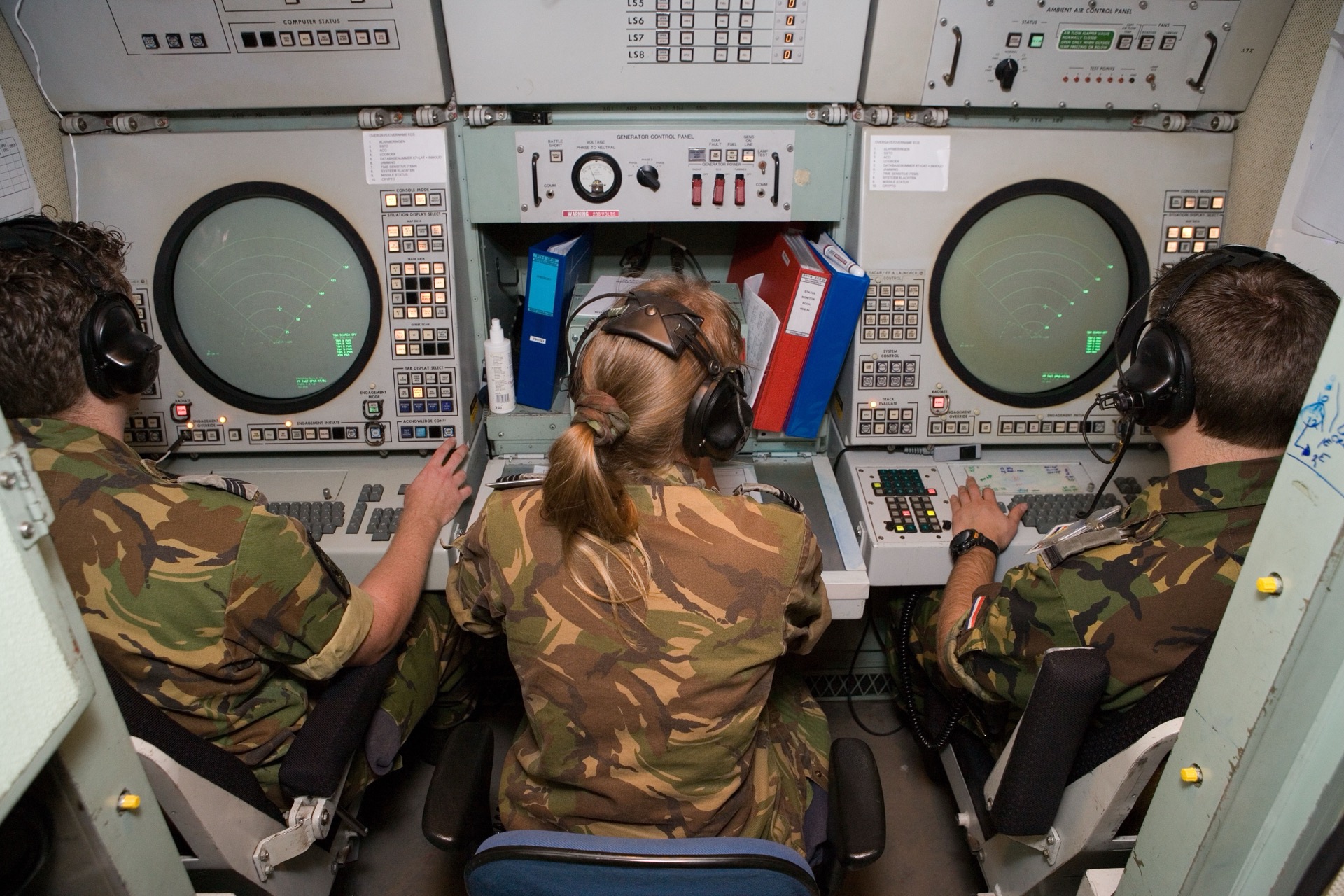
The immediate reason is Defense Minister Boris Pistorius's push to produce or at least industrially secure American weapon systems like Patriot and Tomahawk more on German soil. Politico reported on July 1 about this German desire. On the same day, NATO Secretary General Mark Rutte praised Germany in Berlin as a former laggard that is now leading and delivering. From a German perspective, this sounds like a late confirmation of the Zeitenwende. From an analytical perspective, it is more of an admission: Europe's largest state is not buying its way out of dependence but is trying to bring that dependence geographically closer to home.
This is not a trivial detail. Patriot is the scarcest political good of the alliance for Ukraine and European air defense. Tomahawk represents conventional long-range deterrence and thus the capability that Europe has outsourced to the United States for good reasons for decades. If Germany now tries to embed American systems into its own industrial base, it is not a program of strategic autonomy. It is a program of controlled dependence.
The 5 Percent Target Does Not Solve a Manufacturing Question
The Hague Summit Declaration of 2025 commits allies to invest 5 percent of GDP annually in core defense and security-related expenditures by 2035. Of this, at least 3.5 percent, according to NATO definition, should be allocated for core capabilities and up to 1.5 percent for resilience, critical infrastructure, innovation, and industrial base. The declaration also calls for the rapid expansion of transatlantic industrial cooperation and the reduction of trade barriers.
This is precisely where the institutional vagueness lies. The 5 percent is a budgetary commitment, not a production commitment. It says nothing about whether additional Patriot interceptors, air defense radars, cruise missiles, artillery rockets, or guided missiles will be available in time. Money can trigger orders; however, it does not automatically create qualified labor, explosive capacities, engine lines, test stands, and export approvals. Even less does it create intellectual property.
Germany can sign more procurement contracts in 2026 than in any year since the Cold War. But if key components are subject to American approval, American source code, American end-use control, or American prioritization, the Bundeswehr remains politically stronger without becoming industrially sovereign. This is the sober point of Pistorius's initiative.
Why Ankara Will Become the Industry Summit
The fact that NATO ties the Defence Industry Forum directly to the summit is not a protocol detail. It is a response to three simultaneous bottlenecks. First, Ukraine needs predictable supply, not episodic commitments. Second, NATO must organize its eastern defense with less taken-for-granted American availability. Third, European governments are under domestic pressure to justify the enormous new defense expenditures as job creation and industrial revival.
These three goals do not fit together smoothly. For Ukraine, speed matters. For NATO, interoperability matters. For European industrial policy, domestic value creation matters. If Germany wants to manufacture Patriot and Tomahawk in Europe, it is understandable from all three perspectives. It is fast because it uses proven systems. It is interoperable because the systems are already embedded in the alliance. It is industrially attractive because part of the value creation would come to Germany. But it remains dependent on American approval.
Germany's New Role Remains Contradictory
Rutte is right when he describes Germany as a central supplier of European defense policy. Berlin finances, buys, and plans on a scale that would have been hard to imagine before 2022. Yet the German debate still too often confuses budgetary power with shaping power. Who assembles American weapons in Germany does not automatically shape the technological architecture of those weapons.
The real question for Ankara is therefore not whether Germany delivers more. It does. The question is whether Germany, with its additional resources, creates European decision-making capability or merely stabilizes American systems with European money and German manufacturing depth. The latter would be militarily sensible and politically honest, but it would not be European sovereignty.
The alliance can showcase more money, more summit declarations, and more industrial forums in 2026. What it cannot yet showcase is an institutional mechanism that turns European money into European availability.
This is the uncomfortable lesson before Ankara. Europe must use American systems in the short term because the Russian threat does not wait for European industrial cycles. At the same time, it must not sell this necessity as a strategy. More production on German soil is better than empty warehouses. But Patriot production under American rules remains an extended workbench as long as Berlin and Brussels cannot decide when, where, and in what quantities the systems will be delivered. It is precisely in this difference between location and availability that lies Europe's defense problem.
Source Situation
- NATO Summit Program Ankara 2026, updated on July 4, 2026.
- NATO Hague Summit Declaration 2025 on the 5 percent target and transatlantic arms industry.
- Politico, July 1, 2026, report on Pistorius and German plans for manufacturing American weapons.
- Brussels Times and Euractiv, July 1, 2026, reports on Rutte's visit to Berlin and the expansion of the defense industry.
Germany is pushing to produce American weapons systems like Patriot and Tomahawk on its soil, aiming to reduce dependency on the U.S. This initiative will be highlighted at the NATO summit in Ankara on July 7, 2026, where defense industry cooperation will be a key focus. The German defense minister has stressed the importance of securing industrial capabilities for these systems.
- Germany is seeking to produce American weapons systems like Patriot and Tomahawk domestically.
- The NATO summit in Ankara on July 7, 2026, will focus on defense industry cooperation.
- Germany's defense minister emphasized the need for industrial security in weapon production.
- The 5% GDP defense spending goal does not guarantee timely availability of military equipment.
- Germany's role in European defense is evolving, but it remains dependent on U.S. approval for key components.