
Germany's Poland Pact 2026 Needs Leopard 2 and Logistics Instead of New Symbolism
 Dr. Klaus Weber
Germany's Poland Pact 2026 Needs Leopard 2 and Logistics Instead of New Symbolism
On June 17, 2026, Germany and Poland will sign a defense agreement that does not formally create a new mutual assistance guarantee. This is precisely where its significance lies. Berlin and Warsaw reaffirm Article 5 of the NATO Treaty and Article 42 paragraph 7 of the EU Treaty, but the actual operational core lies in four less ceremonial terms: Baltic Sea, military mobility, cyber defense, and arms cooperation. For NATO's eastern flank, this is more important than another political formula.
The German government had already approved the agreement on June 10. It is to be signed on the 35th anniversary of the German-Polish Neighborhood Treaty. This is symbolically well arranged, but the symbolism should not obscure the view. Germany will not be able to act in the defense of the Baltic States without Poland. Poland, in turn, cannot permanently bear its role as the logistical backbone of Ukraine and as a heavily armed frontline state alone. The pact is therefore less a document of friendship than a test of infrastructure.
The Corridor Counts More Than the Declaration
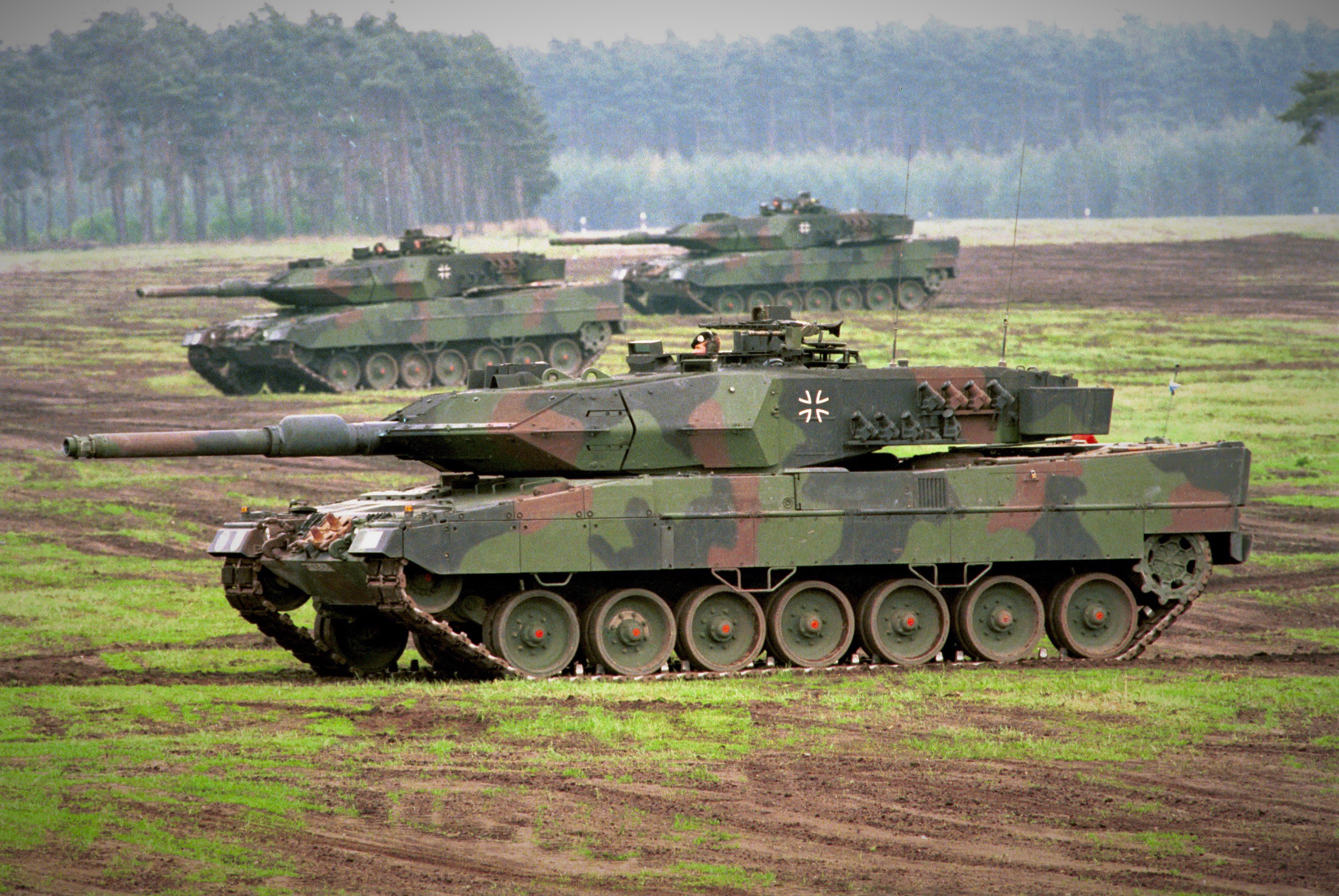
The sober question is: How quickly can German forces, ammunition, spare parts, and air defense components be moved through Poland towards Lithuania, Latvia, and Estonia in a crisis? Germany is already leading the NATO battlegroup in Lithuania. NATO has listed nine Forward Land Forces Battlegroups along the eastern flank since June 2026, including Poland and Lithuania; Lithuania is under German framework responsibility, while Poland is itself the host nation. This geography makes the German-Polish relationship an operational prerequisite, not a diplomatic option.
The term military mobility sounds harmless in Brussels, almost administrative. In reality, it determines whether Leopard 2 battalions, Patriot components, engineering equipment, and fuel columns arrive on time where NATO planners have marked them. Road loads, bridge classifications, border procedures, rail capacities, and ammunition depots are not marginal details. They are the difference between defense planning and defense capability.
Poland is No Longer Just a Transit Country
Since 2022, Poland has fundamentally changed its role. It is no longer just a transit area for Western aid to Ukraine but is evolving into one of the central European heavyweights of conventional land power. Abrams, K2, K9, HIMARS, Patriot, and F-35 make up an arsenal that is politically desired and financially risky. Germany's problem is different: Berlin has industrial depth but too little deployable mass. Warsaw has ordered mass but remains partially dependent on American and South Korean supply chains.
That is precisely why a bilateral agreement makes sense. If Germany and Poland take joint training, exercises, and industrial cooperation seriously, they can partially compensate for each other's weaknesses. But only partially. An agreement does not replace workshop capacities, spare parts stockpiling, and deployable brigades. This is the point at which European defense policy regularly fails due to its own language: it confuses coordination with capacity.
The Baltic Sea Becomes a Test Case
That the Baltic Sea is particularly highlighted in the agreement is no coincidence. BALTOPS 2026 began on June 4 in Gdynia with 20 ships from 15 NATO countries and around 6,000 soldiers. The exercise includes air defense, anti-submarine warfare, mine clearance, amphibious operations, crisis response, and unmanned systems. Even more important is an institutional detail: For the first time since 1972, BALTOPS is being conducted under NATO command structure by Joint Force Command Brunssum. This is not a folkloric change of command center but an indication that the Baltic Sea is now treated as an integrated operational area.
This is uncomfortable for Germany. The German Navy cannot geographically evade in the Baltic Sea, and the Bundeswehr cannot effectively deter in Lithuania if the maritime and land connection to Poland remains vulnerable. Russian hybrid operations against undersea cables, ports, GPS signals, or logistics software would not first destroy tanks. They would slow down the buildup. That is precisely why cyber defense and crisis management belong in a defense agreement that at first glance appears to be classic military cooperation.
SAFE Does Not Automatically Fund Integration
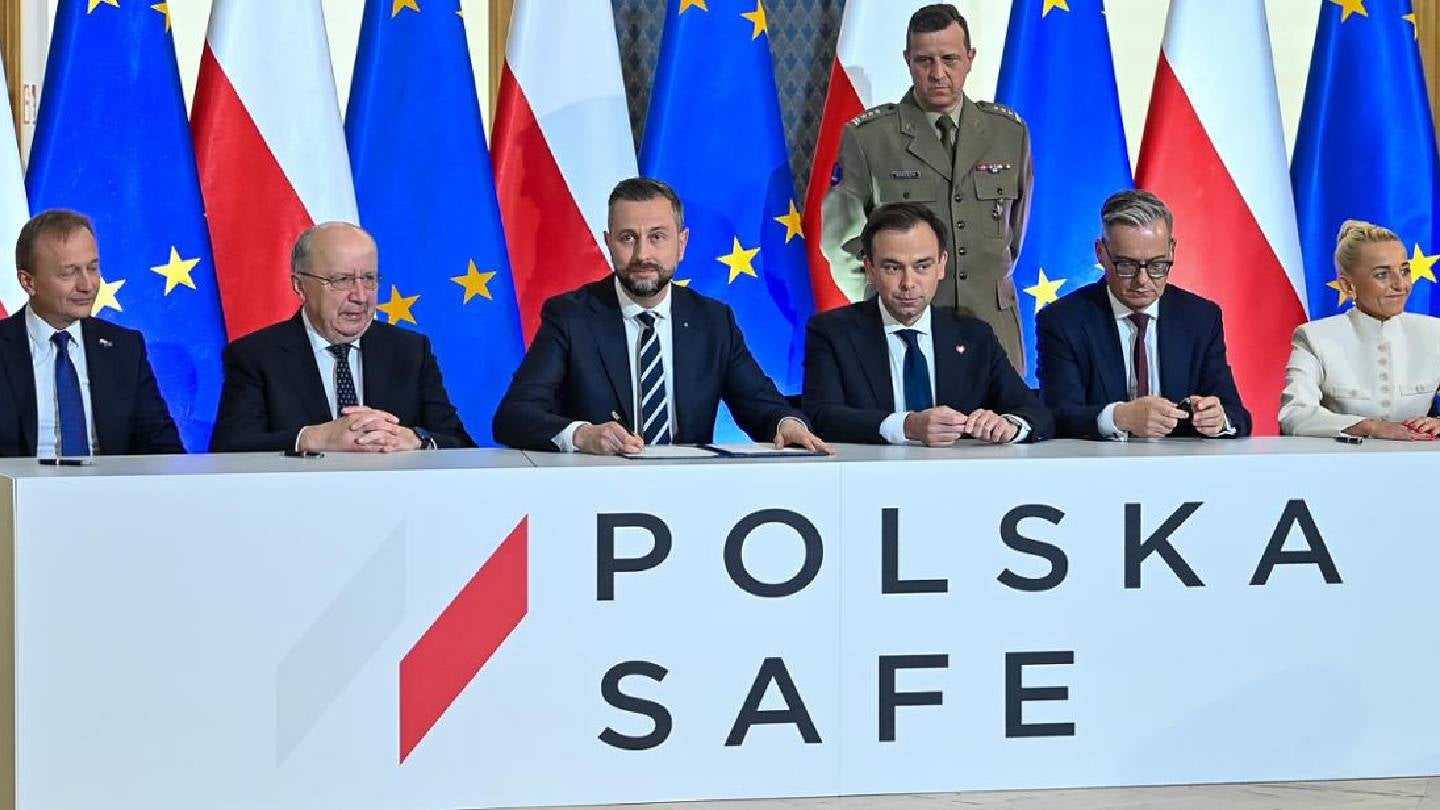
The EU instrument SAFE provides up to 150 billion euros in loans for joint procurement. It finances, among other things, ammunition, missiles, artillery, drone defense, cyber capabilities, military mobility, air defense, and maritime capabilities. On paper, this fits perfectly with the German-Polish agreement. In practice, added value only arises when Germany and Poland choose joint projects that support NATO defense plans instead of labeling national shopping lists as European.
Poland has already heavily relied on non-European systems. Germany has been discussing European industrial policy for years while lacking deployable quantities. SAFE does not automatically solve this problem. The program can co-finance bridges, depots, missiles, and communication systems; however, it cannot force Berlin and Warsaw to set the same priorities. Institutionally, the crucial question remains: Will the pact become a procurement mechanism or just a consultation format?
The Political Limit of the Pact
Notably, what the agreement apparently does not do. It does not create a new bilateral mutual assistance guarantee in the manner of the German-French or German-British treaties. AP reported that the pact remains deliberately practical and below such a threshold due to historical sensitivities. This is realistic. German security policy towards Poland cannot pretend that there is no memory policy, no reparations debate, and no Polish concern about being sidelined in Western Ukraine discussions.
But it is precisely this limitation that makes the agreement useful. In Eastern Europe, it matters less whether Berlin formulates grand statements about European sovereignty. What is crucial is whether German units can pass through Poland on time, whether command staffs can work compatibly, whether ammunition is available, and whether the Baltic Sea remains open in a crisis. This is a prosaic form of strategic capability. Europe needs more of this, not less.
The German-Polish defense pact is not a substitute for NATO planning. It is a test of whether two key states on the eastern flank can finally reduce the administrative friction losses that would cost military effectiveness in a crisis.
Source Situation
- Federal Government, Cabinet Decision on the German-Polish Defense Agreement, June 10, 2026.
- Associated Press, Report on the Planned German-Polish Defense Agreement, June 17, 2026.
- U.S. Navy and Allied Joint Force Command Brunssum, BALTOPS 2026 Start in Gdynia, June 5, 2026.
- NATO, Overview of Strengthening the Eastern Flank and Forward Land Forces, as of June 2026.
- Council of the European Union, SAFE Instrument for Joint Defense Procurement, as of June 2026.
The pact is therefore neither a breakthrough nor a trivial matter. It is what European defense policy should more often be: boring, technical, verifiable. If Berlin and Warsaw turn this into reliable mobility corridors, joint exercises, and coordinated procurement, it strengthens the eastern flank. If not, it remains another well-formulated statement. The paradox is typically European: Without symbolism, little moves politically; with symbolism alone, nothing moves militarily.
Germany and Poland signed a defense agreement on June 17, 2026, focusing on military mobility, cyber defense, and arms cooperation. This agreement is crucial for the NATO eastern flank, ensuring that German forces can effectively operate in the Baltic region. Poland's evolving military role is emphasized, transitioning from a transit country to a key player in European defense. The agreement also highlights the importance of logistics and infrastructure in military readiness.
- Germany and Poland signed a defense agreement on June 17, 2026.
- The agreement emphasizes military mobility and cyber defense.
- Poland's role has shifted from a transit country to a central European military power.
- The Baltic Sea is highlighted as a critical operational area in the agreement.
- The EU's SAFE instrument provides funding for joint defense procurement.