
Germany's SAMP/T Test 2026 Reveals Europe's Air Defense Dilemma After 4 Ukraine Systems
 Dr. Klaus Weber
Germany's SAMP/T Test 2026 Highlights Europe's Air Defense Dilemma After 4 Ukraine Systems
Four SAMP/T NG systems for Ukraine starting in 2027 and a single German word — "test" — are enough to describe the state of European air defense. Emmanuel Macron offered Germany on July 17 to join the French-Italian co-production of the next-generation SAMP/T. Boris Pistorius responded on July 21 in Kassel not with agreement, but with a very German institutional formula: Berlin is "in principle" open but must examine all details. This is not evasion. It is a symptom of a procurement model that demands strategic autonomy but shies away from operational standardization.
The French Proposal is More Than Industrial Policy
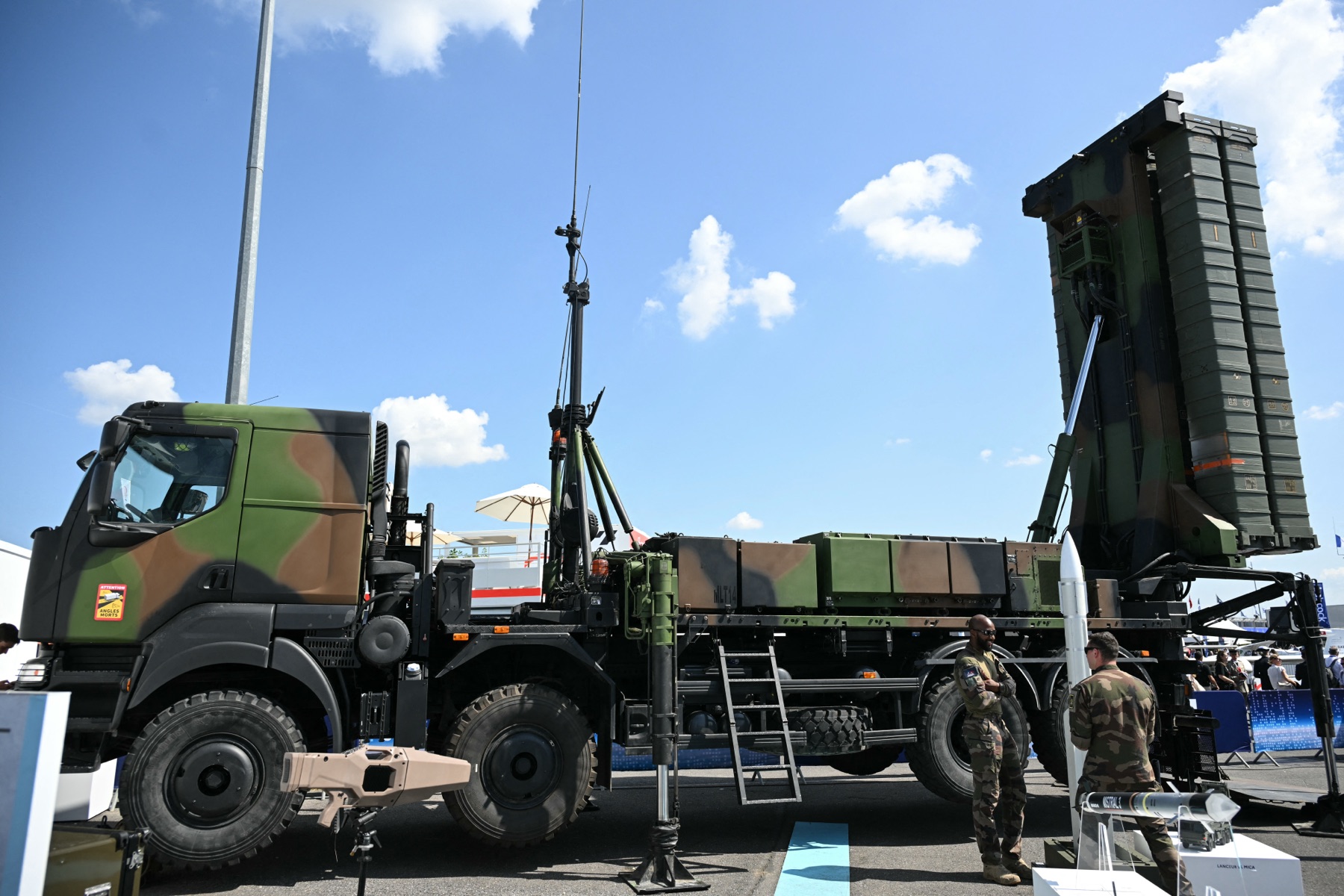
Macron's offer was not aimed at a symbolic working group but at the only long-range air defense system built in Europe that can be considered an alternative to the American Patriot system. SAMP/T NG uses Aster-30 interceptors and is supported by Eurosam, namely MBDA and Thales, with Italian involvement. Italy received its first NG system in January with Leonardo radar and a specified airspace surveillance range of at least 300 kilometers; France followed in February with an upgraded system and Thales Ground Fire 300, for which ranges of up to 400 kilometers are mentioned (Defense News, July 21).
The operational logic is clear: Anyone who takes European air defense seriously today cannot only talk about end devices. They must discuss radars, guided missiles, software, testing infrastructure, spare parts, and production rights. That is why Pistorius' reference to possible collaboration over "ten years or more" is crucial. A limited German involvement in production would be politically nice. However, a technological involvement over a decade would change the industrial architecture of European air defense.
Patriot Remains Indispensable in the Short Term
This is where the German problem begins. Germany is deeply embedded in the Patriot ecosystem. Training, spare parts management, combat operations, NATO interoperability, and the political security guarantee from the United States cannot be replaced overnight. Pistorius therefore openly stated that the parallel operation of two systems in the same range and altitude band is hard to imagine. This statement is militarily reasonable but politically uncomfortable.
For Germany, Patriot is not just a procurement but a system network. Berlin has built capabilities, procedures, and alliance relationships with it. A rapid switch to SAMP/T NG would incur costs that are rarely honestly visible in German budget documents: new simulators, new munitions logistics, different training cycles, different rules of engagement, and possibly different certifications within NATO. Anyone who only compares the unit price of a launcher does not understand air defense.
But the counter-question is equally uncomfortable: What is the price if Europe remains trapped in the Patriot system in the long term? The acute shortage of Patriot interceptors, exacerbated by American and Israeli priorities after the war against Iran, has shown European users that supply chains are politically hierarchized. Washington signals that it will prioritize its own forces first. For a continent that has claimed since 2022 to have learned from the turning point, this is a sobering lesson.
Ukraine Forces Europe to Account for Production
The Ukrainian-French declaration of July 14 makes the time pressure measurable. Kyiv wants to order four SAMP/T NG systems; modules are to be gradually available starting in 2027. A Thales GF300 radar is expected to be in Ukraine before the end of 2026. In the meantime, two existing SAMP/T systems are to be delivered temporarily and later returned. Additionally, a Leonardo Kronos radar and five Thales Ground Master 400 radars are to be included. France and Italy want to accelerate Aster deliveries by October and, according to the Ukrainian presidential statement, enable licensed Aster production in Ukraine before the end of 2026.
These numbers sound dynamic. In reality, they show the gap. Four systems starting in 2027 are important for Ukraine, but they do not solve either the European munitions shortage or the question of series production. MBDA aims to double Aster production in 2026; this is necessary, but doubling from limited initial capacity is not a strategic abundance. Air defense has become a war of attrition. Russia forces Ukraine into daily interception decisions with drones, ballistic missiles, and cruise missiles. Europe is still responding with projects whose production curves take years.
European Sky Shield Without France Remains Incomplete
The German European Sky Shield Initiative was politically successful because it quickly gathered many states around American, Israeli, and German components: Patriot for long ranges, Arrow 3 for exo-atmospheric threats, IRIS-T SLM for medium altitudes. France criticized the initiative early on for rhetorically invoking European sovereignty while deepening central dependencies on the USA and Israel. Paris sometimes exaggerated out of industrial self-interest. Nevertheless, the criticism was not unfounded.
A German entry into SAMP/T NG could partially defuse this front. It would show that European Sky Shield is not just a purchasing club for available systems but a framework in which European production is being developed. However, for this, Berlin would have to make an uncomfortable decision: It would have to accept that standardization does not always mean sticking with the existing American system. Sometimes, standardization means politically prioritizing a European alternative so that it becomes standardizable at all.
This is the point at which German security policy regularly slows down. Berlin wants European sovereignty without bearing the costs of the transition. Paris wants sovereignty without truly sharing industrial leadership claims. Rome wants involvement without being crushed between German procurement mass and French system leadership. The institutions reflect these contradictions: NATO demands interoperability, EU programs demand European value creation, national ministries demand budget control. Each level is right, and together they produce delays.
The Real Decision Happens Before the Contract
Germany does not have to buy SAMP/T NG tomorrow. A rushed dual structure would be expensive and operationally risky. But Berlin should not treat Macron's offer as a French sales initiative but as a test case for European air defense after Patriot. The crucial questions are: Does Germany gain access to system integration and software? Is a joint Aster production planning with binding acceptance quantities created? Are spare parts and training organized multinationally? Can SAMP/T NG be connected with German Sky Shield, NATO air defense leadership, and Ukrainian operational feedback?
If the answer to these questions is no, a German entry would be mere symbolic politics. If the answer is yes, Germany would have to explain which Patriot roles can be replaced by European systems in the long term and which cannot. Both are politically risky. But the alternative is worse: Europe buys American interceptors when they are available, discusses European sovereignty when they are not, and then calls this pendulum movement strategy.
The paradox remains German-European: Two parallel systems are inefficient, but a single American-dominated system creates dependency. More money does not resolve this contradiction. Only when Berlin is ready to plan operational standardization and industrial sovereignty together will the SAMP/T test become more than just another chapter in the management of the turning point.
Germany is evaluating its participation in the French-Italian SAMP/T NG production to enhance European air defense capabilities. Ukraine plans to order four SAMP/T NG systems starting in 2027, with interim systems to be delivered before then. The report emphasizes the challenges of transitioning from the American Patriot system to a European alternative, highlighting the need for collaborative production and operational standardization.
- Germany is evaluating participation in the SAMP/T NG production for European air defense.
- Ukraine plans to order four SAMP/T NG systems starting in 2027.
- The SAMP/T NG system is seen as a European alternative to the American Patriot system.
- France and Italy are accelerating Aster-30 missile deliveries to Ukraine.
- The report highlights the challenges of European air defense integration and reliance on American systems.